
Father Lorenzo, may I use your Vespa while you are away?” I was a young priest at Padua in my first assignment as a teacher in our Comboni Seminary and the one daring to ask me the use of my scooter was Bro. Gianfranco, one of the prefects in charge of discipline among the young seminarians and a student of theology, preparing for the priesthood. I looked at his open face, smiling with a hint of mischief in his eyes, and answered: “Certainly, only be careful because it is an old vehicle.”
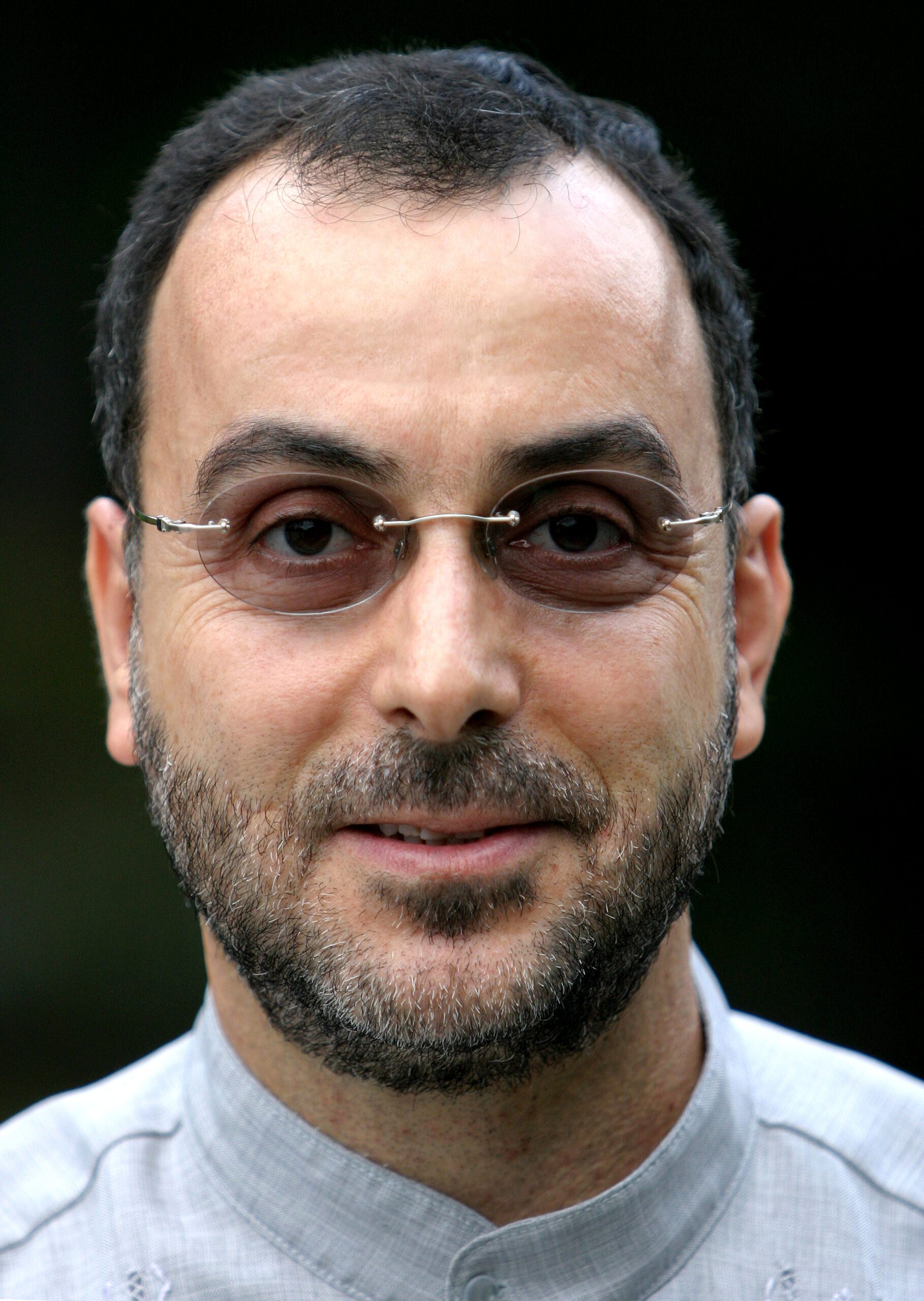
When I came back, after a week, Bro. Gianfranco was in hospital with a broken collarbone and the Vespa had joined the junk-heap. I was reminded of this little episode two years ago when the shocking news of the unexpected and untimely death of our well-esteemed Comboni bishop Gianfranco Masserdotti (whom everybody in his diocese used to call Dom Franco), reached us: he was killed instantly, in an accident, not far from his residence in Balsas, Northern Brazil, on September 17 2006, while peacefully pedaling his bicycle, as was his habit.
Was there an omen, in that first accident, of the mode of his final end? I certainly did not understand it like this then as I never thought, when I went to see my friend Bro. Gianfranco in hospital, that this lively and intelligent companion would one day be one of our most prominent missionary bishops. The ways of the Lord are infinite!
During his funeral, in front of the overflowing crowd of mourners, Card. Gerardo Majella Agnelo, archbishop of San Salvador da Bahia and president of the Brazilian Episcopal Conference, said: “In a short time, Dom Franco has drawn universal appreciation as master of solidarity, listening and respect and for his passion for the indigenous peoples to whom he dedicated his life ‘so that they may have life,’ as he wanted written in his coat of arms as bishop.”
“Who was Dom Franco?” added Fr. Teresino Serra, the Superior General of the Comboni Missionaries. “Just a missionary… a Comboni missionary who has walked along the road pointed out by Saint Daniel Comboni of remaining with the poorest and most abandoned. A missionary sent by God who has sown goodness in the hearts of people. We are saddened but not in despair. God knows.”
A BRUSH WITH TERRORISM
Dom Franco was born Gianfranco Masserdotti at Brescia, in Northern Italy, into an average working class family, on September 13, 1941. Still very young, he entered the minor seminary of the Comboni Missionaries. He was a very gifted young man, of an open and cheerful disposition, bearing in his features the mimic articulations of his father’s face which was the embodiment of the common sense, optimism and zest for life of our simple people.
His seminary life was happy and fruitful. Gianfranco was loved by his companions and appreciated by his superiors especially for his humility, sociability and cheerfulness. He took his First Vows at 21 in 1962 and was ordained priest in 1966. Immediately after his priestly ordination, he was sent to study Sociology at Trent, something new in the tradition of the Institute, but very important in order to understand the great, sweeping changes taking place in the world. He was very much influenced by the sociological approach to problems, but he never lost the purpose of the analysis and, in the end, the pastoral approach always prevailed.
At Trent, during his university student’s days, he was very popular and befriended many, among whom some who will soon occupy the attention of the media and embody the worst aspect of the 1968 students’ revolution. At that time, the sociology faculty at Trent was the hotbed of communist extremists, most of them children of Catholic families and the cradle of the armed revolutionary movement of the Red Brigades. The founder was considered Renato Curcio, who, eventually dropped out from the studies and moved to Milan where the Red Brigades started their criminal activity of political kidnapping and assassinations.
Renato Curcio was soon arrested, but was freed in a spectacular escape organized by his young bride, Margherita Cagol, whom he had married in Trent with a Catholic marriage only a few years before in 1969. Although he was soon recaptured and Margherita was killed in a shoot-out with the police, yet the Red Brigades kept their grip on Italy and their climax and eventually, their downfall, was the assassination of former Prime Minister, Aldo Moro, whose body, riddled with bullets, was left in the boot of a car in the center of Rome in 1978.
Many of the members, revolted by such brutality, repented and revealed their hide out. Very soon the Red Brigades were just a painful memory. Renato and Margherita were friends of Fr. Franco as were many others… How much was he affected by that turmoil? Was it from that experience that he resolutely embraced non-violence? We can only say that he took his degree in the right time, in 1971, and the following year he was on the boat to Brazil for his first missionary assignment and a love story with that enormous country and Church which ended only with his premature death.
THE PASTORAL BAPTISM
Fr. Franco was assigned to the diocese of Balsas in Northern Brazil and sent to the parish of Pastos Bons, in the countryside. It is there that he had his pastoral baptism. He approached his work among the people with enthusiasm, but at the same time with deep consciousness of the complexity of his relationship with the Brazilian people.
At that time, he wrote: “I am aware of the limit of being a foreigner. I feel the ambiguity of my position and this should constantly prepare me to respect and listening. I must make the Christian people perceive that I can only be, mostly, the “auxiliary” animator of a process that must originate from the depth of the Brazilian soul. I am aware that I must daily ask myself about the meaning of my being in Brazil.”
He also realized the richness and novelty of the vision of Church born of the Latin-American experience. This he embraced and struggled to implement through his outgoing and generous personality. He wrote: “Starting from the Ecclesial Basic Communities and their commitment, a new “political” holiness was born, based on an understanding of faith, hope and charity with a social slant. Faith must bring the persons to discern God’s call in the situations of social sin. Hope will help them also to see the seeds of life in the concrete realities and to tie the historical liberations to the integral liberation of the Kingdom. Charity becomes organized commitment in the popular movement on behalf of justice and peace.”
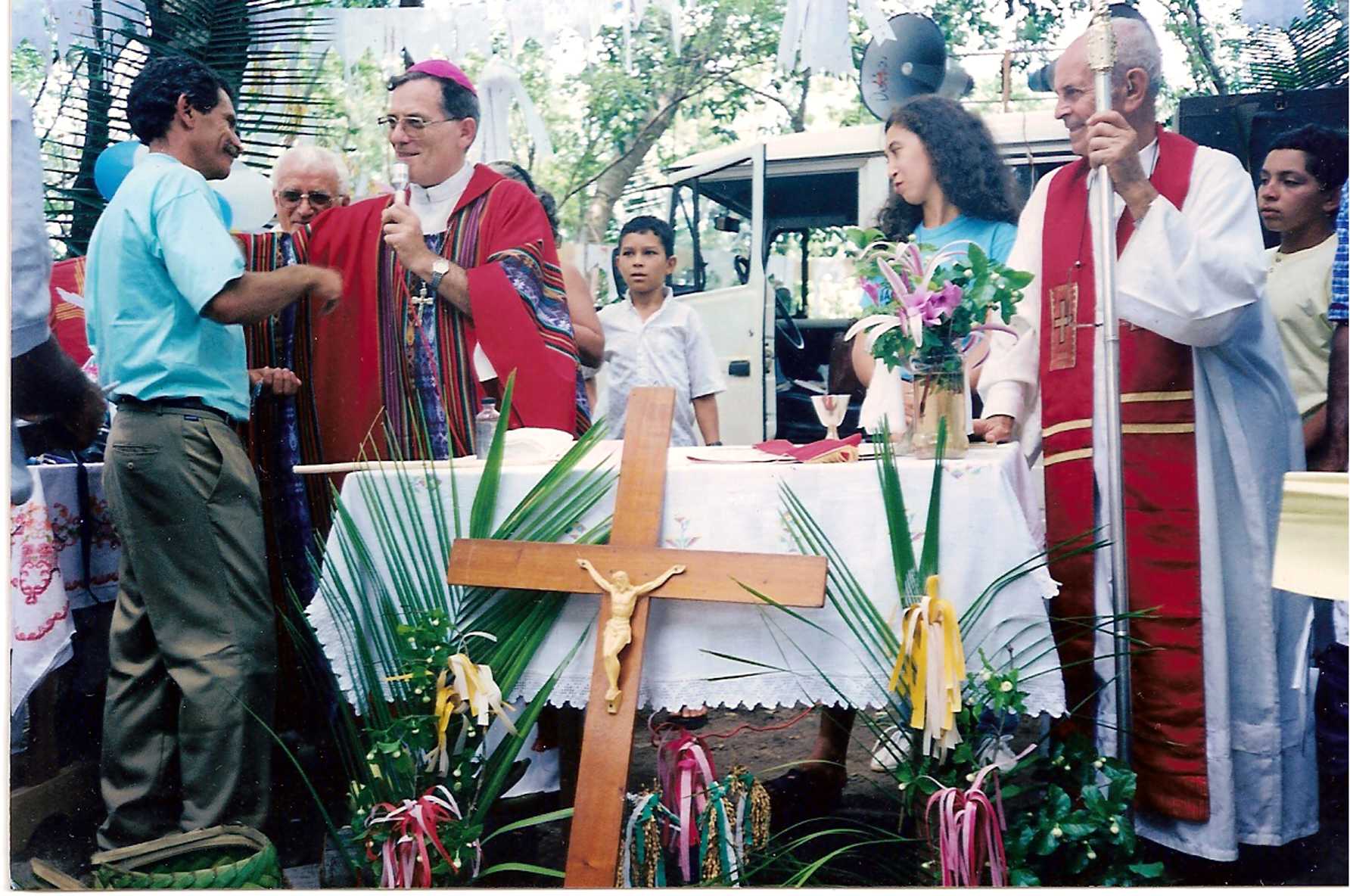
From 1979 to 1985, he had to leave Brazil and was one of the four advisers to Father General: he resided in Rome and traveled to all the countries where the Comboni Missionaries have their missions, in this way widening his experience. Back to his beloved Brazil, he was elected provincial of the Comboni Missionaries of the Northern Brazil. On November 22, 1995, he was named Auxiliary Bishop of Balsas and ordained on March 2, 1996. On April 15, 1998 he was installed as the Bishop of Balsas, since his predecessor, Bishop Rino Carlesi, had retired.
This was for him the time of blossoming as the pastor of his flock and bringing to fruition the gifts of communication that the Lord had endowed him with and that he had refined in his experience with the simple people of Pastos Bons. In 1999, Dom Franco was chosen as president of the Missionary Council for Indigenous Peoples of the Brazilian Episcopal Conference, a charge which he liked and opened new horizons in his pastoral commitment.
THE PASSION OF THE INDIOS
In the context of the celebration for the “discovery of America,” on April 22, 2000, the Indios organized a march that intended to take “the opposite direction of the European invasion.” Dom Franco took part in the initiative. The Indios arrived at the town of Porto Seguro, in the beginning of the Holy Week, to take part in the Conference of Amerindian Peoples and Indio Organizations of Brazil.
All together, they were around 3000, representing 150 peoples. During the conference, the Indios decided to organize a march of about 20 kilometers, not only to express their protest but also in order to make new alliances and to look for solidarity from all the other sectors of society, committed to the building of a future of greater justice, freedom and respect for all. Unfortunately, after only 4 kilometers of the journey, the demonstrators were attacked by the military police. Without warning and without being minimally provoked, the policemen hauled themselves against the participants to the march. They threw tear gas and smoke screens and shot rubber bullets, injuring more than 70 people.
Soon the Indio representative, Gildo Terena, was on his knees, moving his outstretched arms towards the policemen and begging for peace. “Throw a bomb at me – he was crying – but spare my people.” It was Holy Saturday. A tropical rain was coming down in buckets. “I looked at those outstretched arms” says Dom Franco and I couldn’t help thinking of Jesus on the cross who accepted his death so that we might have life. And then I felt inside me a certainty: because of the power of the Crucifix and all the others who are crucified daily, this great “unfinished” Brazil will be regenerated in justice and in the respect of all its multi-ethnic and multicultural riches.
There were many missionaries who had joined the peaceful march of the Indios and were arrested with them. Dom Franco writes: “I went to the colonel who was in charge of the operation in order to ask explanations but I was myself arrested instead. After a while, the colonel, observing the presence of journalists and afraid of possible hostile comments of the press because of the abusive arrest of a bishop, approached me and offered to detach his personal car and driver in order for me to be taken wherever I wanted.
I refused and I told him that I would have accepted only if all the rest were set free… Something which eventually, after some five hours, took place. Obviously, there was no more Indio march. I must confess that I have lived through those hours like a grace of God who allowed us to be more united and in solidarity with countless brothers and sisters who, since five centuries ago, have been experiencing exclusion and repression.”
Dom Franco’s sudden death has left a great vacuum. His children of Balsas diocese and all his many friends around the world are consoled by the faith conviction that their great bishop friend will continue to run with his bicycle not only through the street of Balsas, but through the routes of the whole world in order to still be very close to all his friends and spiritual sons and daughters. Especially to be close to the poor who have always trusted his understanding and sincere help and continuously enjoyed his contagious cheerfulness.
A characteristic of Dom Franco was always that of starting from the different persons, accepting them as they are, giving room to each one’s individuality, without clipping their wings or jeopardizing their chance for development and growth.
“Our true death” – he wrote – “happens when we place our hope and the meaning and sense of our life in possessions, power and unbridled pleasure, when we shut our hearts to our brothers and allow ourselves to be carried away by our egoism.”