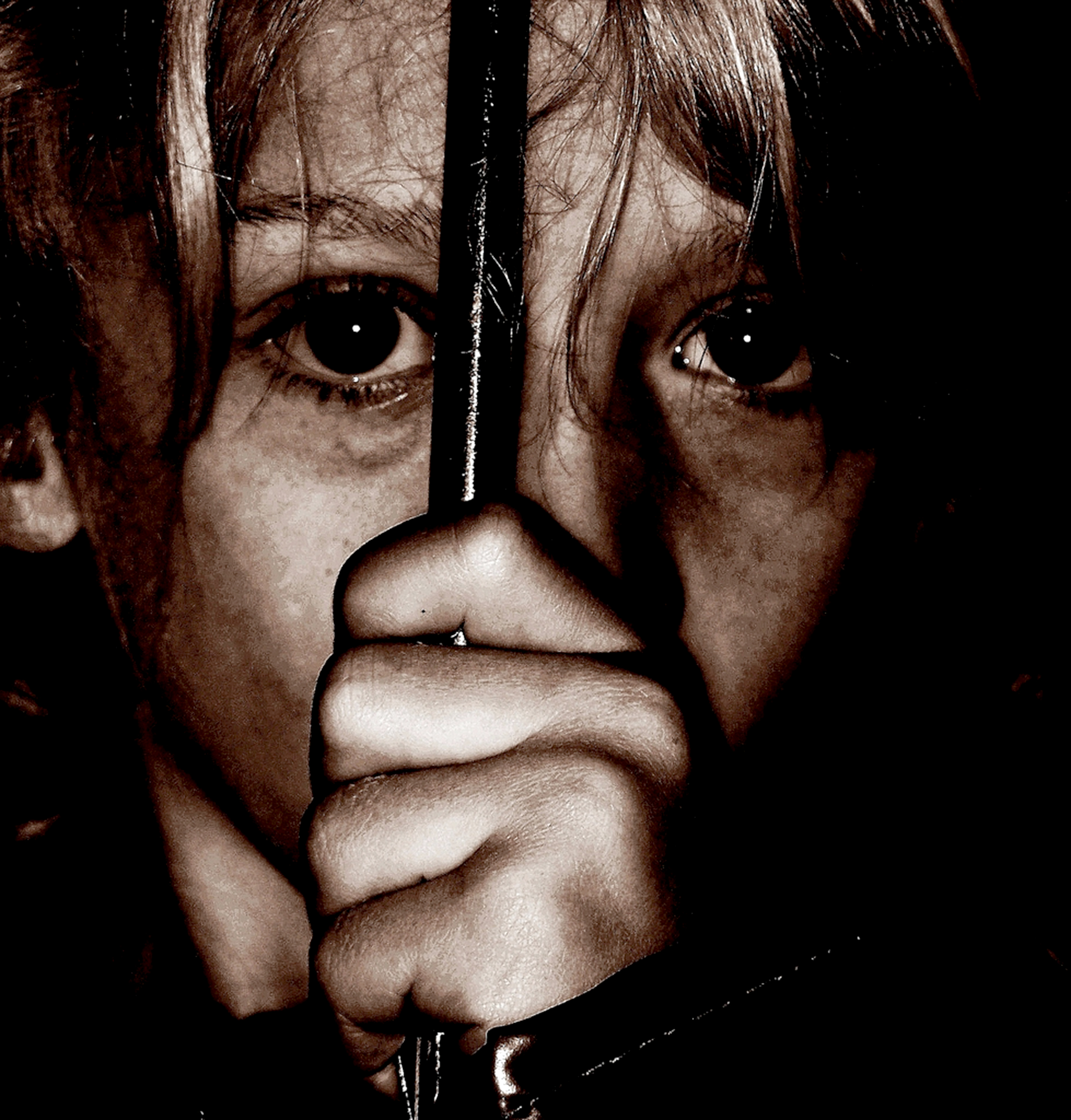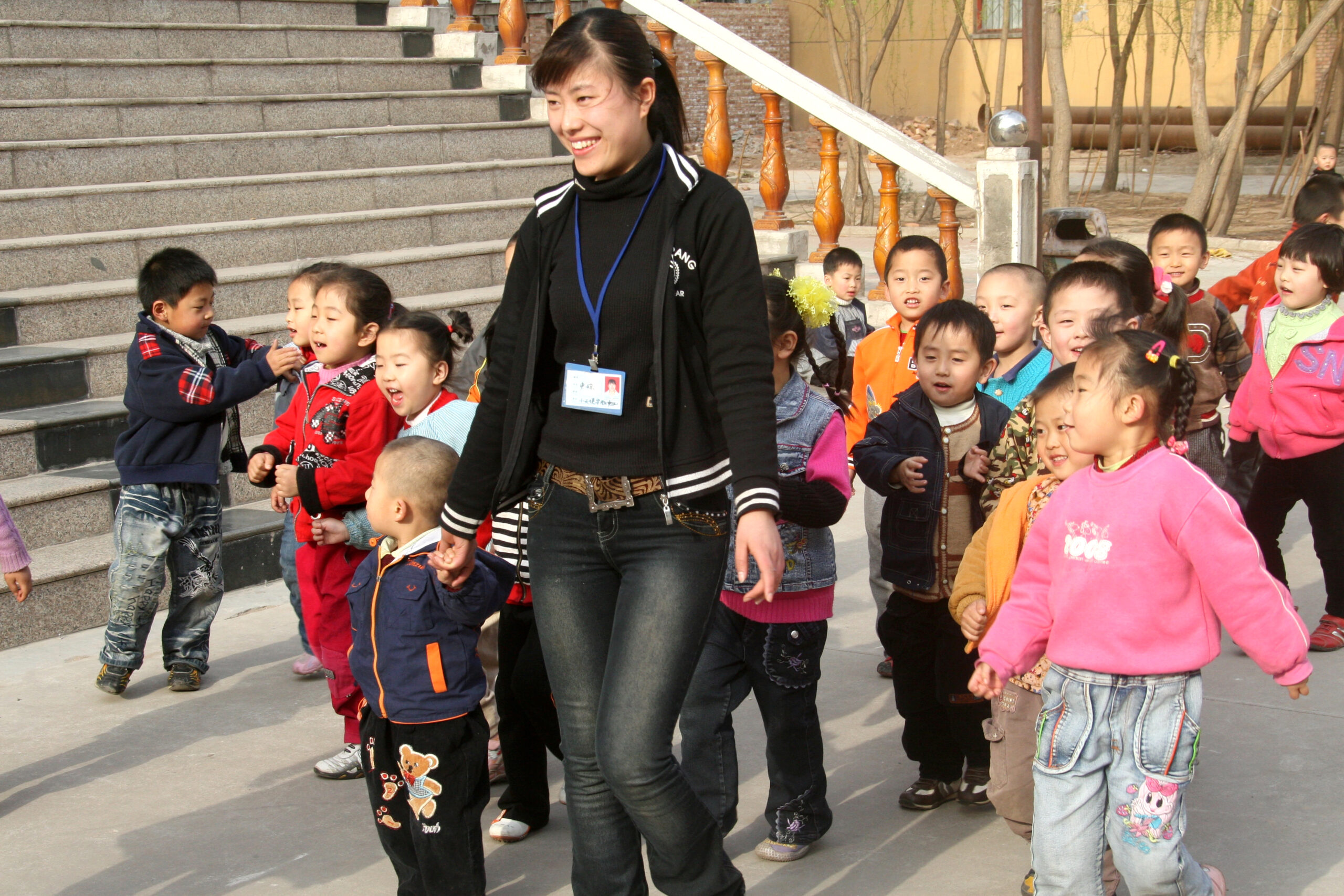
In a country like China with a one-child policy, families prefer to have boys; girls are often discarded – aborted or abandoned after birth. Researchers say that, perhaps a million girl fetuses are aborted and tens of thousands of girl babies are abandoned every year.
A similar horrible fate of sex-selective infanticide and abandonment makes babies with some form of physical and/or mental handicap suffer. There’s still the custom of dumping them off in boxes during the pre-dawn hours either at the entrance of churches or other places, like the convent’s front gate of the Sisters of St. Thérèse of the Child Jesus, a Congregation of the diocese of Zhaoxian, in Hebei Province.
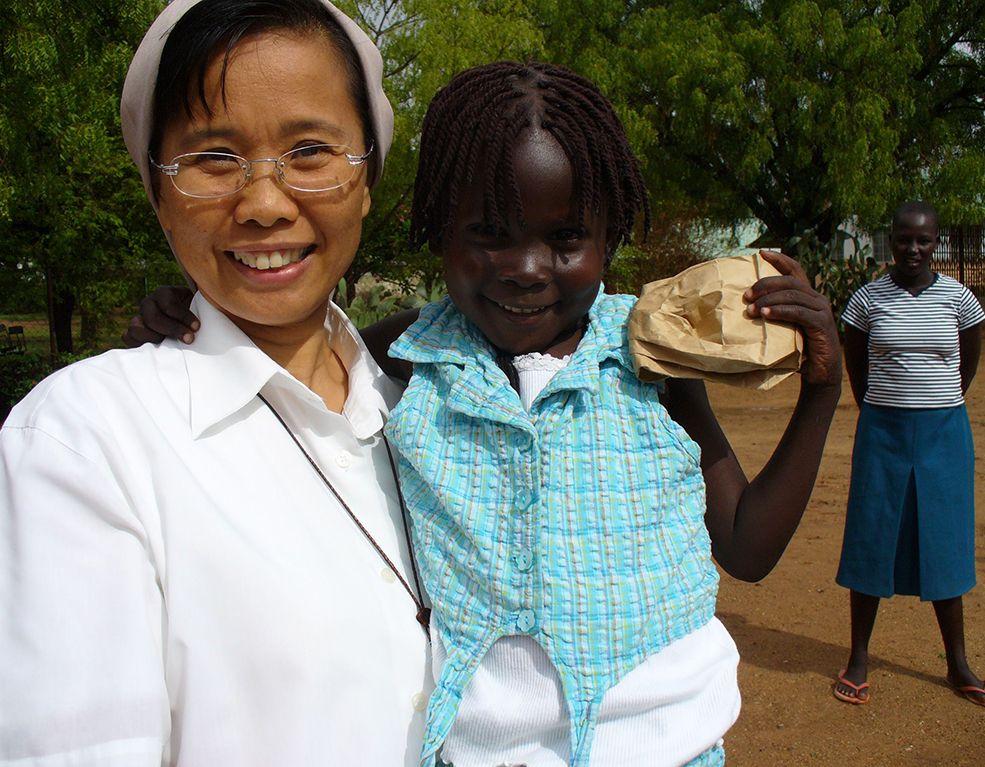
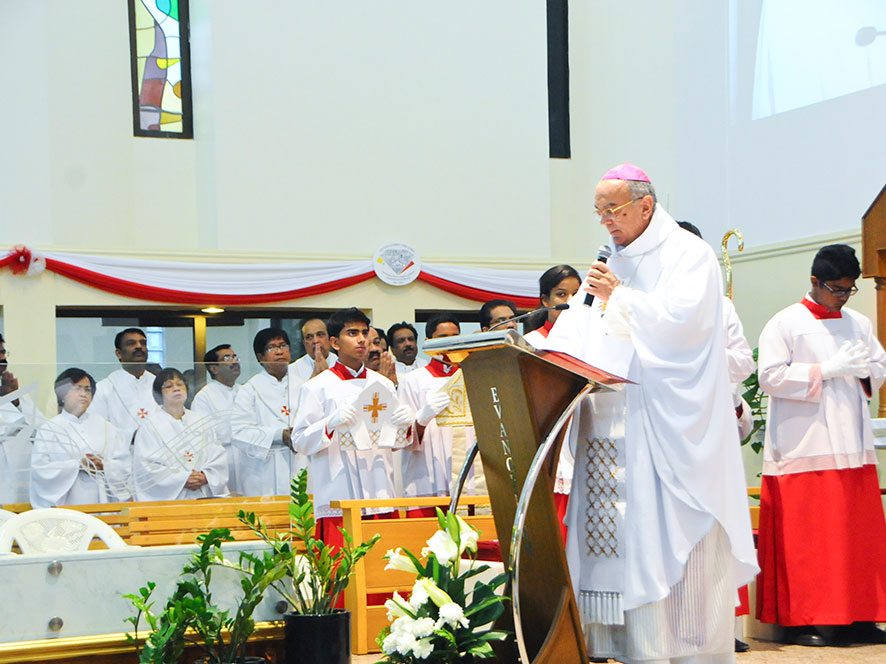
This religious Congregation was founded in 1932, but had to be suspended during Mao Zedong’s Cultural Revolution. When it restarted in 1988, by the will of Bishop Raymundo Wang, the Congregation, whose motto is “To love until the end,” started dedicating prevalently to the most neglected of orphans, the handicapped. They take care of them with unparalleled love and name each one with the Chinese character “Heaven – ” as their surnames since they are all children of God. For them, it is a “family” rather than an “orphanage” with good reason because it is constantly filled with love, hope, laughter and happiness.
At the beginning, there in Biancun village, life was tough. The Sisters and the handicapped lived in the same house. They had little food and charcoal, especially during the winter months when the temperatures went below -20° Celsius and the house needed warming. But they experienced God’s care. Sister Mary Ma, the Superior of the community, witnesses: “The food and the charcoal never ran out like the flour and the olive oil of the widow of Zarephath who provided food for Elijah in time of drought and famine (1 Kings 17:7-16).”
A PERFORMING TRIP
In 2006, they went online and started publishing a yearly magazine. Some sponsors and donors came forward and their life conditions improved. From then on, the Sisters’ work has been gaining recognition. Perhaps, due to this, the government, in March this year, encouraged more religious groups to take care of the handicapped.
Last year, during the months of July and August, they brought some children on a bus tour to Beijing and Shanghai where they performed with great success. Says Sister Mary Ma: “It was a very useful trip. The kids gained a lot of self-confidence and saw other realities. Benefactors watched their performance and were encouraged. With the money we collected, we built another orphanage for older kids and promoted some workshops. A Sister, who studied Fine Arts, is training them.”
Since the beginning, the Liming Family has welcomed more than 400 children. Today, 130 orphans belong to it.
Forty live with them, while the others have been “adopted” by different families. Only a few have been adopted formally. The others while staying with other families, continue to belong to the Liming Family. The Sisters give a monthly allowance and clothes to the caring families. The aim is to provide them with a family environment. If one gets seriously sick, he/she is likely to be brought back “home.”
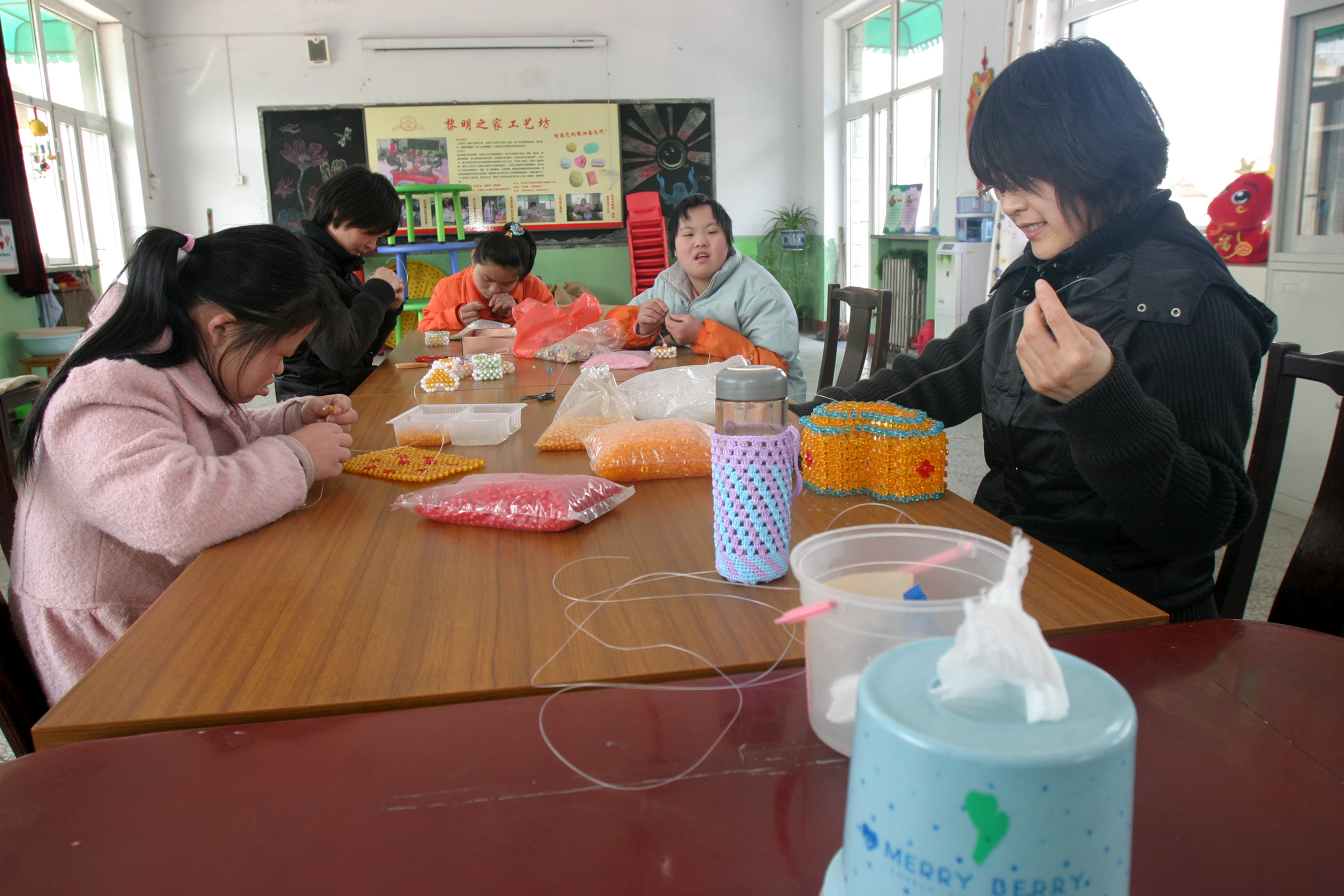
The handicapped children are given all the opportunities to learn, grow, improve their skills and become independent adults, according to their abilities. They attend public schools and, in some cases, special schools, like a blind girl who plays the piano. During their free time, some children help in the arts and crafts room to make objects that are sold to sustain their living. Two boys – one paralytic and the other an albino – managed to set up their own business. Another graduate, a girl, teaches in the rehabilitation center run by the Sisters in a nearby village.
THERAPY FOR KIDS AND PARENTS
That rehabilitation center was opened in September 2006. Its aim is to give parents the opportunity to have their children’s diseases treated, in that way, reducing the number of abandoned children. The Sisters realized that many children were abandoned because of their physical and psychological problems.
Joseph Mong, a resident physiotherapist from Inner Mongolia, explains that they admit no more than 20 outpatients every six weeks. The main problems children experience are mental retardations and various types of cerebral palsy that cause disability and motor problems (difficulty to walk and to use the hands). When a child has more than one problem, he/she is given further treatment sessions.
The kids are accompanied by their mothers or fathers. The Sisters stress that the parents’ stay is therapeutic also for them: they meet other parents who undergo the same experience and are helped to accept their children’s diseases. It is heartwarming, indeed, to observe the parents’ dedication to their kids and how they patiently help them to perform the prescribed exercises.
Every week, on Friday evening, the whole seven-staff team, made up of Sisters, therapists and special teachers (for speech impediments and the use of hands), meets to discuss and evaluate the progress made by the kids.
More and more, patients are from other provinces. Other centers charge much more. They like to come here because it is cheaper and more professional. Besides, they see that the treatment provided by consecrated women is different. They treat everybody without distinction – rich or poor – and they do not charge the very poor. This evangelical approach touches people.
GROWING CONGREGATION
The quite young Congregation of St. Thérèse of the Child Jesus – the eldest Sister is 54 and the second eldest is 47 – has 92 Sisters working in eight communities. It is growing in number, it has five novices, eight postulants and 13 aspirants – and expanding the range of its services, to share love and life with the most needy.
The Sisters run three eye clinics in different villages where they apply acupuncture and other Chinese traditional methods to improve the sight of poor people and to heal other ailments such as headaches. Practically, they are general clinics because the Sisters try to answer people’s needs as much as they can.
They also work in evangelization in the parishes, in the formation of leaders. They have also just opened a retreat center, especially to care for the formation of youth. Meanwhile, they need to care also for the formation of the girls who knock at their door to join the Congregation. Sr. Mianfang Li, a psychologist who studied spirituality in the United States, is in charge of the formation of the 27 temporary-professed Sisters. She comments that the younger generations are more self-centered, look for self-fulfillment and need to be helped to practically respond to God’s love serving the poor.
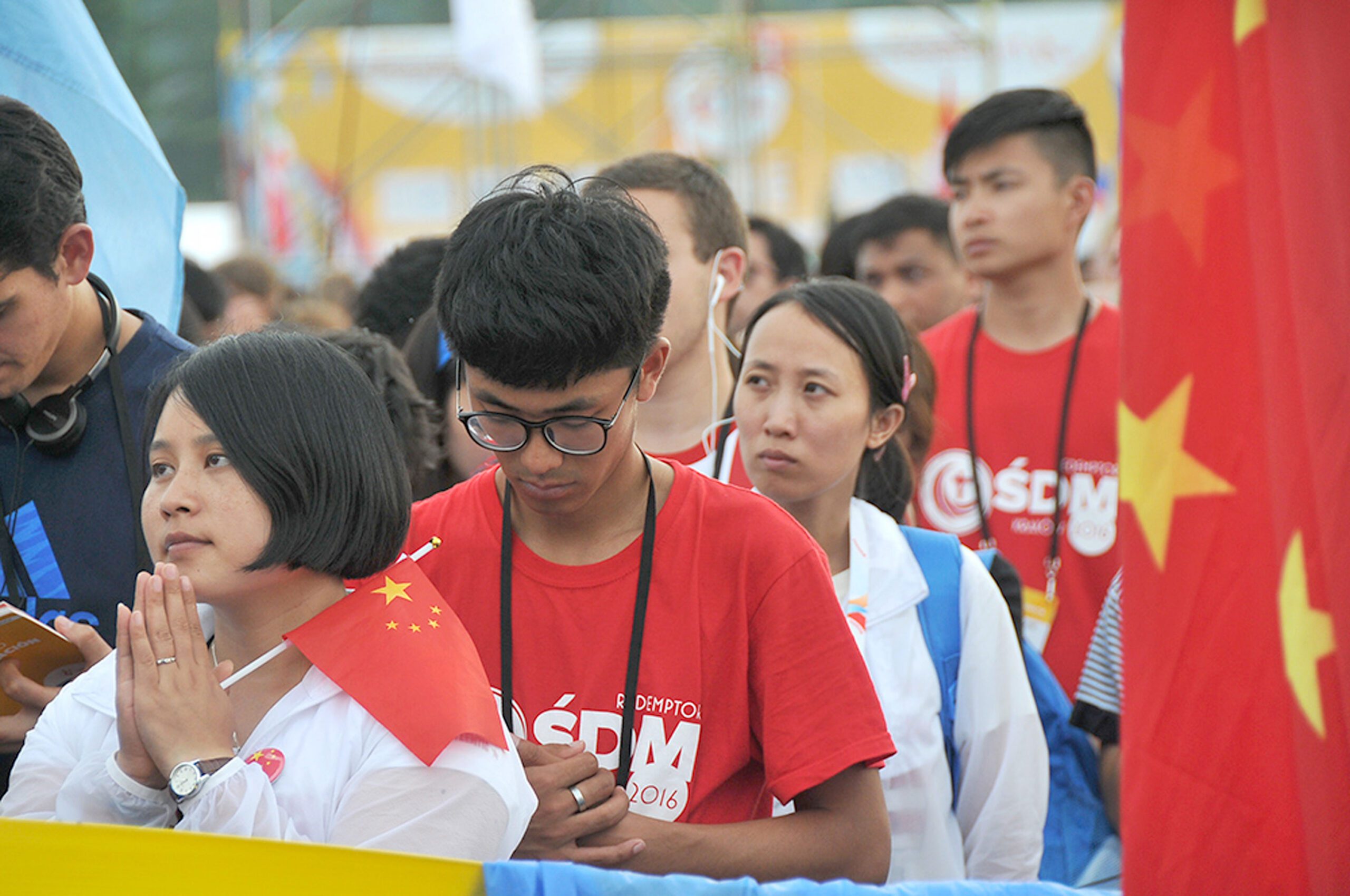
Vocations to religious life are decreasing in China, too. The one-child policy is a reason. But, for Sister Li, secularism plays a bigger role in a country whose economy gallops like a horse. It is already the world’s second financial power. However, she sees signs of growth in either the Government or the Church: “The Government is becoming more humane and starts recognizing the charitable work.” About the Church, she thinks it is at a turning-point: “It is growing and hopeful. Instead of focusing on problems and criticizing as it used to do, now it is less judgmental, more positive and focusing on what it can do to respond to God’s grace. This will allow the Holy Spirit to take the lead.”