
Korogocho is one of the more than 200 slums of Nairobi. Housing some 120,000 dwellers crammed within one single square kilometer, it ranks fourth in the size of population after the slums of Kibera, Mathare and Mukuru Kwa Jenga. It is multi-ethnic, counting some 30 ethnic groups: Kikuyu, Luo and Luhya are among the major ones. Seventy percent of its population is less than 30 years of age.
It is an illegal settlement born in the early eighties next to the only City Council’s dumping site, which lies just across the much polluted Nairobi River, 8 kms away from Nairobi’s central business area. Dandora’s dumping site is the cause of great health hazards (dioxin and cancer), insecurity (Mungiki and hidden illegal firearms), exploitation of underpaid labor. It is a threat to public health, environment, and society by enticing children to street life and providing a safe haven to gun trotting criminals.
A few churches and mosques have joined the Combonis in asking the government to relocate it even if it is a food basket for desperate people. Some slum dwellers, starving to death, try to eke out a living there as scavengers. They compete for any organic bit with the big black birds locally called marabus or bongaus. They can be seen from a distance hovering over the place like GPS rubbish detectors.
EXPLORING MISERY
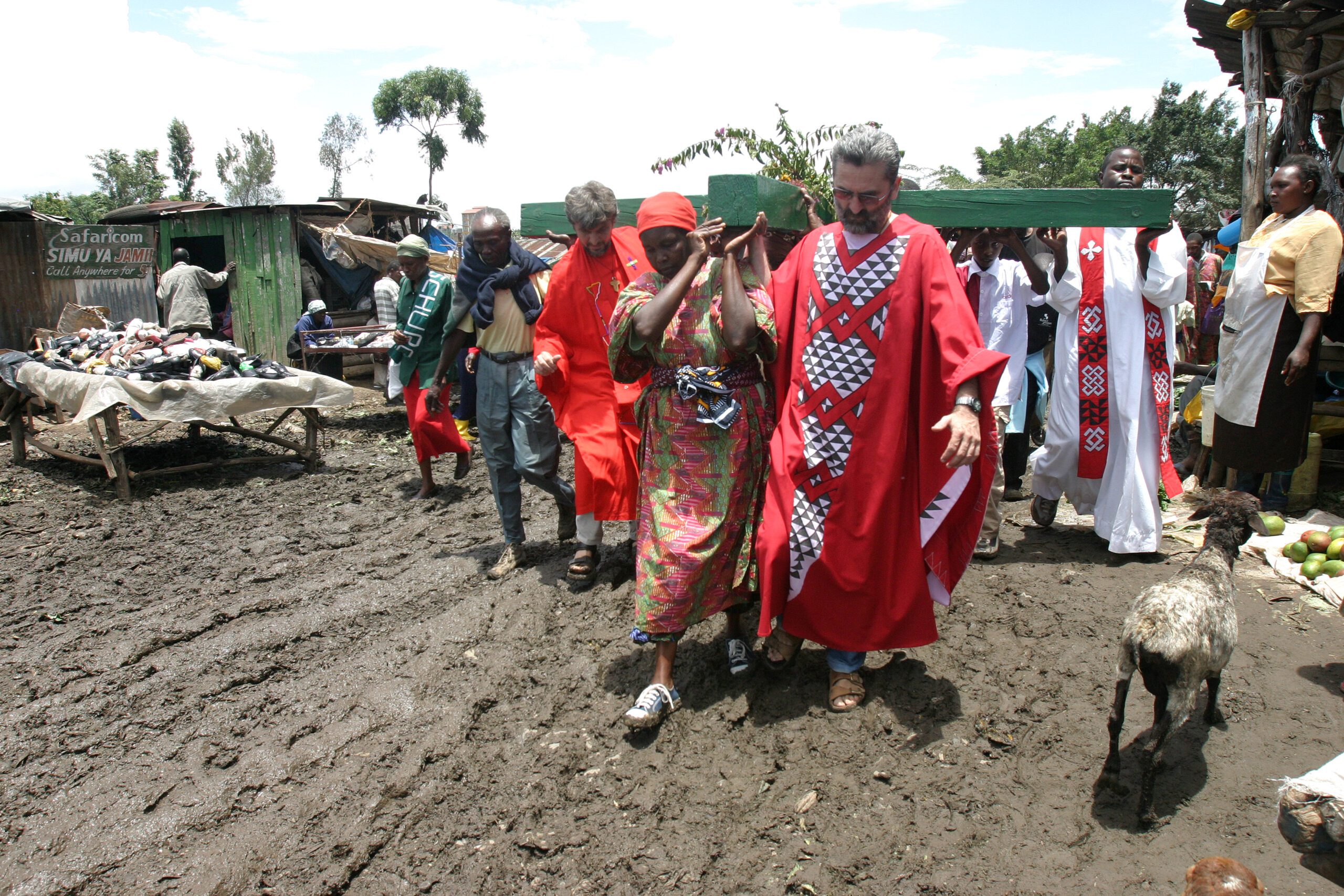
The slum streets are dusty in the dry season and muddy during the rainy season. The sewages run at open sky. A walk can be very dirtying and foul smelling. Besides the sewage stench, there’s the smell of the spices and dry fish being sold everywhere. Driving through the slum is an exercise of patience and public relations as one has to negotiate the right of passage in the crowded streets with the people, the goats, the merchants with their supply carts and all roadside entrepreneurs trying to improve their welfare − carpenters, welders, construction workers. The slum teems with life and tiny business activities.
The slum’s socio-economic reality is very poor: there are no public services and the absence of the State is keenly felt. There are two City Council schools with over 4,000 children and many other informal private schools are mostly inefficient. Over half of Korogocho’s land is State property and the rest is privately owned by a single person. Then there are those who are allowed by government officials − in exchange for kickbacks − to build and rent shanties to the poor for at least 300/400 shillings. These shanty-owners really take advantage of the people’s misery.
According to reports, “the most relevant problems are: prostitution, unemployment, drug addiction, alcoholism, rapes, criminality and domestic violence. There is also a massive presence of street children who try to escape from police roundups in the city finding a hideout in the slums. Also, many illegal firearms find a place here, furthering criminality which is now moving to the city.”
COMBONI PRESENCE
Korogocho is part of Kariobangi Parish where the Comboni Missionaries have been present since 1973. They have accomplished a great deal of undertakings carried out by many missionaries of different nationalities who worked with great zeal, enthusiasm and foresight. The Comboni Sisters, also present in the parish, are very much involved in pastoral work and human promotion with a big dispensary and a dressmaking school for underprivileged girls from the neighboring slums.
The presence of Comboni missionaries in Korogocho was started by Fr. Alex Zanotelli who went to live there on January 13, 1990, after leaving the direction of the Italian magazine Nigrizia. He stayed for one year within the yard of the informal school for poor children. Then, he moved to Githaturu, in the old chapel which, later on, was replaced by a bigger one in the area of Highridge as the Catholic community increased numerically.
Meanwhile, Fr. Zanotelli rented a house in the most degraded slum area, where the community still lives. Some colleagues joined him for longer or lesser periods of time. He left for Italy in April 2002, after 12 years of wholehearted dedication and having ensured the continuity of the Comboni missionaries’ presence in bringing the Gospel to the dumping site.
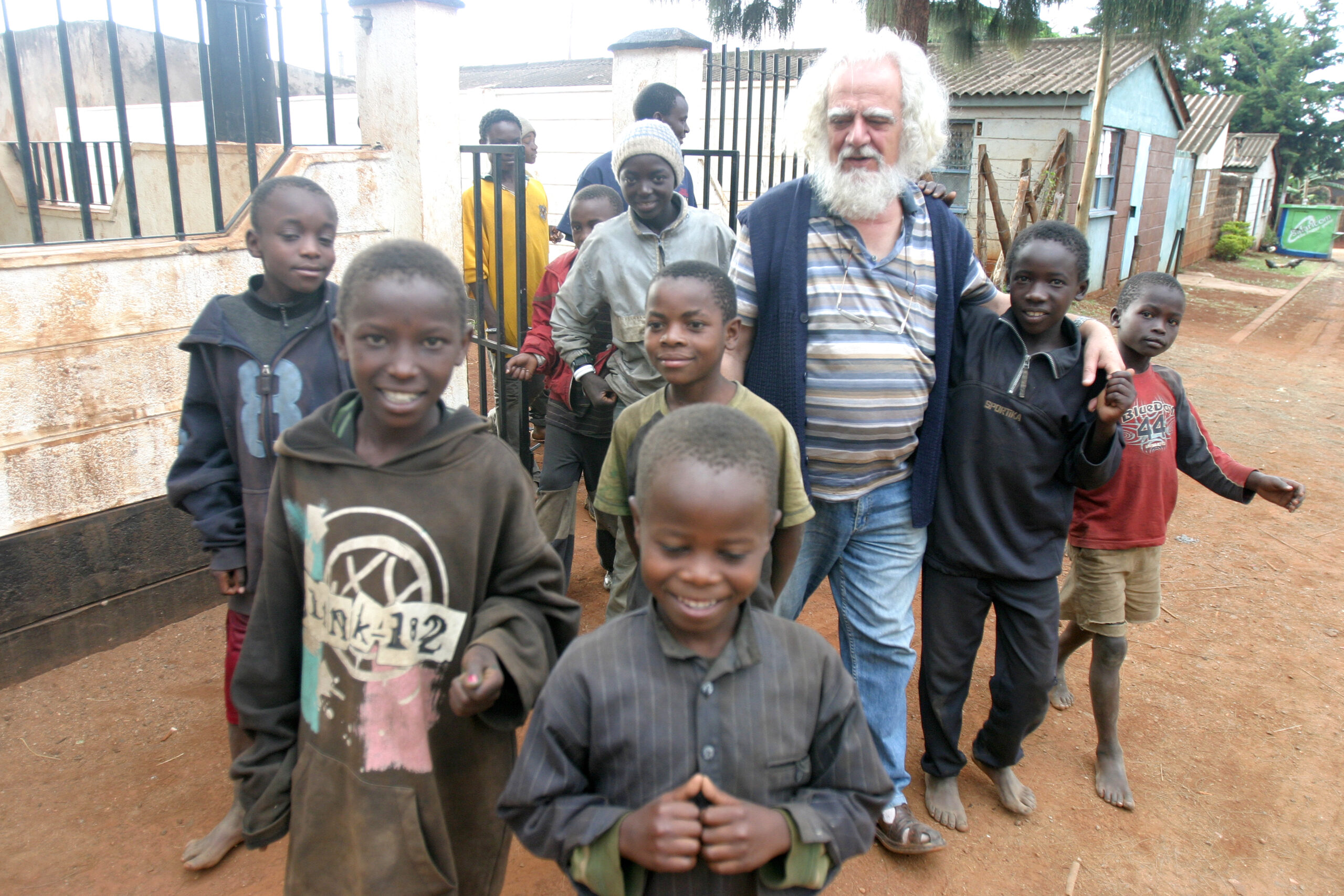
For the last 18 years, a small Comboni community has been living fully within the slum’s reality − in extreme simplicity, sobriety but, above all, seeped in spirituality, sharing and in solidarity with the slum’s poorest. The missionary presence, along with the growth of the Christian community, has addressed the pastoral and human needs existent in the territory. Along the years, many projects of human promotion have been realized like the informal school, the kindergarten, the rubbish recycling cooperative, the care for the sick and others.
A SIGN OF HOPE
Currently, the community is made up of Fr. Daniele Moschetti (working there since 2001), Fr. Paolo Latorre (since 2005), Fr. John Webootsa (since 2006), Bro. James Iriga (will be there for two years), one lay missionary, Gino Filippini, and a Jesuit pre-novice. (The community has hosted and accompanied, for periods of one year in turn, in the last seven years, some 22 Jesuit candidates). The missionaries do not feel like heroes, but they believe their presence is a sign of hope for the people.
Fr. Daniele Moschetti has been working there for seven years. His love for Korogocho started at the time he was studying Theology. During the first two years of his Scholasticate, he did his pastoral work in Kibera, Nairobi’s biggest slum. Then he worked there where he made his final religious profession. That moment in 1996 is still impressed in his memory: “drunkards, prostitutes and street children (who already belonged to the community) accompanied us to the altar.” After the ordination, he worked with the youth in Italy for 5 years before offering himself for this ministry in 2001.
Fr. Paolo Latorre, 40, has been there for almost four years. He entered the seminary when he was 24, after getting a university degree in Anthropology. He was drawn to the seminary by Comboni’s motto of “Saving Africa with Africans.” He studied Theology in the DR of Congo. After some years of work in Italy, he wanted to engage in urban ministry and made himself available to work in Korogocho following an appeal from Fr. Daniele. “I am very happy to be here even if it is not easy. I’d like to stay with people, especially the youth,” he says.
Fr. John Webootsa, 33, believes he can make a difference: “People here have been excluded from society. They are considered dangerous. They feel inferior. We are helping them to go out of poverty, to reconcile, to regain self-esteem and hope in spite of the many troubles they may be experiencing. This goes hand in hand with spiritual formation. I believe God loves them and has a plan for them.”
Bro. James Iriga, a 32-year old Ugandese, is the youngster of the community. He is the headmaster of Korogocho informal school.
A VIOLENT PLACE
Korogocho was one of the epicenters of violence that wretched Kenya in the wake of the last presidential elections. For the first time this year, the community of St. John the Baptist Catholic Church didn’t make the whole night Easter vigil for security reasons. During the upheaval, it lost around 150 catechumens (candidates for baptism): some were killed; others, either luos or kikuyus (the main adversaries) ran away afraid for their lives. Two months later, Fr. Daniele recognized: “There’s still fear and shame. Many young people participated in the lootings, rapes, killings… and they are not coming to church yet. We are trying to reconcile the tribes to rebuild the community and the nation.”
Some years ago, the slum was a no-go zone. Criminality has diminished, but the slum is not suitable for fearful missionaries. In spite of his ties with Korogocho − living there, knowing people, speaking Kiswahili fluently − Fr. Daniele has been also a victim of the rampant criminality: “I have been attacked four times. Last time, I was approached by a youth I was helping to come out of drugs, who prepared the way for two others with knives (one was killed a week after the incident). I was saved by the cross, literally: instead of being stabbed in the chest, it made the knife enter the hip.”
Fr. John was also attacked by youngsters who wanted his money and mobile phone. He did not get any help from the bystanders. He asked them why. “We do not know them,” they answered. He concluded: “People live in fear. I came to share my life with people to help them. If ever I had left because of this, that would have signaled the vagueness of my motives in being there.”
Fr. Daniele explains: “There’s every kind of inhumanity − killings, rapes, sexual abuse, muggings and assaults, domestic violence …. Korogocho has always been a very tough place. In the last years of (President) Arap Moi, who looted the country, this was the most unsafe slum of Nairobi. In 2005, things improved. But 60% of the people, most of them youth, are unemployed. They didn’t finish school and so they lack qualifications to get a job. Many cannot even afford the matatu (local taxi) to go to work.”
The slums are the poorest side of Nairobi. Together, they cover a mere 5% of the city’s territory. And their population is estimated at 2.5 million, out of the total 4 million Nairobians. Fr. Daniele expresses his unconformity with the situation: ”We feel very much neglected by the Government and the City Council. The animals in the national park live much better than the slums’ inhabitants. We ourselves are squatters here.”
The missionaries have been dirtying their hands and feet with the poor, but they feel the poor must be empowered and cared for by a more prophetic Church. Fr. Daniele does not have doubts: “Prophecy must be communitarian in the sense that it must be exercised by the whole Church. Kenya can be a rich country, but wealth is in the hands of 10% of the people. In these days, the Church fails to speak out because Kibaki is a Catholic. The Church has to educate the people civically to have a new kind of politicians and politics more concerned with social justice.”
A MISSIONARY CHALLENGE
The three missionaries talk about the slum ministry as a challenge, first of all for them personally. Fr. Paolo recognizes that it is not easy to live in poor conditions in order to be closer to people. Structures may limit relationships but not there because the house is always full of people who come for counseling and looking for any kind of help. “The challenge is to experience a bit what people go through to uplift them − materially and spiritually. It is not just to give them a better house, but to upgrade them to a dignified level,” Fr. Paolo explains.
Being a Kenyan, Fr. John doesn’t find life in the slum so difficult. But agrees that they are compelled to work, be open and transparent. And he adds: “Our presence is a challenge also to people − in the sense that it brings them to question our being here in spite of the adversities, living as an international and fraternal community.”
Other Comboni missionaries and the whole Congregation are reminded of their priorities. Fr. Paolo says: “It is important to be missionaries in places where people are in desperate need, to study the language and the context and give ourselves fully and not just be facilitators of funds for projects.”
Africa − the world in general − is moving to the cities. Missionaries have to reckon with such rural exodus. “What challenges me as a missionary,” shares Fr. Daniele “is that the poor are increasing, not diminishing. We have to continue among the nomadic peoples in order to challenge the Government to create rural development and avoid this massive migration towards the cities. Slum poverty is worse than rural poverty. People here are enslaved by the chains of drugs, alcohol, prostitution and, especially, poverty which is the root cause of all the problems. I am convinced that the slum ministry is the mission for us Comboni Missionaries.”
CONCERN FOR INCULTURATION
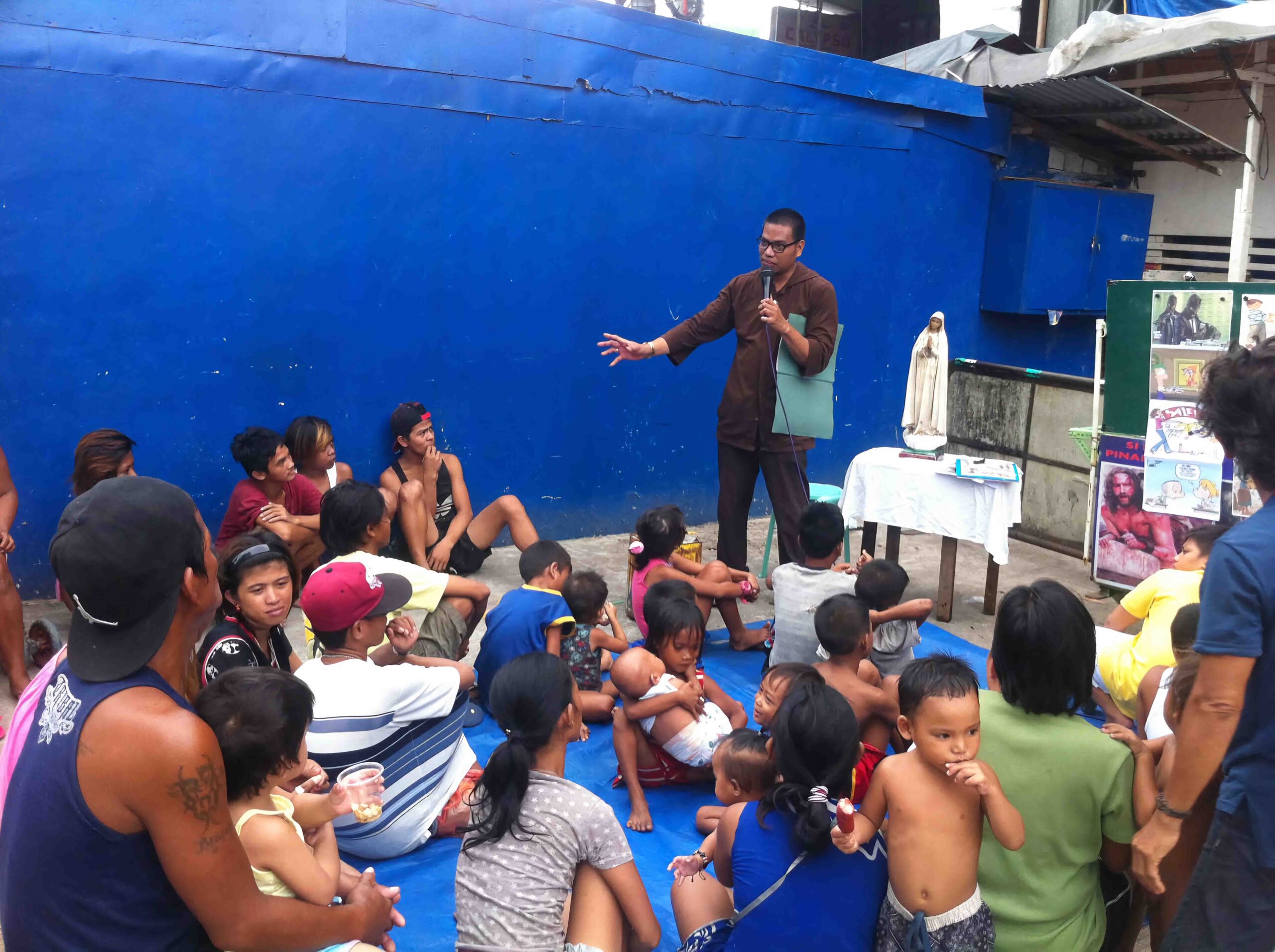
Korogocho has 26 small Christian communities. It is believed that the practicing faithful are around 3,000. A significant part of them are ex-prostitutes, drug-addicts, alcoholics, thieves and other “sinners” whom the community has ministered to. The pastoral activities are coordinated with the central parish of Kariobangi in a weekly meeting. They have youth groups − under and over 16 − liturgical dancers, altar boys and girls, catechism classes and Sunday school for the youngest. The children attended to in the school and the community are over a thousand.
To express concretely the charitable activity of the small Christian communities to the broader community, 16 services have been set up. They are autonomous, have their leaders and have days and times to meet and organize the services. Which are: Justice and Peace, Faith, Liturgy, Council of Leaders (Baraza), Catechists, the Poor, the Sick, Legio Maria, the Eucharist Extraordinary Ministers, Alcoholic Anonymous, Ushers, School, Funerals, Pro-life, Widows, Sport. There are also three associations: Catholic Women’s Association, Pioneers’ Association, and the Korogocho Women Awareness Program (KWAP).
The people’s leadership is expressed, for instance, in the composition of the Local Council (Baraza − 78 leaders, 3 from each Christian community, democratically elected every three years) and its activities. They meet every Wednesday evening for a couple of hours, twice a month to discuss emergent problems and possible solutions and the other two times for moments of spiritual and human formation open to the whole Christian community. This body is crucial for programming and realizing the evangelization and human development in the territory.
The community counts 80/100 new candidates to the catechumenate every year. They are conducted by 15 well-prepared catechists, all volunteers. The catechumenate lasts 20 months, in association with the Kariobangi Parish.
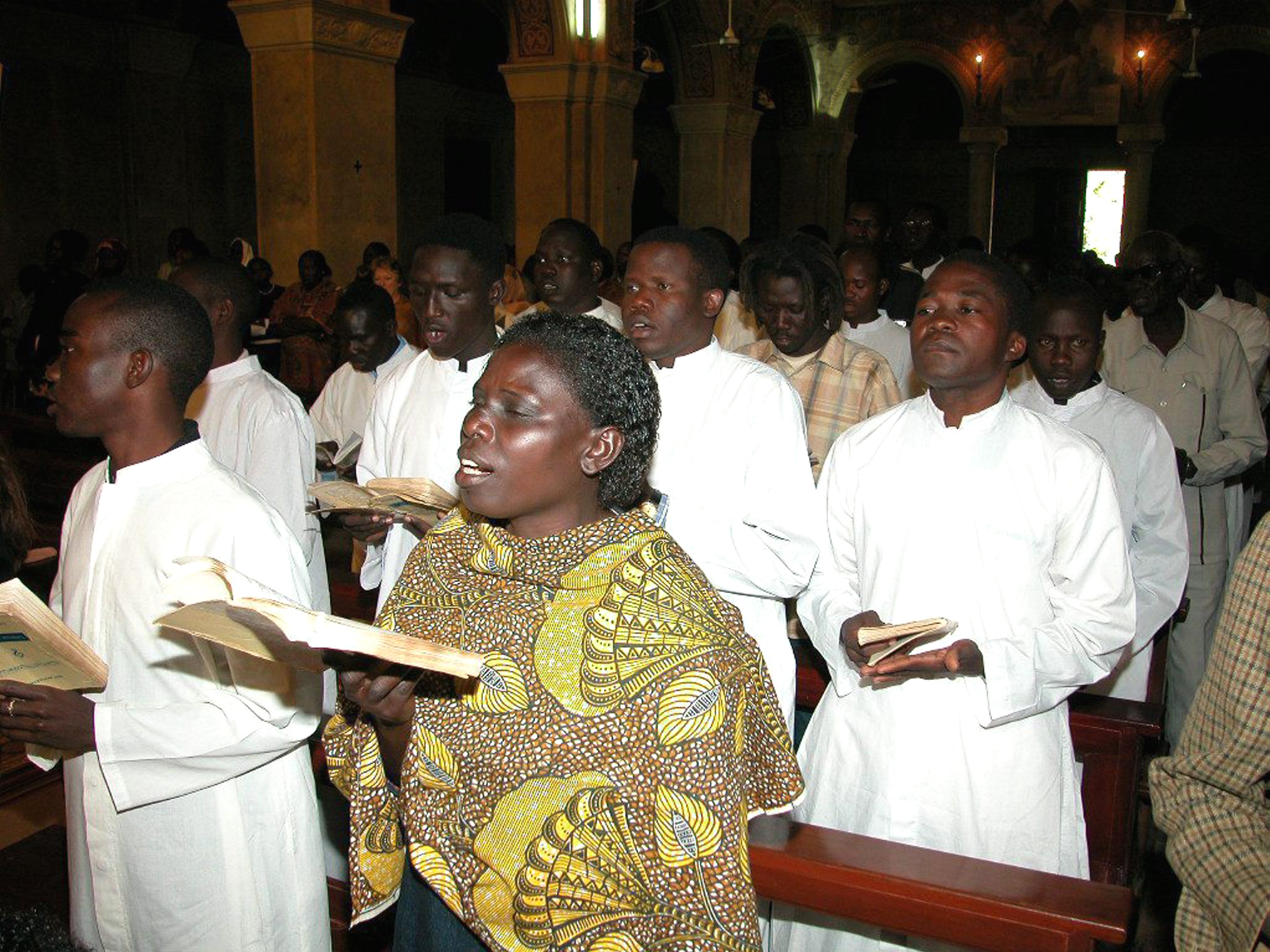
They celebrate two Sunday Masses in the amphitheatre-cum-church. One of them is called Misa ya Sinodi (The Synod Mass) which is particularly festive and enriched with symbols and signs meaningful to the Kenyan and African culture and traditions. It is the result of endeavors over the years made by the Christian community, jointly with liturgists from the Catholic university, priests and missionaries.
The community site states: “This Mass respects all the canons of the Roman rite, but is enriched by an attempt of inculturation that the people feel to be their own. Other prayers and liturgical celebrations have been prepared to answer the requests of our reality, such as the prayers for the sick and funerals. After a period of trial, the community wishes to submit it to the competent diocesan authority for approval.”
AN ENRICHMENT FOR ALL
Fr. Daniele’s time in Korogocho is nearing an end. He has asked to do a sabbatical year in the Holy Land to reflect upon and to write down his experience. What is his legacy? He does not like to boast about his achievements, even if he was given the Solidarity Award by the Italian Embassy last December 14. “I hope they will remember me for the love I shared with them.” But he prefers to emphasize what he has been receiving from people: “I have received a lot of love and support, especially when I was alone and when I was attacked. I have learned very much from the poor. I am indebted to them and I should give them much more. I have been very much enriched. I have asked to go, but I am not calling off the journey. I just need time to think on these last years.”
Korogocho has marked his spiritual journey: “I met Jesus here many times in the street children, in the single and dying mothers leaving orphans, in the young people with talents and without jobs because the labor market does not give them a chance. Jesus is here. We are also liberated from our small problems. To serve Jesus in the poor is to work for justice, peace and reconciliation.”
Fr. Paolo stresses his good fortune of being there: “I feel enriched because I am understanding better the Serenity Prayer (of Reinhold Niebuhr) − “God grant me the serenity to accept the things I cannot change; courage to change the things I can; and wisdom to know the difference.” By character, I am not comfortable to accept things I cannot change. Here, I confirmed the experience of God’s presence and fatherhood. God has helped me to go on. I have learned from people to accept, to pray with simplicity about things we usually take for granted!”
Fr. John is experiencing happiness and fulfillment in his work: “I feel happy and fulfilled as a missionary. I see the relevance of being a missionary here and giving my life for people. This is a place where we can share Comboni’s charism of liberation and empowerment of people.”