Masbate, one of the archipelago’s poorest islands which is also known as its rodeo capital, hosts two Farms of Hope – one for boys and one for girls. The third Fazenda is in Naga. They are therapeutic farms which aim to help young people to recover from any kind of enslaving addiction and regain joy and freedom. Besides, through dedication and work, the farms are setting an example of what could be done to increase food production and promote rural development in the Philippines.
The Masbate farm for boys, located 41 km away or one-hour driving by car from the island’s capital, is a good example of what can be achieved in the country’s fertile soil. Fazenda is a “tax-free” farm. Being a National People Army’s area, it is believed that all the farms there pay revolutionary tax – but not Fazenda which has the respect of the NPA since the beginning, allowing it to pursue its mission without political constrictions.
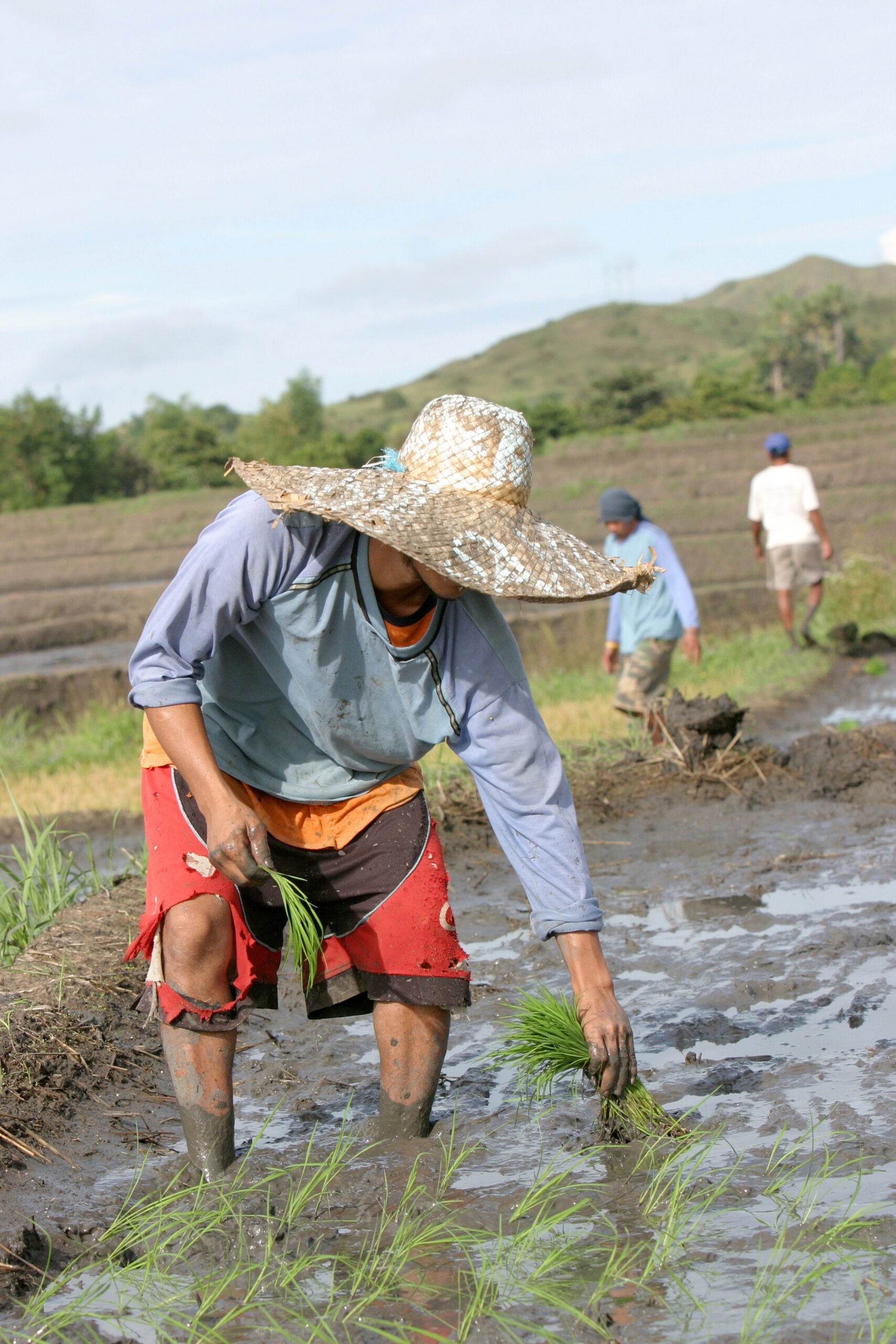
Roland Mühlig, who was part of the pioneering group that arrived in 2003 and now functions as its coordinator, leads a tour around the sprawling 240-hectare farm where agriculture thrives. Practically, the whole of the area is utilized. Between 15 and 18 hectares are used for planting rice. Other plantations, mostly vegetables, occupy one hectare. The vast majority of the land – around 220 hectares – is pasture to feed the 300 heads of cattle.
RICE PLANTERS AND EATERS
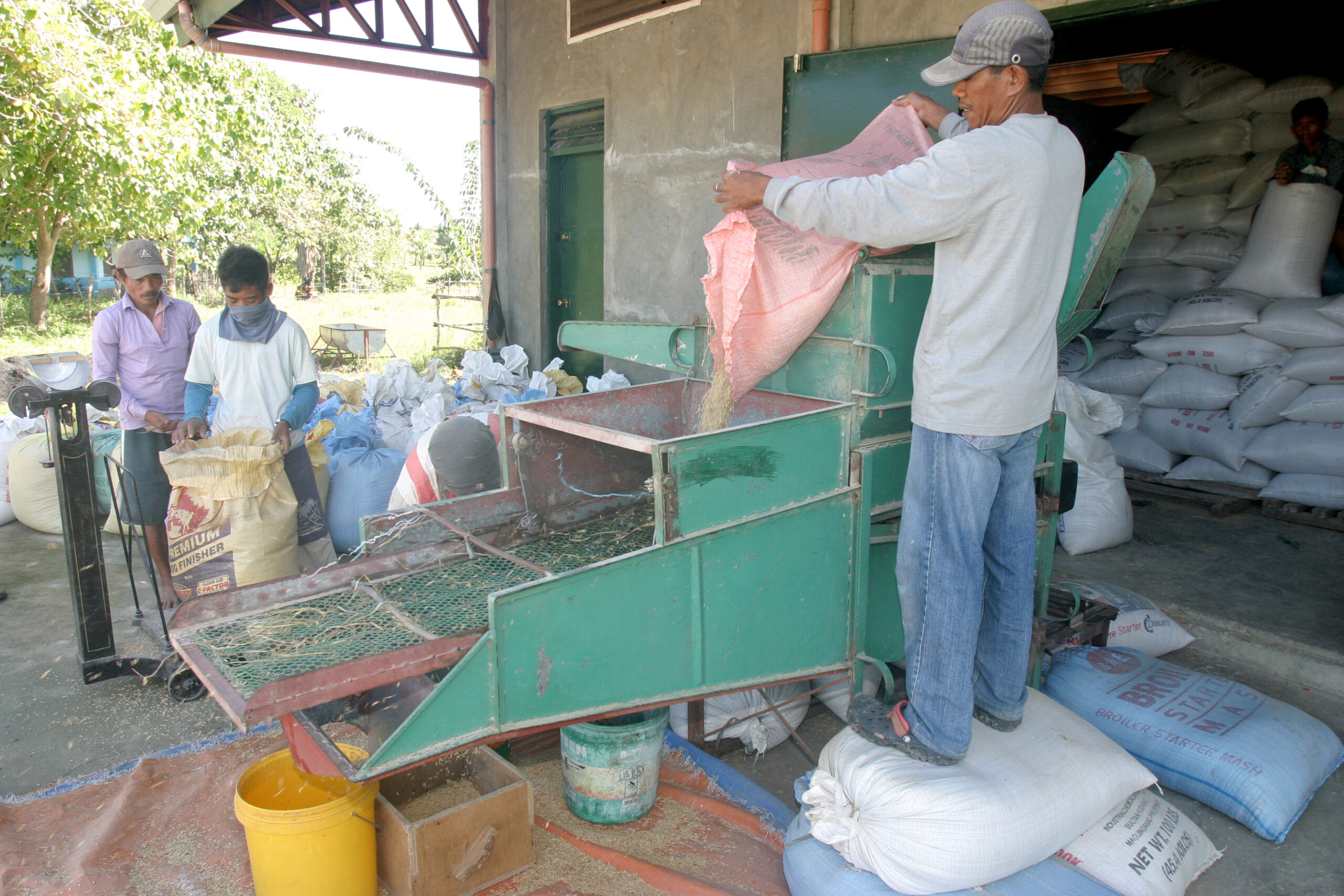
Their rice production – enough to feed the residents and to sell – makes the visitors think that the Philippines could easily lose the title as the world’s top rice importer! In the first harvest, they get above 2,000 bags of palay (each bag has around 44 kg) that they convert into around 1,300 bags of rice. In the second harvest, normally less abundant, they get around 1,500 bags. They collect around 3,500 bags of palay yearly. They consume the equivalent of 1,000 bags of palay yearly, that is, around 100 kg of rice per week.
They sell around 1/4 of the production as seed, which gives them a 20% higher profit. But, this requires knowledge, good management and facilities, because the rice has to be tested in the laboratory and be qualified. If it doesn’t pass the standard, it cannot be sold as seed. Therefore, they have to be well-equipped in treating the rice. They have a dry pavement, three warehouses for storage, a mechanical dryer in case it rains and a double-passing rice mill that produces high-quality rice (better than most of the rice produced in the area).
When the Fazenda team arrived in the country to put up the farm, they were quite ignorant about rice planting and they had to learn to produce the islands’ irreplaceable staple food. They were lucky to know and earn the friendship of Engr. Jonel Orteza from the Department of Agriculture of Masbate, who has been helping them immensely since then, especially in learning the techniques of planting rice and improving the area and its facilities – for which they are very grateful. Engineer Orteza visits them almost weekly.
MILKING COWS
The farm is a cows’ kingdom. They milk 14 cows which give them almost 200 liters of milk daily. Partly, it is consumed by the farm residents; partly, it is processed to make mozzarella/cheese. All the rest is sold: 80% as flavored and 20% as plain milk. Most is sold in the farm’s shop in the cathedral’s compound; the other 25% or so, in Manila or in other locations where the boys come from. They make cheese out of the surplus milk production because it is easier to store.
To make the mozzarella, they use biogas from cow dung. They have built a small biogas digester next to the byre so that energy doesn’t go wasted.
They sell the cows’ offsprings (yearlings) at the age of 8 to 12 months, when the animals weigh between 180 and 250 kg, to Batangas – to be fattened and slaughtered to supply the Manila market. They have around 100 calves a year. Sometimes, they sell the older cows to improve their blood lines.
They have an improved race, compared to native cows. Roland tells the story of how it came about: “When we arrived, we had native cows on the farm. Since I like milk a lot, I pleaded with Alex (Alexandre Falcão) who was with us then (he was transferred to a Fazenda in Brazil two years ago – Editor), to make a plan to, at least, get milk for ourselves. We challenged his pride since he is a vet. We started getting enough milk for ourselves and giving it away freely before it became a business.”
What made a difference and brought the project to a professional level was when they introduced the Holstein race from Germany, the world’s highest producing dairy animal. The German-born missionary doesn’t claim responsibility in the matter. “This is not my fault!” he says jokingly. They just adopted a government program that was made available by the National Dairy Authority and the Department of Agriculture, which were very much interested in increasing the milk production in the Philippines. According to them, 99% of the milk consumed in the country is imported from New Zealand and Australia and that is very expensive. They were interested in helping the farmers to improve their cows’ blood lines. They gave them the semen and Alex implemented the artificial insemination program. As of now, they have around 40 female yearlings under that insemination program. These cows produce much more milk than the Brahman cows. Roland illustrates: “Our best native cow, one time, was giving 5 liters a day but, normally, they give below 3 liters. Now, we have an average of 14 liters per cow and our best ones give more than 20 liters a day.”
LITTLE ZOO
Besides the cows, other animals inhabit the farm and provide meat for them. They have around 40 sheep – a small flock. Roland recalls: “We started with five, but now they are multiplying. It is nice to look at them! They help to create a biblical scenery. They are not economical, because we are still improving the number.”
They have pigs, too. Four are sows. It depends on how many piglets they give birth to. Generally, they have around 30/40 pigs. Roland comments that they are not cheap to maintain. They have to buy the feeds because they are quite sensitive, and it is not always easy to find a good market for them. Since the actual size is a bit difficult to keep, they have either to upgrade or downgrade the sty. A great advantage of having pigs is getting fresh meat always. Before, they were slaughtering them and processing the meat, even making German-style sausages. But now, they have moved the meat-processing work to the Naga farm.
They have some native chicken running around. But, they would like to make new attempts to produce chicken, at least, for their own consumption. Being in a small island, it is not easy for them to get ration supplies. Most of the chicken and eggs are imported from other islands. If they are home grown, food safety is ensured: they would know what they are eating. Roland muses: “Sometimes those in the market are real ‘chemical bombs.’”
The fish for their meals comes from… the irrigation tanks. Some years ago, they threw some tilapias there and now they are teeming as if they were fish ponds! The boys like to catch them with the fishing rod. When water is low, during summer time, they use the net.
SHIFTING TO ORGANIC FARMING
Fazenda is trying to shift to organic farming, even though it is not totally easy to go into it. Various initiatives are being implemented. One of them is the production of vermicompost. With the use of earthworms, compost is produced – a key ingredient in organic farming as well as, for instance, the rice husks. The earthworms should multiply, double in weight and volume every 45 days. Then, there’s a method to separate the compost from the worms. Having enough for their needs, they could sell either the worms or the compost for which there’s a good market. Farmers are looking for compost because, after some time, the chemical fertilizer destroys the soil – it becomes more and more acidic and dries out. Roland comments: “Mentality is changing and more and more people are looking for compost. There’s more demand than supply. To replace all the chemical fertilizer with compost, we would need tons and tons of it – which we would not be able to produce here. Therefore, I don’t think we will pursue the idea of selling the compost.”
The other ingredient very much used as fertilizer is the rice hulls (or husks) when they are carbonized (not burned). Normally, they are used for seed beds. The seedlings can be easily removed because the roots are not as firm as when they are in the ground.
Another effort is to improve the pastures. Most of the cows are in the fields and they have no special feed. Those in the shed are fed with chopped napier grass. The mother cows and the new born also eat cobra corn, that Fazenda gets from farmers around, and soya. They are trying to improve the pasture with humidicola grass that has a higher nutrition value than the native grass.
One hectare of native grass is good for one cow; the same space of humidicola grass is good for one and a half. In that way, they can almost double the number of cows. Little by little, they are converting the whole pasture into a highly-valuable pasture. Many farmers around have much more land than Fazenda has, but they have less cows, because they are not doing proper management, comments Roland.
INSPIRING FARMERS
Are they setting an example for people? Roland answers: “I was not aware about that but now people are telling me that they are being inspired by our farming. Even the former bishop was often recalling the example of Fazenda in his homilies, not so much about the rehabilitation factor, but because of its agriculture programs. He was challenging people to improve. He was telling them: ‘Look, in Fazenda, they have the same soil like you have, but they are able to plant and get results!…’ The principal of the nearby primary school told me that, in the village, people were planting vegetables in small scale, but their mentality changed due to us. This is a nice side effect!”
The main purpose of all the projects is to make the farm financially self-supporting to allow it to continue its rehabilitation mission. Weather conditions may hinder them from achieving that goal: “Last year, for instance, there was a long dry season which affected the cattle, rice and dairy production. But there are times we are able to be self-sufficient and to sustain ourselves with our work.” If in need, they get some donations, mainly from European friends. But they try to minimize this as much as possible.
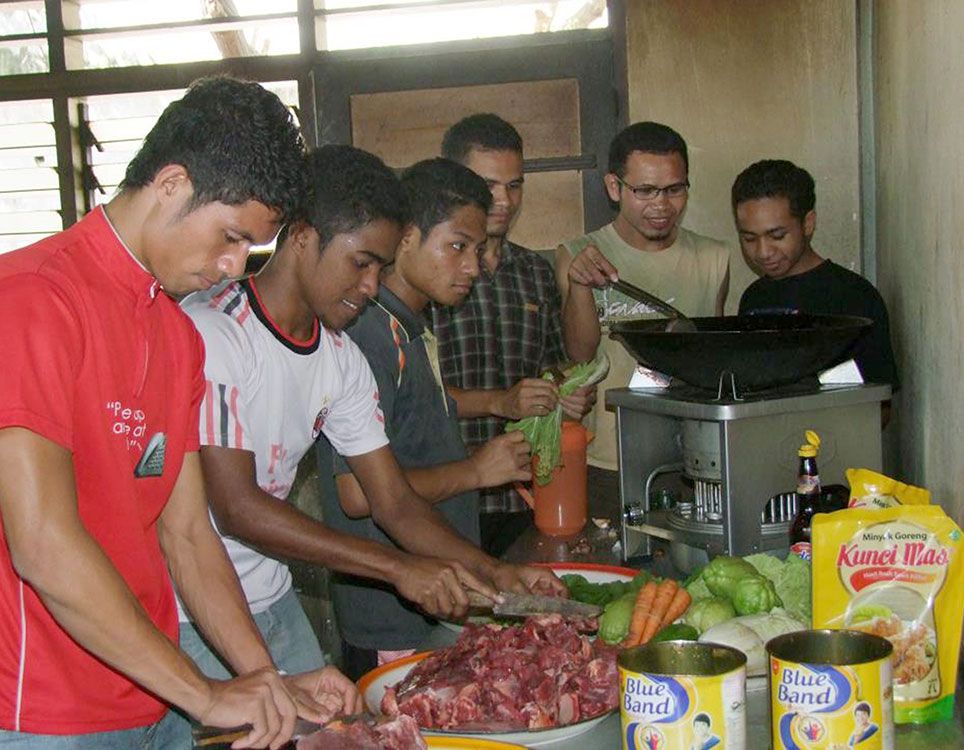
They need workers to run all the projects on the farm. They have around 30 permanent workers. When they are planting rice, they need to hire more. The great challenge is to involve the resident boys and have them participate in all the projects. Roland spells it out: “It would be easy to run the farm just with the workers and earn good money. The challenge is to involve the boys in the work and in all the process – not just telling them to do this or that, but encouraging them to cooperate, to do their part and helping them to discover the joy that comes from working.
Work is not something to be avoided but something that adds value to one’s life. In short, the challenge is to make the youth an active part in the running of the farm.”
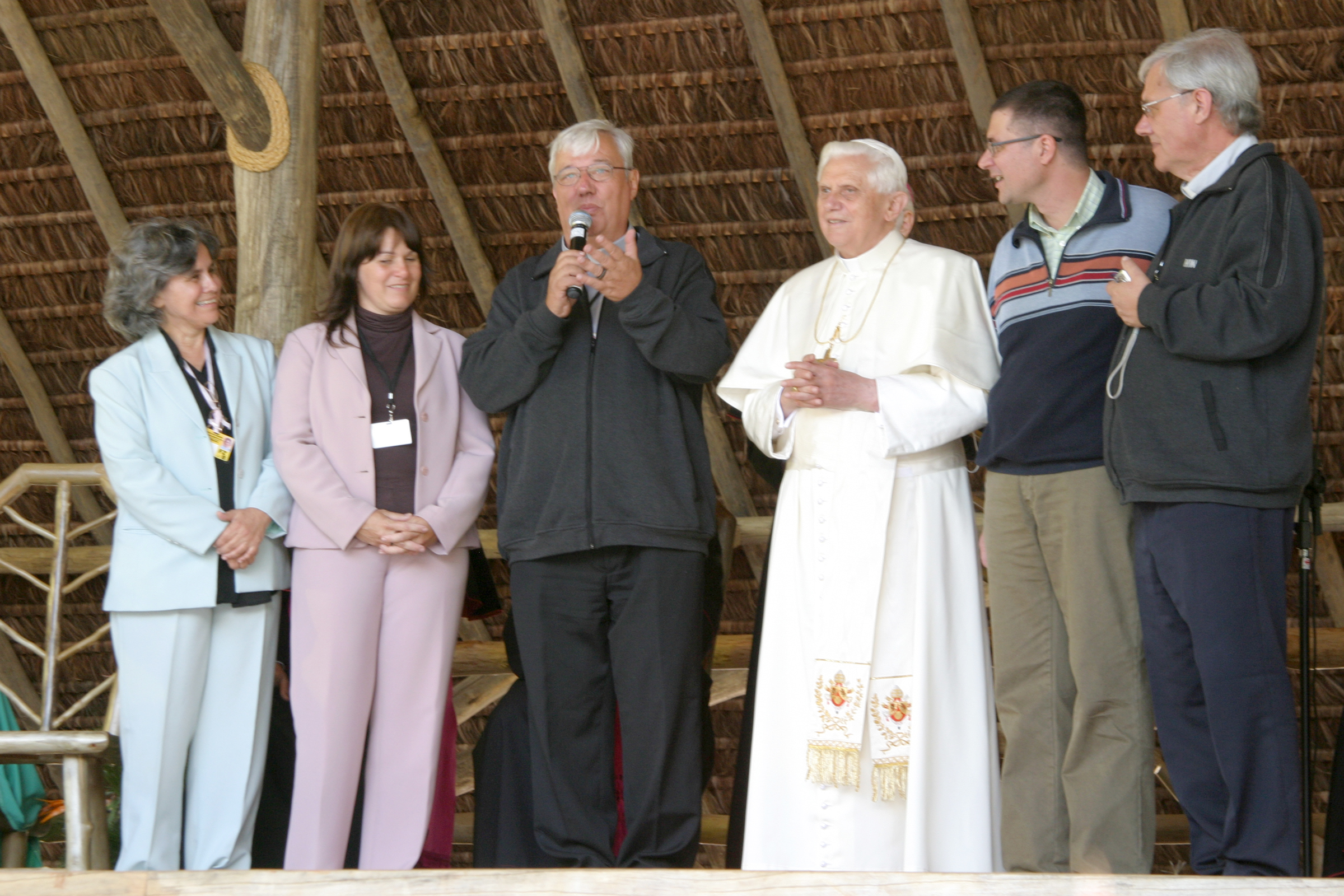
The farm was donated by a Fidei Donum Italian missionary, Fr. Pierino Rogliardi, who is also a member of the Focolare Movement. He is a man with an enormous heart who previously had unsuccessfully tried to bring some development to the area. But now, his dreams are coming true, thanks to the work and commitment of the Family of Hope missionaries.