What is the Family of Hope and how did it come about?
– The Family of Hope is a new community whose members come from more than 10 countries with a common goal: to devote their lives to God giving hope to as many young people as possible, especially those who have been trapped in addiction and are experiencing terrible personal hardships.
Its origin was an evangelical experience made more than 30 years ago in a parish community, at the time headed by a Franciscan Friar, Fr. Hans Stapel, who led his parishioners to see the presence of Jesus in the face of neighbors, in the light of the Franciscan spirituality and that of the Focolare Movement. I was one of those parishioners. Driven by such motivation, I met some young people who were on drugs near our parish church. After creating a relationship of sincere and free friendship with them, several of them surprised me by their desire for change. From this experience, which happened in 1983, the first community of life was born and, without realizing it, became the seed of a great tree that has been spreading its branches throughout Brazil and other countries – with more than 80 therapeutic communities which host over 2,500 youth willing to recover from drugs and alcohol. While undergoing this experience, the volunteer members developed an awareness that this was not just a social or philanthropic experience, that was named Fazenda da Esperança (Farm of Hope). They grew as members of a community of life, affiliated to the Church and composed of celibate members, couples and priests, which was named Family of Hope.
What is the Family of Hope’s position in the Church? What is its specific charism?
– The Family of Hope is considered by the Catholic Church as a new community. It is recognized by the Pontifical Council for the Laity as an international association of the faithful. In its statutes, recently approved by the above-mentioned council, it is written that its specific charism is to give hope to all those who have lost it due to the evils around that affected their lives.
What kind of relationship do members have with the institution?
– The members of this Family are linked to it as members of common life, living full time within the therapeutic communities which welcome and help young people to overcome their drug and alcohol problems; or as volunteers of hope, living the spirit of our Family inserted in the society and, according to their possibilities, devoting time and resources to the welfare of the communities of the Family of Hope.
How many are its members?
– Currently, there are over 600. All the members follow the same path of adhesion which consists in three steps which are as follows:
a) Pact of Unity. It is made by all those who, after a trial period at a Farm of Hope or at an entity associated with it, feel God’s call to be at the service of the excluded and to concretely live the charism of the Family of Hope. It demands an effort to live in mutual love with the other members. This covenant is renewed annually. At present, 278 members have entered such a pact.
b) Commitment. It is made by those who want to live in material and spiritual communion with the other members and take and follow specific tasks in the life of the community and in the Farms of Hope. They pledge to do nothing without ensuring the presence of Jesus, which means not making decisions on personal and community level, without first discerning in communion with the other members of the community. This commitment is renewed annually for a minimum of two years. The members with commitment are 204.
c) Promises: They are made by those who, after passing through the previous steps, and having matured in their spiritual, community and self-giving life, show that to live the charism of the Family of Hope is their vocation, regardless of the choice of a state of life. They express in writing their decision to promise fidelity to the charism of the Family of Hope and after renewing it for five years, they may ask to make a definitive promise. In order to radically live the Gospel and follow Jesus more closely, they are called to live the spirit of the evangelical counsels of poverty, obedience and chastity, according to the reality of their own state of life and as either member of “common life” or “volunteers of hope.” The members who made the promises are 124 (of these, 44 are celibate members who made vows, 12 of whom are priests).
You entrust great responsibilities to young people, often ex-addicts and without much experience. What is the reason? Is taking risks part of your charism?
– Yes, we like to empower young people, even though they don’t have all the experience needed because this also happened to us in the beginning. We were all young and delighted with the fruits that the Gospel life was granting us. Most of us were in our 20’s, several of whom barely out of the drug problem. Community life and concern for the daily bread were enchanting us in such a way that we made the decision not to worry about our professional and vocational future. We were convinced that God, whom we sought to love in the young people we were welcoming to our communities, would reveal Himself, showing us the path we should follow at a personal and community level. And so it happened. In addition to discovering a vocation and lifestyle, we built together an institution which today houses hundreds of young people who want to get rid of their dependence and spend their lives for others. It is for this reason that this way of being, which permeated the beginning of this Family, is also offered to all those who begin their journey – as a stage of training for this vocation. Young people starting their journey to become members of this Family, early assume responsibilities in the various Farms of Hope (including the newly-opened one of Naga where a team of young Filipinos are in charge). The aim is to help them exercise self-sacrifice and to face the challenges that the tasks require. Obviously, they are accompanied by elders and, after a while, go through a period of more intense training.
This way of giving prominence in the construction of this project to the youth “still inexperienced” is, no doubt, a risk but we are not afraid to take it since, from our own experience, we have realized that growth and maturation occur much stronger and faster when one has responsibilities. We think that such a risk is worthwhile, given the fact that the positive results have outdone by far the negative ones through the years. But it is also a risk we cannot escape, at present, because of the many real estates offered to us by bishops, governments and individuals, to establish new Farms of Hope.
If we had followed the pace of forming the youth first and then sending them, we would perhaps have only 30 operating farms. But since we have chosen sending them before forming, we have given God the chance to draw more young people and to them, in turn, the chance to respond positively.
We can effectively say that to take risks is part of our charism, because to meet the request of the Holy Father (made on 10.10.2010) “to give hope to as many young people as possible,” we had to give up the security that a diploma confers to expect the efficient outcome that a free and generous gift of a 20-year old can bring here and now.
What are the pillars of your spirituality?
– They are two: the Franciscan spirituality and that of the Focolare Movement. From the Franciscans, we have inherited and we try to live the embrace St. Francis gave to the leper, discovering that what was bitter became sweet. The fact that we are compelled to live with the youth 24 hours per day is inspired by the same attitude that Francis had when, together with his first companions, he decided to live among the lepers. It is an attitude that is not driven by a desire for social action but based on a spiritual attraction through which one sees in the other the presence of God.
From the spirituality of unity/communion of the Focolare Movement of Chiara Lubich, we have learned and we try to live the most effective way of giving hope to young people who come, morally destroyed, into our houses, that is, the living experience of the Risen Jesus among us that can be felt through the concrete and daily exercise of mutual love. And also in the daily experience of trying to see the presence of Jesus in every pain or suffering inside or outside us. This is done in a simple way: choosing every day a phrase from the Gospel to put into practice and then share with the community members the fruits of such practice.
Does the Family of Hope have a special dream for the future?
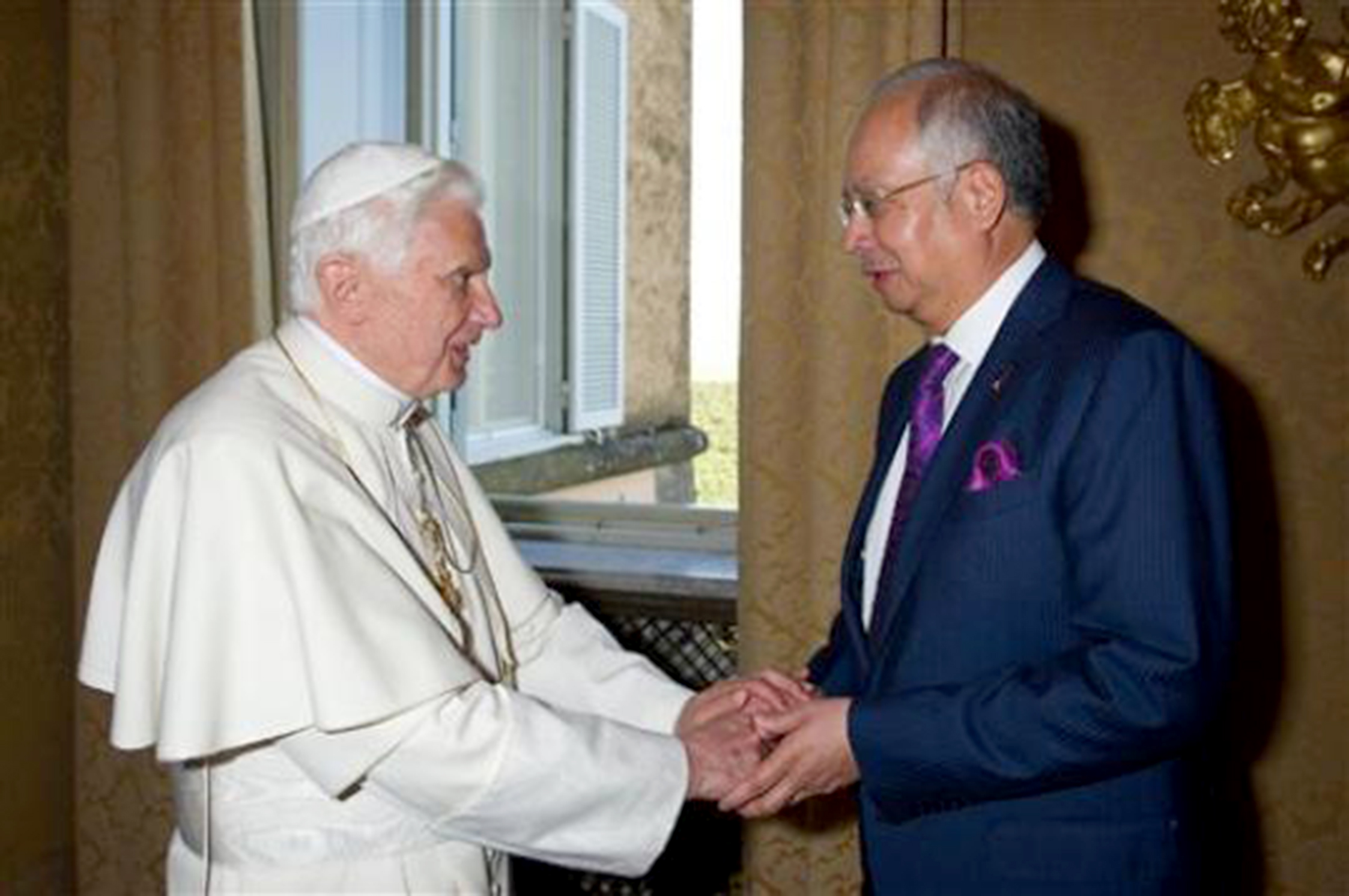
– Yes, we have: the one the Holy Father himself has instilled in our hearts in October 2010, during the celebration of the Family of Hope’s pontifical recognition. The Pope’s message, in his own handwriting, stated: “The Pope counts on you to bring the Hope, Jesus Christ, to as many youth as possible because it grants true freedom that transforms the present moment and shapes a better future.” This became our dream, a dream that is only possible to accomplish with a divine intervention. Such a dream justifies opening as many farms as possible.
How many farms do you operate in Brazil and abroad?
– At the moment, we have 81 farms in the world: 57 are in Brazil and another 24 in countries such as Mexico, Guatemala, Uruguay, Paraguay, Argentina, Colombia, Angola, Mozambique, Germany, Russia and the Philippines.
Are your therapeutic communities successful? Do you have estimates of how many young people have been helped to overcome addiction over the years?
– The fact that, currently, over 30 properties have been offered to us in Brazil and other countries for the establishment of therapeutic communities, is an evident sign of success and credibility that naturally demands an increased responsibility. The more than 15,000 young people who journeyed with us during these 28 years are the living witnesses that the therapeutic communities work. Even those who experienced relapse or have returned to their old lifestyle often tell us that they can no longer be the same as before. They have acquired a new awareness that prevents them to go back to their old behavior prior to undergoing treatment.
What are the main initiatives undertaken by your institution?
– Firstly, we try to meet all bishops’ requests to open a farm in their dioceses. Then, we try to create a network of Living Hope groups near all our farms. Their aim is to support the youth who lived on the farm or are waiting to enter the program, and their families. They meet to continue their journey with the spirituality they have been initiated to on Fazenda. Currently, there are more than 100 groups made up of hundreds of youth and their families, especially in big cities. Another very important activity has to do with communications such as the continuous production of books and CDs that convey the concrete experiences of the members of the Family of Hope; and the preparation of TV shows which currently are broadcasted weekly in eight Brazilian television networks.