
At the end of the Bali conference, the UNFCCC Executive Secretary Yvo de Boer said: “This is a real breakthrough, a real opportunity for the international community to successfully fight climate change.” He went on to say that “the parties have recognized the urgency of action on climate change and have now provided the political response to what scientists have been telling us is needed.” I believe that Secretary Yvo de Boer was overly optimistic, as little of substance was achieved at Bali.
The build up to Nairobi in 2006 and Bali in 2007 was very different. The only major event in the run-up to Nairobi was the publication of Sir Nicholas Stern’s report in October, 2006. Despite Stern’s efforts to galvanize politicians into taking action to halt climate change, little was achieved due to the disruptive tactics adopted by the United States and their willing Australian and Canadian allies.
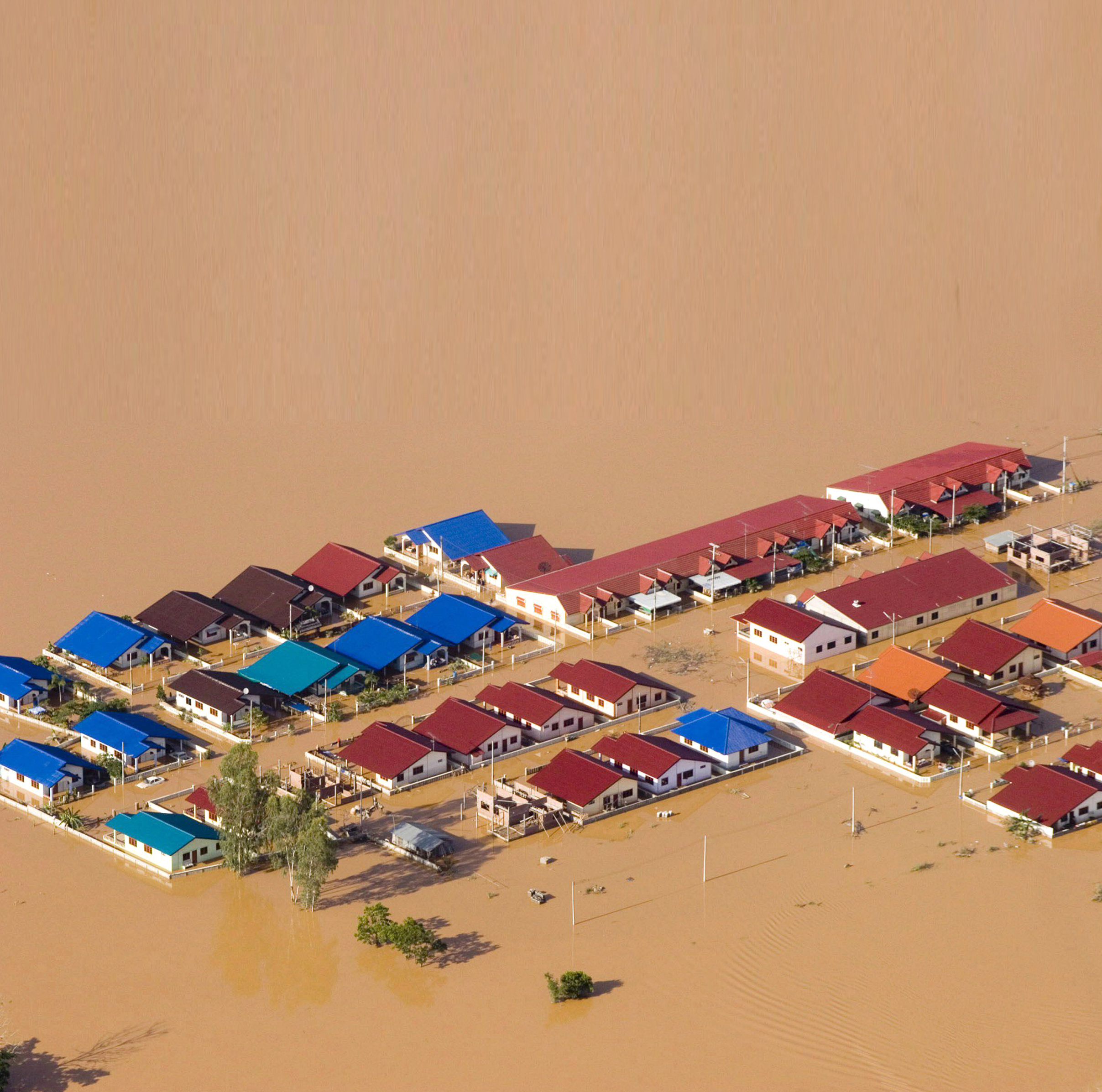
The year 2007, on the other hand, began with the publication of the 4th Assessment Report from the Intergovernmental Panel on Climate Change (IPCC). The message was stark: Unless greenhouse gas emissions (GGE) were seriously curtailed, the human community and the wider global environment faced a bleak future of devastating heat waves, floods, droughts, storms and forest fires which would cause death and displacement for hundreds of millions of people. Warmer global temperatures would have a negative impact on agricultural production, leading to hunger and malnutrition for hundreds of millions of people. A rise of between 1 and 2 degrees Celsius could cause the extinction of one third of the species on Earth, leaving future generations with a polluted and impoverished planet.
THE US OPPOSITION
The IPCC was adamant that, in order to keep the rise in mean global temperature below 2 degrees Celsius, major cuts had to be made immediately in greenhouse gas emissions (GGE). The mitigation target for rich countries was a reduction of between 25% and 40% on 1990 levels by the year 2020. If the rich countries grasped this nettle, which the EU was willing to do, then the expectation was that the G77 countries, made up of developing countries led by India and China, would also begin making mandatory cuts. These countries were adamant, however, that the West had to jump first. The US was not willing to accept binding cuts. This obstinacy by the US delegation continued throughout the Conference, ably supported by Canada and, to a lesser extent, Japan. The famous breakthrough only amounted to a promise by the US to participate in on-going negotiation. The US refused to agree to cut their own emissions which is what everyone else wanted. So, on the mitigation front, which is by far the most important element in stopping a runaway climate change, little was achieved.
The second goal set for Bali was to establish a legally binding Adaptation Fund (AF) to support poor countries which are being affected by climate change. Under Kyoto, adaptation funds were raised on a voluntary basis from a 2% levy generated on carbon trading projects. The UNFCCC announced at Bali that the world needed $40 billion to finance adaptation. The current value of the fund is a mere £36 million.
THE ADAPTATION FUND
Good work was done in Bali towards building the architecture of the Adaptation Fund. Firstly, AF was made directly responsible to the Conference of the Parties (COP). Furthermore, the majority of the members of the Board will come from Third World countries. Some Third World delegates were unhappy that the AF was to be “housed” temporarily at the General Environment Facility (GEF) of the World Bank. On the negative side, Bali did little to identify and develop new sources of income for the Adaptation Fund.
Speeding up the transfer of Clean Development Mechanisms (CDMs) to poor countries was another goal set for the Bali Conference. At the Nairobi meeting, many African countries complained bitterly about the fact that very few CDMs were directed to Africa, where the needs are greatest. The newly industrialized countries, such as India and China, were doing much better at attracting CDM projects. Poorer countries lacked the ability to access, design and deliver such projects. Similar complaints were aired at Bali.
TECHNOLOGY TRANSFER
The air of unreality about transferring low carbon technology from rich to poor countries was captured by Bjorn Sigson from the World Business Council on Sustainability. “I express concern about the transfer of technology being discussed in the governmental context as governments can basically transfer nothing.”* Sigson also reminded his audience that technology is owned by the private sector and, therefore, the government could not transfer it. He went on to say that, “the idea that rich countries should buy technology and give it to developing countries is completely unrealistic.”
The above exposed a major flaw in one of the basic assumptions about the place which CDMs could play in combating climate change and, at the same time, allowing poor countries to leap-frog from a carbon dependent economy to a low carbon one. Another contradiction with regard to CDMs emerged in Lisbon during the week of the Bali conference. The EU was renegotiating a trade agreement, that gives favorable access to European countries, with 78 poor African countries on condition that the EU got equal access to African markets. This means that the African countries cannot block imports or subsidize their own products. Every industrialized nation used protection mechanisms to develop their industries at the beginning of their industrial cycle. Now Europe wants to impose a free-trade ideology on poor African countries. Yet, these are the same countries which are talking about transferring CDMs!
A NEW ADMINISTRATION
The road from Bali will be rocky. There are no guarantees that a successful, comprehensive treaty, embodying serious cuts in GHE will be concluded by 2009 in Copenhagen. Negotiators can expect very little support from the Bush administration. One week after the Bali conference, Stephen Johnson, the administrator of the Environmental Protection Agency in the US, announced that the Bush administration will oppose the decision of California and 17 other states to regulate and reduce global warming emissions from cars and trucks.
In the light of this stubbornness, all eyes will be on next year’s presidential election in the US. If a Democrat wins, there may be some hope that the US will join in a comprehensive treaty. If a Republican wins, the chances of an agreement are slim.
*Andi Hawidi, “Businesses say no to techno transfer,” The Jakarta Post, Climate Conference, Bali, page 25.