Last February, in a meeting that gathered in Tokyo, representatives of 24 countries, the World Bank and a British institution presented a long report that drew a bleak picture and exhorted the international community to help fight opium cultivation and trafficking in Afghanistan. According to the report, the only way to do it is to invest more than $2 billion in irrigation, roads and other rural development plans that will allow poor farmers, generally living in the most remote and instable areas, to have choices.
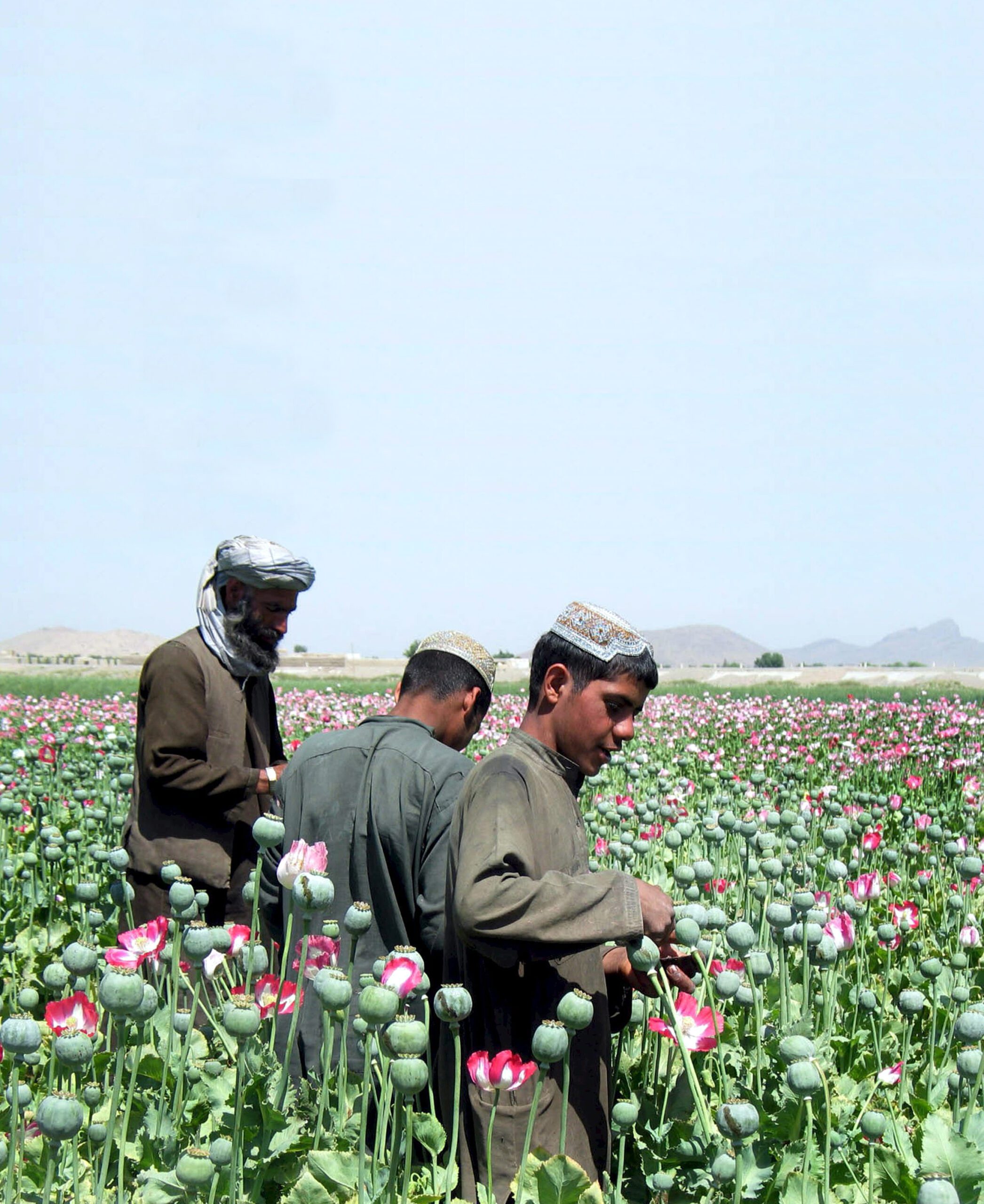
Actually, opium is Afghanistan’s main “resource.” But also a source of violence and instability: the traffic feeds terrorists and warlords, neutralizing the efforts of NATO forces that try to support a democratic but weaker and weaker government. Violence got worse in 2007 and, according to some NGOs, caused ten thousand dead in just the last two years, In Tokyo, the British analysts said that the military intervention alone has been unable to avoid the “creation of a failed state” in one of the most sensitive parts of Asia and the world: high and hard to control mountains link the country to Pakistan’s tribal borders where fundamentalism, violence and instability are also on the rise.
DOUBLING PRODUCTION
For the people, living is again becoming a nightmare, like during the Soviet occupation or the Taliban regime. But for the world, the nightmare is just a little more remote: after all, Afghanistan is the main supplier of the paste that is used to produce heroin, a drug that kills so many around the globe. And is also financing Islamist extremists that are spreading death and terror everywhere.
Last September, António Maria Costa, executive director of the United Nations Office on Drugs and Crime (UNODC) said that the Golden Crescent − the poppy-growing area in and around Afghanistan that includes Pakistan and Iran − is now the source of an estimated 93% of the world’s opium. The region replaced the legendary Golden Triangle − the northernmost reaches of Laos, Thailand and Myanmar − that was responsible for supplying more than 70% of all the opium sold worldwide three decades ago and now only a bit player in the global heroin trade.
According to the UN expert cited by the Agence France-Press (AFP), this is a milestone on the war on drugs. The victory was due to several reasons: “Economic pressure from China, crackdowns on opium farmers, and a switch by criminal syndicates to methamphetamine production; at the same time, some insurgent groups that once were financed with drug money now say they are urging farmers to eradicate their poppy fields.” However, if you think globally, the picture is not so bright. “This shift to Afghanistan has had major consequences for the global heroin market: a near doubling of opium production worldwide in less than two decades. Poppies grown in the fertile valleys of southern Afghanistan yield, on average, four times more opium than those grown in upland Southeast Asia.”
A MAJOR PLAYER
According to the report of the AFP writer, Thomas Fuller, there was a major player in this battle: “A striking aspect of the decline of the Golden Triangle is the role China has played in pressing opium-growing regions to eradicate poppy crops. A major market for Golden Triangle heroin, China has seen a spike in addicts and HIV-infections from contaminated needles. The area of Myanmar along the Chinese border, which once produced about 30% of the country’s opium, was declared opium-free in 2006 by the United Nations. Local authorities, who are from the Wa tribe and are autonomous from Myanmar’s central government, have banned poppy cultivation and welcomed Chinese investment in rubber, sugarcane and tea plantations, casinos and other businesses.”
The situation is not similar in the three countries. Cited by AFP, Pierre-Arnaud Chouvy, an opium specialist at the National Center for Scientific Research in Paris, remembers that “it took Thailand 30 years to wean opium farmers from poppy production, a transition led by the Thai royal family, which encouraged opium-growing hill tribes to use their cooler climate to produce coffee, macadamia nuts and green vegetables.” And he asks: “In Laos and Burma, we’ve had a very quick decrease. Is it going to last?” Burma, ruled by a military dictatorship that renamed the country Myanmar, remains the world’s second-leading source of opium.
In Afghanistan, the situation got worse in a very short period of time. It is true that, like before on the Golden Triangle, the poppy cultivation was traditionally the last resource of the poor populations of the north. But, in a question of a couple of years, it was extended to the more fertile and wealthier valleys of the south. Now, the opium poppies cover a much vaster area than the one used in all Latin America for coca plantations. Some reports warn that the number of labs used in the country to process opium in heroin is on the rise and that traffickers are stockpiling it − a tremendous weapon to finance global terrorism.
Let’s not forget the kind of money involved in drug trafficking. In a 2005 report, UNODC estimated that cannabis dominated the global trade with retail sales worth something like $113 billion; it was followed by cocaine ($71 billion); opium, heroin and morphine ($65 billion); and amphetamines ($44 billion). This almost unthinkable amount remained mostly in the hands of retailers: drug producers earned only about $13 billion of that money. Asia is at the forefront of the world trade not only in opium but also in amphetamines.
THE “ICE” ALERT
Reducing the supply of synthetic drugs is crucial if Asia is to safeguard decades of hard-won progress in drug control, warned António Maria Costa last May. He launched the alarm in a high level meeting in Beijing: “Asia has a problem with the illicit manufacture of amphetamine-type stimulants, particularly methamphetamine. In addition, relatively few of these substances are being seized.” The global market for amphetamine-type stimulants is driven by the continent and 55% of users − some 14 million people − live there. Most of them use methamphetamine, commonly known as “crystal meth” or “ice.” The UN expert also warned China not to export the chemicals needed in the Golden Crescent to synthesize heroin. Even because, using the some trade routes, processed opium was increasingly finding his way back to the East. “This is a sinister example of ‘what goes around comes around,’” he said.
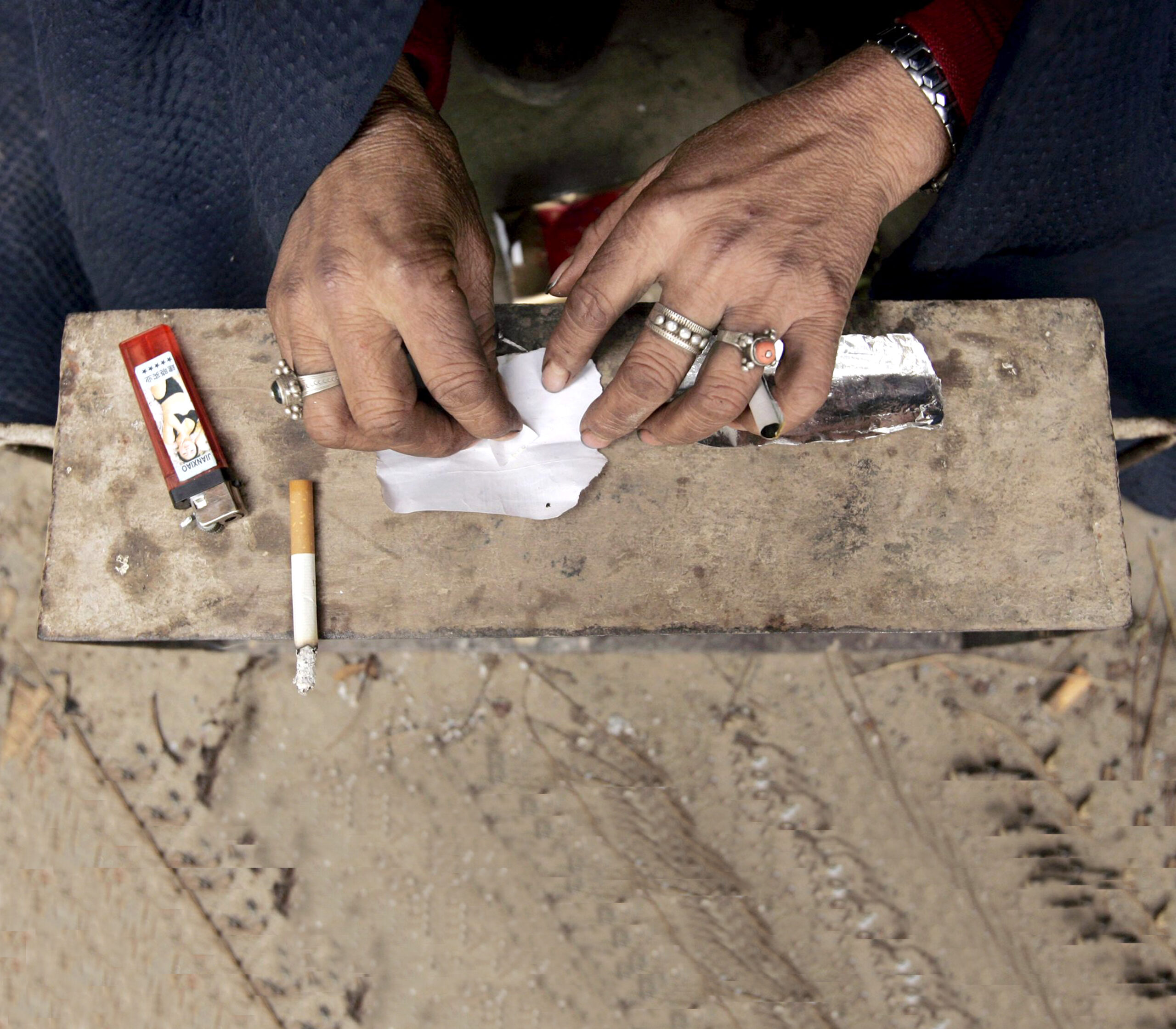
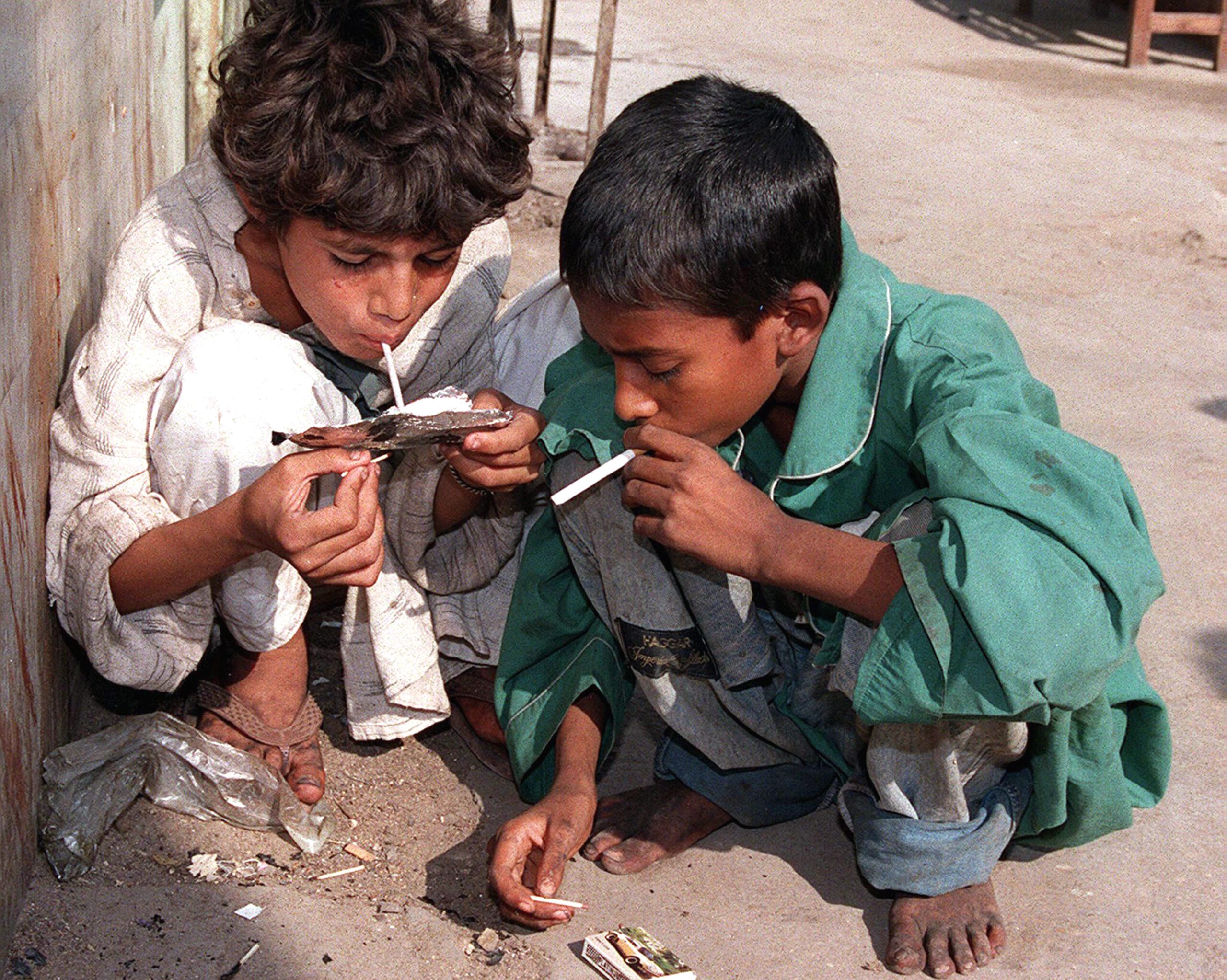
All kinds of drugs destroy lives, in a way or another, even if you tend to associate the more dramatic images of drugs to intravenous use and such killer diseases as AIDS − unfortunately, a terrible reality in the continent. But drug trade destroys also entire societies. As Pierre-Arnaud Chauvy noted in his Encyclopedia of Modern Asia, “drug production and trade in Asia thus evolve and adapt to the market, be it opium, heroin, amphetamines, or ecstasy. These types of trade and consumption, ancient phenomena, have benefited from world globalization and conflicts. Rooted in poverty, the drug trade quickly grows on the ruins of development and its related political conflicts. Wars have proven to nurture the drug trade, and drug profits prolong wars.”