Juan Carlo Gotinga is defensive. Because, after what happened, he would like to clarify that he was never unfaithful.
“No. I was not a two-timer,” he explained.
It started after high school, when a relationship he has faithfully and dutifully nourished for about two decades was sorely tested. Like many in the Philippines, Gotinga was born a Catholic. But as he grew up, he chose to take Catholicism.
“I was really religious ever since I was a kid. I was a sacristan and a member of the Knights of the Altar and was also a St. Francis Youth. My obsession really was on religious matters. I even planned on being a priest,” Gotinga said.
“Up until first year college, I was a sacristan every Sunday. I really tried to live out the faith. I did not treat it as a theoretical framework. I saw it as a life pattern,” Gotinga added.
The disengagement with Catholicism started during college, when Gotinga pursued Philosophy at the University of the Philippines. The gradual falling out could be narrowed down to two culprits: timing and circumstance.
“I was best in religion from elementary until high school. I knew religion like the back of my hand, or so I thought,” Gotinga said.
“I started harboring questions in college and then I was also approaching puberty so I was having different sorts of intellectual epiphany that there are new ways of looking at the world. It suddenly became convenient not to be a Catholic,” Gotinga recalled.
It was a potent brew: the heady days of youth, a fearlessly inquisitive academic environment, and a few personal crises. It was enough to shake one’s faith.
“There was a point during college when I was confessing every week. The priest was already laughing at me. From being an extreme believer, I came to the point that I don’t already know,” Gotinga said.
And it was amid these trying times that Gotinga found what he needed outside of his church. It was a timely but phased in intervention.
“I have friends who are Born Again Christians so when they go to church during Sundays I sometimes tag along,” Gotinga said.
Through intermittent church attendance and participation in Bible studies, Gotinga was gradually drawn into the Born Again faith after he became lukewarm to the Catholic faith. The actual day when he decided to officially identify with them is a telling moment of one of the strengths of his new religion.
“This is when I’ve really decided: It was my 21st birthday and my friends from theater who are also Born Again Christians threw me a surprise party. It was the first time I experienced that and to think that these people really went through all of that trouble just for me. It really moved me,” Gotinga said.
It was a sincere and moving gesture, just enough to finally tip him over to another newfound relationship. One that Gotinga, now 28, is still actively involved in.
“I suddenly became more willing to see the world as they do because they were just so good to me. They made me feel really important and good and happy,” Gotinga recalled.
“When I decided to convert, I’ve felt that my needs were being met and I was being given inspiration and the mental and emotional resource that I needed at that time. And while I can say that all of these theoretical stuff also sold me into it, looking back, realizing it now, it’s really more of the fellowship,” Gotinga added.
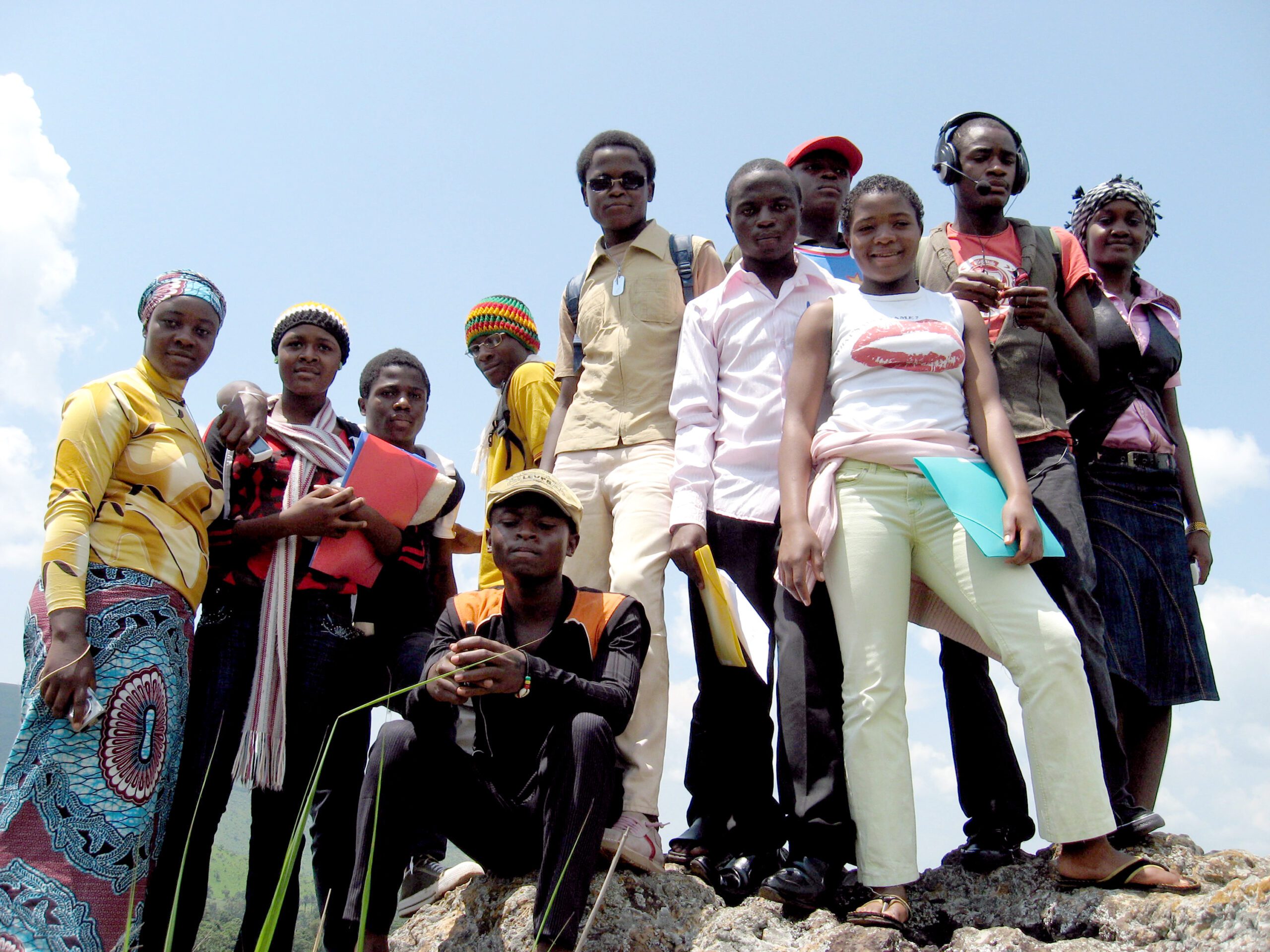
It’s becoming a familiar plot line. In a predominantly Catholic nation, more and more Filipino youth are being drawn out from the Catholic faith, where they are born into, toward more charismatic leaning organizations such as the Born Again Christians.
“The Catholic setup was not able to meet me where I was, so I started leaving it behind,” Gotinga said.
More often, it’s not an issue of differences in terms of dogma or principles that lure them in but the acute feeling of belongingness within a social group.
“Yes, this is really happening. I am a part of a demographic. I am not an extraordinary happening. The people who reached out to me are also reaching out to others,” Gotinga said.
“It’s big. It’s growing. And it’s mostly the youth,” Gotinga added.
PROBLEM OF REACH
Aside from the anecdotal evidence and word-of-mouth stories, there has been no actual comprehensive study done by independent research and survey groups on the number of Filipino youth leaving the Catholic church to join charismatic organizations. One of the few pieces of evidence somehow validating the claim was released as far back as 2002 by no less than the Episcopal Commission on Youth (ECY) of the Catholic Bishops Conference of the Philippines (CBCP).
The survey found out that nearly half of the Filipino youth population or about 44.9% are just Catholics on paper who seldom practice their faith. The survey also reported that the youth see little significance in going to church to express their faith. The ECY characterized this widespread character trait as a “split-level” Christianity, where personalistic expressions of faith outside the church have much more weight compared to involvement in actual church activities.
“These findings, though sprinkled with positive data, nonetheless, show how our Filipino Catholic youth form part of the false picture of Catholic faith among Filipino Catholics,” the survey said:
“As this understanding of God stands out among the Catholic youth of the Third Millennium, it is indicative of a weakness in the catechesis and religious instruction that the Church offers Catholic children and youth,” the survey said.
A survey done in 2001, meanwhile, found out that only about a fifth of the Filipino are involved in church activities. In 2000, a CBCP study, also reported in the media, stated that only 6% of young Filipinos received “significant religious instruction” and, at the rate things are going, the Philippines would no longer be a Catholic country after four decades.
As one member of the church saw it, the issue was less of the youth turning their backs but rather of short-handedness on the part of the church to reach out.
“They are not turning away. They are simply not being reached,” Fr. Catalino Arevalo told the media.
A GLOBAL SITUATION
Though the seeming exodus is somehow more pronounced in the youth segment, the issue is also a reflection of a larger context, and one that is not distinct to the Philippines alone.
Latin America, for one, is now seeing droves of its Catholic population converting toward other charismatic evangelical denominations. From 81% in 1996, the total Catholic population in Latin America dropped to 70% by 2010 according to the Chilean polling group, Latinobarometro. The Protestant population, on the other hand, saw a dramatic rise in the same time period from 4% to 13%. In a cover story by Time magazine last April, the unfolding phenomenon was dubbed as “The Latino Reformation.”
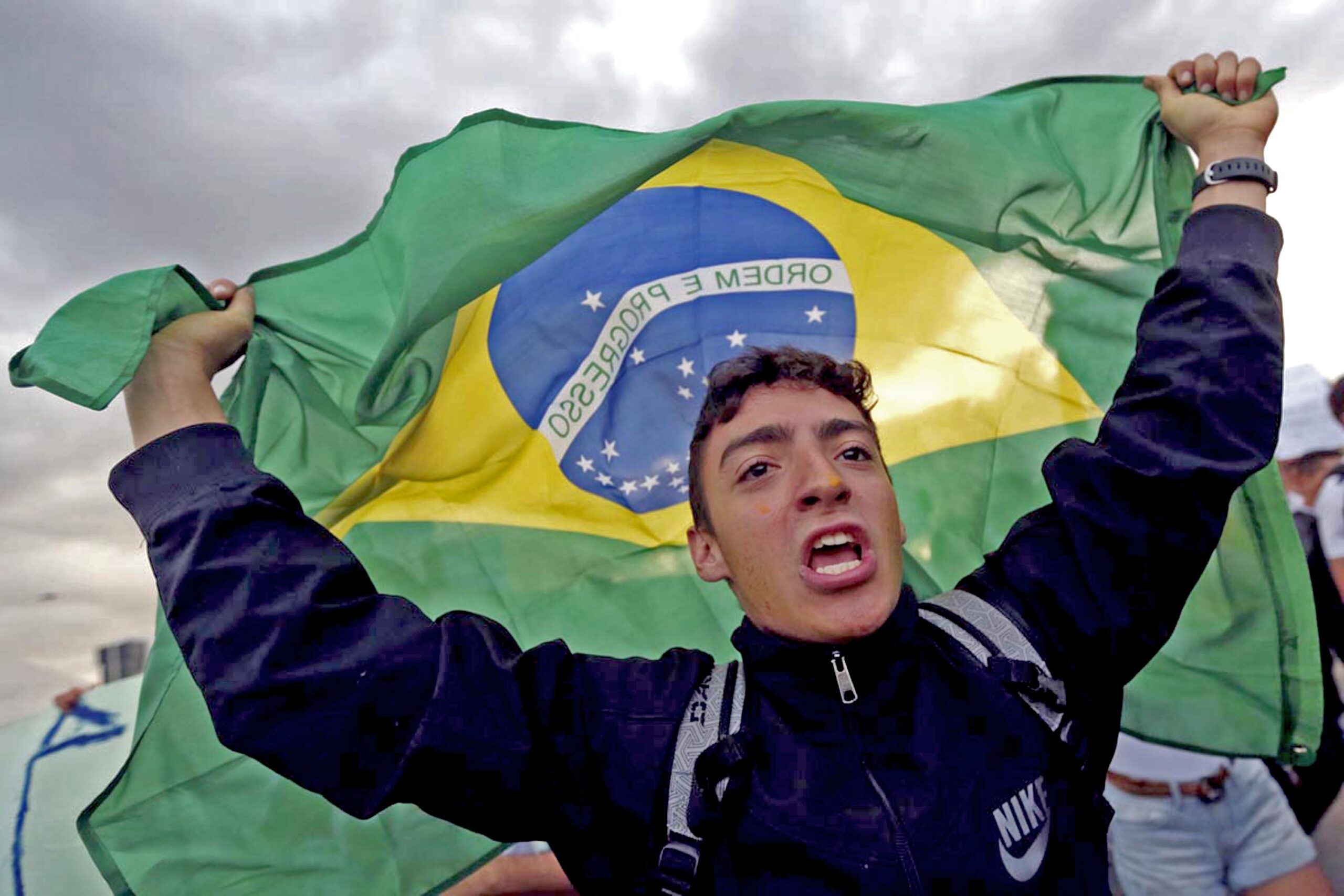
A separate survey, this time done by the American think tank, Pew Research Center, echoes the same findings in other predominantly Catholic countries. Brazil, which has the largest Catholic population in the world, saw its Catholic denomination drop from 74% in 2000 to 65% in 2010, a decrease of nearly a tenth in just a decade.
Mexico, which has the second largest Catholic population in the world, went from 89% Catholic in 2000 to 85% in 2010.
From the religious arena, evangelicals are also spilling over the political ring in Brazil as they now have 68 seats in Congress, a 50% increase in the 2010 elections. Evangelical Christians have grown so much in Brazil that President Dilma Roussef was even moved to appoint an evangelical bishop to her Cabinet.
A HUMBLE LEADER
Amid a dwindling Catholic population in Latin American countries, it was only fitting that many saw the accession of Pope Francis, who is from Argentina, as an auspicious event compatible with the current needs of the flock. With significant numbers converting toward other evangelical congregations in such territories, many church observers are hoping that the election of the first Latin American pope may arrest the bleeding.
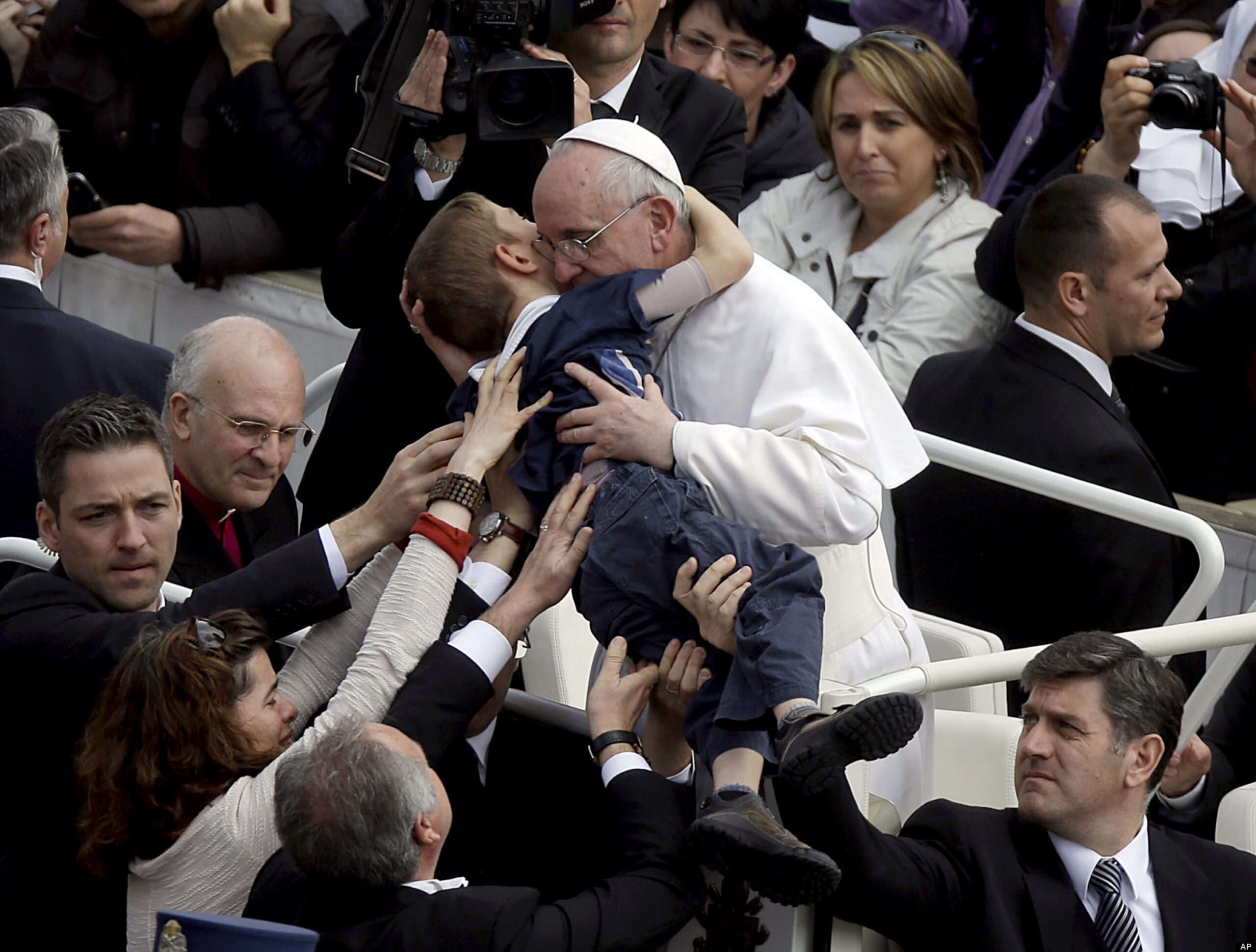
But as things have turned out, it has been less Pope Francis’s cultural heritage than his disarming modesty and unassuming ways that are winning the people, and more so, the youth.
Pope Francis’s down-to-earth nature was immediately put on display after his election to the papacy. Following the papal conclave, he chose to return to his residence onboard the minibus together with other cardinals, personally collected his luggage, and insisted on paying his bills. These are all gestures that resonated deeply to the youth.
“The new Pope brings humility a more vivid face and persona and this has captured the imagination of the young,” Fernando Academia Jr., a full-time pastoral worker for the Youth for Christ, an arm of the international Catholic lay ecclesiastical movement ,Couples for Christ, said.
For a number of the youth, who are at a stage in their lives where an aversion toward traditional founts of power and authority may come instinctively, a self-effacing establishment figure may indeed prove fresh, charming, and attractive. It is something that is now making the Catholic Church more accessible for the present generation.
“It makes the Church approachable and reachable as the lifestyle that the Lord, through the Catholic Church, teaches is iconized by the Pope,” Macademia said.
The lowly lifestyle has been one crucial drawing factor of the other evangelical organizations as it is the “I am no different than you” approach that has attracted a number of young people to be drawn in by lessening the perceived tension and intimidation.
ICONOCLASTS AND TRADITIONALISTS
That the Catholic hierarchy has held its traditions closely and tenaciously, even amid the seeming attractiveness of a more contemporary and youthful outlook, is not without reason as for a centuries-old institution, it is both weakness and strength.
“In some respects, yes, the Church is still very old-fashioned; but it is in being traditional that the Church ensures that the deposit of faith, handed down by Jesus to the apostles and their successors, remains unchanged and uncompromised,” Joey Villarama, a church correspondent of a Philippine-based broadcast media outfit, said.
While some may see the traditional conventions of the Catholic church as a sign of inflexibility, Villarama pointed out that it is also a symbol of resilience.
“Those who say the Church has not adapted to modern times actually mean that the Church has not succumbed to the pressures of secularism, of convenience and of the whims and caprices of youth,” he said.
“This is actually a positive observation, a strength in the Church’s strategy because it only means that Jesus’ teachings have not been altered,” Villarama added.
But even then, Villarama admitted that being much rooted and grounded in the past may be ill perceived by the youth.
“Unfortunately, this slow, leisurely pace that the Church is taking will likely be the impediment in its strategy to keep the youth interested,” Villarama said.
Gotinga, on the other hand, also stressed that the contemporary vibe of other charismatic religious organizations helps make it attractive to the youth.
“They are really iconoclastic. They really defined Christianity for the average young person. No church vestments. No statues. The place does not smell of flowers. The services are noisy. You are allowed to bring food in. You are even allowed to wear shorts,” Gotinga said.
The energetic and animated preaching, as well as the electrifying praise and worship aspect of a typical Sunday church service of Protestants and Born Again Christians, indeed stands in stark contrast to the sober liturgical Mass of the Catholic Church. While the former tends to excite the youth with its contrarian and borderline rebellious appeal, the latter is just more prone to be perceived as tepid and even downright boring by the young population.
“Catholic service is very ritualistic while those from the Born Again are very production-based. It is almost a variety show. So I guess it’s more in tuned to the times,” Gotinga said.
SCALE AND INTIMACY
Fr. Oscar Cruz, an archbishop-emeritus of the Catholic Church in the Philippines, also said that the sheer size of the Catholic congregation has somehow worked to its disadvantage in terms of reaching out to the young people on a more personal level.
“It is an advantage for a group to be small in this issue as they readily respond to one another. The Catholic Church in our country, however, is a large congregation so there could be less affection, less care, less attention in terms of reaching out to every member. The membership is more loose as opposed to other more compact groups where there is a tighter sense of belonging for its members,” Cruz said.
“More often if you go to church on Sundays, there are many people but they do not know one another. There is no fellowship,” Cruz added.
The opportunity of fellowship and the sense of intimacy it nourishes among its members is an edge that cannot be understated within any congregation. It is something that, with the right circumstance and timing, could tip people like Gotinga toward other congregations. Or, if it works, could make people like Katrina Martin stay and devote a life of full-time ministry to the church.
“I was really having difficulties then with a personal relationship and other things. I guess I was looking for a distraction. Then some of my college blockmates invited me to join their prayer meeting and I gave it a try,” Martin, who is now 28 serving as a publications head of the CFC, said in recalling how her active involvement with the church started.
Like Gotinga, it was also a timely intervention for Martin as her friends reached out in her hour of need.
“So I joined and the first meeting was fun. It did not feel like you are listening to a sermon or anything like that. And then I gained friends and I think that was what really kept me there,” Martin said.
“A lot of these people let me feel very loved so that was how my relationship with God really started to grow. Because when you come across the love of other people, when you experience that, you really can’t help but also see God,” Martin added.
THE MILLENNIALS
In addition to the large yet “loose” and dwindling membership as well as having a traditionalist sheen, one of the hurdles also of the modern Catholic Church is reaching out to the youth in an age of iPhones, tablets, Facebook, and other modern gadgets and online preoccupations that all compete for the limited and fleeting attention span of the younger generation. With such a wealth of gadgets and options to choose from, the young people are also growing accustomed to having their highly specific needs met by various tools and media. Dubbed as “The Millenials,” the present generation is used to the efficient concepts of speed and customization, things that are not exactly prime character traits of a much-established institution like the Catholic Church.
“One of the biggest challenges for the Church in terms of reaching out to the youth is that the secular world has shaped the minds of people on how other things can be customized to suit their tastes. The faith, being based on sacred traditions, doctrines and morals, cannot be customized like how other things can be adjusted,” Macademia said.
“It is then the challenge for the church to communicate the faith in a manner more palatable to the youth, to enable and empower them to be witnesses of the faith,” Macademia added.
As a solution, Macademia said that the church is now developing strategies to meet the youth on their home court, which is the online platform. Dialogue in all possible forms of media, especially in online platforms, will be paramount to stem the tide.
“We are currently developing an alternative online environment where the young can find themselves at home. It is an environment relevant to their daily concerns, their interests, and also that elicits dialogue with our missionaries who can guide them in sifting through their tough times and life-related queries,” Macademia said.
Another major factor for the disenchantment of some members of the present generation is disagreement with raging social issues such as reproductive health, abortion, and divorce, among others. Opposing camps have largely won the hearts of the youth with their creative means of demonstration and aggressive online campaigns.
In the Philippines, a popular tourist guide named Carlos Celdran became a modern cult hero in 2010 after he held up a placard amid an ecumenical service inside the Manila Cathedral and shouted “stop getting involved in politics” toward the priests. He was slapped with a two-month jail sentence by a Metropolitan Trial Court early this year “for offending religious feelings,” but last June, he was appointed as a consultant for the tourism of Manila.
“It is difficult for us especially now that secularism is very cool and it’s cool to be anti-church. We all like the idea of being a rebel so it’s difficult,” Martin said on the challenges of the youth ministry today.
“The Catholic Church is actually a little behind in this battle so we saw that there is a need to kind of repackage our image,” Martin added.
Aside from actively engaging people in social media platforms like Facebook and Twitter to better articulate the position of the Church on various social issues, Martin said that they are also trying to rebrand their image through various clothing merchandise.
But in terms of rebranding, no one has seemed to achieve widespread and seemingly instantaneous success as Pope Francis himself. His contagious humility and exemplary gestures to shun luxury have now reached the other aisle as even non-believers have now begun warming up to the church. He has been called a rebel. He has been called “the Catholic Princess Diana” by CNN. And in an opinion piece at Esquire magazine, an atheist has called Pope Francis as “kind of awesome.”
“There is no doubt that the way Pope Francis has run things at the Vatican so far has attracted renewed interest not only in the Papacy but in the Church as a source of spiritual nourishment,” Villarama said.
“Pope Francis simplicity, not only in deed but in word, has made Church teaching more visceral and comprehensible, without taking away the beauty and relevance of those teachings in the modern times,” Villarama added.
Moving forward, the youth issue will surely be one of the major and enduring challenges for the modern Catholic faith. No doubt, modern technology will play a major role in the agenda but, above it all, the humility, sensitivity and creativity of the youth ministers will also prove vital. A carefully planned online strategy will be greatly instrumental, but in some cases, the little things such as a surprise birthday party for a friend or a casual personal invitation to a prayer meeting could spell the difference.
Eighteen years after the statement of Pope John Paul II at the 1995 World Day of Prayer for Vocations still rings true.
“This is what is needed: a Church for young people, which will know how to speak to their heart and enkindle, comfort, and inspire enthusiasm in it with the joy of the Gospel and the strength of the Eucharist; a Church which will know how to invite and to welcome the person who seeks a purpose for which to commit his whole existence; a Church which is not afraid to require much, after having given much; which does not fear asking from young people the effort of a noble and authentic adventure, such as that of the following of the Gospel,” Pope John Paul II said.