
The Kampala Observer of March 30, 2012, revealed that, besides President Museveni’s prerogative of mercy, Sharma Kooky was released because an independent report indicated that he did not murder his wife, Renu Joshi. Earlier, in January 2000, a High Court judge convicted and sentenced him to death after finding him guilty of killing Joshi.
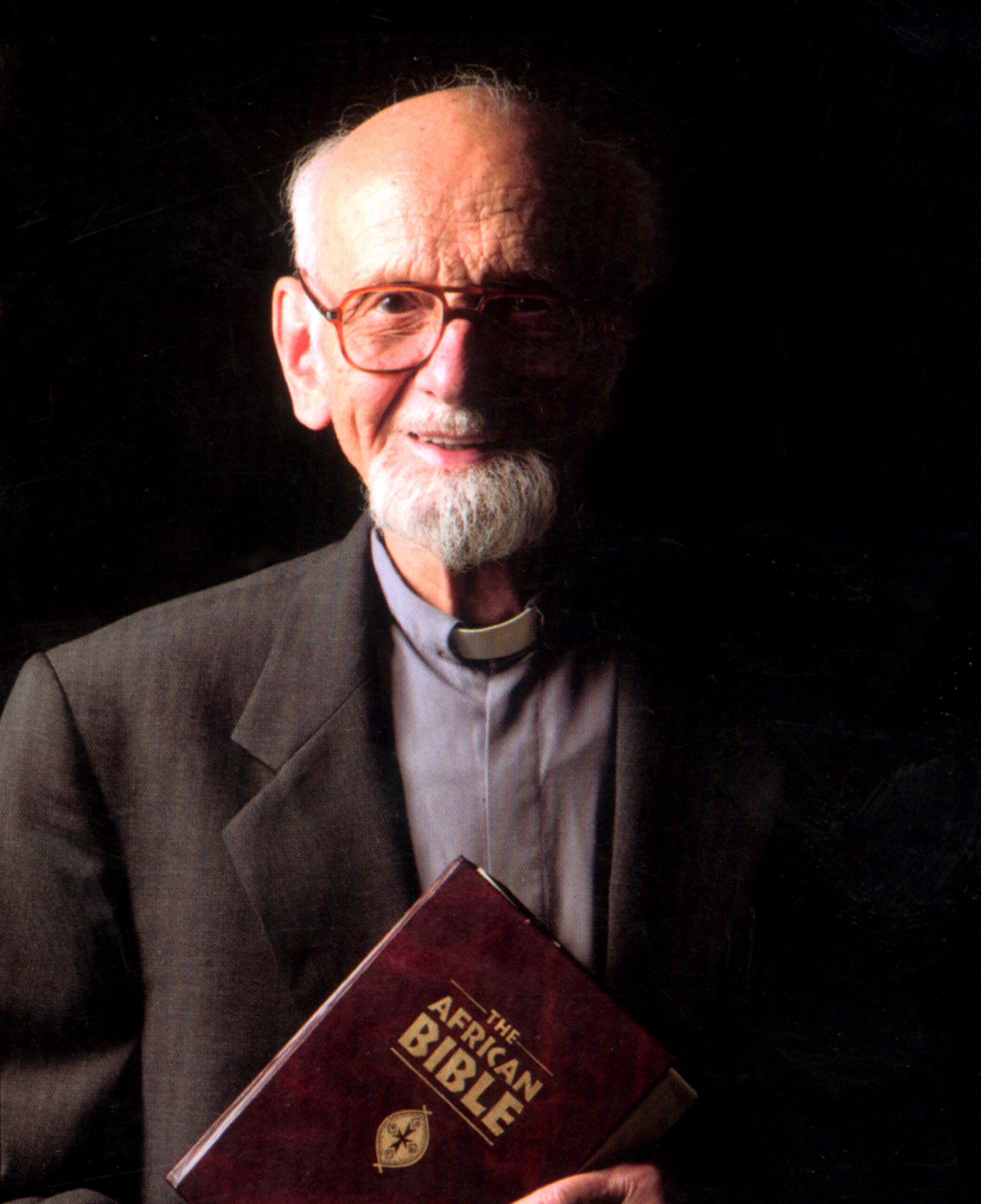
It was at that time that Fr. Tarcisio Agostoni decided to carry out fresh investigations into the murder through the Uganda Citizens Rescue (UCR), a non-governmental organization he had founded that advocates abolition of the death penalty in Uganda. Through his NGO, Agostoni saved many from death row, from the hangman’s noose. At that time, Fr. Tarcisio was 80 years of age.
“I’m sure, today, Fr. Agostoni’s spirit is the happiest in God’s heavenly kingdom” exclaimed Godfrey Bamweyana Ssebuwufu, head of UCR, who had lamented Agostoni’s death only two months before, on January 15.
THE FIRST MISSION
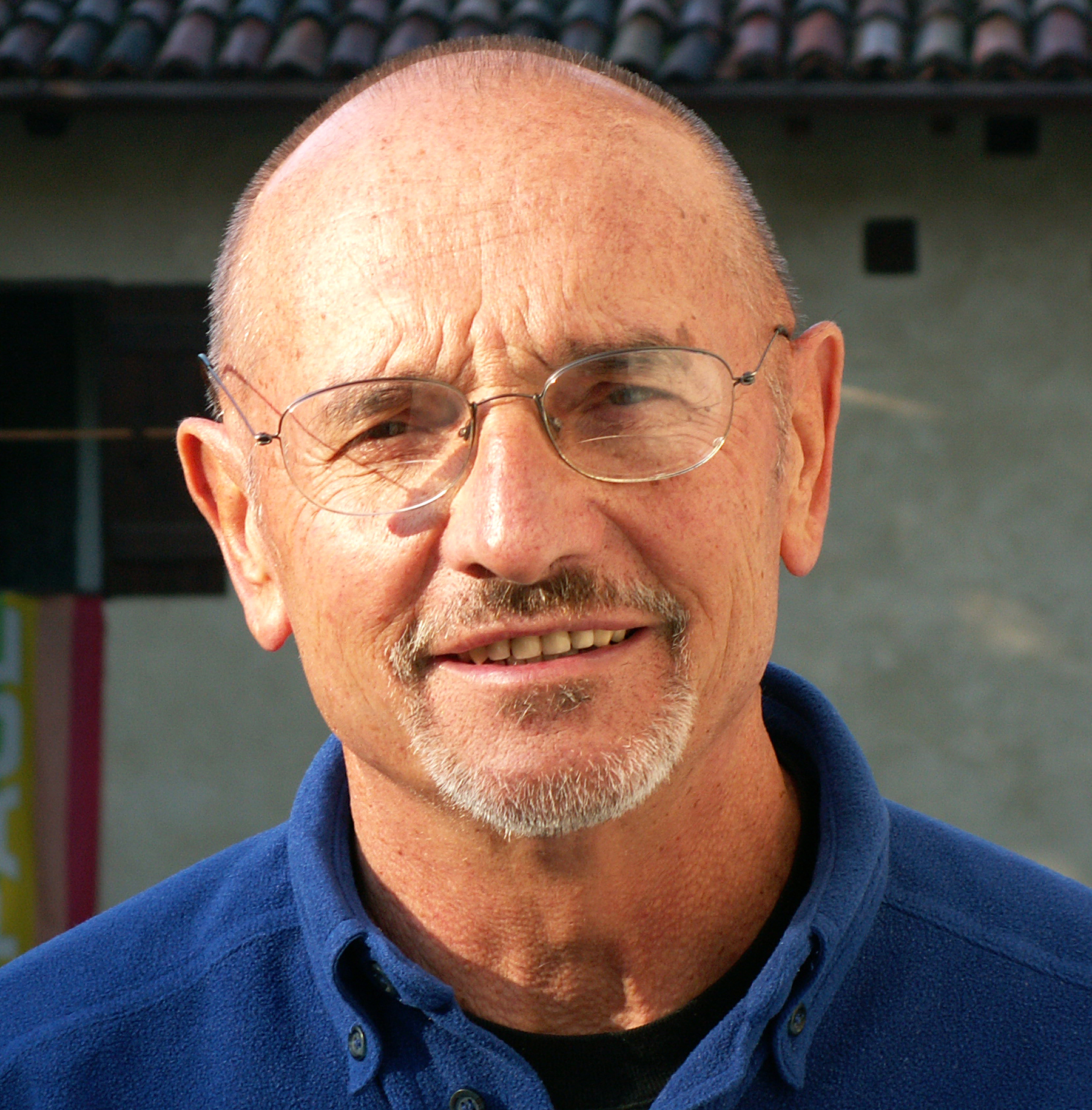
Fr. Tarcisio Agostoni was born at Cabiate, a village near Milan, in Northern Italy, on November 23, 1920. He left his place at the age of 13 in order to enter the minor seminary that the Comboni Missionaries had opened at Padua and from which he moved later on to the seminary at Brescia. Since his young age, he had a taste for music which he studied passionately and kept as an interest all throughout his life. In his free moments, he used to find time to play the organ and savor a piece of classic music. His studies of Philosophy and Theology were completed in Rome, in the Pontifical Urbaniana University, the Church’s missionary university. He got his doctorate there. He was ordained as a priest a little after the end of World War II, on April 20, 1946.
After spending some time in England, Fr. Tarcisio was assigned to Gulu mission in Uganda in 1951. Gulu mission was the Catholic heart of Northern Uganda. It appeared as a big medieval monastery engendering life and culture. Around the majestic cathedral, built by a team of young Comboni Brothers, the missionaries had given existence to a large network of social works. The mission had become the hub of promotion for an educational culture and an evangelizing action that was affecting the remotest corners of that region.
Around 30 missionary priests and Brothers were living in the mission center at that time, together with almost a hundred religious sisters, both European and African. It was to this mission that young Fr. Tarcisio was assigned. The young missionary started teaching Philosophy, Music and singing in Gulu Seminary where, at that time, seminarians from Uganda and the Sudan were lodged. But his work was not limited to the formation of the candidates to the priesthood. It was in training the laity that Fr. Tarcisio found his special vocation that will mark his whole life: to form a committed laity, dedicated to education and public life and to forge a new social conscience among the Christians.
THE AWAKENING OF AFRICA
After World War II, Africa became awake. Independence movements multiplied in the continent. Some missionaries started perceiving the new turn that the African continent was taking. The young missionary, Fr. Tarcisio Agostoni, was definitely one of them. The history of Uganda as a British protectorate, started with a civil war in 1890 that opposed Protestants, Catholics and Muslims. The war ended with the victory of the first due to the support of the British Imperial East African Company’s guns. The Protestant winners destroyed the recently founded Catholic missions and more than 50 thousand Catholics were sold as slaves.
In the middle of the 20th century, Catholics came together in order to affirm their ideals and demanded religious freedom. They started a political party, the Democratic Party of Uganda, first in the central region and then in the North of the country. Fr. Tarcisio got involved in this fight for the social and political rights of the Catholic population and he did it by writing in the local papers Lobo Mewa, published in the Acholi language and in The West Nile Gazette, published in English.
That was the birth of the movement of teachers and lay men and women, committed to public life. Later, on their behalf, Fr. Tarcisio gave origin to two magazines with the meaningful titles of Truth and Charity for the social formation of the clergy and Leadership for the formation of the laity involved in social and political life. Fr. Tarcisio would gather, in due course, the main themes in a book of basic guidelines by the title: Every Citizen’s Handbook that came out in 20 thousand copies, a really extraordinary number for the Uganda of that time. In it, Fr. Tarcisio expounds the fundamental principles of Christian humanism and democratic political life.
Uganda was lacking in proper cultural identity, a common sense of belonging over and above the tribal identities which were prevailing in the minds of each ethnic group. It was necessary to help form persons capable of taking responsibly into their hands the destiny of a common homeland, beyond the state created by the British colonialism.
AN ERA OF CHANGE
In October 1962, the same year and month of Uganda’s Independence, Pope John XXIII inaugurated the Second Vatican Council which marked an era of change in the Catholic Church. At that time, the Catholic Church in Uganda used to count about half a dozen bishops, who didn’t know each other very much and rarely used to meet in Kampala, the capital of the ancient kingdom of Buganda.
Fr. Agostoni saw the need for the bishops to work more united in order to find answers to the problems and challenges facing the Church. To create an Episcopal Conference and a Permanent Secretary to serve it appeared as urgent targets. Thus, Uganda was among the first countries in Africa to give origin to its Episcopal Conference. Fr. Agostoni was put in charge of serving this project and, consequently, he had to leave Gulu in order to establish himself in Kampala.
The Catholic Secretariat was founded in order to serve the aims of the Episcopal Conference and Fr. Agostoni was put in charge of it. He gave it three departments that will accomplish a fundamental role in the following years: Lay Apostolate, Social Services and Mass Media. They did not represent a kind of clerical bureaucracy, but became meeting points for the formation and support of the laity of all the dioceses of the country. The Mass Media Department launched new newspapers at diocesan and national level, edited books and catechisms and promoted other initiatives in the different languages of the country.
In order to coordinate the formation of the laity, he created the Ugandan Social Training Center, where, starting from a basic Christian education, all sectors of social life were reached. These courses were authentic school of Christian life because the teachings of the Christian faith were becoming culture in all areas of personal and social life. Fr. Agostoni’s interest in all the realities of life brought him to the need of facing the most painful aspects of the tribal society like the wounds left by the chronic Ugandan wars. In order to respond to the orphans’ situation, for example, he introduced a pioneering, unique experience: getting Ugandan families that could adopt the orphans as their children. In this way, many children found a home in a society where the family sense is great. Fr. Tarcisio didn’t want orphanages, bur family homes in order to accept the street children and orphans.
THE POPE IN UGANDA
Fr. Tarcisio took part in the Second Vatican Council as secretary of the Ugandan bishops. In this way, he was able to follow firsthand the Council debates and the still timid African voice. He came back to Rome to take part in the International Lay Apostolate Congress of 1967.Those were the most intense years of his service to the Ugandan Church. He was also the soul of the dialogue and interreligious contacts that he promoted among Catholics, Anglicans, Protestants and Muslims. In 1968, out of his personal decision, he handed over the reins of the Catholic Secretariat to a Ugandan priest, but went on offering his service and kept himself active in the Kampala diocese of which he became the Chancellor. At that time, he was entrusted with the building of the Uganda Martyrs’ Shrine at Namugongo, the place where most of them had been killed. In the same way, he was entrusted with the organization of the pastoral visitation of Pope Paul VI to Uganda, between the end of June and the beginning of July 1969.
It was the first time that a Roman pontiff was visiting the African continent. Fr. Agostoni knew Pope Paul VI from the time of Vatican II but from that circumstance his contacts with the Pope became more frequent. In that same year, he took part in the General Chapter of the Comboni Missionaries and came out as General Superior, a task that he carried out for ten years until 1979, taking up residence in Rome. Once he declared that that was the most difficult period of his life: “They were very difficult years. Not always we knew what to do. At any rate, I tried to keep together the young with the old. It was not easy.” Because of his outstanding missionary spirit, Fr. Agostoni made his Institute weather the storm without too many losses.
TO BUILD UP A PEOPLE
Almost straightaway after ending his term as General Superior, without taking time for resting, Fr. Agostoni went back to his first love, Uganda, to the activities within the Ugandan Episcopal Conference, as animator of the Social and Pastoral Services.
Those were tough years for the Ugandan society: after the war to dislodge the notorious dictator Idi Amjn Dada, it was entering a phase of tribal divisions and chronic guerilla warfare. During those tragic years, between 1979 and 2004, 15 Comboni missionaries, including one Sister, were murdered in Uganda.
From his position at the service of the Episcopal Conference, Fr. Agostoni gave his contribution to the publication of a series of pastoral letters of great relevance in a time when confusion, injustice and violence were rampant. Those documents, with their clarity of judgment on the situation and their Christian proposals for peace, were the fruit, in great part, of Fr. Agostoni’s reflection and animation. During this time, he also established the Justice and Peace Commission the members of which used to travel across the country in order to animate the Christian communities in the difficult task of promoting justice, reconciliation and peace.
Fr. Tarcisio started also to gather together groups of Christians committed to social and political life in order to re-edit and update his previous Every Citizen’s Handbook. The key idea was that democracy cannot exist if it lacks its subject: the people. It was, therefore, necessary to take seriously the formation of persons, the education of a conscience based on human rights. Fr. Agostoni decided to prepare a new handbook with the fundamental principles of the Church’s Social Doctrine and the contribution of Vatican II to this subject. The new text was a bulky volume of almost 500 pages and he put it to the service of all those who were working in order to promote that new stage of the country. The book reached the neighboring countries and was appreciated in universities and centers of social studies.
Through that book, we can say that Fr. Agostoni exercised his influence on the elaboration of the Constitution that, at present, rules Uganda. From his pen, originated also dozens of texts published in Ugandan daily papers and magazines. His lean face used to appear regularly on Uganda television and his weak voice to be heard on local radios, like the very popular Radio Maria–Uganda, to which he gave his collaboration almost to the end of his life. Thus, he was offering a witness to the Gospel values and the need to join the struggle for human rights to the Christian faith.
AGAINST THE DEATH PENALTY
Starting in the nineties, Fr. Tarcisio went to visit the inmates in Luzira prison, in Kampala, a place dreaded in the whole country because it reminded people of the horrors of the tortures in the time of Idi Amin and the tragedies that followed his dictatorship. One of the most moving aspects of his work during these years was his commitment to the prisoners in the death row. Some would wait years in their cells. Others had lost any hope of having justice done to them. They had been condemned without proofs, out of political reasons, revenge or tribal hatred.
Frequently, in the judgment, the lawyers of the victims used to appear without knowing well the cases or even did not appear at all to defend their clients. Given this situation, Fr. Tarcisio started with doing a delicate, detailed and constant work in order to obtain justice for the cases he was faced with. He would get good lawyers and bring together the opposing parties in order to find the truth and, in this way, promote justice.
It was in this context that he started a campaign in favor of the abolition of the death penalty. He wrote a book on this subject by the title: May the State Kill? Naturally, the book had a big impact and provoked reactions and discussions of every type in a country which, unfortunately was accustomed to violence and death perpetrated often by the state. The result was that, after the book came out, the executions were suspended indefinitely.
Agostoni’s doctor, in 2005, diagnosed the popular priest with cancer and recommended medical attention in Italy. On January 15, this year, he lost the battle against cancer. In receiving the news of his death, the Archbishop of Gulu, Msgr. John Baptist Odama, President of the Uganda Episcopal Conference, defined Fr. Tarcisio as “one of the great figures who forged the present day Uganda.” The Provincial Superior of Comboni Missionaries, Fr Sylvester Hategek’Imana, a Ugandan himself, told the faithful during the funeral mass in Kampala that, in October 2009, Fr. Agostoni sent him a message saying: “Remember, I still belong to Uganda.”