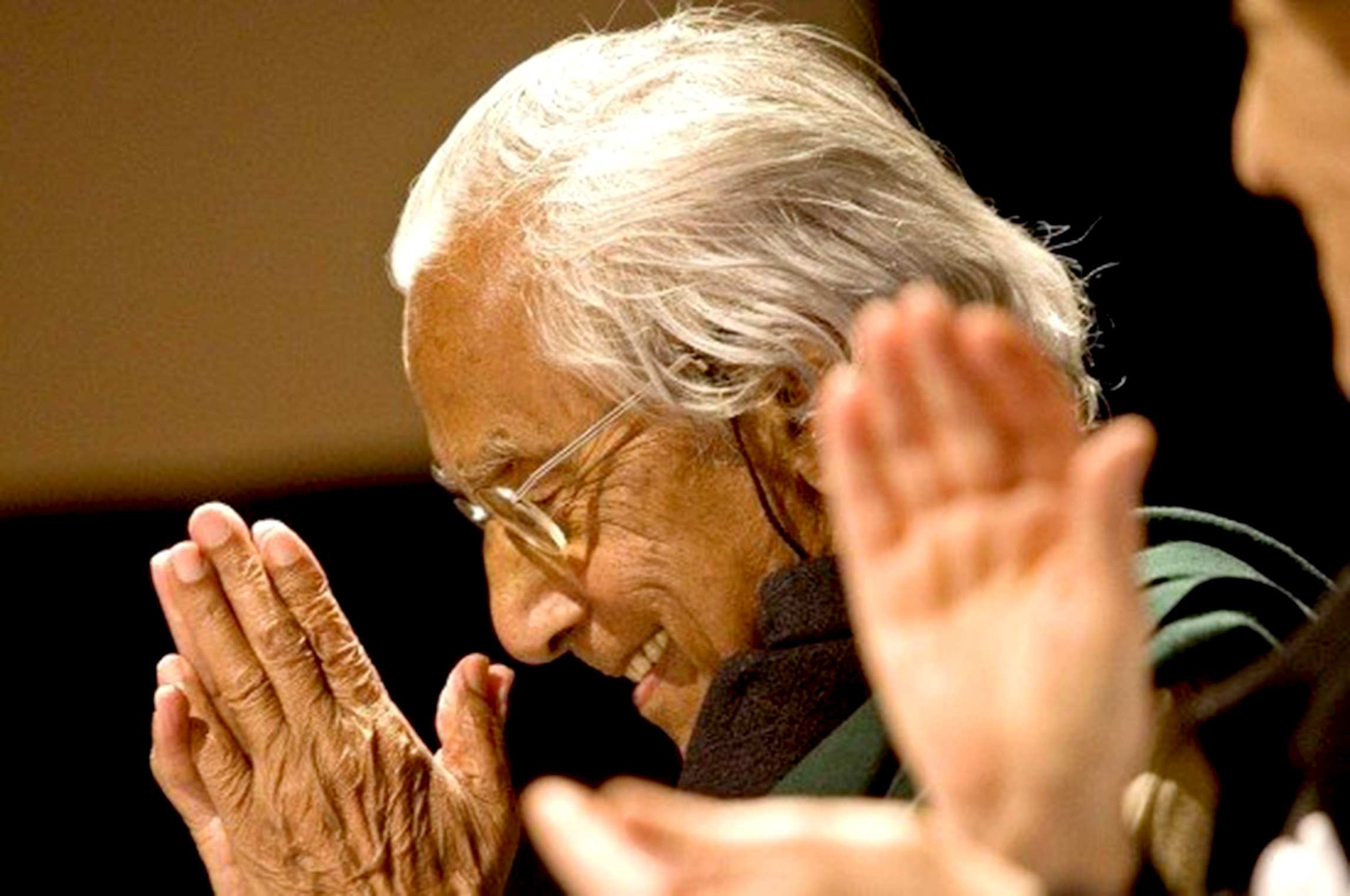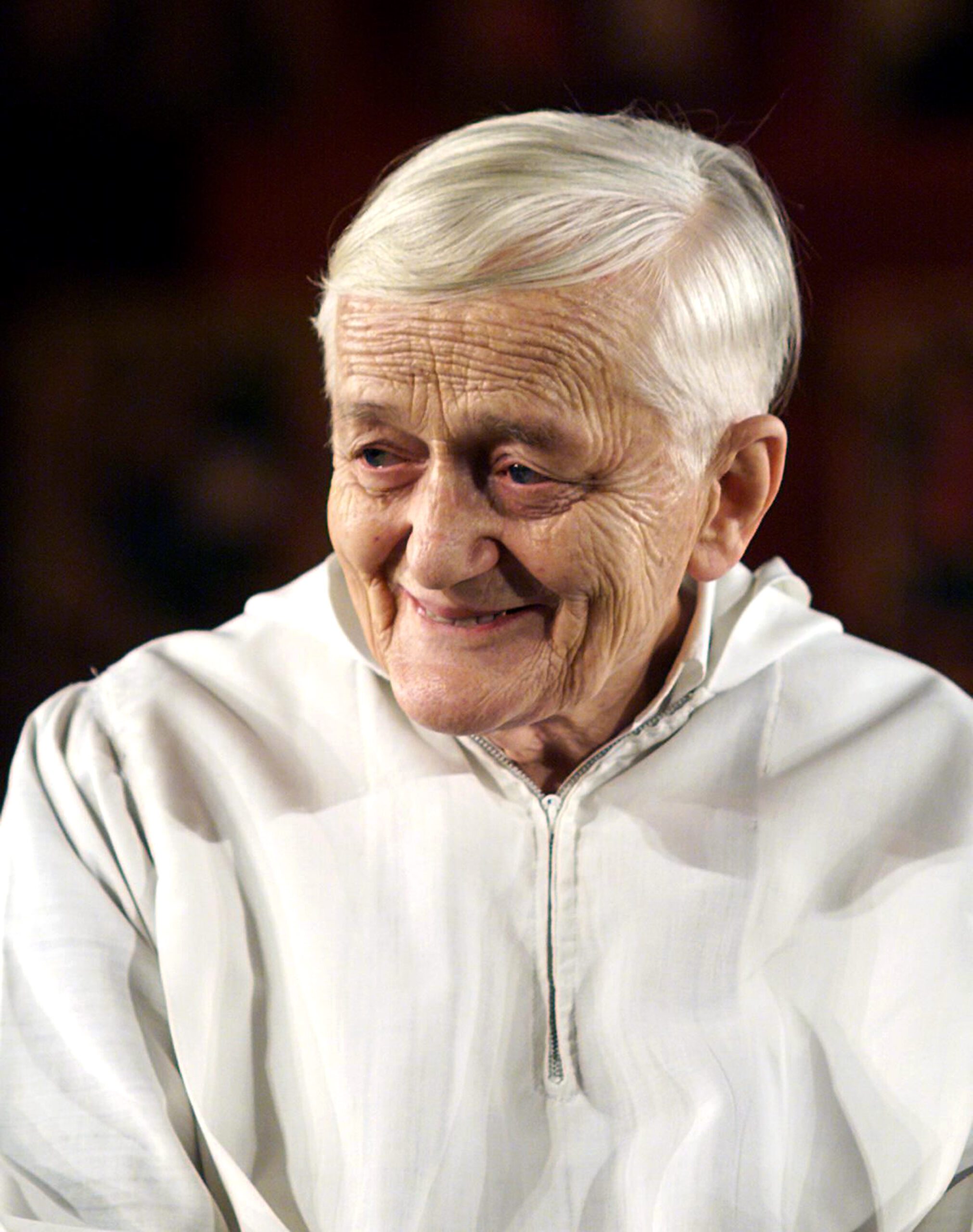

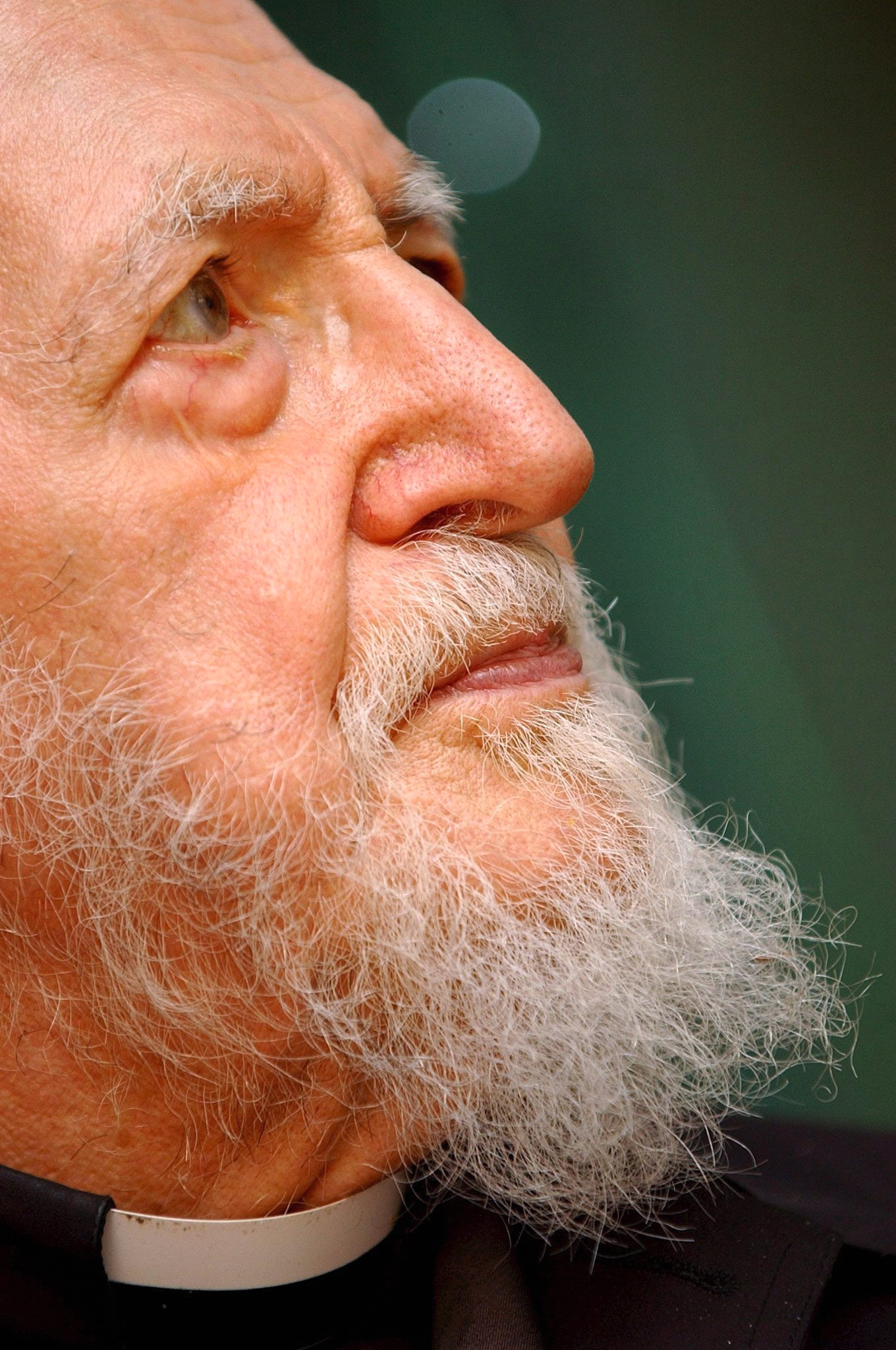
On February 22, this year, the long life of the world-renowned French priest, Abbé Pierre (Father Peter), came to a peaceful end on the simple bed of a military hospital. He was 94. Notwithstanding old age, Abbé Pierre had never faded from the imagination of the French people and that of the whole world. His funeral was celebrated in the Basilica of Notre-Dame de Paris in the presence of the highest French authorities. And yet, according to his precise instructions, the first benches in the basilica were filled by the compagnons (comrades), the poor of the community, the dropouts of society to whom he had dedicated his life.
SAVING DOZENS OF JEWS
Henri-Pierre Grouès was born in 1912 at Lyon, France, into a well-to-do family. In 1931, after having donated his paternal inheritance to the poor, he entered the convent of the Cappucines of Lyon. Seven years later he became a priest. In the forties, during World War II and the German occupation of France, he joined the freedom fighters, the partisans, and gave himself to the task of saving dozens of Jews, putting his life at risk many times. Once arrested by the Gestapo, he almost miraculously escaped torture and a certain death.
In post-war France, he was already famous and this fame took him to the French parliament. But he was not meant for a political career. Disappointed by the failure of the law about conscientious objection, he left the parliament and went out into the streets. By that time he had already made the experience that would change his life: it was in 1949 that he encountered Georges, a former convict with suicidal tendencies. Abbé Pierre recognized him as Jesus in disguise, like on the way to Emmaus. It was together with him that he founded the first nucleus of the Emmaus community.
THE UPRISING OF GOODNESS
February 1954 was in the heart of one of the coldest winters in man’s memory. In the icy streets of Paris, the homeless were in danger of death by frostbite. It was in that context that Abbé Pierre launched his appeal over the French radio, for the “Uprising of Goodness”: he invited the citizens to immediately bring “5,000 blankets, 300 big tents, and 200 stoves” for the homeless of the city of Paris threatened by the cold.
His moral authority and the extraordinary emergency provoked an overwhelming response. From that moment on, the tiny figure of Abbé Pierre, with his characteristic long beard and black French beret, became well known and loved all over the world. He gathered around his humble person all the dropouts of society and gave them a chance of rehabilitation, through their communitarian work, in favor of other people in the same condition or worse. They were the Compagnons batisseurs d’Emmaus (the comrade-builders of Emmaus).
THE COMRADES OF EMMAUS
At Rouen, inside poor shelters on the banks of the river Senne, as well as in Paris and in other parts of France, Abbé Pierre was surrounded by dozens of less respectable guys to whom he was nevertheless giving his utter respect, bringing out of them their wounded, yet rich humanity and great capacity of sharing.
They were attracted by that unusual priest and former congressman, who was putting them together and giving back their dignity by showing them that they could help themselves and others worse than themselves by means of their communitarian work, especially the building of poor but dignified shelters so that the homeless could at least have a home.
Les Compagnons d’Emmaus (The Comrades of Emmaus) very soon became a reality in many countries of Europe, North America and the rest of the world. Poor people were impressed by the personality of their benefactor: he was first of all a man. In the recognized common humanity, they used to find him, a champion of communion, enjoying being outdoor with the comrades for the communitarian work or around the common table and a hot soup. But at the same time, he loved his solitude − time and again sitting on a pile of rubble, looking at the distant horizon, lost in prolonged prayer.
Together with him, there were alcoholics, ex-legionaries and former convicts: a destitute and marginalized humanity that was trying to have another chance, to start afresh. Together, they used to go out to empty attics and cellars, called by people who wanted to get rid of rags and debris. They used to load everything on pickup trucks and take everything to their store close to their ramshackle residences. In their spare time, they used to build shelters in order to host other homeless people more unfortunate than themselves. It was a competition between the defeated and Abbé Pierre was their referee.
TO RECOGNIZE ONE’S WEAKNESS
It was Christ’s love that was pushing him “beyond”: beyond the social conventions, the self-interests, the worldly strategies; it was the Gospel that animated him to go down in depth, within the hidden part of our heart where we discover our common God-image; it was the Spirit of discernment who was bestowing Abbé Pierre the freedom and courage to proclaim the legitimacy of the gratuitous gift of self as Jesus did for our sake. And so he grew old, loving the poor and living with them. In 1981, he was awarded the highest French medal: The Legion of Honor.
When he was already 90, Abbé Pierre spoke candidly about the sins of his youth and some people were scandalized. Yet, he had simply recognized that he had known some moments of fragility and weakness as regards the sexual drive. As one of the Desert Fathers writes, “to recognize one’s sin is greater than to perform miracles and to raise the dead.”
This, only this was what Abbé Pierre was asking every man, every Christian, every community and the entire Church: to recognize our own weakness. Our weakness is the door that allows God’s power and grace to enter into us, as Saint Paul wrote: “When I am weak, then I am strong.”
THE FIGHT AGAINST POVERTY
The movement “Emmaus Internationalis” is the union of groups and communities founded by Abbé Pierre that are committed to the struggle of uprooting all forms of poverty and to the full development of the human persons and their dignity. From 1999, “Emmaus Internationalis” has been guided by the Italian Renzo Fior, who is the present successor of Abbé Pierre. His term, however, is coming to an end. The world assembly of the movement is already planned for the coming October in Serajevo in order to elect the new leader.
The fight against poverty goes on. Like the Emmaus movement, so many other associations are involved in this fight. The free market and our global world generate an increasing number of people who remain at the margins of society. When, in the winter of the year 1954, Abbé Pierre launched his cry for help through the radio and triggered the “Uprising of Goodness,” the homeless in Paris were 2,000. Today, they are estimated to be 100,000. If we are able to accept the voice of the radical Gospel, we will not miss Abbe Pierre. He will be at our side, together with that cloud of witnesses who make visible and credible Jesus’ face in the midst of our every day’s joys and miseries.