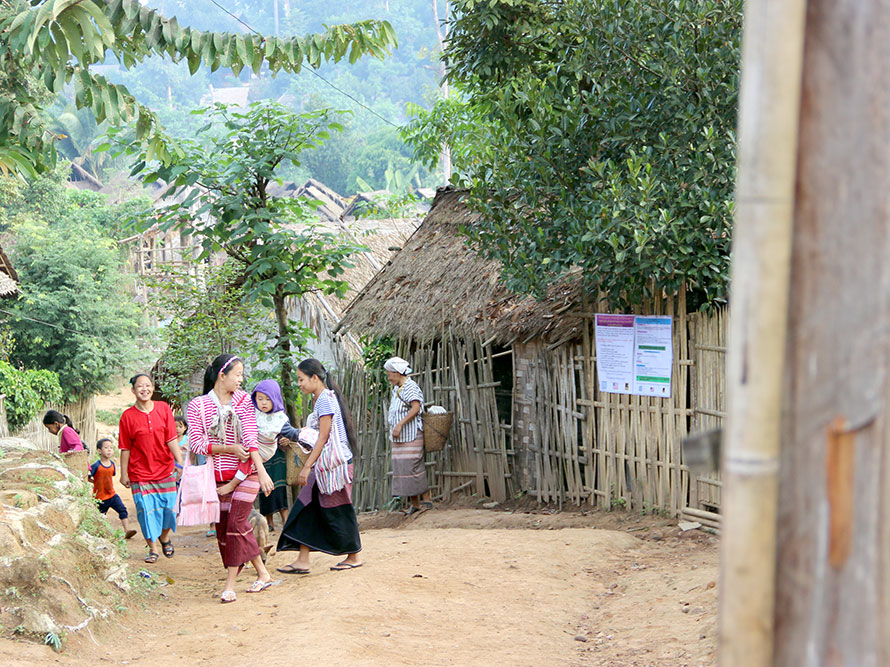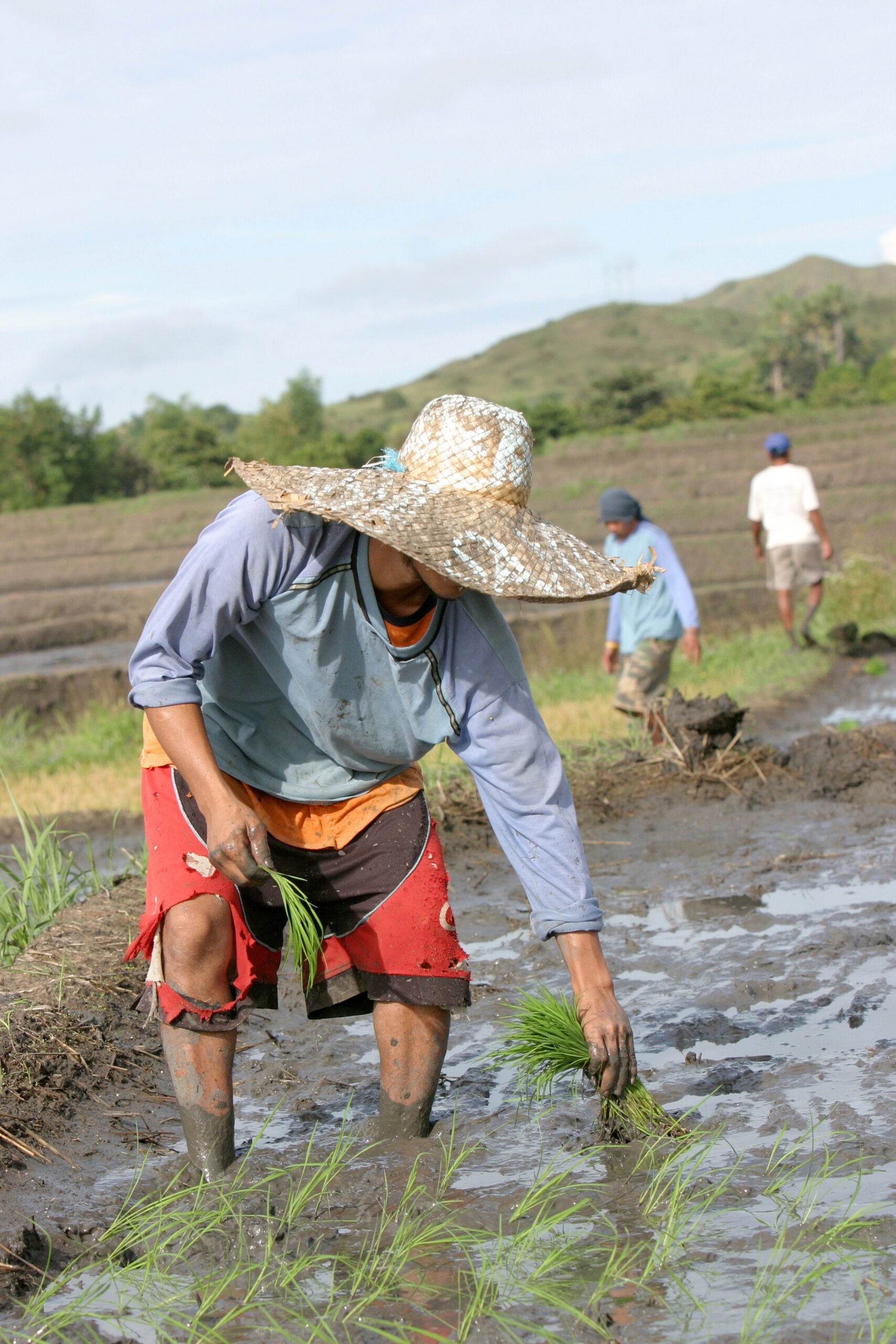
The Farms of Hope (Fazendas da Esperança, in Portuguese) started in Brazil. One was opened in the Philippines in 2003, more precisely in Masbate, an island one hour away from Manila by plane. The other way to get there is to travel 12 hours by bus and another four by boat. The farm is a place of peace and quietness with the mountains as backdrop; the silence is broken only by the chirps of birds and the moos of cows. The noon breeze spurs the spirit to contemplation. More than 80 youth, who followed their one-year rehabilitation program, have graduated and now lead a life free from the grip of drugs and alcohol.
On the hedge of that same property in Bangad, Milagros, a rehabilitation farm for girls was opened in August 2008. It is on a hill with a superb view of the coral reef. Eight girls have already graduated. Four of them returned to school to further their studies. One has just accepted to go to Brazil for training in order to join the Family of Hope. The farm in Naga opened in May 2009. It is entrusted to a team of Filipinos who were rehabilitated in Masbate, headed by Danny, an ex-addict from Dipolog City, Mindanao.
LIFE MIRACLES
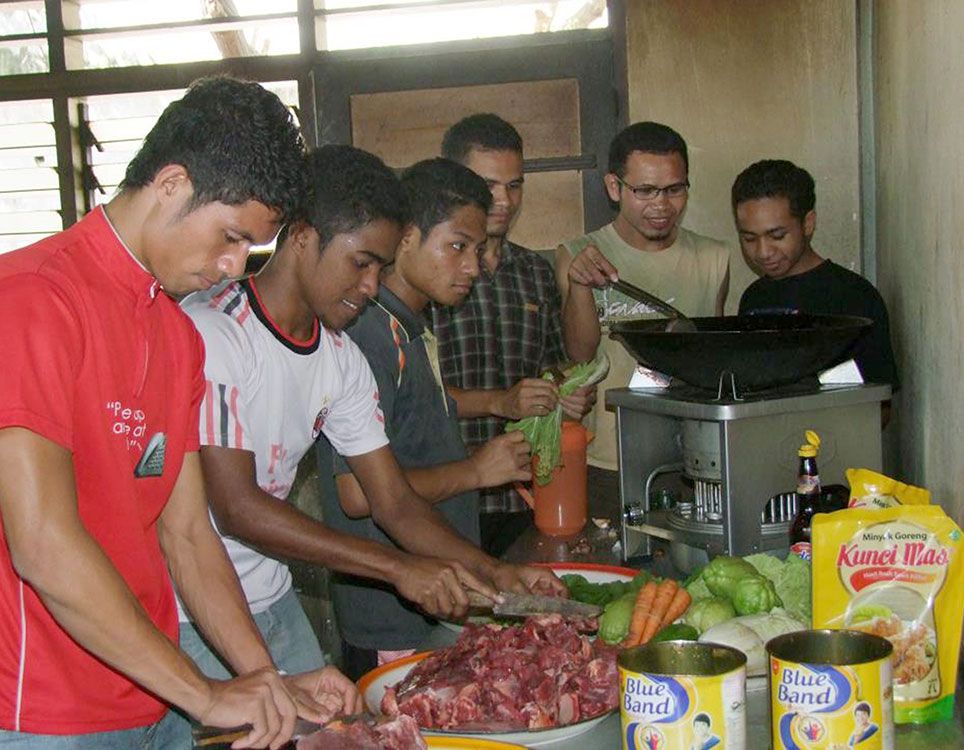
What is at stake there are the lives of young people that need to be reconstructed. The missionaries (lay and religious) and volunteers are not psychologists or psychiatrists, but they have been helping the youngsters to overcome their addiction. Indeed, the changes that happen in people’s lives – through manual work, prayer and community life – are amazing. No recourse to chemicals and in total freedom! The residents are not confined: they can leave the farm any time they want. Actually, they could even get a ride to go away. There’s no punishment or pressure to make them change their behavior – only total respect and openness.
There are cases in which Fazenda cannot help. And they are honest to admit this. They tell people who come that if they need psycho medicines like anti-depressants, etc. – not insulin or other medicines of that kind – they have chosen the wrong place and they humbly tell them to look for help somewhere else. The missionaries don’t pretend to be doctors.
Roland Mühlig, who is not an ex-addict, but has been in Fazenda for 12 years (first in Germany and now coordinates the community in Masbate), shares the secret of their success as a rehab community: “We have discovered a kind of life that makes us happy and fulfilled. Therefore, we invite those who come here to make the same discovery. Our concern is not so much about fighting addiction but more so about discovering and experiencing God’s love in our lives.” And he explains the great difference in approach between them and the many other rehab centers: “Some rehabs focus a lot on addiction and the need not to go back and use drugs again – the do’s and don’t’s – but then people are still lost without a clear direction. Ex-addicts know that they should not go back to drugs because they destroy their lives, but they don’t know where and how to start a new life. They are still controlled by addiction in the sense that before, everything was about addiction and now everything is against addiction. We try to teach them to forget the darkness and show them the light: life fulfills and makes us happy. The focus is on a new life.”
RECIPE FOR REHABILITATION
Spirituality plays an irreplaceable role in Fazenda’s community life. They draw from two spiritual sources: the Franciscan spirituality (because their founder, Fr. Hans Stapel, is a Franciscan priest) that is shown in the love for the poor and rejected, especially, the modern lepers (drug addicts, HIV positive, AIDS infected, etc.); the other is the spirituality of unity of Chiara Lubich and the Focolare Movement, according to which, in spite of all differences in social background, age, culture and religion, people are united because they have a common heavenly Father.
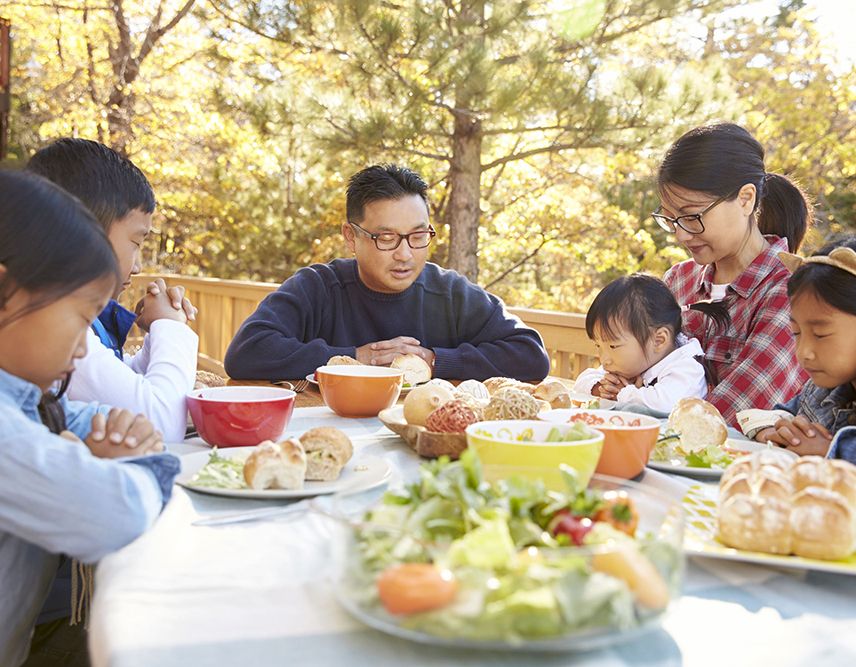
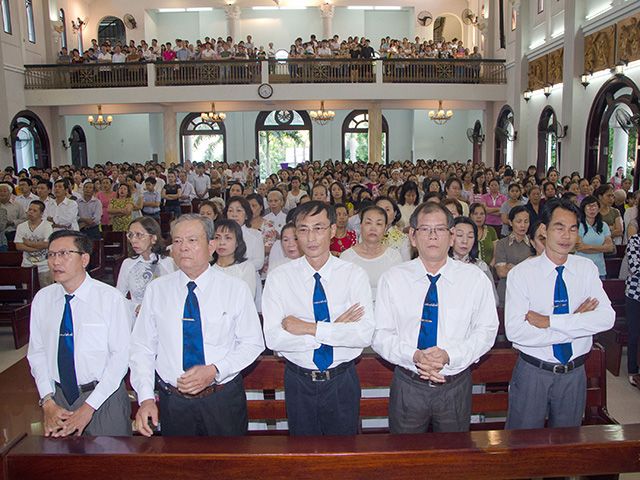
Very early in the morning, the residents pray the rosary and meditate on the daily Gospel asking themselves: “How can we live according to God’s word today?” They choose a sentence to be recalled during the day to see how it can be translated and applied in their lives. Once a week, they all sit together to share how they managed, during the week, to live according to God’s word; how it became flesh in them. Often, there are simple experiences, but very meaningful for the boys. Three times a week, they participate in the Eucharistic celebration.
Fazenda is open to all religions. In the past, there was a Muslim volunteer. Also, they have just welcomed a Protestant boy and another from Iglesia ni Cristo. Can the program work for those who are not religious? Roland says this is no issue in the Philippines where most people are religious and Catholics: “Here, everybody has a certain belief in God. Some, however, have traumatic experiences with the Church. We try to introduce them to a God who is love, not Someone who imposes rules. We also help them to see how God’s word becomes part of our lives.”
Community life is also very important in making the program succeed. Roland explains its dynamics: “We live like small families. We try to put up family-like groups, 14 people at the most in each group. Those who have been here longer take the role of coordinators, after undergoing a formative process with us. We sit with them weekly to share about the joys and challenges we experience – to become closer to each other and to God. The aim is not just to be housemates, but to become friends, brothers.”
The boys pay nothing while undergoing rehabilitation. Fazenda just asks their families to buy farm products from them for 2,000 pesos (around US$46) a month. The idea is to help the missionaries in marketing the products. Some families do buy and sell them. Others consume them themselves. This is a way of involving the families in the rehabilitation process. “Having to buy and sell the products makes them feel they are part of the boys’ journey. The rehabilitation process doesn’t work without the participation of families,” comments Roland.
It is a challenge, either for boys or girls, to admit their problem and share it with their respective families. Instead of helping out, the latter, due to shame, try to cover up, consciously or unconsciously, the whole problem. This is called co-addiction. It is said that co-addiction is stronger in the Philippines than in South America or Europe because of the importance given to appearances here. However, it impresses so much a visitor how open the residents are in telling their addiction stories that it is difficult not to recall the Gospel where Jesus says that “the truth will set you free.”
BACK TO THE FUTURE
After finishing successfully the one-year rehab program, all concerned receive a diploma. So far, 81 have it. Fazenda asks ‘graduates’ to leave, even though some prefer to stay longer. They must leave, at least for some months, even if they have plans to become volunteers in the future and help their peers. Fazenda doesn’t want them to stay around just because they are afraid of the world and want to hide or they have nothing to do or nowhere to go. To welcome them again, Fazenda has to see in them a strong motivation behind the act of coming back. Some return because of relapse and they have problems again with addiction. For them, there is a different arrangement and they must follow a kind of refreshment program.
Typical of the Family of Hope is entrusting great responsibilities to the youth, often ex-addicts and with little academic formation. It was the case of the team sent to the Philippines seven years ago. They were not qualified academically; they didn’t know Tagalog; some, not even English; they had never been to Asia and yet they have put up a Fazenda that has been doing a magnificent work. Roland looks at such risk from a faith perspective: “As Fr. Hans says, success depends not so much on human qualities but on the ability and readiness to build Jesus’ presence among us; allow Him to lead. We can hinder His work, if we believe too much in our human qualities and put ourselves in front. When we cannot trust much ourselves, we have to trust in Jesus. This is what we try to do. We entrust the youth with great responsibility invoking God’s grace. We believe He gives to those who ask.”
The Family of Hope is growing in number. More and more youth, mainly ex-addicts, are committing themselves to the Family. There’s a wide spectrum of possibilities to be a part of the Family of Hope. One of them is to become Ambassadors of Hope and pursue the Family’s mission out there in the world.