
What Do Catholics Believe About Purgatory?

INTRODUCTION

Everlasting life remains a mystery to us while we are here on earth. Most of us aim for heaven and hope to avoid hell, but rarely do we think about that other option: purgatory. What do Catholics believe about purgatory? Here is an answer.

WRITTEN BY

SHARE THE WORD

PUBLISHED ON

October leaves flash gold and red, blowing over streams and roads. The cold November rain transforms the foliage into a damp carpet on sidewalks and forest floors. Our attention turns to hot soup, spiced drinks and wintertime.

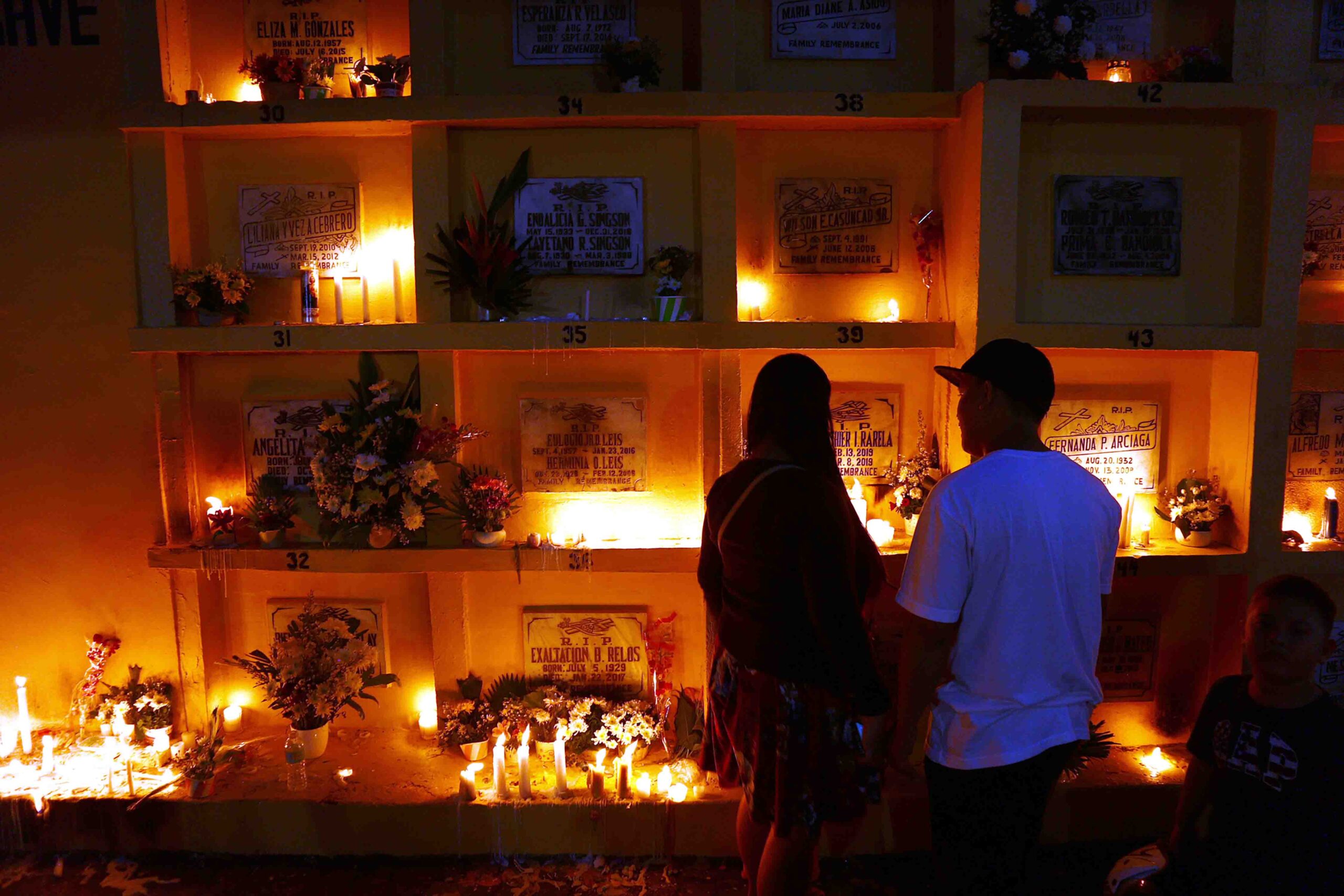
The Church begins November by celebrating all of the saints in heaven. The second of November brings the commemoration of All Souls. We are invited to pray for our relatives and friends who have gone before us. Many families visit cemeteries to pray at the graves of their loved ones. In Mexico, people celebrate El Dia de Los Muertos, the Day of the Dead. Masks, music, and food transform gray cemeteries into festive places filled with color and song.

For Catholics, the death of the faithful is cause for hope, even rejoicing, amid the mourning. A prayer at the funeral Mass proclaims, “Lord, for your faithful people, life is changed, not ended.” Death is not an end, but a gateway into everlasting life.

But what that everlasting life looks like remains a mystery to us while we are here on earth. Most of us aim for heaven and hope to avoid hell, but rarely do we think about that other option: purgatory. Purgatory seems to come up more often in television shows or classic literature than in our daily discussions of the afterlife. But what do Catholics believe about purgatory? Does purgatory deserve a proper burial, along with other medieval superstitions, like bloodletting and limbo? I find in this Catholic teaching a gritty, hopeful realism.


WE ARE NOT SAINTS YET

Let’s be honest: We are not all saints yet. Ask the men in my Jesuit community and they will give you plenty of examples of my grumpiness, laziness and impatience. “Was I on for dish duty last night? Oops.” I can provide similar examples for them as well. I try to forgive, but I choose not to forget. We are not devils either, not entirely. We are caught somewhere in between, with flashes of charity and selfishness side by side. The Catechism of the Catholic Church states, “All who die in God’s grace and friendship, but still imperfectly purified, are indeed assured of their eternal salvation; but after death they undergo purification, so as to achieve the holiness necessary to enter the joy of heaven” (No. 1030).

This describes many of us. We are “imperfectly purified.” Yes, I do pray. I celebrate and participate in the sacraments, especially Mass and confession. As a Jesuit, I have participated in two 30-day silent retreats, 24 eight-day retreats, and a handful of weekend retreats and days of prayer–totaling almost 300 days on retreat as a vowed religious. I should be holier than this. I am working on it. Kind of.

Pope Francis asks us to pray for the souls in purgatory. “Let us not forget, however, that so many deceased also await our spiritual support,” he said. “Let us remember them in our prayers, together with Mary, ‘Queen of All Saints.’”

Perhaps purgatory does not belong in the ecclesial waste bin but rather deserves our attention, like other neglected teachings such as the Sacred Heart devotion and reparation. Praying for those in purgatory is communal. We pray as families and in the church, with Mother Mary. We are sinners praying for sinners. I will need to apologize to some people when I get there. I will need to forgive others. This reality is also an incentive for me to do these things now.

There is an excellent continuity between earth and purgatory: I have opportunities for purification, or purgation, from my sinful habits now. These come every evening at the dinner table and at Thanksgiving with my extended family. Life on earth is a kind of purgatory. We are not in heaven nor in hell. We can experience heavenly moments in a glorious Mass, when separated lovers are reunited, or when holding a newborn child. We see glimpses of hell here, too, in the blank craters on a Ukrainian battlefield or a mother seeing her son convulsing after a drug overdose.

Purgatory is not an act of God’s justice but a sign of God’s mercy in the face of human sinfulness. If the Beatitudes are a pathway to heaven, then what about the times that I ignore those guideposts and do the opposite? Blessed are the meek and the peacemakers (Matthew, 5); what about the overbearing and the warmakers?


“STOP DOING EVIL”

Pope Francis’ views on hell are complex and worthy of another article.  He once stated, “What I would say is not a dogma of faith, but my personal thought: I like to think hell is empty; I hope it is.” But at a prayer service for those murdered by the mafia in Italy in 2014, he addressed the hitmen: “Convert. Stop doing evil…. There’s still time to stay out of hell. That’s what’s waiting for you if you stay on this path.” Perhaps the pope’s first statement is a prayer and his second is a warning. Jesus likewise speaks of hell while doing all he can to keep us out of it.

Pope Benedict XVI writes eloquently of the afterlife in his encyclical, Spe Salvi. On purgatory, he reflects: “The belief that love can reach into the afterlife, that reciprocal giving and receiving is possible, in which our affection for one another continues beyond the limits of death–this has been a fundamental conviction of Christianity throughout the ages, and it remains a source of comfort today. Who would not feel the need to convey to their departed loved ones a sign of kindness, a gesture of gratitude, or even a request for pardon? (No. 48).

St. Ignatius encouraged, even ordered, Jesuits to pray for their deceased brothers and for departed donors to the Jesuit order. These are prayers of gratitude for all they did on earth, and prayers that they join the saints so that they can pray for us in heaven. This tradition continues, as Jesuits are required to offer two Masses for the dead each month: one for deceased Jesuits and another for departed benefactors.

For Catholics, the dead never really go away. “Life is changed, not ended.” We can still love the departed, pray for them, and cherish their memory. I offer a twofold petition: “Grandma, I love you and pray for you. If you’re in heaven, pray for me and help me to see you there.”


WEDDING FEAST

What is purgatory like? Saints and Scriptures offer images and descriptive parables, always related to heaven. If heaven is like a wedding banquet (Matthew, 22), then purgatory may be understood as a cleansing and preparation for a grand celebration. The Book of Revelation describes heaven as a garden with fruit trees and rivers (21-22). In this way, life on earth and in purgatory are a journey to a glorious destination. Am I in the backseat, kicking my siblings and complaining, “Are we there yet?” Or, with the saints, am I helping my fellow travelers, like the Good Samaritan–as we anticipate our arrival at our eternal home? See you in Purgatory! Let us pray that we are not there for long.  Published in America Magazine

Share Your Thoughts

All comments are moderated

From The Same Issue

The articles and content about this issue

From The Same Issue

The articles and content about this issue

From This Topic

The articles and content about this topic

From This Topic

The articles and content about this topic

Explore Other Topics

Browse other coverage

Explore Other Topics

Browse other coverage

WM SPECIAL

Presents, discusses and draws readers to reflect on issues of outmost relevance to the world today.


FRONTIERS

Very often, mission is carried out in frontier situations around the world. Those who embrace these situations have much to share.


UNITY IN DIVERSITY

Writer Ilsa Reyes will be exploring the richness of Pope Francis’s latest encyclical Fratelli Tutti with a view of helping our readers to get a grasp of the this beautiful papal document.


FRONTLINE

Puts to the front committed and inspiring people around the world who embrace humanitarian and religious causes with altruism and passion.


IN FOCUS

Focus on a given theme of interest touching upon social, economic and religious issues.


FAITH@50

As the Philippines prepares to celebrate 500 years of the arrival of Christianity. Fr. James Kroeger leads us in this series into a discovery journey of the landmark events in the history of faith in the Philippine archipelago.


INSIGHT

Aims to nurture and inspire our hearts and minds while pondering upon timely themes.


FILIPINO FOCUS

The large archipelago of the Philippines, in its richness of peoples and cultures, offers varied and challenging situations for mission.


FOLLOW ME

Reflections and vocation stories that shape up the lives of young people.


MISSION IS FUN

As humor and goodness of heart are qualities of Christian and missionary life, the new column “Mission is fun” will be publishing some anecdotes and stories that have happened in a missionary context to lighten up the spirits and trigger a smile in our faces.


LIVING COMMUNION

To help readers of World Mission live this year dedicated to Ecumenism, Interreligious Dialogue and Indigenous Peoples, Tita Puangco, writer and lecturer, shares in this section insights on the spirituality of communion.


WINDS OF THE SPIRIT

A historic view of the Catholic movements that emerged from the grassroots as an inspiration by the Holy Spirit.


BRIDGE BUILDERS

On the Year of Ecumenism, Interreligious Dialogue and Indigenous Peoples, radio host and communicator Ilsa Reyes, in her monthly column, encourages Christians and people of good will to be one with their fellow people of other sects, religions and tribes.


INTERVIEW

Questions to a personality of the Church or secular world on matters of interest that touch upon the lives of people.


WORLD TOUCH

News from the Church, the missionary world and environment that inform and form the consciences.


CARE OF THE EARTH

A feature on environmental issues that are affecting the whole world with the view of raising awareness and prompting action.


EDITORIAL

The editor gives his personal take on a given topic related to the life of the Church, the society or the world.


YOUNG HEART

A monthly column on themes touching the lives of young people in the Year of the Youth in the Philippines by radio host and communicator I lsa Reyes.


SCROLL

A missionary living in the Chinese world shares his life-experiences made up of challenges and joyous encounters with common people.


EXTRAORDINARY PEOPLE

Life stories of people who deserve to be known for who they were, what they did and what they stood for in their journey on earth.


ONE BY ONE

Stories of people whom a missionary met in his life and who were touched by Jesus in mysterious ways.


INCREASE OUR FAITH

Critical reflection from a Christian perspective on current issues.


SPECIAL MOMENTS

Comboni missionary Fr. Lorenzo Carraro makes a journey through history pinpointing landmark events that changed the course of humanity.


PROFILE

A biographical sketch of a public person, known for his/her influence in the society and in the Church, showing an exemplary commitment to the service of others.


WM REPORTS

Gives fresh, truthful, and comprehensive information on issues that are of concern to all.


LIFE'S ESSENTIALS

A column aimed at helping the readers live their Christian mission by focusing on what is essential in life and what it entails.


ASIAN FOCUS

Peoples, events, religion, culture and the society of Asia in focus.


THE SEARCHER'S PATH

The human heart always searches for greatness in God’s eyes, treading the path to the fullness of life - no matter what it takes.


INDIAN FOCUS

The subcontinent of India with its richness and variety of cultures and religions is given center stage.


AFRICAN FOCUS

The African continent in focus where Christianity is growing the fastest in the world.


JOURNEY MOMENTS

Well-known writer and public speaker, Fr. Jerry Orbos, accompanies our journey of life and faith with moments of wit and inspiration based on the biblical and human wisdom.


IGNATIUS STEPS

On the year dedicated to St. Ignatius of Loyala, Fr. Lorenzo Carraro walks us through the main themes of the Ignatian spirituality.


THE SEVEN LAST WORDS OF JESUS

Fr. John Taneburgo helps us to meditate every month on each of the Seven Last Words that Jesus uttered from the cross.


INSIDE THE HOLY BOOK

In this section, Fr. Lorenzo delves into the secrets and depths of the Sacred Scriptures opening for us the treasures of the Sacred Book so that the reader may delight in the knowledge of the Word of God.


CONVERSATIONS

Reflections about the synodal journey on a conversational and informal style to trigger reflection and sharing about the synodal path the Church has embarked upon.


VATICAN II

This 'mini-course' series provides a comprehensive exploration of Vatican II, tracing its origins, key moments, and transformative impact on the Catholic Church.


COMBONIS IN ASIA

This series offers an in-depth look at the Comboni Missionaries in Asia, highlighting their communities, apostolates, and the unique priorities guiding their mission. The articles provide insights into the challenges, triumphs, and the enduring values that define the Comboni presence in Asia.


BEYOND THE SYNOD

Following the Synod on Synodality, this series examines how dioceses, parishes, and lay organizations in the Philippines are interpreting and applying the principles of the synod, the challenges encountered, and the diverse voices shaping the synodal journey toward a renewed Church.


A TASTE OF TRADITION

This series introduces the Fathers of the Church, featuring the most prominent figures from the early centuries of Christianity. Each article explores the lives, teachings, and enduring influence of these foundational thinkers, highlighting their contributions the spiritual heritage of the Church.


A YEAR OF PRAYER

In preparation for the 2025 Jubilee Year under the theme “Pilgrims of Hope,” 2024 has been designated a Year of Prayer. World Mission (courtesy of Aleteia) publishes every month a prayer by a saint to help our readers grow in the spirit of prayer in preparation for the Jubilee Year.


OUR WORLD

In Our World, the author explores the main trends shaping contemporary humanity from a critical and ethical perspective. Each article examines pressing issues such as technological advancement, environmental crises, social justice, and shifting cultural values, inviting readers to reflect on the moral implications and challenges of our rapidly changing world.


CATHOLIC SOCIAL DOCTRINE

This series unpacks the principles of Catholic Social Doctrine, offering a deep dive into the Church's teachings on social justice, human dignity, and the common good.


BIBLE QUIZ

Test your knowledge and deepen your understanding with our Bible Quiz! Each quiz offers fun and challenging questions that explore key stories, themes, and figures from both the Old and New Testaments.


Shopping Cart