
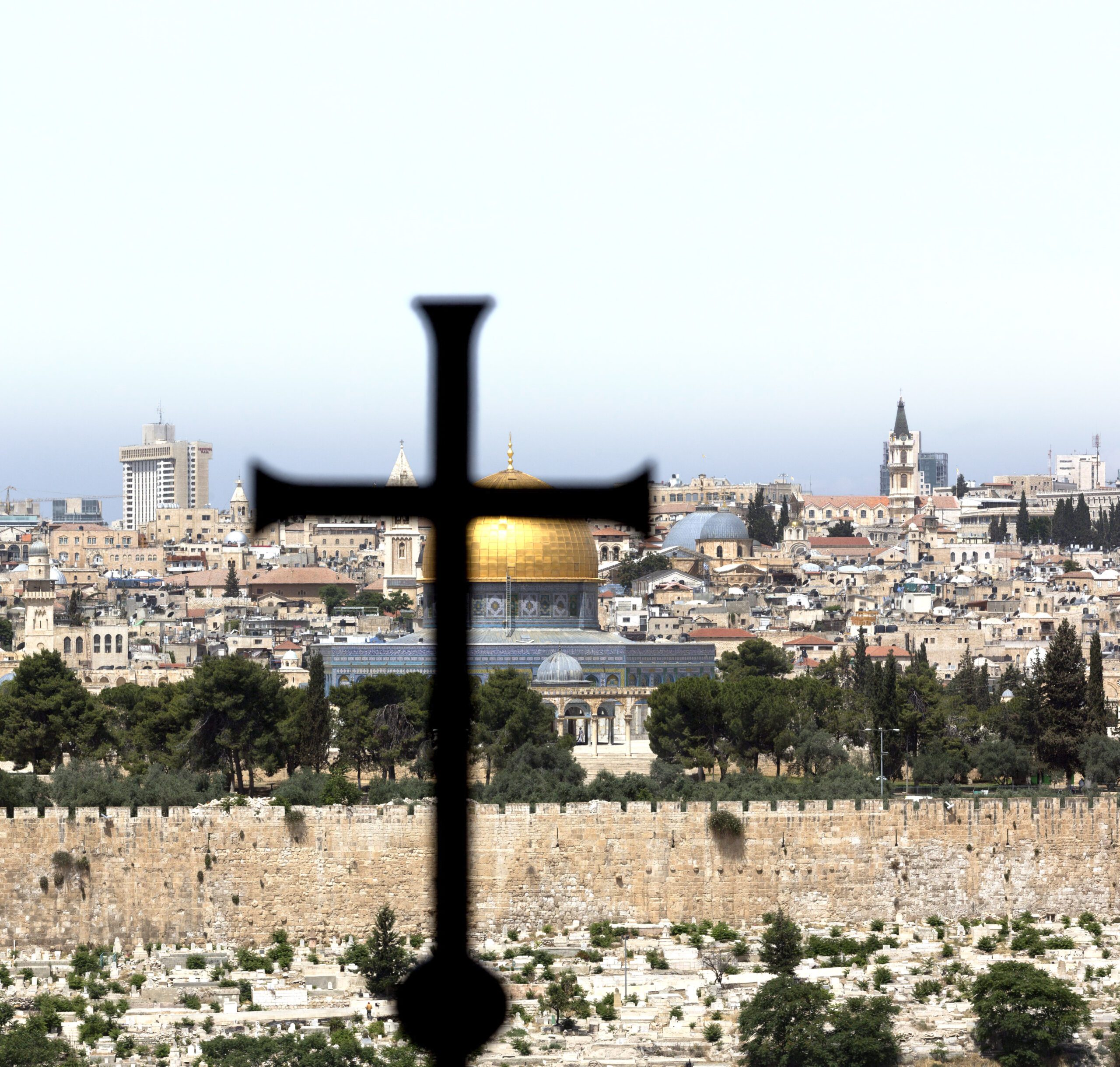
When one speaks about the presence of Christians and Catholics in the Holy Land, the image that comes to mind has to do mostly with groups of pilgrims. Usually, we find numerous groups that visit places linked to the life of Jesus: Bethlehem, Nazareth, Capernaum and the Sea of Galilee, Jericho and the Jordan River, and finally, Jerusalem.
During the summer months, the groups normally come from a variety of countries, especially from Europe and North America. During winter, their numbers decrease and the prevalent groups show the face of a more universal and multicultural Christianity: the groups come mainly from Africa Asia, and the Americas.
These pilgrims, by visiting the holy places, witness and live their faith with a strong and emotional experience. Their interaction with those who live there is limited to shopping or interactions with locals in restaurants and hotels. Only a few have any genuine encounter with resident Christians or Catholics.
THE TRUE FACE OF CHRISTIANITY
Meanwhile, those who have the luxury of time to know more deeply the human, religious and cultural situation of the two peoples – the Hebrews and the Palestinians – often ask: How do Christians live? Are there Catholics? If so, where are they? What face do they have and what problems do they withstand?
The initial impression is that the political context in which they live does not make their life easy. The gap of intolerance between Jews and Palestinians continues to rise, frustrating both sides. This does nothing to help the interaction and growth of the Christian communities. The conflict makes emigration increase, especially the Catholics of Palestinian origin. Places, such as Nazareth and Bethlehem, which had high percentages of Christian and Catholic population, are today a mirage of what they were in the past.
KEEPING THE PRESENCE
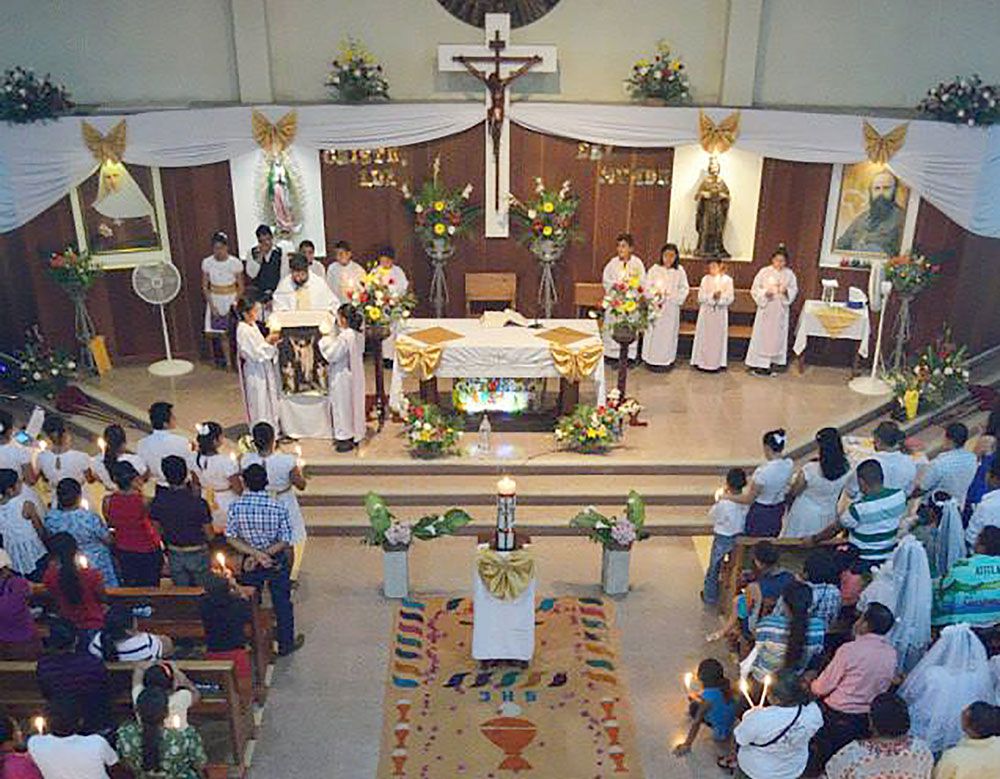
The Catholic Church does everything to maintain the presence and the structures of these communities – a very rich presence inherited from a long history of centuries and millennia full of human vicissitudes. The visible presence is the custody of the Holy Land by the Franciscans, who have been running Catholic lands and infrastructure for centuries. But, apart from maintaining the places and preserving this geography linked to the history of salvation, the Franciscan presence has given rise to Christian communities, especially among Arabic populations, communities that the Franciscans followed for decades and centuries.
In addition to its antiquity, the Catholic presence in the land of Jesus also reveals a great diversity caused by centuries of isolation and division. The custody of the Holy Land and the Latin patriarchate are surely the hallmarks of this ancient Catholic presence connected to Rome. But there is more Catholic presence, which usually goes unnoticed by the pilgrim. This includes: (1) the Melkite Greek Catholic Church, which keeps her patriarchate of Jerusalem with eight parishes and the archeparchy of Akko with 33 parishes; (2) the Maronite Catholic Church, which maintains the Diocese of Haifa with 11 parishes and the exarchate of Jerusalem and Palestine with three parishes; and (3) the Armenian Catholic Church and the Syro-Catholic Patriarchal Church with its exarchate of Jerusalem with two parishes each.
Some of these Catholic communities appear to be more linked to the past and have an uncertain future. But, in fact, they express a tradition that dates back to apostolic times. They were able to overcome the vicissitudes of history, and that is the most valuable guarantee of its future.
MORE PEOPLE AND PRESENCE
Aside from these Churches, a total of 103 institutes for consecrated life, 73 for women and 32 for men, are in the Holy Land. The members of these religious institutes total to 502 religious, distributed over 88 communities, and 1,072 religious sisters, distributed in 218 communities.
Added to this are growing numbers of new communities, movements, and Catholic groups that sought and consolidated a presence in the Holy Land during the past few years. These new communities have already reached a sum of 20 with 284 members divided over 35 centers.
THE FACE OF COMMUNITIES
The Catholic presence is best understood, not through numbers, but through the people who comprise them. Among these are the Catholic communities of Hebrew heritage, which are coordinated by a vicariate for Hebrew-speaking Catholics.
When the State of Israel was established in 1948, many Catholics left the country thinking that the Hebrew State had no room for them. The Catholic Church, linked mostly to the Palestinian population, entered a phase of trauma, worried about her survival. But according to Fr. David Neuhaus, SJ, currently in charge of the vicariate, the creation of the State of Israel meant an opportunity to review the Catholic Church’s relations with the Jewish world. Some pioneers, individual priests and congregations, thought this was an opportunity to reformulate the relations between Catholics and Jews.
Despite some tension between this group and the local Church, that struggle with issues of justice and peace because of the Palestinian issue, this group stirred the Church. The first community of these Catholics within the Jewish context was founded in 1958 in the region of Jaffa, and had more than three thousand members. Over the years, parish communities of Jewish language were founded in Jaffa-Tel Aviv, Jerusalem, Haifa and Bersheba; lately, in Tiberias and Nazareth.
CHALLENGES
These communities inserted themselves in the Jewish environment. One of their first concerns was the translation of the entire liturgy and prayers in the Hebrew language. The challenge was to think and live the Catholic faith in Hebrew. Therefore, there was a return to the Old Testament to find in it the novelty of the roots of faith. Today, the local Church speaks, lives and thinks in Hebrew terms.
The second challenge was, and still is, how to transmit the faith to the young in a completely Hebrew and very secularized environment. The situation is difficult because the youth are completely absorbed in school, by the army, and the attractive Hebrew secular environment.
The vicariate for Hebrew-speaking Catholics has no structures to support the formation of youth, such as schools. It uses catechesis schemes and summer camps, which are insufficient to keep alive the interest of young people in the Christian faith. These communities are assisted by a dozen priests, young and dynamic, but all of them are foreigners. This by itself is an impediment: the inculturation of the youth by priests who themselves are not inculturated.
EXTERNAL INFLUENCES
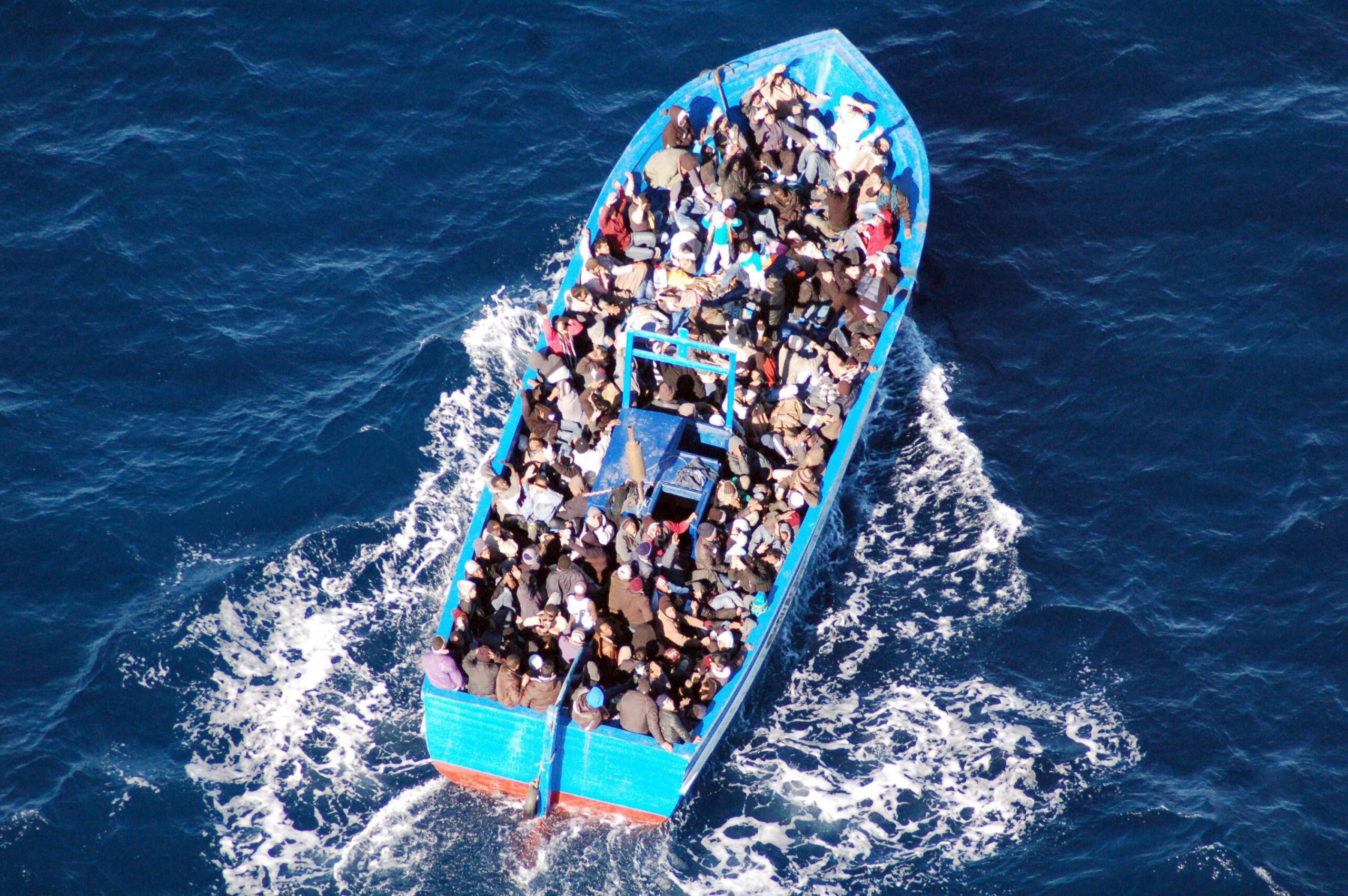
In 2000, Israel began to close the Palestinian territories thus preventing the access of Palestinians to the labor market in Israel. A new generation of migrant workers came from Asia and Africa, landing in a Hebrew society. Many of them are Christians and Catholics (calculated at 70,000) and the vicariate took over the pastoral care of these Catholics migrants. The children of these immigrants attended government schools, along with the children of Jewish families, and easily inserted themselves into the Catholic-Hebrew-speaking communities.
The presence of Catholic immigrants living in Jewish environment and participating in the life of the Hebrew-speaking communities is rather fragile because they are transients in Israel. But despite this, they are members of the Church in the full sense and bring vitality to the communities. The hope is that some or even many of them end up settling there permanently. The presence of immigrants can help the local Catholic Church to come out and take a more evangelizing attitude. Socially speaking, immigrants live in fragile conditions, but they have a strong and cheerful disposition concerning their faith.
The presence of thousands of immigrants, especially Filipinos and other Asians, gives new vitality and enrichment to the face of the Catholic Church. For Fr. Neuhaus, there is a third objective to be achieved and not to be forgotten: enabling these communities to interact with the Arabic Catholic communities because both form the same and only local Catholic Church.
COMMUNITIES OF ARABIC CULTURE
The Catholic communities of Arabic heritage form the largest nucleus of the Catholic Church. They are linked to the vast majority of church institutions, both in Israel and in Palestine. Their face is easier to trace. On the one hand, they are more worried about their survival in a world hostile to them: the Jewish world and the radical Islamic world. Their numbers are small: the permanent deacon in a suburb east of Jerusalem puts the members of the community at 69 families, 300 people in all.
The biggest problem of these communities might be at the social level. Right now, many Palestinians are unemployed. The Church, directly or indirectly, helps many Palestinian families to find employment in institutions of the Catholic Church. Her biggest enemy is emigration, with many members going abroad or to the Palestinian territories, where the cost of living is lower.
The political context in which these Catholic communities live has not improved. On the one hand, in Israel, there’s more intolerance and hatred; there is an affirmation of their own cultural and political Palestinian identity. On the other hand, in relation to Islam, there is a positive relationship coming from the past; but there is a fundamentalist ‘yeast’ that is trying to disrupt the good relationship between Catholics and Muslims in Palestine. This feeling of political uncertainty causes the communities to live in a spirit of survival and anxiety about the future.
SOCIAL COMMITMENT
Traditionally, the Church’s social action has been linked to educational institutions, Bible schools and seminaries. There are a large number of middle and high schools, kindergartens and primary schools, which the Catholic Church keeps running, especially in favor of the Palestinian population, Catholic and especially Muslim. The Latin patriarchate has 11 of these schools operating in Palestine and 5 in Israel. Melkite Catholics have 10 of these schools between Palestine and Israel. The male religious orders keep 14 of these schools functioning in both states. The female religious orders, in turn, operate 17 schools, besides 22 homes for the elderly and children and 11 hospitals, clinics or maternities.
In the social sphere, the Catholic Church has responded to challenges with the Caritas. Because of the problems caused by prolonged conflict between Israel and Palestine, the involvement of the Church and Catholic institutions in this area has increased more, with the organization of committees on justice and peace, interreligious dialogue, and legal aid.
It is in this context that the search for new answers to the constant problems caused by the conflict, goes on, and where men and women religious have been more involved, particularly in assisting refugees, visiting prisoners, assisting immigrants, legally and materially, supporting Bedouin and the groups pushed to the margins of Israeli and Palestinian society.
This work has united the various religious congregations and has also favored an interaction between Israelis and Palestinians. The Comboni Missionary Sisters, for example, while supporting the African refugees and migrants, as well as the Bedouins of the desert of Judea, have done their work in collaboration with Israelite groups and NGOs.
For the Comboni Missionary Sister Ezezet Kidané and Alicia Vacas, who are dedicated to this work, responding together to the challenges of injustice and social exclusion creates new conditions for a reciprocal approach and an interfaith dialogue with Jews and Muslims, born of life and faith in the same God, and realized in a shared commitment to social transformation based on the values of the Gospel, the Jewish tradition that preceded it, and the Islamic tradition that followed.