
Reduce anger. In situations of intense conflict, it is unrealistic to think that there will be immediate solution to hostilities. When the anger is high, the first task is to reduce the anger of the opponent. The peacemaker can exhort the moderates on either side; begin to use mollifying words, e.g., appreciating some good things happening on the other side, showing sympathy for the sufferings they have gone through, or recalling the good relationships that existed between the two parties in earlier times, or pointing out the damage that continued hostilities can cause to both communities. But this should be done carefully lest the sentiments of one’s own people are hurt when they are still agitated, in agony, and determined to fight. The peacemaker can keep referring to positive happenings in the midst of conflict, e.g., the kindness shown on either side, forgiveness given by some individuals. But he/she has to do it casually as if in passing, lest some may think that his/her so-called ‘universal’ outlook makes him/her insensitive to their own sufferings.
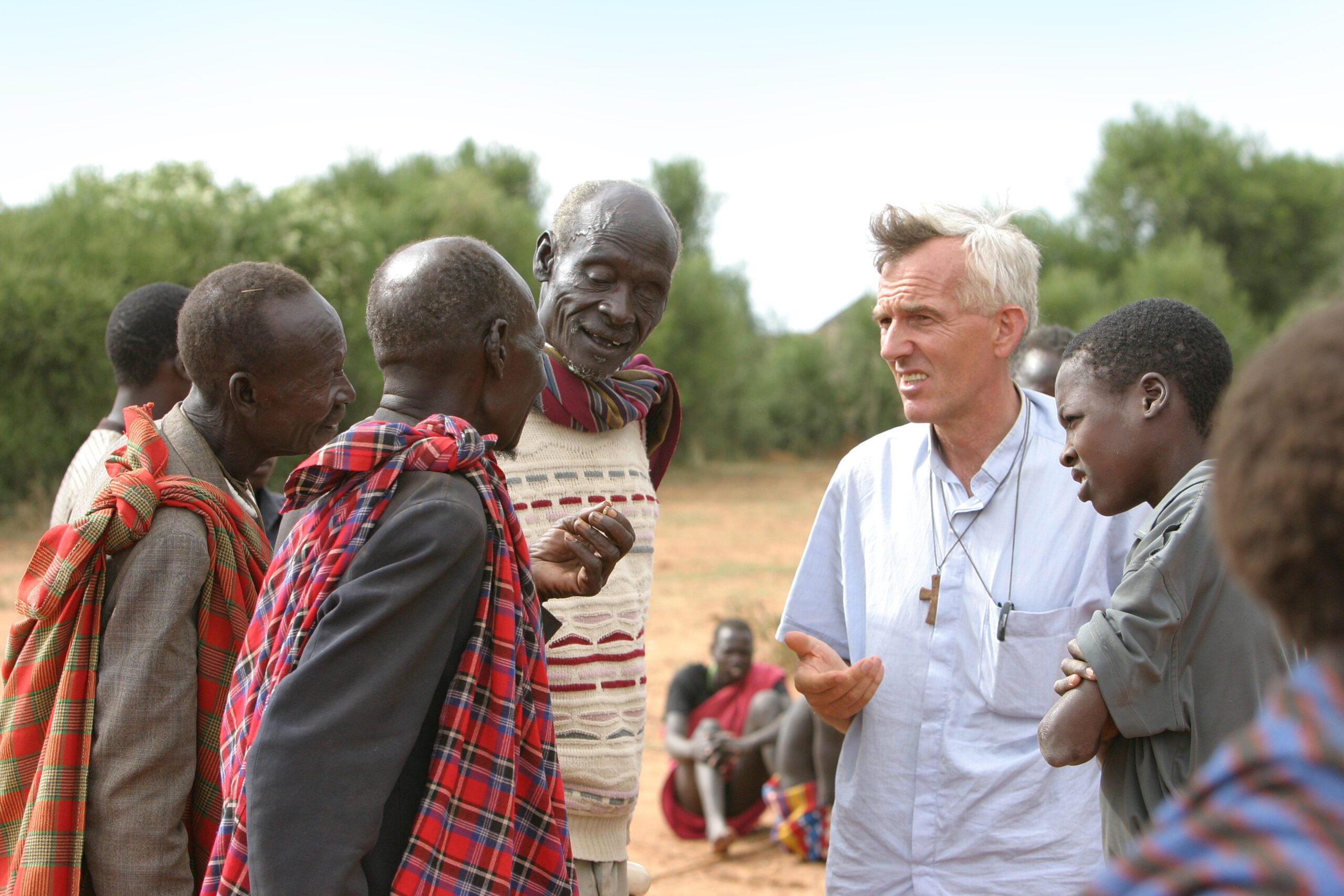
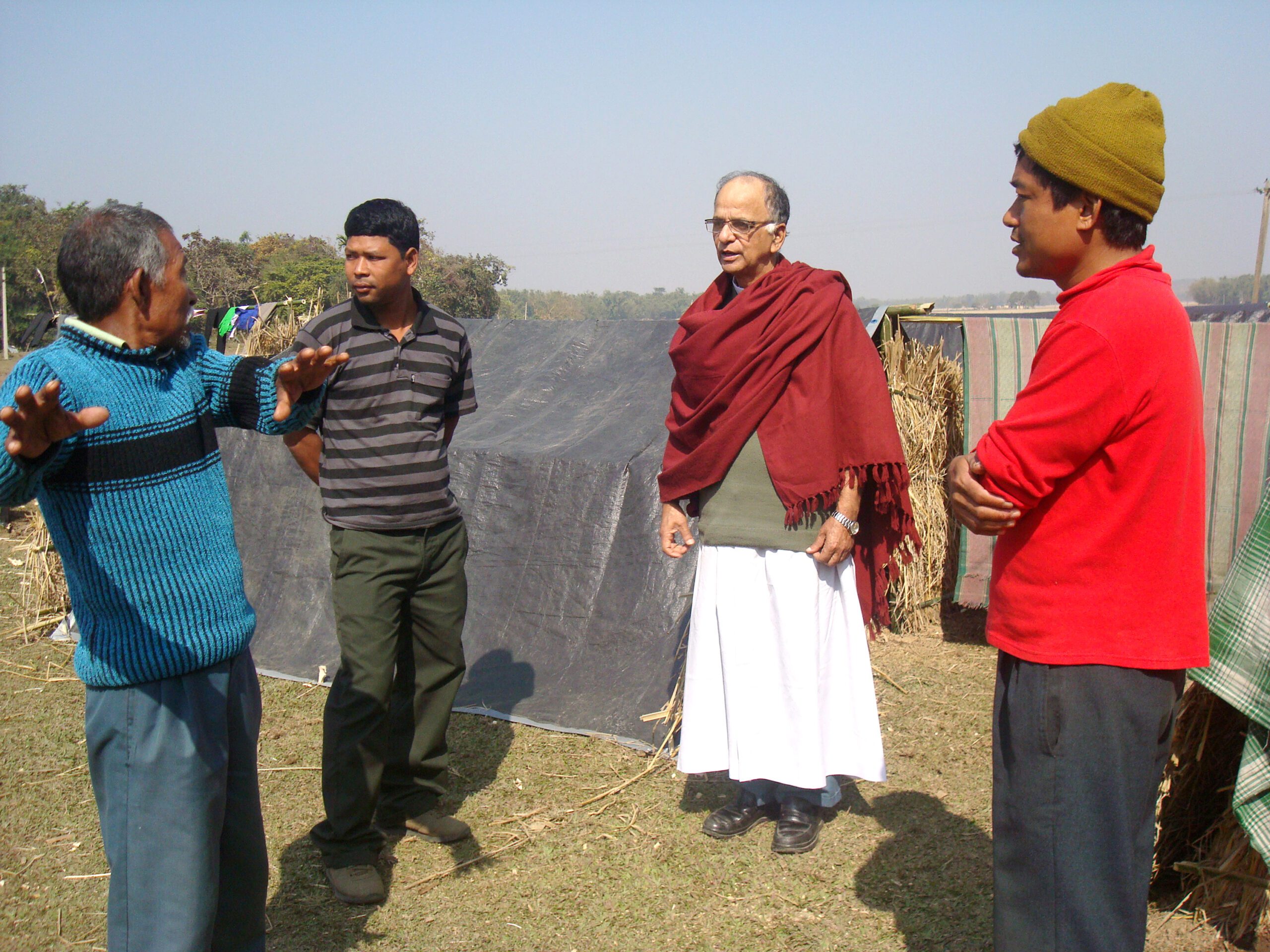
I have repeatedly tried to do this during the Kokrajhar conflict in order to create an atmosphere for reflection and discussion, leading to the acceptance of the idea of peace. It is a pedagogy involving a long itinerary. I kept meeting the leaders on either side mostly to express sympathy for the sufferings of their respective people and appreciation for the supreme effort they were making to assist their community, casually also referring to the difficulties that the other side was experiencing. Let me quote one example. When I was in Khandmal (Orissa) with our northeastern ecumenical team, one of the first things I did was to ask whether I could meet the Hindu religious leader who was the successor of the one whose death had caused the uprising against Christians. People did not encourage me at that time, and I thought it was too early a stage to make such a request. Back in Guwahati, I probed the possibility again, and the message I received was positive. The new Swamiji (religious leader) was open to meeting me at some neutral place. Though, subsequently, we did not succeed to meet each other and the need for it had become less important with other contacts growing, I am sure the anger on the other side could have become a little less with the interest I showed in meeting him. His entire party would have softened at least a bit. For me, even that small change for the better is important. And if we multiply many small gestures, symbolic and real (e.g., relief assistance, friendly call, etc.), the general atmosphere changes for the better, and we lead trends to the ‘tipping point’ in favor of peace. I remember meeting a leader in Kokrajhar who was presented to me as an aggressive person. He was totally disarmed by the very fact that I went out to see him and seek his advice at great risk to myself and with considerable sacrifice.
Build a tiny bridge. In times of tension, we ought to search for ways of building a tiny bridge across the lines of hostility. I have often suggested meeting the very leader of our opponents. If that is not possible, we can meet someone next to him. If not, someone next to the next; in other words, through a second or third party. Taking another route, someone on this side may have a friend, a relation, a work companion, someone who speaks the same language or belongs to the same ethnic group or has had some association in the past with the other side.
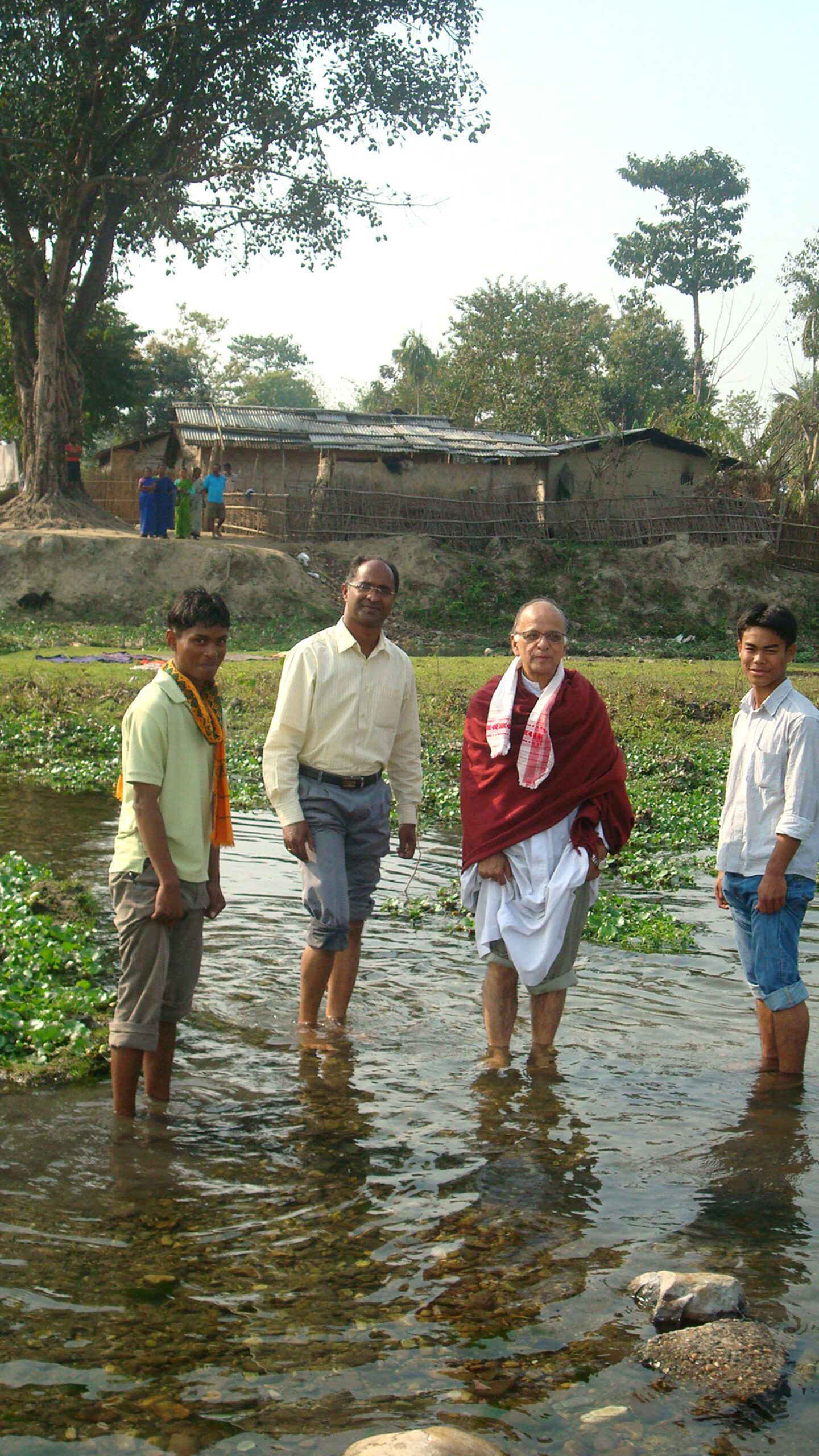
In the case of Khandhamal, the bridge-builder between the Christian community and the rest of society was Sr. Suma, Regional Superior of the Missionaries of Charity. Her team of Sisters was doing relief work for both sides. She had built up good relationship with the district collector, whom our ecumenical team had met during our first visit to Khandhmal. And it just happened that Mr. Kishen Kumar, the district collector, had known Fr. V.M. Thomas of Guwahati at some training program. It was this tiny bridge that built a relationship between the Northeast and Orissa, with indefinite possibilities in our work for peace.
During the first visit of our ecumenical team, I asked Mr. Kishen Kumar whether he would appreciate a training program for the youth of Khandmal by Fr. V.M. Thomas. He welcomed the idea. I was not sure how committed he would be to such a program. Sr. Suma kept the idea alive with further discussions. Finally, I discovered that Mr. Kishen Kumar was most serious about our proposal. He welcomed our interreligious team to Phulbani where we conducted a two-day youth training program for more than 160 young people representing the entire region of Khandmal.
The participants were mostly of other religions. They were chosen on the criterion that they would make a difference in society. The district authorities gave full cooperation. A minor bond of relationship had helped us to develop a mighty peace-building program. That is why I exhort my colleagues to keep trying to build a bridge over the ‘impossible.’ It may be like the little bridge that Caesar built across the Rhine! Two months after the Phulbani program, some 25 young leaders selected by Mr. Kishen Kumar, came to Guwahati’s Don Bosco Youth Institute, for further training for 10 days. They went back determined to work for peace in Khandhamal.
Lessons learnt. It may be good, at this stage, to share with you a few lessons that I have learned over the years from working for peace in Northeast India. The work itself was educative as we struggled for reconciliation in places like Kokrajhar, Churachandpur, Haflong, Diphu, Udalguri. I am adopting a reflectional style, and I hope that someone finds a few of these ideas useful while they are evolving strategies for peace in their own contexts. Let me begin with a general statement, which would be valid in any part of the world today. We have been fed, for over a century, with philosophies of struggle (from Darwin, Marx, Nietzsche, propagators of the Fascist, Nazi and Communist ideologies and with their milder versions, developed from various forms of nationalisms, ethnic loyalties, religious fanaticisms) and are so inspired by the ideals of fighting and struggling for justice and rights, that our combating spirit has grown, while our reconciling skills have sagged. Young revolutionaries find words like these of Marx and of other radical thinkers inspiring: “Far from opposing excesses, the vengeance of the people on hated individuals or attacks by the masses on buildings which arouse hateful memories, we must not only tolerate them, but even take the lead in them” (Wilson 250). There are milder versions of this theory; for example, the one proposed by Fritz Fanon which says that, for oppressed people, violence was psychologically healthy and tactically sound! In recent years, some Latin American Liberation theorists have proposed: “By commanding us to abandon neutrality, the gospel forces us to create enemies and combat them… The Christian must love everybody, but not all in the same way; we must love the oppressed, defending and liberating him; the oppressor, accusing and combating him” (Frost 142).
A STEP-BY-STEP APPROACH
No wonder, then, that the fighter is the hero today, and the peacemaker is, at most, a ‘useful botheration’ or ‘unnecessary help,’ who may be granted a minimum space grudgingly in our consciousness. Activities of such a harmless do-gooder do not get the headlines or attract attention. What makes news is action, explosion, confrontation, collision, mutual destruction. What is expected of a committed activist is to condemn, denounce, expose, challenge, humiliate. When he does that, he is at his best. He emerges as a hero. Consequently, we are beginning to forget that there are certain basic skills traditional in all cultures like paying respectful attention to the other person’s (tribe’s, community’s) points of view, trying to understand them, showing sympathy for the opponent’s goal or at least some aspect of it, dialoguing, explaining, arguing amicably, negotiating, avoiding aggressive language, making a special effort to convince, yielding, conceding, tolerating, forgiving, coaxing, eliciting compliance, drawing people into accepting one’s own point of view, evoking collaboration, insisting on gentler solutions, and inviting compromise. So, the first learning I have acquired is that anyone who desires to be a peacemaker needs to unlearn some of the earlier mentioned skills of confrontation and develop the skills needed for reconciliation.
If, in an ongoing conflict, we take it for granted that one side is definitely right and the other side totally wrong, that one is a demon and the other a helpless victim, and that we have to take sides and fight to a finish… if this is our conviction, we shall not succeed to become mediators between two groups in conflict. For both contenders in a fray are convinced that they are fighting for a good cause. Let us begin by turning to one group of people that is making loud claims of fighting for justice for its own people and listen to them at length. When we have heard enough of it, let us turn to the other side. Surprisingly, we will find that they, too, are waging a war in behalf of fairness to their community and their own set of interests. Both are fighting for justice, each community for its own version of it. Thus, perceptions of justice clash. When justice clashes with justice, the peacemaker finds himself in a helpless position. An important lesson from experience, therefore, is that a peacemaker should be prepared to fail. For he will need to make a great effort to sort out issues in such contexts. However, he should never give up; on the contrary, he should be doubly determined to make the extra effort that the situation calls for. Barack Obama once said: “We can constantly remake ourselves to fit our larger dreams.”
Another lesson is this: you will not be in a position to initiate a reconciliation-dialogue with contending groups unless you have a measure of sympathy for their cause in your heart. Excessive preaching and repetition of pacifist platitudes at the early stages of the dialogue, when the contestants are still in an aggressive mood, will sound extremely annoying and humiliating to them. Hasty condemnations will enrage them. Even if you believe that their claims are exaggerated, unless you can empathize with them at depth and are touched by the passion they have for their goals and the sense of justice that motivates them, or their approach to the problem, or at least some aspect of their cause, you will not be able even to initiate a dialogue. But if you are profoundly struck by the magnitude of their grievances and are able to understand (not necessarily approve) the excesses to which their ‘legitimate anger’ has driven them, they will gradually, with caution, begin to respond. The same will be true of the other party. Neither group is asking you to condone their immoderation; they are asking you to understand how they felt compelled to go to such painful lengths to defend their cause. They are not asking you to say much, but to feel much. They are not asking you to appropriate their anger, but to experience their pain in the inhuman situation in which they find themselves imprisoned at the moment (which, of course, they themselves had a share in creating).
There is a fourth lesson I would like to share with you: that there is a profound longing for peace even in the heart of the sternest combatant. But peace at what cost? At whose terms? Not certainly at the cost of their central interests. Not certainly at the price of having to compromise their honor or damage their image before their community or their peers. If the peacemaker wants to retain his credibility, it must be clear to the contestants that he is not going to sell out the gains they have made during a lengthy struggle, or compromise their future; that he understands that they were ‘compelled to resort to violence’ only because they wanted to convey powerfully a greatly-needed message to the public in general, but more specially to their opponents. Carl Jung once said that the strong man must somewhere be weak, and the clever man must somewhere be stupid… otherwise, the man would not be true to reality. In the same way, the violent man must somewhere be peaceable. Even the fiercest fighters are looking forward to an era of peace. That is why they keep a little door open for the peacemaker, which they can snap shut any time they feel unsure. It is this hidden entry point that the peacemaker tries to target. But often, sadly, that secret door remains bolted and barred for reasons of security. So, a peacemaker has often to fall back on the unyielding stamina he has built up and profound convictions he has cultivated to persevere in his effort and inspire confidence in the combatants and their leaders.
The most important thing for the peacemaker is to create an acceptable presence in the subconscious of the warring groups. If he or the organization he represents is well known for their beneficent services and non-controversial activities among the communities in collision, the belligerents may turn to him as a peacemaker, or welcome him when he takes the initiative. His ability to build up confidence-generating relationships with the parties concerned is the key to his success. Even those who have been engaged in justice struggles need not consider themselves excluded from the privileged position of becoming peacemakers – if they have always taught non-violence, sought to be fair to all parties concerned, consistently avoided exaggerated ego claims, have a special skill for establishing warmhearted relationships with people and are known for their universal outlook on issues. As he was campaigning for the elections, Barack Obama insisted: “We have a stake in each other’s success.” He spoke of “a future in which the economy grows and prosperity is shared.”
The peacemaker begins by entering into a relationship with the two groups in collision in all sincerity. If he presents himself as a self-appointed mediator or arbitrator, he will be rejected. Criticizing one party to the other is not the best way of proving his neutrality. A commitment to humanity that comes through in his words, deeds and relationships is far more convincing. This quality is far more important than some techniques that he has picked up in a recent conflict-management seminar. A universal outlook, a sensitivity to human pain no matter who suffers, a keen desire to come to the assistance of people in anxiety… these are some of the qualities that a citizen who wishes to become a peacemaker needs to cultivate. When we come close to pain, we come close to humanity. When we come close to a human tragedy, we come close to some of the central concerns of the human family. The memory of great human tragedies like the Holocaust and Hiroshima has an educative message. Most Venerable Nichidatsu Fuiji, a Buddhist leader, once pointed out: “There is no longer a soul who visits the graves of MacArthur or Truman.
However, year after year, thousands and tens of thousands of pilgrims gather at Hiroshima and Nagasaki to pray for the repose of the souls of those who were sacrificed” (Frost 66).
While an intercommunity battle is raging, bringing the ‘right’ people from the contending parties together for negotiations is itself an achievement. Now, who are the right people? It is not likely that the frontline fighters will come for peace talks; their skills lie in another direction. It is not likely either that the war hawks will deign to sit for dialogue. They have a vested interest in keeping the fires burning. I would describe the persons who matter in a peace dialogue as “socially important people”: people who are respected in society, persons who are non-controversial; groups whose opinions have wide acceptability among both radicals and moderates. Such persons would be thinkers, writers, professors, speakers, social workers and people who inspire society with their charismatic leadership or prophetic utterances. One needs to be on the guard against self-interested or politically-motivated people. They can pull the peace initiative in the direction of their own interests.
Always search for ‘effective persons.’ Such persons during conflicts may not necessarily be the ones whose names appear in the press, like politicians or bureaucrats, but they are those quiet and almost ‘invisible’ individuals who think and provide a philosophy for action in the context of the present conflict. It is they who propose the goals, it is their ideas that keep teams together. Some of them develop strategies, keep public contacts, control publicity, build an image for the group, maintain the stamina of the activists. A leader of this definition may be an unimpressive figure, mild-looking and soft-spoken. But he is a perceptive person and has the confidence of the ‘militant boss’ and his confederates. In fact, even the ‘big boss’ depends on his ideas. For, the doer is not always the thinker. The doer acts fast, but does not always reflect. So, after organizing a few agitations, he is exhausted; or after killing a few harmless people and inflicting severe injuries on the other party, he runs short of ideas, and the entire movement fizzles out. It is the thinker that interprets history, constructs a theory, visualizes a future in order to sustain the movement. I am not referring necessarily to just one person. There may be many such persons at different levels of the hierarchy scattered in the various units. Any movement needs a philosophy built by its own intellectuals. It is not likely that you will easily get the key thinkers of a fighting group to come to the negotiating table. The next best thing to do is to draw those who are close to them; and the next best thing again is to get those who are close to those who are close to them. In other words, you may have to work through mediators, or at least such people, as you think, have some influence on the guiding team in the organization. Though you have such ambitious plans to draw the most suitable persons, those who ultimately come for dialogue may be persons totally remote from the frontlines and the controlling machinery. But, at least, they should be persons respected in their own society. For, as long as they have the confidence of their communities, the message they approve will meet with some recognition in intended circles. In order to draw such persons to the dialogue table, it is very important to make direct contacts with them, and not limit yourself to sending out letters.
There are times when negotiators representing conflicting interests will feel unprepared to face each other directly in a meeting. Even after they arrive at the venue, they feel emotionally and mentally not yet ready for direct discussions. In which case, it would be best that each group spends some time in separate meetings to clarify and formulate their own two different points of view and get themselves ready for the intergroup negotiations. Social leaders who have taken up the mission of serving as peacemakers can play an important role by trying to motivate the participants to bring their utmost sincerity to the common effort. They can begin by making a passionate appeal for peace, basing themselves on arguments from human experience, philosophical reflection, wisdom of the ancients in their own respective societies, and the teaching from the scriptures of their religious traditions. Depending on the charism and the moral authority of the peace initiators, a great measure of mental transformation takes place during such preparatory exercises.
If, ultimately, the two groups are prepared to come together, I would suggest that the peacemaker remains a confidence-builder and facilitator and helps to create a serene atmosphere…an atmosphere in which interactions become easy. He may suggest a step forward at key moments, invite deeper reflection, whisper a solution, allowing the contestants themselves to thrash out their differences. If he remains inconspicuous and keeps a low profile, his long-term contribution can be greater. The less he interferes with the natural flow of things, the normal processes of discussions and the practical side of the decisions to be taken, the better. But the temptation to win recognition is so great, that the peacemaker, if he happens to be successful at the first stage, rushes into the role of a mediator, arbitrator and judge. Even if the contestants agree to such an idea, it would be unwise to assume such roles. Winning headlines may be flattering, but the fruits may not be lasting. Premature publicity can be fatal. Those who oppose peace may track down the peacemaker at any stage and make him trip over. Doing things as though not doing – that is the formula for the peacemaker in complex situations. One should feel free from having to play for the gallery.
THE FINAL FORM OF LOVE
Finally, a word about making compromises. Living together always implies a preparedness for compromises. This is true of a family, a village, a nation and the international community. The most valuable contribution the peacemaking team can make is to lead opposing parties towards a gradual understanding and acceptance of this great truth. Self-evident as it may seem, if you rush to conclusions insisting on compromise before the parties had enough time to think over, quoting scriptures and adages when the anger is still high, the pedagogic process you have initiated may be disturbed. It is far more purposeful to draw their attention to the disastrous consequences of an ongoing conflict.
You have to walk a long distance with them sharing the pain of their people. Only when they are mentally prepared to look for other solutions than violence, is it pedagogic to propose compromises. It is unwise for the peacemaker to overinsist on specific areas in which a compromise must be made. It is far better that they emerge from the participants’ lived-experience and agonizing search for a way out of the deadlock they are caught up in. Prodding compromises in the area of their central concerns will appear insensitive to them. What they themselves are willing to concede is a gift they make to the opponents, with largeheartedness; to the future of their own community; to the cause of peace; and to humanity. For believers, it is an unconditional gift to God.
Compromise is intimately linked to forgiveness. Reinhold Niebuhr has something interesting to say about forgiveness: “Nothing that is worth doing can be achieved in our lifetime; therefore, we must be saved by hope. Nothing which is true or beautiful or good makes complete sense in any immediate context of history; therefore, we must be saved by faith. Nothing we do, however virtuous, can be accomplished alone; therefore, we must be saved by love. No virtuous act is quite as virtuous from the standpoint of our friend or foe as it is from our standpoint; therefore, we must be saved by the final form of love which is forgiveness” (Frost 146-7).
Often the persons you have invited for peace negotiation have no authority to decide on issues on behalf of the two contending parties. But they can make recommendations. And if these are carefully phrased, well balanced and corresponding to realities and needs, they usually evoke a good response. The participants in this meeting can make an effort to organize similar meetings at local levels, try to create once again the same atmosphere and goodwill, and discuss the recommendations with other members of the community. If there is wide acceptance of the proposals in the communities, the community leaders may move on to the final round of negotiations in the presence of civil authorities, in which the citizen-peacemaker need not necessarily be present at all. If, in the process, he is cleanly forgotten or marginalized, he should rejoice, for it is in the order of things that, ultimately, peace is restored to a community no matter who serves the cause.
It is an honor and a privilege for a committed citizen to get deeply involved in the cause of justice and truth, in the defense of the poor and the deprived, and in the cause of human rights. But he should avoid certain mistakes: making public statements without having studied the issues from different points of view, taking sides too fast and condemning in haste, alienating persons and communities to whom he has a responsibility, and similar things. It is not the humiliation of the wrongdoer that conscientious leaders aim at, but the change of heart and the transformation of society.
In the context of Northeast India, while it is easy enough for committed citizens to plunge into areas of education, health, development, research, peace, promotion of ethical values, one needs to exercise a great sense of responsibility when taking a stand on issues that are politically complex. A religious leader needs specially to be cautious. Hasty statement with scant respect for different communities can only be counterproductive. Of this we are sure, that religious leaders should make of their faith a spiritual resource for human betterment and an impetus towards a community’s ultimate destiny. It is for the religious leader to discern and decide before God in what manner he may come out directly into the public sphere with his prophetic utterances, gestures or actions. His own Church/religious body guides him in difficult situations.
A CAPACITY FOR SUFFERING
Here is another learning. Violence is not broken by superior violence, but by another power, a tremendous capacity for suffering. If you wish to save the lives of others, be prepared for death. This is a teaching that Mahatma Gandhi and Martin Luther King were convinced of. Some persons in the groups that are in conflict may be seriously opposed to a peace settlement. A section of the public may be suspicious of the peace initiator’s motivations. Petty-minded officers may be jealous. Groups opposed to the activities of a particular community to which the peacemaker belongs may be critical. There may be negative interpretations in the press. There may be repeated failures in the peace-promoting work itself. Cynicism against him may grow. The peacemaker is ready to go through any suffering. Jomo Kenyatta once said: “One must learn to suffer and endure, to replant and rebuild, to move on again. And as with farms, so with politics, the practitioner must never lose faith” (Kenyatta, Suffering Without Bitterness, p. vi).