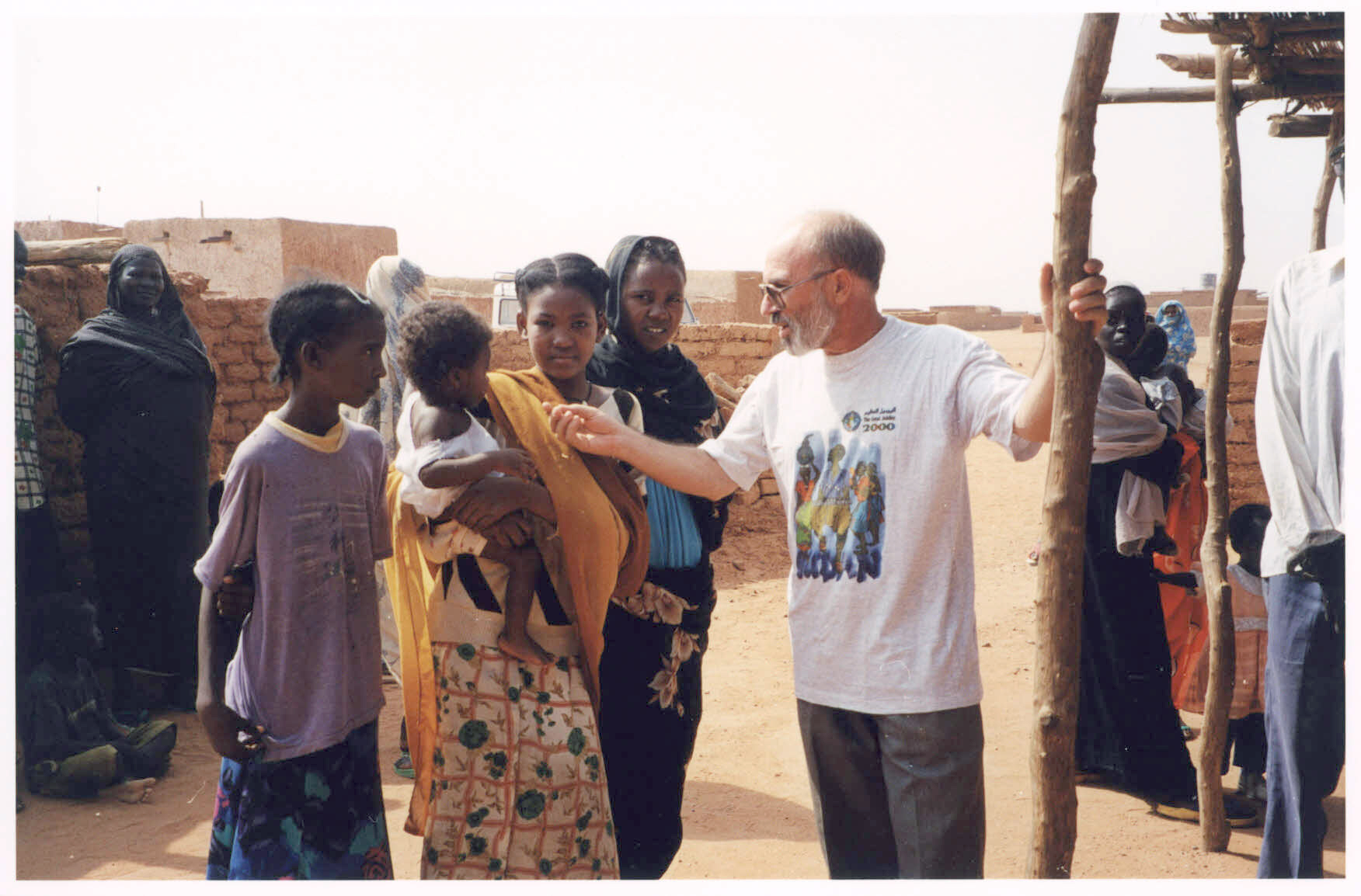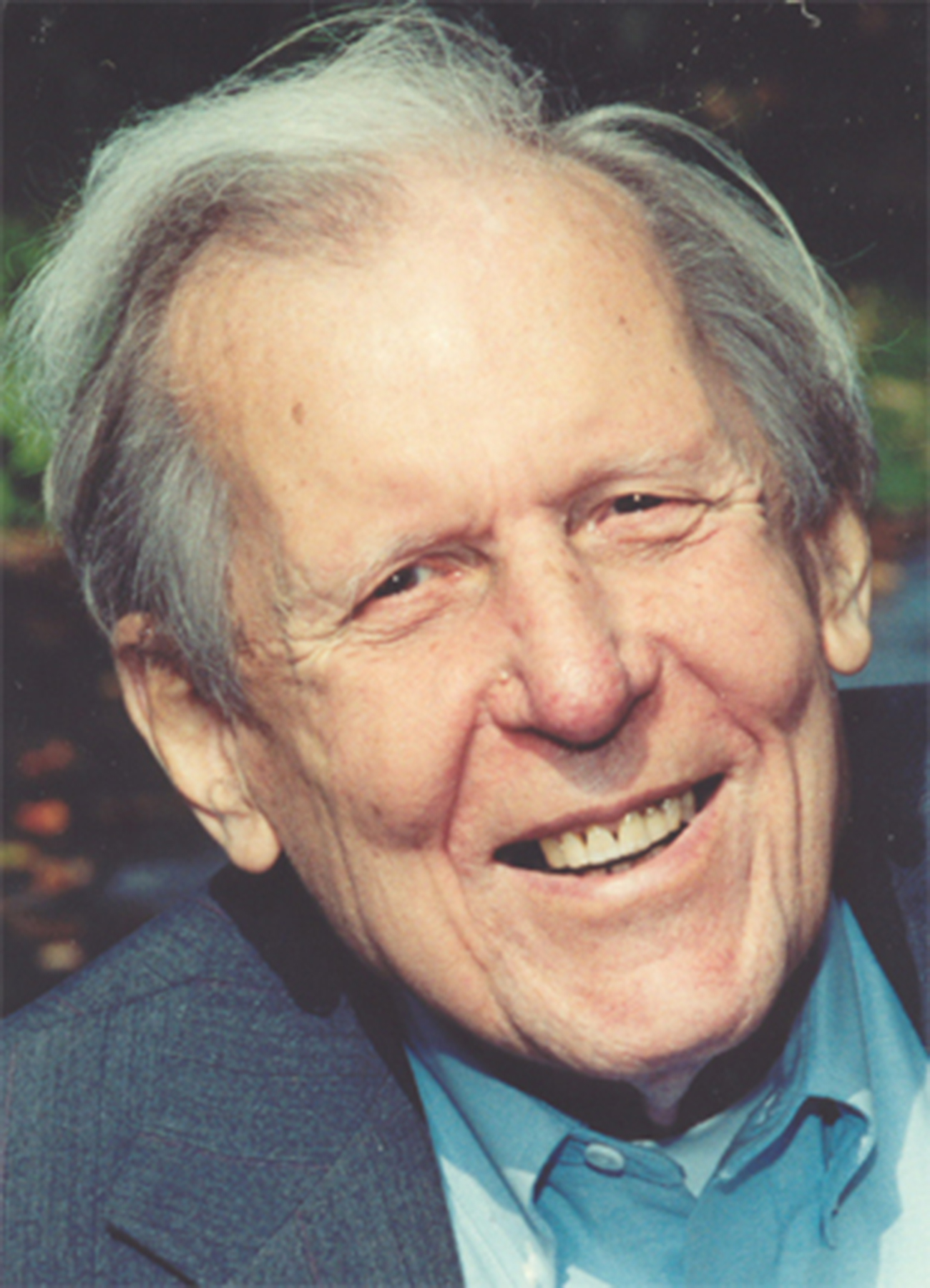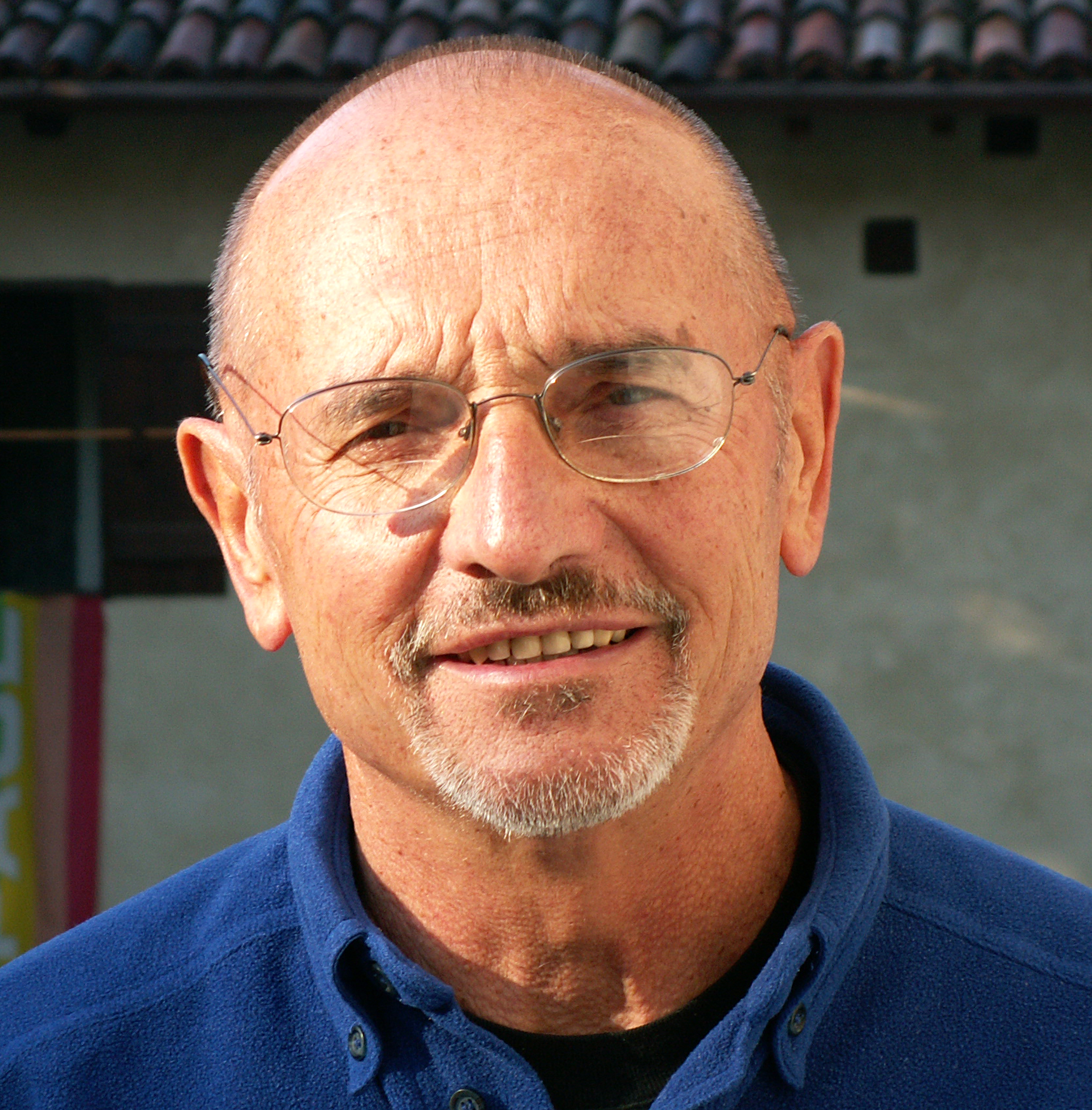


While the Pontifical Academy for Sciences discussed the pros of genetically modified organisms (GMOs), Columban Missionary Fr. Seán McDonagh was across Rome making the case for the “con” point of view. McDonagh organized a small demonstration near the Piazza del Popolo, which was joined by a few left-of-center political movements in Italy. A large banner read, “No to GMOs, yes to food security,” and a smaller sign addressed the Vatican gathering: “Pontifical Academy of Sciences, do not ally with those who, promoting GMOs, contribute to hunger in the world. Listen to the words of the Holy Father!” A well-known writer on environmental themes, McDonagh is a veteran Irish missionary who spent more than 20 years in the Philippines. He’s an outspoken critic of GMOs; in 2003, he published “Patenting Life? Stop! Is Corporate Greed Forcing us to Eat Genetically Engineered Food?” McDonagh spoke to NCR on the margins of the demonstration.
Promoters of GMOs bill them as a strategy for combating hunger. Why do you claim the exact opposite?
At the moment, almost all GMOs (canola, Bt corn, soy) are actually animal feeds. You’re getting more of the meat dimension in the diets of people all over the world. It’s estimated that with a traditional Asian diet, including a little bit of meat, we could support about eight to nine billion people on the planet. But if we go down the European route of eating a lot of meat, we’ll be able to support maybe one and one-half to two billion. In other words, the direction GMOs take us is going to create famine and hunger in many parts of the world. That’s number one.
Number two is because all genetically modified seeds are now patented, you’re giving enormous control to a handful of corporations over the seeds of the staple crops of the world. It started with rice, then corn, now they’re looking to wheat and potatoes. This should be totally unacceptable to anyone. Forget about the science of whether they’re safe or not. To give six Western corporations, in the United States and Europe, control over the seeds of the world is outrageous.
THE CORPORATIONS’ DOMINATION
I have a particular problem with patenting living organisms. It entered our human reality through a decision of the U. S. Supreme Court in 1980 with Diamond v. Chakrabarty. It was never discussed in any parliament of the world. This extraordinary control, I would even call it domination, has been given to corporations. This, by the way, comes at the same time that these same people are promoting ‘free trade.’ The levels of mischievousness and deceit involved are actually gargantuan. If free trade is good, why shouldn’t sharing knowledge freely be good?
I come at it from the perspective of a missionary. I lived in the Philippines for 25 years, and I saw the mixed results, even of the Green Revolution, on the poor. GMOs will only exacerbate that, because not only will you have to buy your seeds, but you also have to buy the glyphosate, which is the Ready Roundup (a herbicide manufactured by Monsanto designed for use with genetically modified crops). You’re getting crops now with multiple traits genetically engineered into them. There may be all kinds of problems with human health and the environment, but even if there weren’t, you might not want these traits.
THE EXAMPLE OF BRAZIL
What about claims of dramatically improved yields?
The point of the recent “Failure to Yield” report from the Union of Concerned Scientists is that the increase in yield in crops over the last 25 to 30 years has come from conventional breeding. It has nothing to do with GMOs at all, or very little. This report was just published two weeks ago. I would consider it a very objective study. It looks at soy, at corn, at canola, and so on. There’s no increase in yields at all, which there was in the Green Revolution, so it’s quite different.
My main concern, however, is giving this control to corporations. For example, 60% of lettuce in the United States is now controlled by Monsanto. This is frightening. In the 19th century, all kinds of securities and exchanges agencies were created to move in on monopolies. Of course, those were monopolies on things like telephones. Now they want to build a monopoly on food. That, mind you, is precisely what they’re after.
Feeding the world is about distributing food to those who need it, or distributing land so that people can grow their own food. I always give the example of Brazil. It’s now the fourth largest exporter of food in the world, mainly animal feeds for Europe and America, and yet 35 to 36 million people go to bed hungry there every night.
Even if GMOs did increase the yield, is that extra food going to go to the people who need it? The reality is it won’t, because Monsanto is not the St. Vincent De Paul Society. They’re out there to make a big profit. They want to get monopoly control, and they make no bones about that.
THERE’S NO MAGIC BULLET
All the experts in Catholic development agencies have taken the position that this is not the way to address food security, and that there’s no magic bullet for hunger. What’s needed is land reform, financial aid to small-scale farmers, and markets where they can get value so they’re not caught by the middleman. I’ve spent 40 years at this sort of work, and I know that’s the way forward.
We also need to promote diversity in the diet. This is the whole problem with the supposed “golden rice.” Why should you say to poor people that they have to eat rice three times a day? Why not a little bit of vegetables, so they’d get all the vitamin A they need? To me, it’s extraordinary that $100 million has been spent on golden rice, when you could make a lot of vegetable seeds available in developing countries for that kind of money.
POLITICAL AND ECONOMIC INTERESTS
What about the safety question?
The answer is, we don’t know. That’s the bottom line. Studies done, for example, by Arpad Pusztai in 1999 on Bt corn, or on Bt potatoes that were fed to rats, found problems with their inner organs and also problems with their brain. Being a good scientist, he did not say, ‘Now we should reject the technology.’ He said we should look to see where the problem might be. He wanted to see if the problem was in the gene itself, because you’re bringing to the target organism a gene that normally the immune system of the target organism would attack. That’s what your immune system does. He was ready to go into the various dimensions of that question – for example, is it the promoter? That is, the virus or bacteria that’s actually used to bring genetic material across to another organism. What happened, of course, is history. He was fired from the Rowett Institute in Scotland. He was accused of being a bad scientist. They said he would never get his research published in The Lancet, which he actually did. All he was basically saying is that this technology creates problems and we need to look at them.
The problem with regulatory agencies, at the moment, is that they’re much too tied up to political and economic interests. The United States is a very good example. It’s amazing just how hard-wired Monsanto is to the Environmental Protection Agency and to the Food and Drug Administration. There’s a real problem there, as a researcher showed with the Bt potato. When he went to the FDA, they said, we deal with potatoes but not the GM kind, that’s over at the EPA. When he went to the EPA, they said, we don’t deal with foodstuff, we deal with chemicals. Between them, they couldn’t figure out which one was responsible for allowing this to be brought onto the market.
WE ARE NOW ALL GUINEA PIGS
The real problem is that all the research on these genetically modified organisms is done by the corporations that then stand to gain trillions of dollars. Biotech is one of the few industries that has not taken a dip in the current economic crisis for the very simple reason that you have to eat everyday. There’s almost no independent verification. A Russian scientist named Ermakova has studied Bt soy, and found something similar to what Pusztai found with potatoes. I believe it’s incumbent upon government to do public science and to protect the common good of ordinary citizens.
We are now all guinea pigs. We don’t know what the impact will be, and it may be two or three generations before we find out. Don’t forget, with ozone-layer-destroying CFCs, it was 60 years before we knew they were harmful. They were considered to be the wonder chemical, non-toxic and so on … you couldn’t get any better. It was one man, British scientist Joe Farman, who actually found out, by land research in Antarctica, that they were doing irreparable damage to the ozone.
It’s the same thing with impact on the environment: We don’t know. But we do know that if you bring GMOs into a country like the Philippines, where we don’t have any idea how many species are really there, now you’re playing Russian roulette.
PATENTS ARE FOR WATCHES
What other justice concerns do you have with GMOs?
I have a particular concern if they introduce, which they’re threatening to do, this terminator gene, a plant whose seeds are genetically blocked from reproducing. I believe that’s a huge moral issue. You’re creating something that will not germinate on a second planting. I can’t think of anything that’s so … I hate the word ‘evil,’ but certainly morally wrong. It’s incredible that someone would create an organism that is deliberately sterile, particularly in the area of food. Food is a gift to all of us, and obviously necessary for human life.
Companies argue that if they can’t protect their investment somehow, there’s no incentive to do research and to develop better products.
The evidence shows the opposite. If you look at the history of patents, most countries, including the United States, stole patents from other countries until they got their own economic and technological processes up and going. A Korean economist at Cambridge has done a very good study on that, and he calls it “kicking away the ladder.” You’re asking these so-called developing countries to follow these patent laws, but let’s have a look at whether any of you actually followed it – beginning with post-Tudor Britain, right up to the United States, or more recent, Japan and Korea.
Patents are for watches, not food. Patents always have to consider the trade off between the individual and the common good. Food, water and air should not be under a regime of patents, because we all need them. If you don’t have air for five minutes you’re dead, if you don’t have water for five days you’re dead, and if you don’t have food for 60 days you’re dead. For Christians, this is the first request in the Our Father: ‘Give us this day our daily bread.’ It’s a huge issue, and I think patents are completely morally out of place. Churches, especially the Catholic Church, that claim to be pro-life should have a serious moral critique of this arrogance.
EXPLORING THE SOUTH
It’s also stealing, because what did they patent? They patented one small dimension of iot. What about the farmers in the Philippines for the last 5,000 years who created all the other traits? What about the farmers down on the altiplano in Peru who created 5,000 varieties of potatoes? Are they going to be compensated? I think governments should set up processes to say, okay, this is the money you’ve spent, this is the value to society as we see it, and therefore you should get ‘x’ amount of money. Ownership, however, is something completely different.
Here’s another dimension of the injustice. The northern world, the United States and Europe, is poor biologically. Ireland, for example, has ten species of trees. Where I worked in the Philippines, I got money from the Australian government to do a study in a local forest. In a single hectare, you could get up to 130 species of trees. In total, there are 5,000 species in that forest. The south is rich biologically but poor financially. Northern countries are using trade agreements to go down to the south, take advantage of its diversity, change slight little bits of it, and then bring it back to patent it. It’s exploitation of the worst order. It makes Magellan, Cromwell, and the Pizarro brothers look like dime-store operators.
TO GET RID OF REGULATIONS
Do you believe the Pontifical Academy for Sciences is being exploited?
It is. This is the Pontifical Academy for Sciences, so let’s start with the ‘pontifical’ part. It’s a Catholic organization. Who are the Church’s real experts in this area? I would say people like myself. I would say particularly the aid and development agencies, such as Misereor, Cafod, and Caritas. […] They thought so little of this expertise in the Catholic Church that they didn’t invite a single person from any one of these agencies.
Further, anyone who ever claims to be a scientist should hear the other side. That goes back to Plato. What are they afraid of? Why didn’t they set up a decent colloquium over there? Also, why don’t they take into account numerous independent studies in the last three years which have concluded that the way to food security is not through GM crops? Why just discard all that? There’s a very recent study from Africa on the yields from organic farming, saying this is the kind of thing we should be promoting. I would consider this gathering grossly incompetent.
Why do you believe they’re doing it this way?
They want to get rid of the very minimal regulations that we have at the moment. They said it in the introduction to the study week, and every one of them says it in his abstract. That’s their goal. Bishop Sanchez Sorondo (Chancellor of the Pontifical Academy) has said that the purpose is to examine whether GM crops are safe, but I’m sorry, that’s not it. The purpose is to use the prestige of the Pontifical Academy of Sciences and its good name to beat on governments so that you can reduce regulation.
I would also claim that they want to use something like the Potrykus rice as a battering ram against the regulatory process. The strategy is that if you get it through once, you’ve set the precedent. They say they want it for altruistic reasons, but this language of talking about the poor and about development is grossly misleading. I’m a professional anthropologist who has been working in the area of development economics, I think it’s patronizing.
THE IMPORTANCE OF BIODIVERSITY
Proponents of GMOs suggest that you’re guilty of neocolonialism, in the sense that you presume to know what’s best for the poor in Africa and other places.
Let them come to where I was in the Philippines, and ask there. Let’s go to the southern part of Brazil, or Argentina, where this is being pushed on people. Let’s do a real empirical study, and I think you’d find that the people who are affected by it are very negative towards it. I took up this issue only because I saw the impact it’s had on people living there. I believe I have a better take on what’s happening in the Philippines, for example, than anyone in the study week … including the only person from the Philippines there, the Director of the International Rice Research Institute, but he’s an American.
I was not against GMOs at first. When I arrived, I taught anthropology and linguistics at the University of Mindanao in the Philippines, the biggest agricultural university in the region. At that stage, I thought, if you can plant crops as far as the eye can see, why not? It was only as I began to see the other aspects, including wiping out genetic diversity, that I changed my mind. I looked back at my Irish experience. We used to have these massive potato fields, and then suddenly in 1845, one pathogen wiped them out. I began to learn a lot about the importance of biodiversity.
THE RABBITS IN AUSTRALIA
The pro-GMO argument is comparable to what we used to hear from the bankers. They used to tell us we need a light touch with the regulations, because we’re the entrepreneurs, we’re the people who create wealth that sends the boys and girls to school and puts the Euro in the collection plate on Sunday. If a banker came to you today and tried to say that there shouldn’t be any regulation, we’d all laugh. We wouldn’t even engage him intellectually. The same is true with these lads. The tide has gone out on what they want, and rightly so, because we’re dealing with very serious issues.
Humankind has a very bad record of moving biodiversity around to the wrong places. It’s like the guy who brought rabbits out to Australia with disastrous results. This is biological science, which is different from architecture or engineering. If those guys get something wrong and the building collapses, too bad, but you can fix it. Biology reproduces. The Australian government can’t fix the rabbits. The level of regulation should be multiple times more stringent than it is.
TO BUILD UP ORGANIC AGRICULTURE
The study week invited an African bishop. What’s your sense of where African Catholics stand on GMOs?
I’ve had conversations with African people, including religious orders, working in this area. We just had a conference in Assisi on ecology and integrity of creation at the heart of Christian mission. There are all sorts of efforts by the religious to build up organic agriculture in Africa. […] I feel this man shouldn’t have come here. If they’d invited me, I wouldn’t go. You just give them legitimacy, and it’s not properly structured. I’m not a geneticist or a plant biologist, but based on the expertise I have as a missionary, I know this is not the way to go for sustainable agriculture. If it was, they’d have the right people at this meeting.
Are you worried that the Vatican is going to come out with an official pro-GMO statement?
Not at all. We were more concerned back in 2003, when Cardinal Renato Martino began to talk about how maybe GMOs could feed the world. We were very worried then, but not so much now. The Pontifical Council for Justice and Peace, for example, may not yet have assessed the science, but they have begun to see the impact on developing countries. On January 1, there was an article in L’Osservatore Romano, in which Martino was quoted on that side of it.