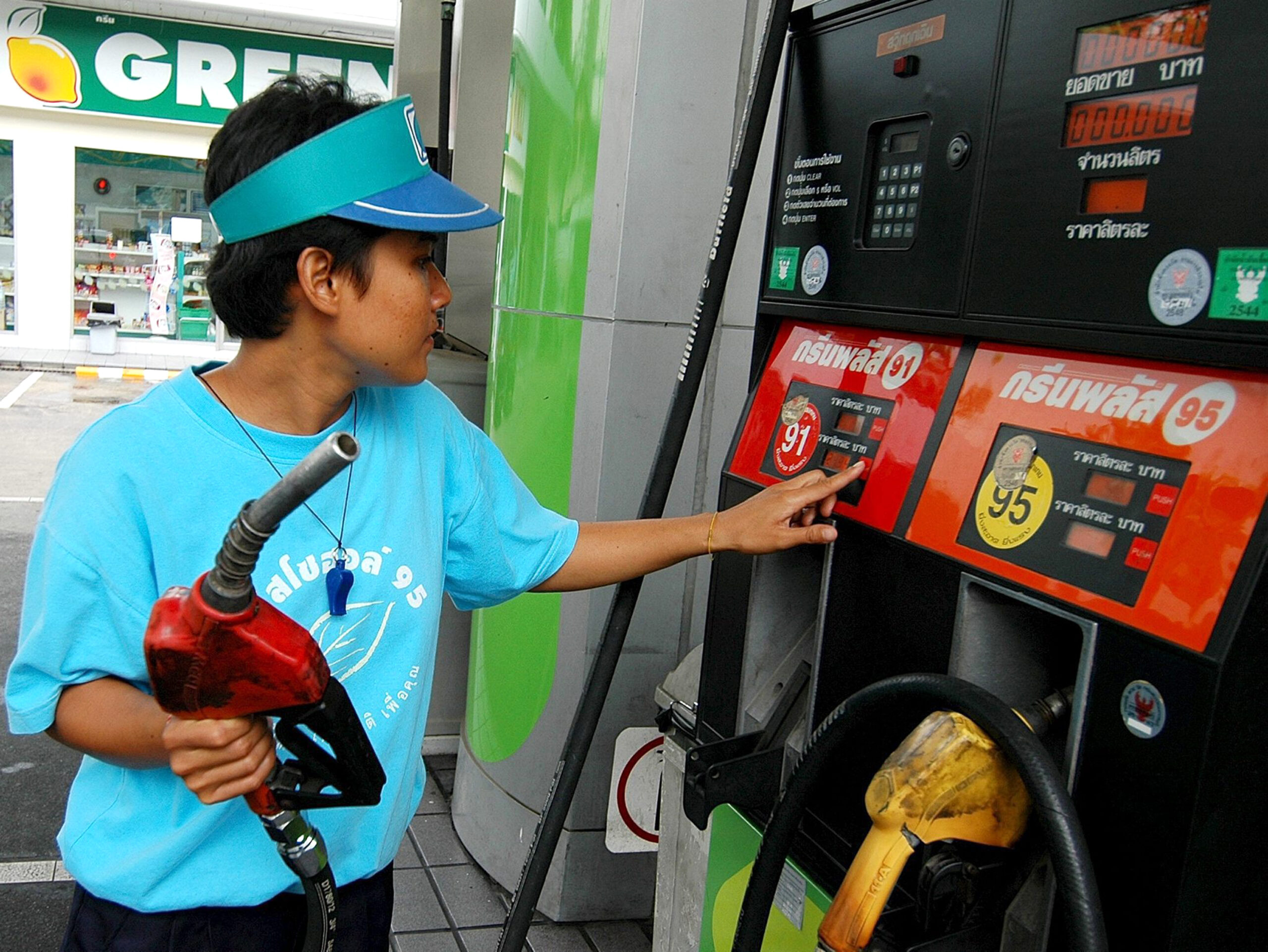
Green Hope or a Great Swindle

INTRODUCTION

A raft of new studies reveal European and American multibillion dollar support for biofuels is unsustainable, environmentally destructive and is much more about subsidizing agribusiness corporations than combating global warming.

WRITTEN BY

SHARE THE WORD

PUBLISHED ON

Not only do most forms of biofuel production do little to reduce greenhouse gas emissions, growing biofuel crops uses up precious water resources, increasing the size and extent of dead zones in the oceans, boosting use of toxic pesticides and deforestation in tropical countries, studies say.

And biofuel, powered by billions of dollars in government subsidies, will drive food prices 20-40% higher between now and 2020, predicts the Washington-based International Food Policy Research Institute.

“Fuel made from food is a dumb idea, to put it succinctly,” says Ronald Steenblik, research director at the International Institute for Sustainable Development’s Global Subsidies Initiative (GSI) in Geneva, Switzerland. Biofuel production in the U.S. and Europe is just another way of subsidizing big agribusiness corporations, Steenblik added. “It’s also a distraction from dealing with the real problem of reducing greenhouse gas emissions.”

AT WHAT COST?
Making fuel out of corn, soy, oilseeds and sugar crops is also incredibly expensive, Steenblik and his co-authors document in two new reports on the U.S. and the European Union that are part of a series entitled “Biofuels at What Cost? Government Support for Ethanol and Biodiesel.”

Their analysis shows that, by 2006, government support for biofuels had reached 11 billion dollars a year for Organization of Economic Development and Cooperation (OECD) countries. More than 90% of those subsidies came from the European Union and the U.S. These subsidies were predicted to climb to 13-15 by the end of 2007, the report estimates.

“More subsidies are coming as the biofuel industry expands,” says Steenblik. In fact, countries will have to spend more than 100 billion dollars a year to get biofuel production levels high enough to supply 25 or 30% of transport fuel demands. And those levels of annual subsidies will have to continue because the industry is dependent on them, he says.

WORSE THAN OIL
It might be worth it if biofuels resulted in significant reductions in greenhouse gas emissions (GHGs) but Steenblik calculates the amount of subsidies that goes into making enough ethanol to reduce emissions equivalent to a ton of carbon dioxide (CO2) is between 2,980 to 6,240 dollars depending on the support programs. However, the European carbon trading markets sell a similar saved or sequestered ton of CO2 for less than 35 dollars through various projects like planting trees or installing solar panels.

Various analysis that take the full environmental costs of growing, shipping and processing maize into ethanol show there is only a small reduction in GHG emissions over burning fossil fuels. Newer research shows some biofuels could even be far worse. Rapeseed biodiesel and maize ethanol may produce up to 70% and 50% more GHG emissions, respectively, than fossil fuels, according to work published in September (last year) by Nobel prize-winning chemist Paul Crutzen and University of Edinburgh colleague Keith Smith.

They found that growing biofuel crops releases around twice the amount of the potent greenhouse gas nitrous oxide (N2O) than previously thought. The N2O results from using nitrogen fertilizers. About 80% of Europe’s biodiesel comes from rapeseed and, in America, the vast majority is maize ethanol. “What we are saying is that growing biofuels is probably of no benefit and, in fact, is actually making the climate issue worse,” Smith has said in media reports.

POLLUTION AND LACK OF WATER
In January 2007, U.S. President George W. Bush set a biofuel target of 35 billion gallons per year by 2017, more than five times the current production of less than 7 billion gallons. However, that target would leave some U.S. waterways polluted and some regions with severe water shortages, the National Research Council (NRC) said in a report. The NRC is the research arm of the US National Academy of Sciences.

The additional fertilizers used to grow all that maize will contribute to the overgrowth of aquatic plant life that produces “dead zones” like those in the Gulf of Mexico, Chesapeake Bay and elsewhere, the report said. Similar water warnings were issued by the International Water Management Institute (IWMI) in Sri Lanka regarding India and China’s growing interest in biofuels. IWMI, part of the Consultative Group on International Agricultural Research, recommends in its report that the two countries invest in cellulosic biofuel the so-called second generation biofuel technology that is still a number of years from commercialization.

A POLITICAL CHOICE
“Subsidies for ethanol are more about securing votes from the powerful agricultural lobby than bringing environmental benefits,” says Walter Hook, executive director of the Institute for Transportation and Development Policy, an environmental NGO based in New York City. Simple and cheap programs like a congestion charge − an extra fee for driving in city centers − and the widely successful Paris, France, free-bike program reduce air pollution and GNG emissions immediately at very low cost, Hook said in an interview.

Launched in July, Paris put thousands of low-cost rental bikes − the first 30 minutes of use are free − at hundreds of high-tech bicycle stations. A million trips were taken in just 17 days. “Absolutely amazing, every city should be thinking of doing this,” he said. In Paris, an advertising company provides the bikes for free, runs the system, gives all the revenue to the city and pays 4.3 million dollars a year in exchange for exclusive control of the city’s advertising billboards.

THE DUMBEST WAY
Mobility − getting from A to B − with the minimum of GHG emissions is the core problem we should be addressing and not finding greener fuels, says Steenblik. Indeed, Canadian transportation analyst, Todd Alexander Litman, has demonstrated that greener fuels and improvements in fuel efficiency result in people driving more because they can afford to. And that just makes “traffic congestion, accidents, road and parking facility costs, and the lack of options for non-drivers worse,” said Litman, director of the Victoria Transport Policy Institute, in British Columbia, Canada.

In his “Win-Win Transportation Solutions” report, Litman documents a variety of cost-effective transportation strategies that could reduce motor vehicle travel by 30-50 percent, produce substantial reductions in GHGs and bring a range of economic developments. His simple solutions include making urban areas more walkable, creating bike lanes, improving the quality of mass transit and a dozen more ideas. None involved producing more biofuels. “Subsidizing biofuels is just about the dumbest way to go,” Litman commented.  www.ipsnewsasia.net and www.ipsnews.net

Share Your Thoughts

All comments are moderated

From The Same Issue

The articles and content about this issue

From The Same Issue

The articles and content about this issue

From This Topic

The articles and content about this topic

From This Topic

The articles and content about this topic

Explore Other Topics

Browse other coverage

Explore Other Topics

Browse other coverage

WM SPECIAL

Presents, discusses and draws readers to reflect on issues of outmost relevance to the world today.


FRONTIERS

Very often, mission is carried out in frontier situations around the world. Those who embrace these situations have much to share.


UNITY IN DIVERSITY

Writer Ilsa Reyes will be exploring the richness of Pope Francis’s latest encyclical Fratelli Tutti with a view of helping our readers to get a grasp of the this beautiful papal document.


FRONTLINE

Puts to the front committed and inspiring people around the world who embrace humanitarian and religious causes with altruism and passion.


IN FOCUS

Focus on a given theme of interest touching upon social, economic and religious issues.


FAITH@50

As the Philippines prepares to celebrate 500 years of the arrival of Christianity. Fr. James Kroeger leads us in this series into a discovery journey of the landmark events in the history of faith in the Philippine archipelago.


INSIGHT

Aims to nurture and inspire our hearts and minds while pondering upon timely themes.


FILIPINO FOCUS

The large archipelago of the Philippines, in its richness of peoples and cultures, offers varied and challenging situations for mission.


FOLLOW ME

Reflections and vocation stories that shape up the lives of young people.


MISSION IS FUN

As humor and goodness of heart are qualities of Christian and missionary life, the new column “Mission is fun” will be publishing some anecdotes and stories that have happened in a missionary context to lighten up the spirits and trigger a smile in our faces.


LIVING COMMUNION

To help readers of World Mission live this year dedicated to Ecumenism, Interreligious Dialogue and Indigenous Peoples, Tita Puangco, writer and lecturer, shares in this section insights on the spirituality of communion.


WINDS OF THE SPIRIT

A historic view of the Catholic movements that emerged from the grassroots as an inspiration by the Holy Spirit.


BRIDGE BUILDERS

On the Year of Ecumenism, Interreligious Dialogue and Indigenous Peoples, radio host and communicator Ilsa Reyes, in her monthly column, encourages Christians and people of good will to be one with their fellow people of other sects, religions and tribes.


INTERVIEW

Questions to a personality of the Church or secular world on matters of interest that touch upon the lives of people.


WORLD TOUCH

News from the Church, the missionary world and environment that inform and form the consciences.


CARE OF THE EARTH

A feature on environmental issues that are affecting the whole world with the view of raising awareness and prompting action.


EDITORIAL

The editor gives his personal take on a given topic related to the life of the Church, the society or the world.


YOUNG HEART

A monthly column on themes touching the lives of young people in the Year of the Youth in the Philippines by radio host and communicator I lsa Reyes.


SCROLL

A missionary living in the Chinese world shares his life-experiences made up of challenges and joyous encounters with common people.


EXTRAORDINARY PEOPLE

Life stories of people who deserve to be known for who they were, what they did and what they stood for in their journey on earth.


ONE BY ONE

Stories of people whom a missionary met in his life and who were touched by Jesus in mysterious ways.


INCREASE OUR FAITH

Critical reflection from a Christian perspective on current issues.


SPECIAL MOMENTS

Comboni missionary Fr. Lorenzo Carraro makes a journey through history pinpointing landmark events that changed the course of humanity.


PROFILE

A biographical sketch of a public person, known for his/her influence in the society and in the Church, showing an exemplary commitment to the service of others.


WM REPORTS

Gives fresh, truthful, and comprehensive information on issues that are of concern to all.


LIFE'S ESSENTIALS

A column aimed at helping the readers live their Christian mission by focusing on what is essential in life and what it entails.


ASIAN FOCUS

Peoples, events, religion, culture and the society of Asia in focus.


THE SEARCHER'S PATH

The human heart always searches for greatness in God’s eyes, treading the path to the fullness of life - no matter what it takes.


INDIAN FOCUS

The subcontinent of India with its richness and variety of cultures and religions is given center stage.


AFRICAN FOCUS

The African continent in focus where Christianity is growing the fastest in the world.


JOURNEY MOMENTS

Well-known writer and public speaker, Fr. Jerry Orbos, accompanies our journey of life and faith with moments of wit and inspiration based on the biblical and human wisdom.


IGNATIUS STEPS

On the year dedicated to St. Ignatius of Loyala, Fr. Lorenzo Carraro walks us through the main themes of the Ignatian spirituality.


THE SEVEN LAST WORDS OF JESUS

Fr. John Taneburgo helps us to meditate every month on each of the Seven Last Words that Jesus uttered from the cross.


INSIDE THE HOLY BOOK

In this section, Fr. Lorenzo delves into the secrets and depths of the Sacred Scriptures opening for us the treasures of the Sacred Book so that the reader may delight in the knowledge of the Word of God.


CONVERSATIONS

Reflections about the synodal journey on a conversational and informal style to trigger reflection and sharing about the synodal path the Church has embarked upon.


VATICAN II

This 'mini-course' series provides a comprehensive exploration of Vatican II, tracing its origins, key moments, and transformative impact on the Catholic Church.


COMBONIS IN ASIA

This series offers an in-depth look at the Comboni Missionaries in Asia, highlighting their communities, apostolates, and the unique priorities guiding their mission. The articles provide insights into the challenges, triumphs, and the enduring values that define the Comboni presence in Asia.


BEYOND THE SYNOD

Following the Synod on Synodality, this series examines how dioceses, parishes, and lay organizations in the Philippines are interpreting and applying the principles of the synod, the challenges encountered, and the diverse voices shaping the synodal journey toward a renewed Church.


A TASTE OF TRADITION

This series introduces the Fathers of the Church, featuring the most prominent figures from the early centuries of Christianity. Each article explores the lives, teachings, and enduring influence of these foundational thinkers, highlighting their contributions the spiritual heritage of the Church.


A YEAR OF PRAYER

In preparation for the 2025 Jubilee Year under the theme “Pilgrims of Hope,” 2024 has been designated a Year of Prayer. World Mission (courtesy of Aleteia) publishes every month a prayer by a saint to help our readers grow in the spirit of prayer in preparation for the Jubilee Year.


OUR WORLD

In Our World, the author explores the main trends shaping contemporary humanity from a critical and ethical perspective. Each article examines pressing issues such as technological advancement, environmental crises, social justice, and shifting cultural values, inviting readers to reflect on the moral implications and challenges of our rapidly changing world.


CATHOLIC SOCIAL DOCTRINE

This series unpacks the principles of Catholic Social Doctrine, offering a deep dive into the Church's teachings on social justice, human dignity, and the common good.


HOPEFUL LIVING

Hopeful Living’ is the new section for 2026, authored by Fr. James Kroeger, who dedicated most of his missionary life to the Philippines. In this monthly contribution, he will explore various aspects of the virtue of hope. His aim is to help readers align their Christian lives more closely with a hopeful outlook.


PHILIPPINE CROSSROADS

Filipino Catholic scholar Jose Bautista writes each month about how the Philippines is at a crossroads, considering the recent flood control issues and other corruption scandals that have engulfed the nation. He incorporates the Church’s response and its moral perspective regarding these social challenges.


BIBLE QUIZ

Test your knowledge and deepen your understanding with our Bible Quiz! Each quiz offers fun and challenging questions that explore key stories, themes, and figures from both the Old and New Testaments.


Shopping Cart