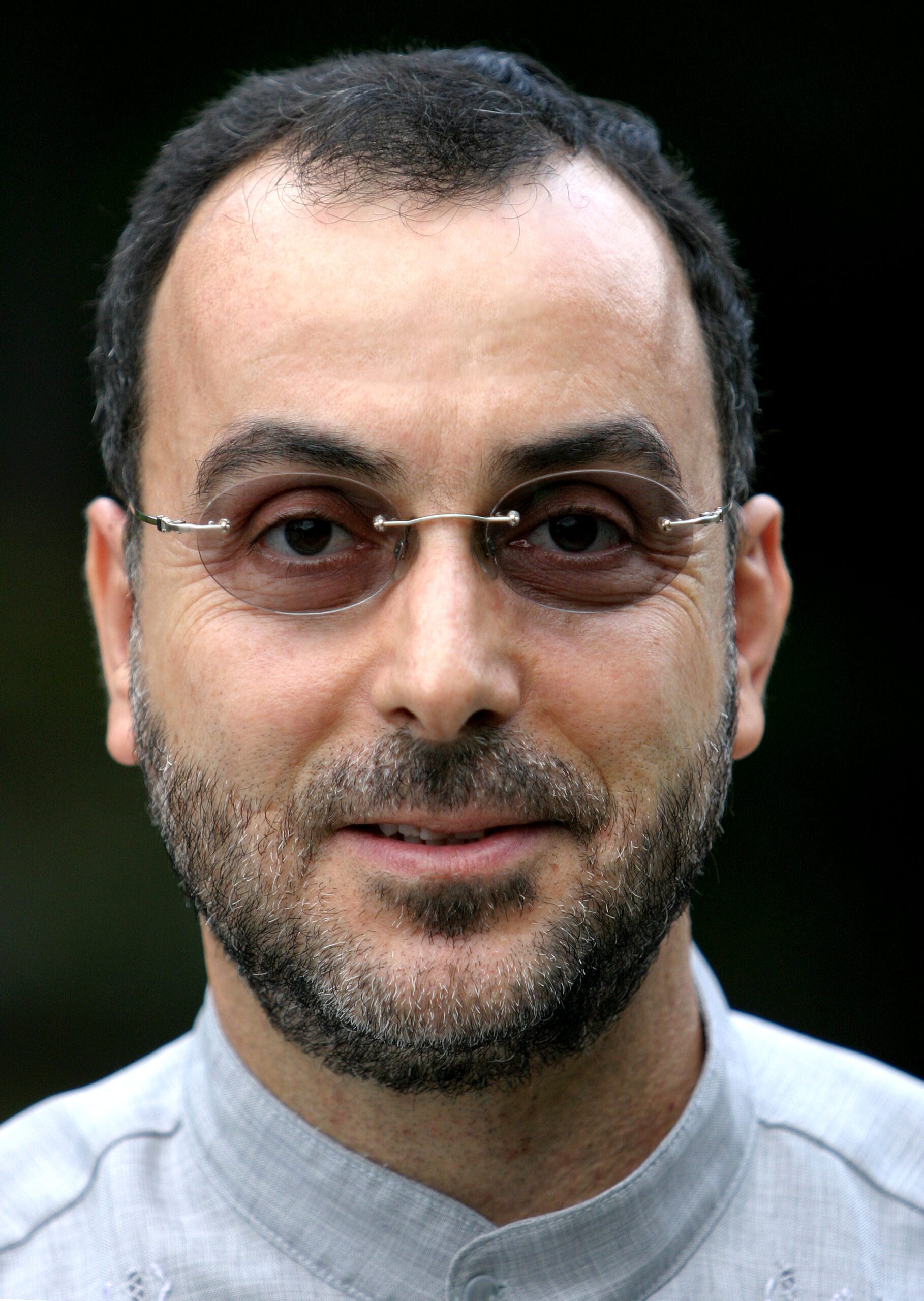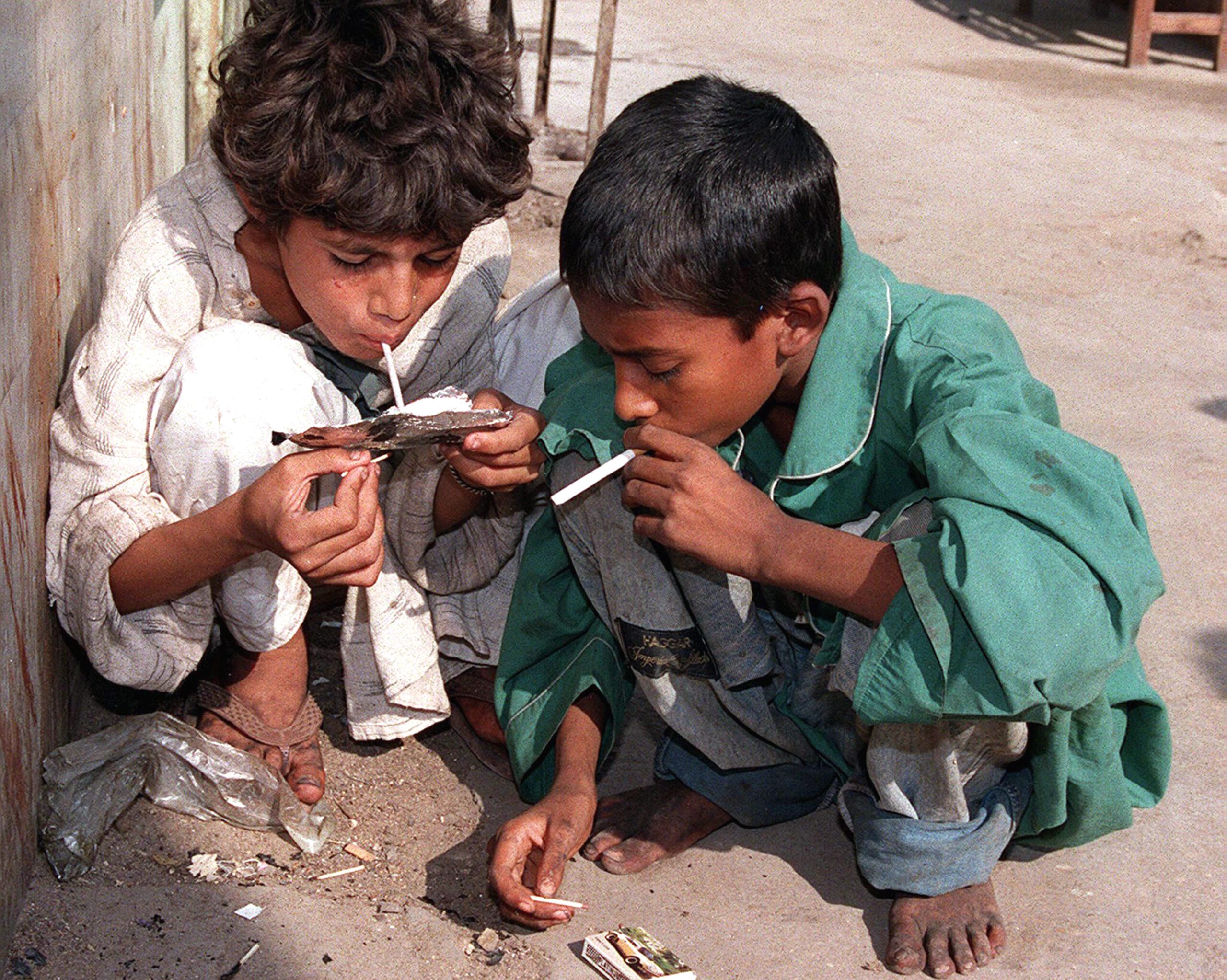
Alexandre Falcão is a young Brazilian who experienced the infernal spiral of drug-use dependence, like countless other youth all over the world. Luckily, he sought and found help to come out of the dark tunnel of his vice. As he became drug-free, he committed his life to help drug addicts to recover and all those who suffer from and wish to get rid of any kind of ill-dependence. He accepted the challenge to leave his family and country to become a missionary in the Philippines.
The 42-year old veterinarian from Feira de Santana in the State of Bahía is one of the leaders of the becoming more famous Fazenda da Esperança − Farm of Hope − a rehabilitation center in the district island of Masbate. Twenty young Filipinos are being rehabilitated in the 250-hectare farm, located 40 km away from the capital, in the hills of Bangad, Milagros.
Alex is in charge of production in the sprawling Fazenda. A natural entrepreneur and a trained technician, he does not waste time and energy in ensuring that everything is moving on wheels. But, he is also a joyful and welcoming fellow.
A COCAINE SLAVE
Alex talks about his life story with a rare freedom: “Everything started when I was sexually abused at the age of seven. I became afraid of people. I was suspicious of everybody. I didn’t have the courage to share this trauma with anyone until I was 30 years old. I kept it locked inside. My family was giving me all I needed. But no matter what I was given, my suffering was enormous.”
He started on cocaine with four friends at the age of 18. He was a university student then. “At the beginning, it was funny. I didn’t have any notion of the problem. I was an introvert person and it freed me. I became talkative and I was not ashamed of anything… Then I realized I was a slave of it,” he confesses.
He was looked upon as a model son. Graduated as a vet at the age of 21, he had already a good job the year after entering the university. He was working for a big company, taking care of 7,000 head of cattle. (The owner, a friend of his father, had 8 hypermarkets.) He didn’t need to steal to buy drugs. He started as vet and finished as administrator of all the landlord’s farms. Besides, he was taking care of his farm and shop and his parents’ farm. He says: “I was working a lot, but always accompanied by cocaine. Realization was only apparent. Work was an escape from my suffering.”
In Brazil, it is very easy to get drugs. One calls and there’s immediate delivery. Alex felt he was reaching the pit’s bottom. He gave drugs to his brother-in-law who also became a drug addict. The initial group of 4 increased to 16 with cousins and friends. He could not control himself: “Libido was insatiable. It didn’t matter with whom I had sexual relations − men or women. I was solely looking for my satisfaction. My life was hell.”
In this situation, he met his wife. He got married when he was 26 and separated two years later. He looks at it as an equivocal step in his life: “I thought she was the right help to rescue me from drugs. I didn’t marry because I loved her, but because I looked at her as the solution to my slavery. But things just got worse.” He explains that during weekends, he would sniff cocaine the whole night in the comfort room, while the wife was asleep. (Eventually, he managed to have his marriage annulled to set her free from this bond.)
With the divorce case, his family came to know that he was on narcotics. The rush to the rehabilitation clinics started: “Since I was 28 until I was 32, I was in four centers − one per year. As soon as I returned home, I would lapse again. Rehabilitation was done based solely on psychology and chemicals. There was nothing spiritual.”
He recalls the heavy price he was paying for his terrible addiction in terms of family and health: “Sometimes, I was inside a room for two days sniffing cocaine, without eating and sleeping… I would lose 5-6 kg. I had lost any hope. When I was 31, I told my father: ‘Abandon the farm and let it die. I don’t want to work anymore for you.’ Then, I left their home.”
THE TURNING POINT
Having discovered drug dealers next to the farm, Alex was spending more time there. The episode which made him more conscientious of his bondage happened on December 1, 2007, birthday of his sister. He was in the farm and had already given to the dealers 11 ewes as payment for his debts, but he still owed them R700. Alex gave them three cows worth R2,000 and remained with a credit of R1,300 for cocaine.
The memory of his drama is very alive: ”It pierced my heart watching the drug dealers leaving with the animals. I told myself: ‘Gosh, animals are the only thing I still like. Lord, I have to stop this. Help me!’ I regained some strength, came to town and phoned a certain lady of the Charismatic Renewal, who was accompanying my struggles against drugs. I told her: ‘Doña Eneida, pray to your God to take my life, because I cannot bear it anymore. My life has no more sense. I want to die, but I don’t have the courage to put a bullet in my head. Ask him to take my life.’”
Surprisingly, as soon as he put down the phone, his mother called him. She had contacted six clinics. He looked at the costs because he didn’t want them to spend more money with his rehabilitation. Fazenda da Esperança was for free. Families had just to buy their farm products monthly. He chose it. On December 26, 2007, he went to one of the centers which had opened in Lagarto, Sergipe, in Northern Brazil (see page 25: From A Corner to the World).
THE LAUNDRY BAPTISM
Alex arrived there fully equipped with the instruments of his profession. The farm had more than one hundred head of cattle. As a vet, he wished to be in charge of them and to show that he was competent. But his coordinator cut him off from the animals without explaining. Much later, he got an explanation: “My son, when you arrived here with your vet kit and your books… I understood that you had to lose everything.” Alex commented: “Exactly as they had done with him who was a renowned artist. Arriving there, they asked him to keep all his painting materials in the storeroom, to empty himself!”
An experience during the first ten days anchored Alex to Fazenda. Those who had been there for three months could receive visitors. His coordinator was very busy preparing the reception for the families and commented that he had no clean clothes. Alex decided to put into practice what he had been listening to − living God’s Word and love everybody always. He remembers well: “I entered his room and asked Pedro: ‘Where are Francinaldo’s clothes?’ ‘They are there, but they are mixed with ours,’ Pedro replied. ‘Separate them,’ I asked. He started to do so. Meanwhile, it came to me: ‘Why would you wash only his clothes? Just because he is your coordinator? Why don’t you love all and wash everybody’s clothes?’”
Alex grabbed the dirty clothes of all three colleagues with some disgust and went to wash them. It took him from Saturday morning until Sunday morning to finish. He started understanding the experience: “It was the first time I washed clothes in my life. (At home, the maid was doing everything I needed and asked for.) I was happy! Putting myself at the service of others gave meaning to my life.”
THE BUNCH OF GRAPES
As time passed by, Alex started nurturing the idea of giving himself completely to God in Fazenda: “I was experiencing a joy I never had dreamed of. I was telling God: ‘Lord, I want to remain here, but I don’t know if this is Your will.’ As a sign, I asked Him for a bunch of grapes.”
This was on a Thursday evening as he was praying the rosary, as usual, in the chapel. On Sunday, the diocesan bishop came to sleep in Fazenda. The following morning, while Alex was praying in the chapel, the bishop sent for him. In the middle of the talk, he told Alex to go to his room and get the fruits he had brought. Alex brought the basket to the kitchen.
On Monday evening, while he was praying, he became aware of the given sign: “I felt that God was telling me: ‘I gave you the grapes you had asked for, didn’t you understand the sign?’ The chapel was dark. Only the red light of the Blessed Sacrament was on. I felt so fearful that I wanted to run away. I hold the bench firmly and answered: “It is true, Lord. This is not a joke!”
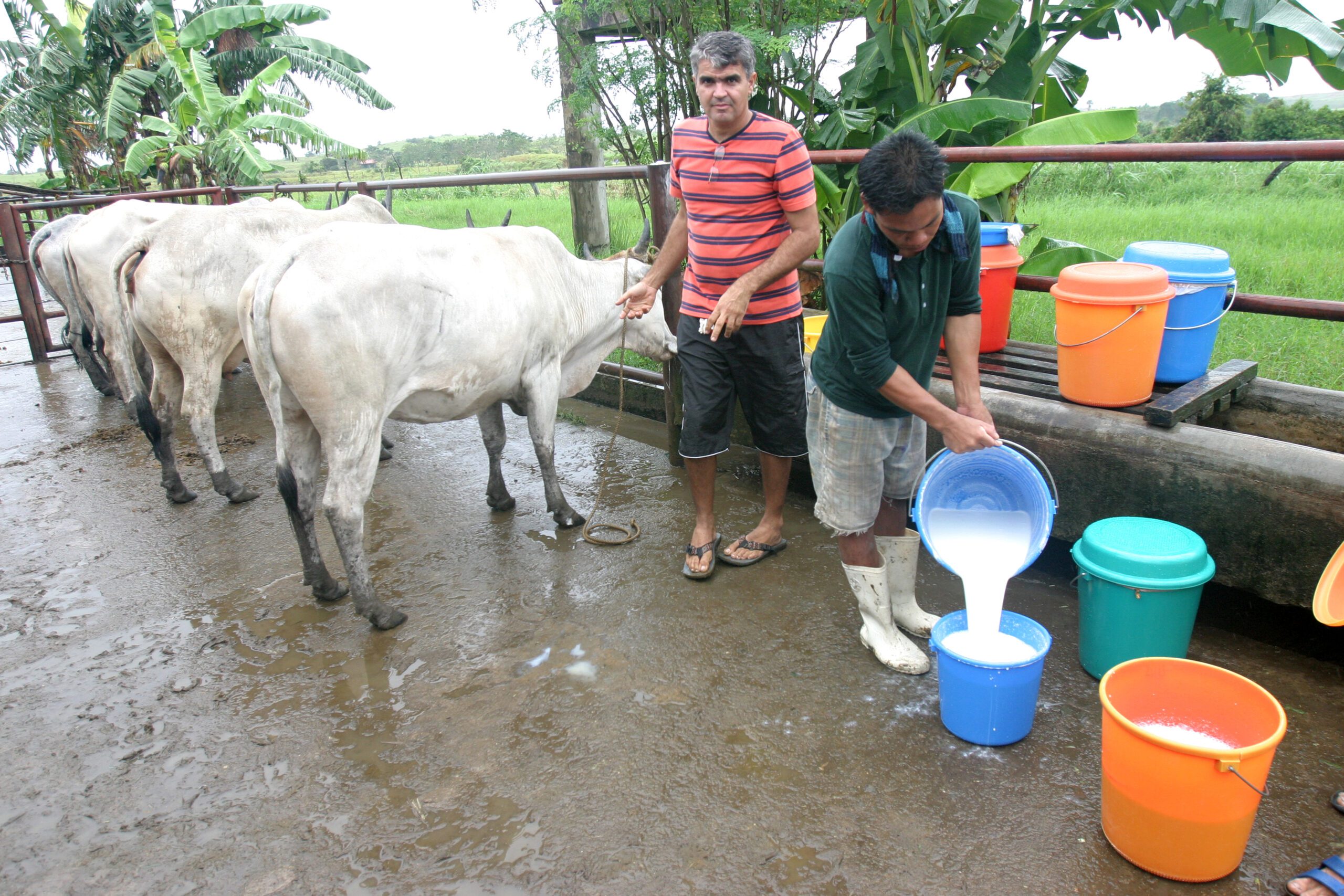
Meanwhile, he changed work place inside Fazenda: from the fields, which were 3 km away from the center, to the kitchen which was closer to the cow-shed of his dreams. A month after that, he was transferred to the carpentry. Finally, on the tenth month of his stay, the cow-shed’s doors opened for him. Production increased quickly. The 40 cows were producing 70 liters of milk a day. With his dedication, expertise and some offered cows, production increased as much as 7 times in four years!
NEW VOCATION
The most important discovery was spiritual: “God was showing me His love. I discovered that there was something more important in life than material things! Before, I could buy what I wanted and my heart was not fulfilled! My realization was to meet the Lord. Today, I need nothing else.”
At the end of the year, a big entrepreneur of S. Paulo, knowing about Alex’s success in Fazenda, phoned his coordinator to offer him a job. Also his ex-boss sent message through his father. He didn’t accept the proposals. He believed God had called him to another vocation. He remained as a volunteer in Fazenda − in charge of the production and to accompany the youth, living the three key principles: work, spirituality and community life. His life has become a gospel of hope.
He relates that, in his two-week holiday at home, he became a missionary. At a certain point, there were 10 youth of his city undergoing rehabilitation. Two of them consecrated themselves: one of them, André, is in the German Fazenda; the other, Marcelo, is in Paraguay. A friend from his city has organized a campaign to collect US$250,000 to buy a farm and open there a Fazenda this year. He asserts: “God touches people and makes things happen.”
PIONEER IN ASIA
Fazenda had opened centers in other countries. One was established in the Philippines, in 2003, in a farm given by an Italian missionary, Fr. Pierino Rogliardi, the ‘maker’ of the so-called ‘nature church’ in Las Piñas. He knew Fr. Hans Stapel, the founder of the community, through the Focolare Movement. One year earlier, he was asked to send a group − eight went to Brazil and two to Germany − to gain the experience and be of help to missionaries.
After four years of work in Brazil, Alex was asked to be one of its founding missionaries. He knew little about the country, but he was willing to learn: “I knew nothing about the Philippines; I knew neither English nor Tagalog. But, I had learned to love. It was enough. I was not afraid to leave my country with the message: ‘there’s a way out for drug addicts.’“
With Alex, five other missionaries − Roland Mühlig, Maurício Bovo, and a community of religious sisters, Sr. Fátima, Sr. Claudete and Sr. Saula of the Apostles of the Sacred Heart of Jesus − came. Later on, Maurício’s fiancée, Karla, who became his wife, also arrived. (They now have two children, André and Ângelo, both born in the Philippines.) Maurício says about their journey: “We could see how God is opening roads and guiding us. We have discovered our personal vocation. But, we are still discovering our vocation inside Fazenda.”
“In our Fazendas, we must have consecrated people (or those who are preparing for that), couples, a religious community and a priest. Here a priest is missing,” says Alex.
“The Sisters’ presence,” explains Alex, “is important to boost harmony. And they should be Mary for the youth. Many of the latter have entered in prostitution. For drug addicts, women are used and discarded, they are just for sex. Sisters give catechesis, lead the celebrations and adoration. They help a lot in the spiritual side. Here in the Philippines, they take care of the kitchen and the laundry.”
Their congregation’s charism is for mercy and love especially for the neglected in society. They fit well in Fazenda where they try “to help the boys to rediscover their lost sense of life and to start again,” says Sr. Fátima. Their wish is that the youth may experience God’s love through their care and friendship.
FIRST STEPS
As a new community in a yet unknown set up, they had to learn almost from scratch. “The first years here were difficult. We had to get used to each other and to get acquainted with the language and culture. The first time I had to deliver a reflection in Tagalog I was afraid. But it went well and they congratulated me,” says Roland Mühlig, 29, from Berlin, Germany, the first Lutheran to join the Family of Hope.
And he adds: “Everyday life was also challenging. Energy and water were faulting often. We didn’t have roads: everything was muddy. There was a great pressure and we could more easily see our personal limitations. We made our way with crosses and sufferings.”
What has been done is patent for everybody to see. Improvements have not stopped. At this moment, more dams are being built.
Fazenda used to be in a NPA region. One day, the leftist guerrillas ambushed a police convoy. Eight policemen were killed and two injured. A reporter who was following them in a motorbike came for help. The missionaries went to rescue and bring them to hospital. A battle followed which lasted for two days. The road was closed. People coming from town could not go home. They were stuck at the Fazenda’s gate hungry, thirsty, tired and stressed. The missionaries invited them for Mass and to share their food. Their generosity was rewarded. One of the ladies present offered them enough money to finish one of the houses they were building. Since then, they were never disturbed. Guerrillas have been respecting them. From their side, their motto is to try to love everybody without distinction.
THE EXAMPLE OF LOVE
Officially, Fazenda is not a rehabilitation center because it doesn’t comply with government requirements. But during the past five years, about 100 youth have been there. Twenty completed the one-year rehabilitation program. The great majority of these has been strong enough to persevere. They consider this success rate very encouraging. And there’s already a Filipino who wishes to join the family: Danny, from Boloc City, who has worked here for two years as a volunteer, is in Brazil preparing himself to come to work here permanently.
The typical day at Fazenda starts at 4.30 a.m. Breakfast is at 5.00, followed by prayer and mediation. At 7.00, the working journey starts, with two interruptions, for merienda (at 10.00) and lunch and siesta (from 12.00 to 2.00 p.m.). It finishes at 5.00 p.m. In the evenings, there’s Mass twice a week, celebration of the Word also twice a week and adoration once a week. On other evenings, they have meetings to share experiences and assess their lives and growth.
Upon arrival, the incoming youth have to get used to such lifestyle and open up. As they grow, they change house. Those more serious in their journey are invited to live with the missionaries for one month and learn to be coordinators/leaders. “A leader for us means one who loves, cares, is patient, takes the initiative, gives the example… in one word, one who is a father,” says Alex. Each house has two. The role is important, as Alex explains, because drug addicts often have a traumatic experience with their fathers. They run away from home because they didn’t find there what they were looking for. “They don’t accept human authority but they are conquered by love like the one of Jesus,” concludes Alex.
Fazenda is more than a rehabilitation center: it is for all those who wish to know God and live love. Therefore, it also needs those like Roland and Karla who were not on drugs. According to Roland, ex-drug addicts have the advantage of being able to get closer to the rehabilitating youth. But, at times, they might be too demanding and lack mercy. Paradoxically, the non-drug addicts are more understanding and compassionate.
RANDY’S STRUGGLES
“I can really feel God’s presence in this place. And I can feel God’s love because of the missionaries,” says Randy, 37, from Alabang, Muntinlupa, one of the residents. He was on drugs half of his life. He tried marijuana when he was 16. Then, he used cough syrup (he would drink half a bottle of 120 ml to get “high”). At 18, when he was attending his first year at the University of Sto. Tomas he was hooked on shabu. When his money was not enough to buy drugs, he started stealing from his parents. He started skipping classes. Then he didn’t enroll and used the money for his tuition fee for drugs. The farce went on for two semesters until his parents discovered. In 1991, he enrolled in another school but the same thing happened.
Before arriving at Fazenda, he had been in two other rehabilitation centers. First, he was in Mandaluyong Rehabilitation Center, a government-run institution, in 1993. He stayed there for 17 months. It was a building with grills, with security gates, almost like a prison. Leaving, he enrolled again in Emilio Aguinaldo College, taking up X-ray technology, but after four months, he went back to drugs and other vices.
In 1997, he tried again rehabilitation. This time, he went to Camp Bagong Diwa, in Bicutan, a center of the police. Their program lasted for 6 months. It was worse than the previous center: “We were cramped. In one room, there were supposed to be 20 persons only, but 40 were placed there. I really felt I was in jail because of the food. The first three days, I could not eat the food because it was disgusting. We all slept together. Every inch of the area was occupied.”
He came out in 1998. He enrolled again in commerce, this time in San Pedro, Laguna. The place is full of drug pushers. “One could say that it is an open market,” he says. After three months, he lapsed again. “I was spending between 500 and 1,000 pesos a day. Aside from drugs, we also gambled. So, we should have money not only for drugs but also for gambling and women. I even pawned my cellphone to have some money. Then I would borrow the cellphones of other members of the family and pawn them, too. Sometimes, when the pawnshop was closed, we just left the cellphones with the drug pusher. A cellphone which was bought, for example, for 5,000 pesos would be gone for 500 pesos. It is irrational. One does things that never imagined he could do before being on drugs.”
“Here, I am happy unlike in the first two rehabs where I felt like a prisoner. Here, I am inspired everyday to work with my housemates and to pray to God. Aside from my recovery from my addiction, I really feel now that God has other plans for me when I finish here. I am developing a personal relationship with God now and I hope, too, that this will be my last rehab,” Randy concludes.
SHAPING THE FUTURE
Randy is just an example. More and more people are asking to be admitted. There are projects to build a third house to welcome more youth in need, a retreat house for groups and to accommodate the families which come monthly to visit their children − recommended visits so that they may also be helped − a sort of an evangelizing center to meet those, especially schoolchildren, who come to spend the day with them.
The second Asian Fazenda is being built − for girls − three kilometers away. The volunteers are preparing in Brazil and should arrive to start it in July. After being offered different farms, they decided to put it up not far away so that they can create synergies between missionaries.
The opening of Fazenda put Masbate in the world map of rehabilitation centers. It is likely to become a model for many more providing there are selfless volunteers like Alex, Roland, Mauricio and Karla ready to give themselves up for others. What has been happening is a powerful narrative of God’s love: “Often, we remained dumbfounded with the graces we receive. It seems God has a great plan for Fazenda,” comments Roland.
RICH HARVESTS
The farm is almost self-supporting. The monthly expenditure for food is calculated as 120,000 pesos. Just an example: residents eat about 400kg of rice per month. They contribute to the center’s maintenance and, with their work, they learn to survive without depending on their parents, stealing or begging. Thus, overcoming the sense of inutility.
The center’s main income (about 50,000 pesos) comes from the cows. Alex is a wizard in the sector. He has been inseminating cows, with government support − to sell calves to other farms for reproduction and to expand their own production. They have already more than 20 Dutch cows and 15 oxen.
A native cow gives an average of three liters of milk per day. The first Dutch which gave birth started giving six liters, then gave eight (all was taken out, but only six liters are proper for drinking). Alex foresees it will likely increase to ten after giving birth the second time and 12 after the third time. In that way, they will likely double their milk production.
The farm is already getting 150 liters of milk per day. They pasteurize and sell it. Before, they were selling it door-to-door; now they have opened a shop in the cathedral’s compound. The majority of the milk is sold with flavors − chocolate, mocha mango, ube, melon, watermelon, sweet corn and coconut. It has been a great success in town! People are buying milk to support Fazenda; children are getting used to it and enjoying its beneficial effects.
With milk, they make cheese and mozzarella. Then, they make cassava cake and biscuits (with the milk sub-product). The Sisters give particular attention to this sector.
Agriculture is progressing. Fazenda has a 10-hectare rice plantation. In the first harvest this year, they collected 860 bags of palay. In the second, they hope to collect around 400. They were recognized by the government as hybrid seed producers. It is the second most productive sector. The rice plantation earns for them 20,000 pesos per month.
They also grow vegetables. A top seller is the lettuce which is sold in their shop and to Jollibee. Roland comments: “People think that lettuce can be grown only in Baguio! They get astonished when they see ours.”
They make and sell banana jam, squash jam and delicious bread − fresh everyday. The plan for the near future is to make meat and prawn pies to be sold frozen.
Since the beginning, they have been rearing pigs for consumption but without great success. Through perseverance, however, they now see hope in this sector, especially after Roland started making the German-type sausage. Meanwhile, they have also begun making smoked ham. Having only 30 pigs, they have to buy pork outside because selling of pork is becoming their second source of income.
Fazenda is a pilot-farm boosting the region’s development. Cattle breeders are copying what they are doing to increase their production and income. Their cows’ birth rate is above 90%. Alex started giving advice to farmers on how to treat animals, divide the pastures, etc. He comments: “This also is our mission. If God gave me this gift, I have to share it with others freely. I cannot keep it only for myself.”
Those who have carabaos have also started milking them, following Fazenda’s example. A small agricultural revolution is happening in Masbate, the capital of the rodeo and the second poorest province of the Philippines!
Alex looks at everything from a faith perspective: “Jesus says that those who follow Him will be repaid a hundred times over what they have left behind. I have received mine already. My father, at this moment, has just one farm. I left it for the sake of the Kingdom but we in the Family of Hope have 50. I never thought of leaving my country. Now I am on the other side of the world. “