Some years ago, the great British historian, Arnold Toynbee, declared that when the historian of a thousand years from now comes to write the history of our time, he will be preoccupied not so much with the Vietnam war, nor with the collapse of communism, but with what happened when, for the first time, Christianity and Buddhism began to meet and penetrate one another deeply.
We can now realize more and more how the above remark is not only profoundly interesting, but especially very true. In connection with this, William Johnston wrote with enthusiasm: “Christianity and Buddhism are penetrating one another, talking to one another, learning from one another. Even the stubborn, old Catholic Church, in a flush of post-counciliar humility, feels that she has something to gain by sitting at the feet of the Zen roshi and imbibing the age-old wisdom of the East. Surely this is progress.”
Now, the communications revolution is throwing peoples and cultures together. This is increased by the extraordinary mobility of populations that is taking place in this beginning of the 21st century. Physical contact, however, does not mean by itself understanding, esteem and cooperation. This is why thinking people are promoting a conscious and deliberate effort to make the different civilizations meet.
At the heart of this encounter of civilizations, undoubtedly, there is the meeting of the different religious traditions. A widespread and profound process of secularization marks our age, yet the understanding, tolerance and mutual acceptance of the great religions is perceived by many as vital for the peaceful coexistence of tomorrow’s humanity. In the future, peace shall depend on the good relationship between the different religious traditions and their capacity of dialogue. To this ideal, Raimon Panikkar (1918-2011) dedicated his life.
UNUSUAL ORIGINS
Raimon Panikkar i Alemany was born on November 3, 1918 in Barcelona. His origins, though, are unusual in that his mother was Catalan and Catholic (Carme Alemany), from an important bourgeois family, and his father was Indian and Hindu (Ramuni Panikkar), a Malabar of aristocratic origin and British nationality, who settled as a businessman in Barcelona in 1916 and lived there until the end of his life. Raimon was the firstborn of four children. He often explained how much he owed to his family roots: “There was a profound harmony between my father and my mother, in spite of belonging to two different traditions.” From an early age, Panikkar tried to bring together his multicultural origin with his deep religious leanings: “I don’t see myself as half-Spanish and half-Indian, half- Catholic and half-Hindu, but fully Western and fully Eastern.”
Panikkar attended school with the Jesuits in Barcelona, then he was a university student of both Science and Humanities. The Spanish Civil War put his family at risk. He left for Germany, where he spent three years studying Physics, Mathematics, Philosophy and Theology. He returned to Spain in the Summer of 1939, planning to go back to Germany to get his degree. But the outbreak of the Second World War prevented his return.
Panikkar completed his degrees in Spain with a doctorate in philosophy and later on a doctorate in chemistry.
In 1940, Panikkar joined a group of laymen (later on to become the Opus Dei) that were trying to achieve a full Christian life within their professional work. He met Saint Josemaría Escrivá de Balaguer, its founder, shortly after having returned from Germany, and they established a close relationship. Panikkar was, for twenty years, a numerary member of this Roman Catholic organization and it was Fr. Escrivá de Balaguer himself who suggested that Panikkar become a priest. He was ordained in 1946. The association with Opus Dei came to an end in 1962, when Raimon realized that his deepest vocation was not pastoral work but academic life and research. Since he left the Opus Dei, Panikkar was incardinated at the Indian diocese of Varanasi.
DIGGING HIS OWN ROOTS
At the end of 1954, Panikkar left Europe to go to India. He was already 36 when he went to the land of his forefathers, feeling that this would be a decisive event in his life. Meeting India’s cultures and religions opened up new horizons in Panikkar’s understanding of God, the human being and the cosmos. He encountered Hinduism and Buddhism at a deep level; he remained a Christian, but his perspective and positions changed. He wrote: “I left for India as a Christian, there I found myself a Hindu and I return a Buddhist, without having ceased to be a Christian.”
In India, he mainly lived in Varanasi, the most holy city of Hinduism, in a small room within an old Shiva temple by the Ganges; he was happy and devoted himself to studying, writing, praying and meditating. “I see this period of my life as one of the most joyful,” he would remark a number of times. He worked as a researcher, digging deeply into the roots of Hinduism and Buddhism while acknowledging that these are also his own roots.
Panikkar met a number of people who transformed him in those years, among them two French monks who pioneered interreligious dialogue, Jules Monchanin and Henri Le Saux, both founders of the Saccidananda Ashram (Monastery of the Holy Trinity) as well as the English Benedictine Bede Griffiths. All of them tried to incarnate themselves into the Hindu reality, deeply committing themselves, with its culture and religion, to the extent of declaring themselves both Christian and Hindu.
Although he was now based in India, Panikkar travelled back to Europe many times and also to many other parts of the world. In Rome, he defended his doctoral dissertation in Theology at the Lateran University, which became one of his most successful and widely translated books: “The Unknown Christ of Hinduism” (London, 1964). In that book, Panikkar studies the encounter between Hinduism and Christianity, arguing that there is a living presence of Christ within Hinduism. He also took part in the Second Vatican Council.
BETWEEN TWO WORLDS
In 1964, Panikkar returned to India to resume his research into Hindu philosophy, working for the Christian Institute for the Study of Religion and Society. In that same year, he was offered a Chair at Banaras Hindu University but, in the end, it was not awarded to him due to his Christian faith. But just when he seemed to be fully established in India, he was unexpectedly offered a Chair in the United States. He became a visiting professor at Harvard Divinity School in 1966 and a professor of religious studies at University of California, Santa Barbara in 1972. He then taught in the Spring and spent the rest of the year doing research in India. For a quarter of a century, he was “commuting” between one of the richest cities in the world (Santa Barbara) and one of the most chaotic cities of the second most populous country (Varanasi).
When Panikkar retired in 1987, he returned to his roots, settling in Tavertet, a hamlet in the mountains of Catalonia. There, he lived almost as a monk. He returned to his Catalan roots in order to complete his vital cycle, his karma in order, as he said, to “make my life round or rooted, returning to the place where I was born.” Although officially retired as an academic, Panikkar continued to write and publish.
Eventually, in a statement from his residence in Tavertet, dated January 26, 2010, he wrote: “Dear friends, I would like to communicate with you that I believe the moment has come for me to withdraw from all public activity. I will continue to be close to you in a deeper way, through silence and prayer, thankful for the gift of life which is only such if lived in communion with others: it is with this spirit that I have lived out my ministry.” Fr. Raimon Panikkar died on August 26, 2011.
A FOURFOLD IDENTITY
Raimon Panikkar’s existential and intellectual journey was long, rich and unusual, with multiple dimensions in his life. His Hindu-Christian origin was enriched with a multiple formation: scholarly, intellectually and interdisciplinary, as well as intercultural and interreligious. Raimon Panikkar is doubtless one of the great thinkers of our time.
He developed a fourfold identity throughout his life: he was born and brought up as a Christian; Hinduism was equally part of his heritage, although he discovered it more slowly (“I had to let it emerge in me”, he says); Buddhism, which developed in him in quite a natural way (“as a result of inner work”), and, finally, his secular identity, through his interaction with the modern Western world.
Panikkar’s fourfold identity is fertilized by the four traditions mentioned above to the extent that we cannot understand him unless we know how he sees the profound interior dialogue that unfolded within him: “An inner dialogue within one’s own self, a meeting with another religious experience in the depths of one’s own personal religiosity, at that most intimate level, a kind of intra-religious dialogue.”
Panikkar has been sometimes called a syncretist, but nothing would be farther from the truth; he knows very well that syncretism destroys the richness implicit in the varieties of religious experiences which he sees as a fundamental wealth of the diverse human cultures.
WRITING AS A LIFESTYLE
Panikkar’s numerous writings were published both in periodicals and books. His wealth of knowledge and depth of thought, together with his good literary background and a suggestive style, creative and precise, can be appreciated in his many writings: around 60 books published, with translations into many languages and about 1,500 articles in journals and other periodicals.
He wrote: “I remember an ideal I used to have: each paragraph I wrote, possibly each sentence, was to reflect my whole life and be an expression of my character. One was to be able to recognize my life in a single sentence of mine just as one could reconstruct the complete skeleton of a prehistoric animal by means of a single bone. One single word, the Logos, expressed the entire universe. Writing, to me, is meditation – that is, medicine – and also moderation, order for this world. Writing is a religious undertaking to me: writing allows me and almost forces me to ponder deeply the mystery of reality.”
It is true that there is an evolution in Panikkar, from a traditionally Catholic and Neothomist position to the very broad perspective that takes him into interreligious dialogue; this second Panikkar is the most interesting and most prolific. But we cannot separate the young Panikkar and the mature Panikkar. In spite of the deep transformations he underwent, shaping the evolution of his thinking, there is a continuity that can already be detected in his early writings: aiming to embrace everything in a constant search for harmony. Panikkar himself insists in this continuity in his thinking: “My great aspiration was and is to embrace, or rather to become (to live) reality in all its fullness.”
Religions – rightly understood – are the base of culture. It is futile to reduce Man to a mere bundle of psychological or economic needs. Unless we come to a religious understanding of humanity, we will perpetuate destructive tensions, both cultural and ideological. Granting that the West has been heavily influenced by Christianity, the question can be asked: Is it possible today to be a Christian, i.e., a person with an allegiance to a concrete tradition and, at the same time, universal? Panikkar was working on what has been hailed as a “Christology” for the future.
WHEN RELIGIONS DIALOGUE
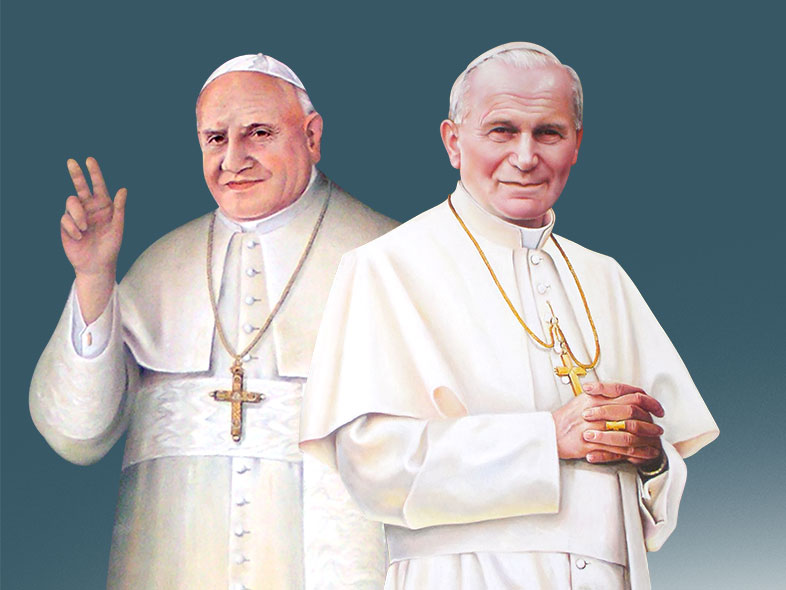
On October 27, 1986, Pope John Paul II, with the inspiration of a prophet, invited the leaders of the world religions to pray and fast for peace at Assisi. Those who were present spoke of the humble demeanor of the Dalai Lama, the major Rabbi of Rome, the Archbishop of Canterbury, Mother Teresa and many others as they entered the small chapel where St. Francis died on the bare ground.
All prayed in silence for a short time before dispersing to twelve different locations in Assisi, where they prayed according to their own unique traditions. In this way, the unity and diversity of the world religions shone forth clearly. And so, throughout the town of Saint Francis, arose prayer and meditation inspired by the Vedas, the Sutras, the Kur’an, the Avesta, the Psalms and the Gospel, with incense, flowers, water, fire and peace pipe. In five Catholic churches in Assisi, crowds prayed before the Blessed Sacrament, while, throughout the world, men and women interceded for peace on earth. “The challenge of peace transcends all religions,” said Pope John Paul II.
What Blessed John Paul II did on that occasion has become a point of reference, but it may never have taken place if it had not been prepared by the work of trailblazers like Raimon Panikkar. Twenty-five years have passed since that historical event and to mark its Silver Jubilee, on the same day, Pope Benedict called another gathering at Assisi of the representatives of all religions and even the agnostics, under the motto: “Pilgrims of truth, pilgrims of peace.”
We may think that this must have very pleased the old pioneer in his seclusion at Barcelona. But death did not allow him to see it implemented. Only from heaven, the house of the God of all, did Panikkar follow the joyous event.
The peaceful assembly in Assisi doesn’t change the fact that, in various places in the world, faiths are in conflict, and Christians, in particular, are among those most in danger. Two recent events are emblematic of this dramatic reality: the massacre of dozen of Coptic Christians in Cairo on the part of Muslim extremists and of the army itself, and the killing of a missionary, Fr. Fausto Tentorio, in the Philippines. The embrace of peace in Assisi is all the more significant against this backdrop.