
Asia Bibi is a citizen of Pakistan, a humble peasant woman, a 45-year-old mother of five, who was sentenced to death by hanging in November of 2010 because of the notorious anti-blasphemy law of that country and is currently awaiting an appeal ruling. She was accused, by other women of her village who were working with her in the fields, of having offended the Prophet Mohammed, when a quarrel broke out over the use of water. The case of Asia Bibi provoked an uproar in the world media and, consequently, the execution of the sentence was suspended. Even if she is exonerated or pardoned, Asia will not feel safe because various Muslim figures have made death threats against her.
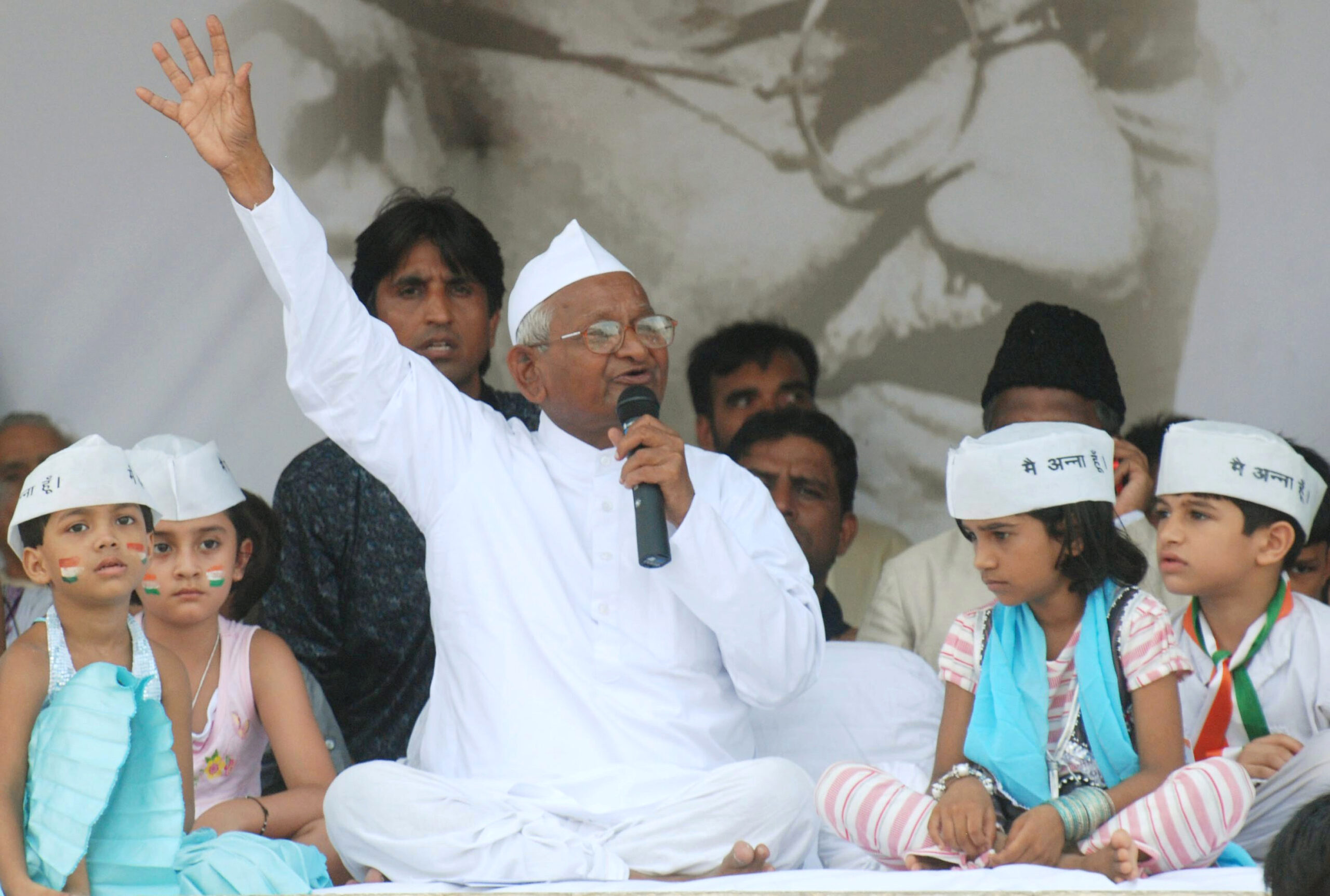
On March 8, on the occasion of the International Women’s Day, the Pakistani Catholic Church and Indian Christians launched the latest in a series of appeals for the liberation of Asia Bibi, who is in danger of being killed in prison. Moreover, they affirmed that this woman symbolizes all the others who are behind bars or in apparent freedom, oppressed by disparity, intolerance and violence because of their sex or the faith they profess.
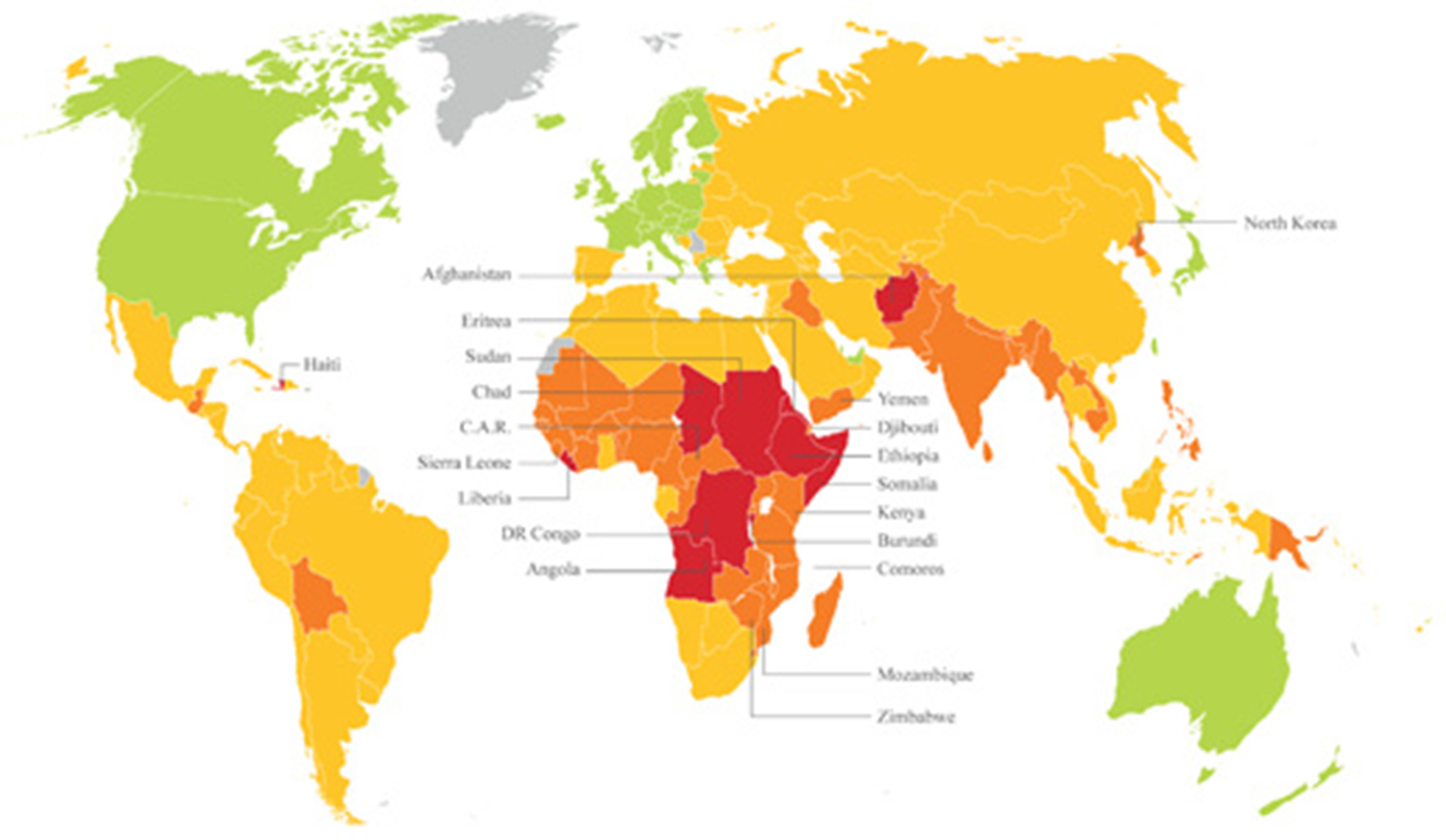
In Pakistan, out of a population of 185 million inhabitants, Christians are 2%, one million of them Catholics. But among the Muslims, as well, there are minorities in danger: Shiites, Sufis, Ismaili, Ahmadis. The law against blasphemy is a weapon used against the minorities. It was introduced by the English in 1927, and kept in effect in 1947, after Pakistan’s independence and separation from India. But from 1977, after the military coup by Zia-ul-Haq, Islamization has been increasing and the law against blasphemy – brought back into vogue with a vengeance – has been joined by other norms based on Sharia Law.
The Justice and Peace Commission of the Catholic Bishops of Pakistan has estimated that, from 1987 to 2009, 1,032 persons have been unjustly punished using the law against blasphemy. For blaspheming Mohammed, the death penalty has been introduced, and for profanation of the Qur’an, a life sentence. Charges of blasphemy are based on the word of the accuser, who, however, must not report the precise content of the offense in order to avoid being charged with the same crime. The judges, in turn, are afraid of being killed, as has happened on occasion, if they exonerate a defendant. So they often tend to delay the verdict, but without granting bail.
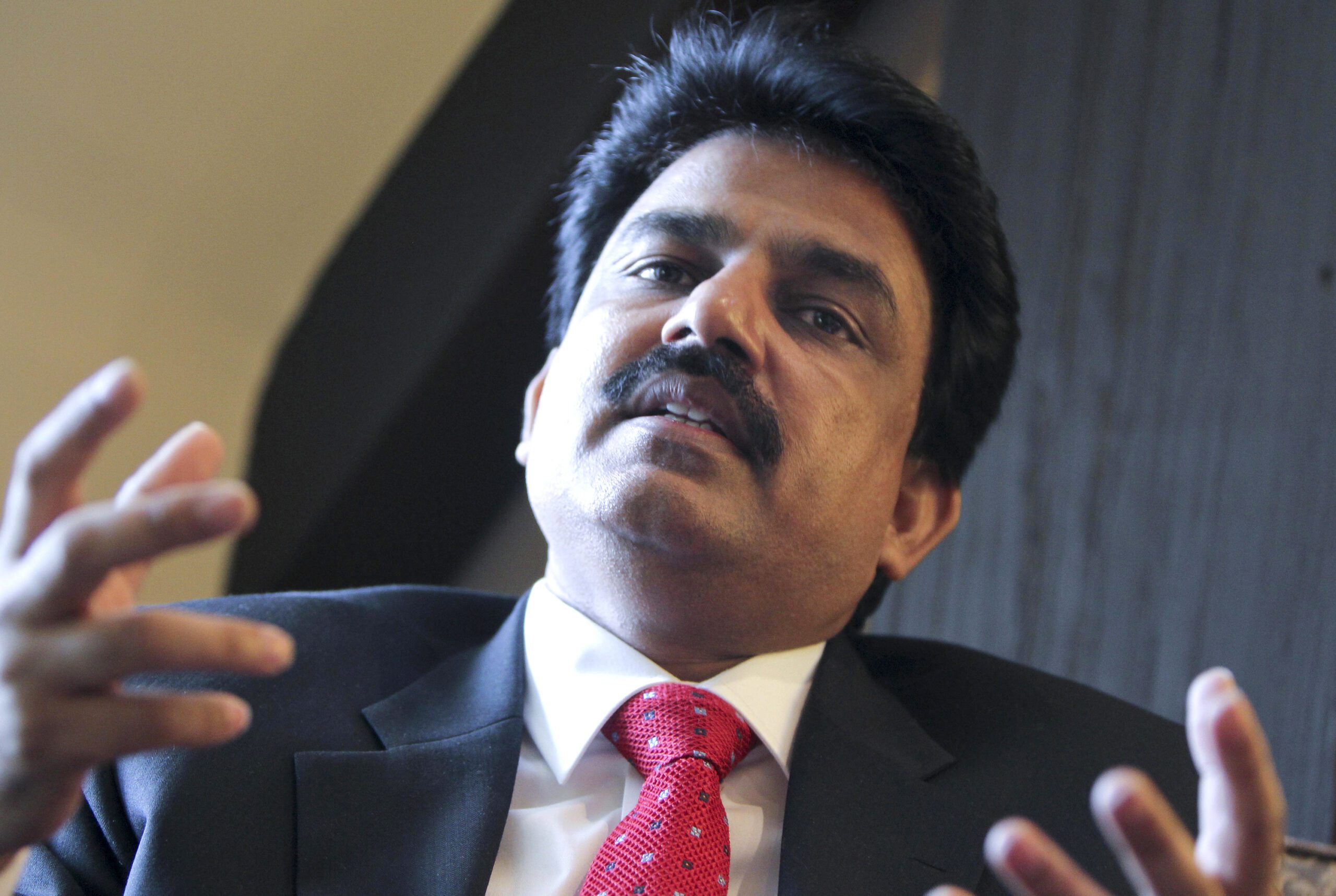
It was for having called for the liberation of Asia Bibi and for the modification of the blasphemy law that Shahbaz Bhatti, Catholic Minister of the Religious Minorities, paid with his life. A short while before him, Salmaan Taseer, the Muslim Governor of Punjab, had met the same destiny for the same reason. The degree of Muslim fanaticism in Pakistan was proved recently when the sanctuary of Osama Bin Laden was discovered at a short distance from Islamabad, Pakistan’s capital city.
MASSACRED BY THIRTY GUNSHOTS
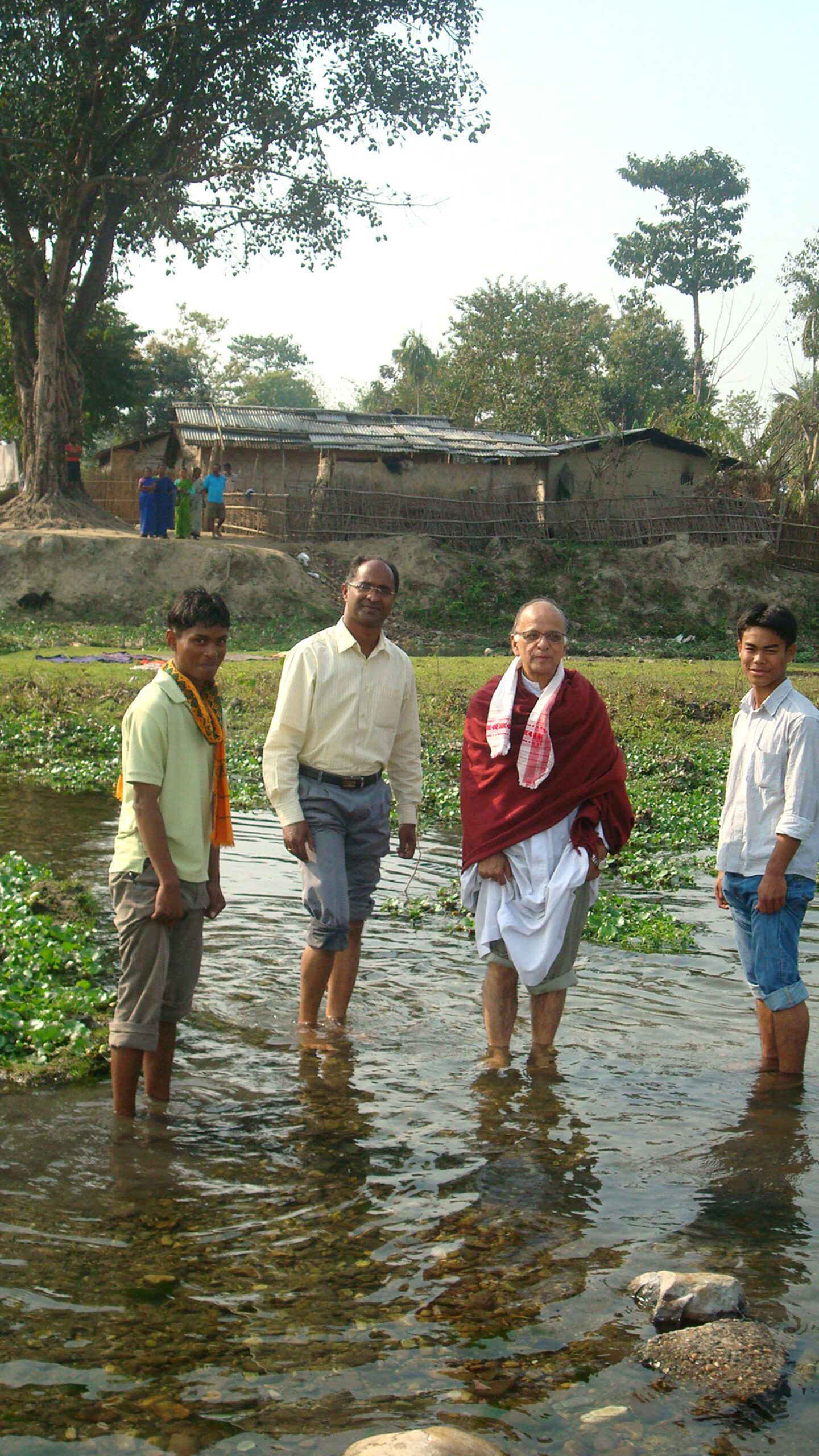
Khushpur, the birthplace of Shahbaz Bhatti, in the fertile plains of Punjab, was founded by Catholic missionaries a century ago, and almost all of its five thousand inhabitants are baptized.
The village is clean, industrious, welcoming. Its schools have good attendance. There is equality between men and women. It bears witness to the good quality of life of Pakistan’s Christian community.
Shahbaz Bhatti was born there on September 9, 1968. He came from a fervent Catholic family. His father, a retired teacher, and his mother, a housewife, raised him according to Christian values and the teachings of the Bible. Since he was a child, he was accustomed to going to church and finding profound inspiration in the teachings, the sacrifice, and the crucifixion of Jesus. It was Jesus’ love that led him to offer his service to the Church. He entered politics and was a member of the main governing party, the PPP, the Pakistan People’s Party. His aim was to promote the freedom and equality of the religious minorities, especially the Christians.
He decided not to get married in order to consecrate himself to his mission. He did not choose the priesthood “because he wanted to be among the people, in direct contact with persons and their difficulties, something that priests are often unable to do in his country.” Eventually, Shahbaz Bhatti became Federal Minister of Religious Minorities. He was assassinated on March 2 by an extremist brigade in the capital of Islamabad. A few weeks earlier, he had asked: “Pray for me. I am a man who has burned his ships behind him: I cannot and I do not want to turn back in this effort. I will combat extremism and I will fight in defense of the Christians until death.”
On March 2, the Minister was with his driver and a nephew in an official vehicle, which had not been armored in spite of requests. The terrorist brigade dragged Bhatti out of the car and massacred him with thirty gunshots. The assassination is attributed to the Pakistani Taliban of Punjab. They worked without interference, and left at the scene of the crime some flyers signed by Tehrik-e-Taliban-Punjab. The Minister had not wanted an escort, mindful that his friend and fellow party member, Taseer, had been killed precisely by a member of his escort, without his other bodyguards intervening. This had taken place two months earlier, on January 4. And his assassin has been turned into a hero, with lawyers competing to defend him free of charge.
FROM HIS SPIRITUAL TESTAMENT
After Shahbaz Bhatti’s supreme sacrifice, his Spiritual Testament was published and it reveals the stature of a saint. These are some excerpts from it: “The frightening conditions into which the Christians of Pakistan have fallen disturb me. I remember one Good Friday when I was just thirteen years old: I heard a homily on the sacrifice of Jesus for our redemption and for the salvation of the world. And I thought of responding to His love by giving love to my brothers and sisters, placing myself at the service of Christians, especially of the poor, the needy, and the persecuted who live in this Islamic country.
“I have been asked to put an end to my battle, but I have always refused, even at the risk of my own life. My response has always been the same. I do not want popularity, I do not want positions of power. I only want a place at the feet of Jesus. I want my life, my character, my actions to speak of me and say that I am following Jesus Christ. This desire is so strong in me that I consider myself privileged whenever – in my combative effort to help the needy, the poor, the persecuted Christians of Pakistan – Jesus should wish to accept the sacrifice of my life. I want to live for Christ and it is for Him that I want to die.
“I do not feel any fear in this country. Many times the extremists have wanted to kill me, imprison me; they have threatened me, persecuted me, and terrorized my family. I say that, as long as I am alive, until the last breath, I will continue to serve Jesus and this poor, suffering humanity, the Christians, the needy, the poor. I believe that the Christians of the world, who have reached out to the Muslims hit by the tragedy of the earthquake of 2005, have built bridges of solidarity, of love, of comprehension, and of tolerance between the two religions.
“If these efforts continue, I am convinced that we will succeed in winning the hearts and minds of the extremists. This will produce a change for the better: the people will not hate, will not kill in the name of religion, but will love each other, will bring harmony, will cultivate peace and comprehension in this region.
“I believe that the needy, the poor, the orphans, whatever their religion, must be considered above all as human beings. I think that these persons are part of my body in Christ, that they are the persecuted and needy part of the body of Christ. If we bring this mission to its conclusion, then we will have won a place at the feet of Jesus, and I will be able to look at Him without feeling shame.”
AFTER THE FUNERAL
After the state funeral in the capital, the “martyr” Bhatti was buried, in the presence of ten thousand people of every creed, in Khushpur near Faisalabad, in Punjab. After the Angelus, on March 6, Pope Benedict issued this appeal to comfort the Pakistani Catholics traumatized by the murder: “I ask the Lord Jesus that the touching sacrifice of Pakistani Minister Shahbaz Bhatti’s life may awaken in consciences the courage and commitment to protect the religious freedom of all people and, in this way, to promote their equal dignity.”
Confronted with this crime, the Pakistani bishops immediately declared and confirmed that “this is a perfectly tragic example of the unsustainable climate of intolerance in which we live in Pakistan. We call on the government, the institutions, the whole country to recognize and take decisions about these issues, because there must be an end to this situation, where violence prevails.” They also sent a request to the Holy See that Bhatti be proclaimed a martyr, killed “in odium fidei (In hatred towards the faith).” The imam of the Badshahi mosque in Lahore himself, Khabior Mohammad Azad, shaken by the death of his “good friend” Bhatti, charged that “the people no longer have the right to express their opinions” and that “those who have claimed responsibility for the assassination are not Muslims, nor human beings” because “Islam is a religion of peace, which teaches respect for minorities.”
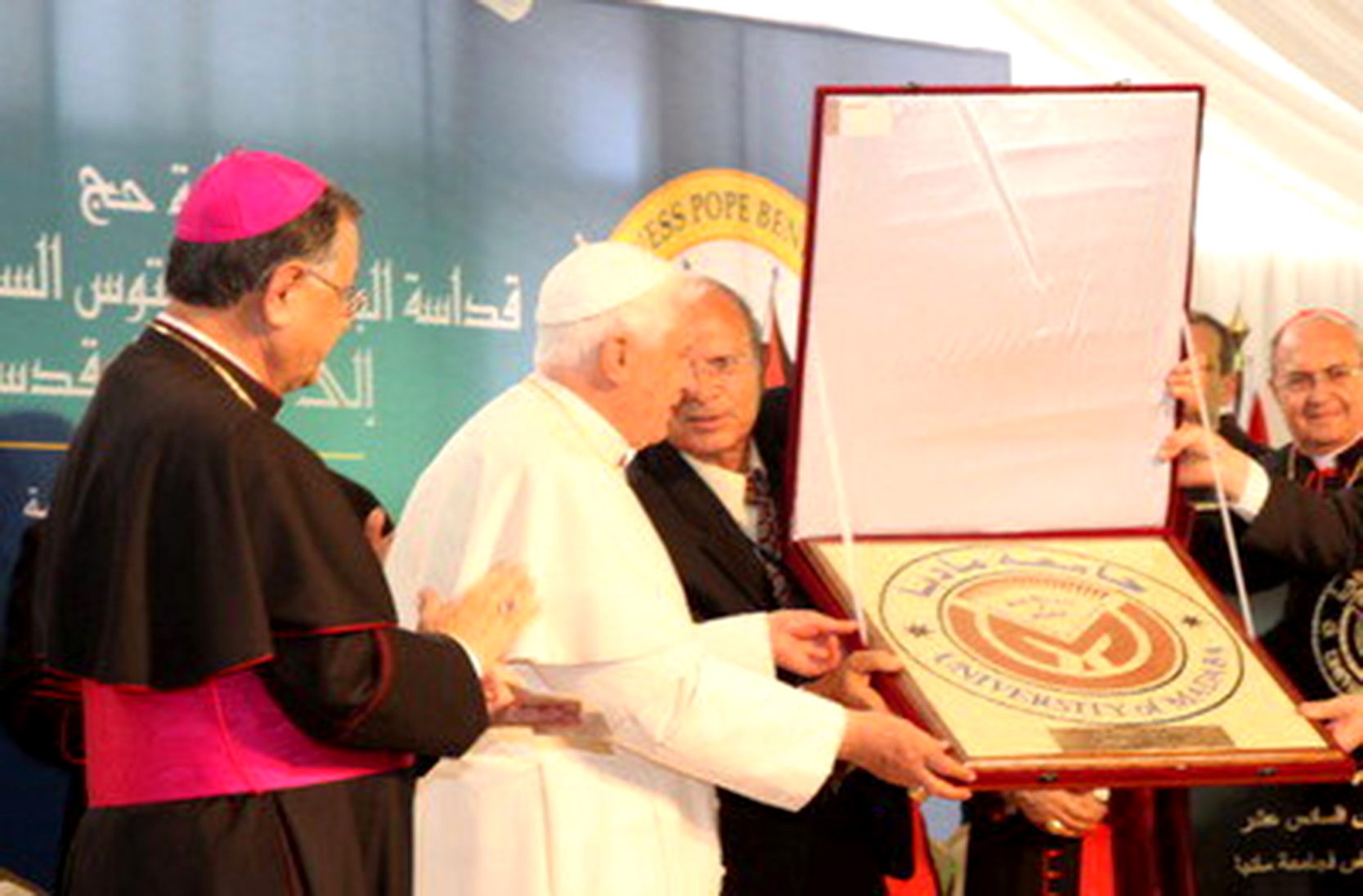
One month later, at the end of the general audience on Wednesday, April 6, Benedict XVI received Shahbaz’s brother, Paul Bhatti, a doctor who lived in Italy for many years but returned to his country precisely in order to continue his brother’s mission, and has been appointed a special adviser on religious minorities to the Prime Minister of Pakistan. With Paul, the Pope also met the grand imam of Lahore, Khabior Azad, a personal friend of Shahbaz. The Bible that Shahbaz always had with him is now in Rome in the memorial for the martyrs of the past century, in the Basilica of Saint Bartholomew on the Isola Tiberina.
A day of prayer for Asia Bibi, Arif Masih and all the other persons arrested for the same accusation was celebrated on April 20, Wednesday of the Holy Week, in Pakistan and other countries. In Rome, in the chapel of the Italian Parliament, Cardinal Jean-Louis Tauran celebrated a Mass in memory of Shahbaz Bhatti. A huge banner with Bhatti’s image and name was hanged outside of the Italian Foreign Ministry on March 5, to commemorate the man and his sacrifice.
Pakistan’s Government has abolished the cabinet-level Federal Ministry for Religious Minorities, eliminating the post of Minister of State for Religious Minorities, the post once held by Catholic politician Shahbaz Bhatti. This ministry is one of the seven cabinet offices closed in a decentralization program approved by Parliament.
Pakistan’s Prime Minister Yusuf Raza Gilani, announced the creation of a new federal department focusing on interfaith harmony and human rights. He tried to dispel the concern of minority leaders present by stressing that “the work of protection and development of religious minorities will continue.” Paul Bhatti, brother of Shahbaz and special adviser to the Prime Minister for Minority Affairs, who had occupied Shahbaz’s post after his martyrdom, attended the meeting and expressed satisfaction with the new structure. He also reported on investigations into Shahbaz’s murder. Evidence points to an al-Qaeda brigade led by one of the Pakistani Taliban, he said, and “now we are waiting for the capture of the perpetrators of the crime, who are in Dubai.”
Meanwhile, petitions urging greater safety for Christians in Pakistan, signed by more than six thousand people, were recently handed in at the Pakistani High Commission in London and at Downing Street, the British Prime Minister’s office. They were delivered at the start and end of a two-mile march by around 300 people, highlighting human rights violations in Pakistan. The march was organized by the British-Pakistani Christian Association and supported by the Aid of the Church in Need. The struggle is still going on and it will be very long indeed. The sacrifice of Shahbaz Bhatti will not have happened in vain.