The letters of Comboni that have been kept until our present times are mainly addressed to Christian religious and political authorities. Considering the theological mentality of his time and the characteristics of his letters and their scope – reporting about the Catholic Mission in order to recruit personnel, promote prayers and raise funds – points of reference which may enlighten our current commitment in the field of interreligious dialogue are difficult to find.
I have tried, therefore, to approach Comboni from a different perspective. In the list of the texts which were examined in Khartoum during the period between February 6 and June 7, 1929, as part of the “ordinary process” to verify the fame of sanctity of Comboni, eight Muslims, who had personally known him, appeared among thirty-eight witnesses. Their age ranged from 70 to 92 at the time of their declaration. I will try to draw a portrait of Comboni and his relationship with Muslims from this set of witnesses and draw out some pointers for our pastoral service among Muslims.
STRONG LIKE A LION
Many of the witnesses underline Comboni’s strong character: his “heart was strong like a lion, like iron” (Somit Habi); he was not afraid of anyone or anything. “At El Obeid, he was himself caring for people sick with smallpox” (Ottaminu ibna Tiu). He was not arrogant and dealt, in a similar way, with both important and simple people. He had a good heart and character and was a joyful person.
Something which caught the attention of the Muslim witnesses was that after the Mass, Comboni did not immediately leave the Church to meet the people who were waiting for him, but remained praying for a while (Somit Habib, Ottaminu ibna Tiu). He was also often seen walking in the garden while reading or praying (Ottaminu ibna Tiu). “Comboni prayed a lot. He loved God so much, that he honored and worshipped Him and invited others to do the same” (Said Mohammed Taha and Mohammed Joseph el-Ezzi).
THE FATHER OF THE POOR
After Mass, Comboni would distribute money, clothes and food to the poor, the blind, the lame, destitute women with children (Somit Habib, Ottaminu ibna Tiu). He even went to the homes of the poor and sick whose situation hindered them from going to church (Mohammed Joseph el-Ezzi). Different witnesses agreed that Comboni’s money was all for the poor. It was clear to them that his purpose was not related to business (Ahmed Ibrahim).
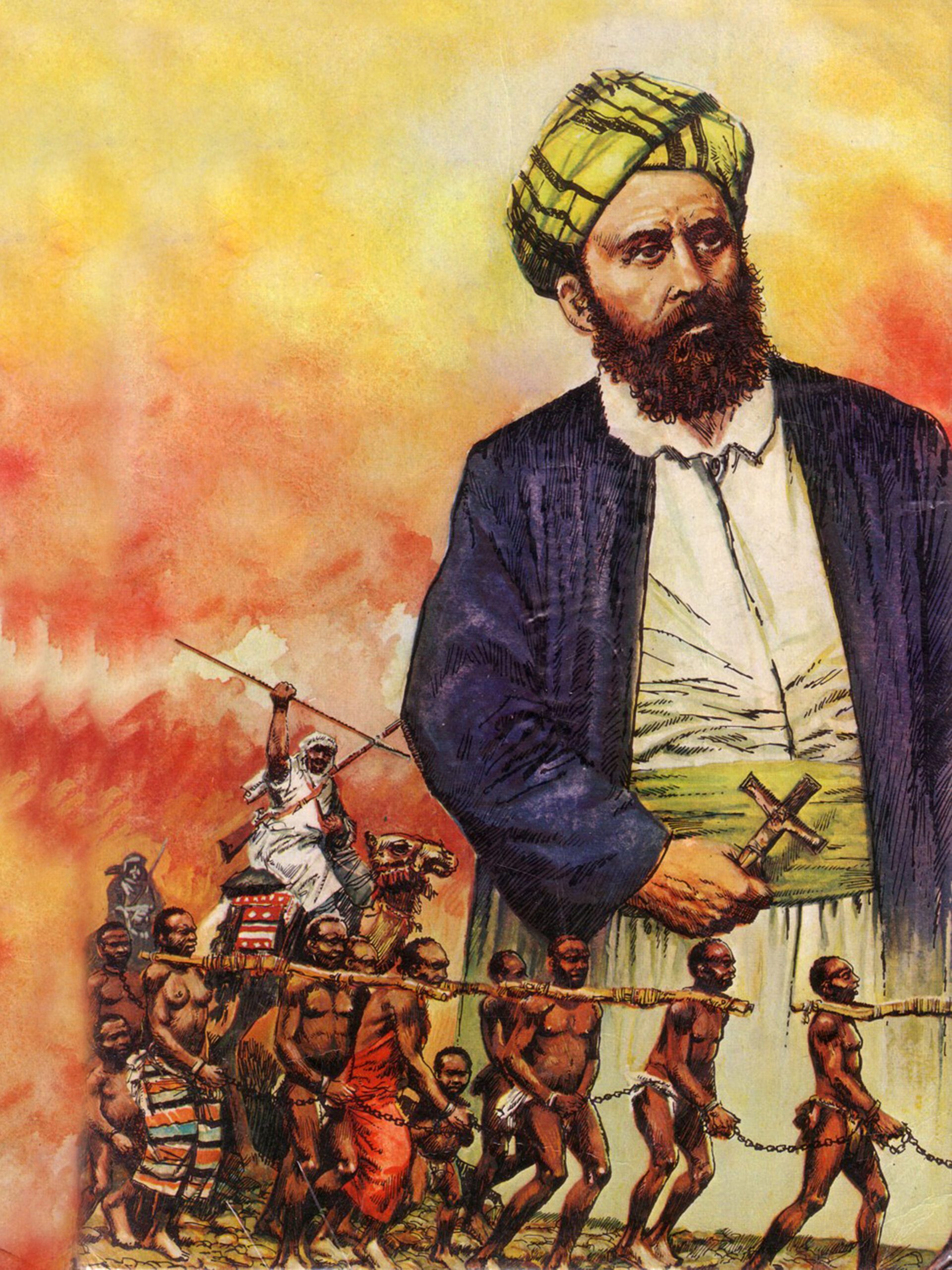
Comboni received slaves who escaped from their owners and defended them, even before the Government, giving them what they needed. He also went to meet these slave-owners to rebuke them when they beat their slaves, to the point that the same owners were afraid of him (Somit Habib, Ottaminu ibna Tiu). There were three kinds of slaves in the Mission: those Comboni had bought, those who had been given to him, and others who had escaped from aggressive owners (Mohammed Joseph el-Ezzi).
He was considered the “Father of the Poor” (Ottaminu ibna Tiu) and these poor were from different religions (Mohammed Joseph el-Ezzi). He was demanding with the boys he welcomed to the Mission, so that those who did not behave properly or legally, were sent to the Government to be punished according to the law (Ottaminu ibna Tiu). His goodness is compared with that of “Jesus, the Prophet” (Mohammed Joseph el-Ezzi).
Comboni helped Blacks and Arabs, Christians and Muslims (Mohammed Joseph el-Ezzi). Comboni himself recognized this fact during the famine of 1878 in Khartoum: “We have gone to the aid of the many families of our Christians who are in the greatest need: we have also helped, as far as we could, the neediest Muslims, because charity in such cases makes no distinction between Greek, Arab or Syrian” (Writings 5152). Muslims were allowed to participate in the Mass as long as they dressed with dignity (Ottaminu ibna Tiu). Knowing Islamic culture, he did not greet Muslim ladies on the road (Ottaminu ibna Tiu).
HE WAS A HOLY MAN
Comboni enjoyed a good friendship with Said Mohammed Taha, a Syrian slave-merchant. This man explained that in their encounters, Comboni spoke to him about Jesus and the Christian faith after having asked him about his family, his country and his Islamic religion. “He used to tell me about the need for repentance and explain to me the difference between Islam and Christianity. He was more devoted to his religion than I myself am to mine, even if I am preparing my pilgrimage to Mecca, where I would like to die” (Said Mohammed Taha).
However, in my view, the most interesting fact which emerges from these witnesses is the conviction that Comboni was considered a . The , in the Sufi Islam, which dominates Sudanese spirituality, is someone who lives in the presence of God and collaborates with Him in the governance of the world, a holy man who has passed away and still intercedes before God and is able to perform miracles. People make pilgrimages to their shrines both to show reverence and to receive a share of their blessings. “One who is alive will rarely be called a That term is reserved until after his death; he proves his right to the title by the continued exercise of power from his tomb.”
Unfortunately, the testimonies of these witnesses were not recorded in Arabic, but in Italian and Latin. Therefore, it is not possible to find an explicit use in the testimonies of the word, , but many signs point to it. The witnesses described most of the main characteristics of these aulia’ (plural of ). They considered Comboni a “holy man” (Somit Habib) and they saw people who went to pray at his tomb and were healed. In fact, Somit Habib affirms: “Bishop Comboni may be very powerful before God since he was a holy man on this earth.”
Ottaminu ibna Tiu said that she knew that Christians esteemed Comboni as much as Muslims do “with our saints (those whose tombs we visit).” This explanation between brackets indicates very clearly that the original word this witness intended was aulia’, which the translator explained in this way: “those whose tombs we visit.”
THE SLAVERY FIGHTER
Two titles emerge from these Muslim witnesses to summarize their perception of Comboni: “Father of the Poor” and “ Allah.” The first indicates that Comboni’s commitment to the poor was perceived as genuine. These witnesses were able to see the love which motivated this care, totally different and without any economic or ideological purpose. This commitment made them recognize in him the “Prophet Jesus” who is characterized in the Qur’an by prayer and charity. “He [Jesus] said: I am indeed a servant of God. He has given Me revelation and made Me a Prophet; He has made Me blessed wheresoever I be; and He has enjoined on Me prayer and charity as long as I live” (Qur’an, surah Mariam 19: 30-31).
On the other hand, if we were to reduce Comboni’s ministry to that perceived by these Muslim witnesses, we would be led to question his missionary methodology and his apparently paternalistic attitude. Here, we have to consider the ideal of charity for Muslims, which is closely related to almsgiving, one of the five pillars of Islam, and the whole of Comboni’s missionary activity. If we examine, for instance, his action in the field of the fight against slavery, both at national level, where he gained the right to political asylum for those slaves who reached the territory of the Mission, and at international level, where he collaborated in the abolition of slavery in Africa, and we look at his programs to help former slaves be self-sufficient, we will see that it would not be so easy to question his method and attitude.
We also have to take into account that these freed slaves were away from their homes, completely uprooted, really in need of material help. Moreover, the fact that Comboni helped people from different religions, excludes any thought about the use of material assistance to proselytize – to gain people for Christianity.
A GIFT FROM ALLAH
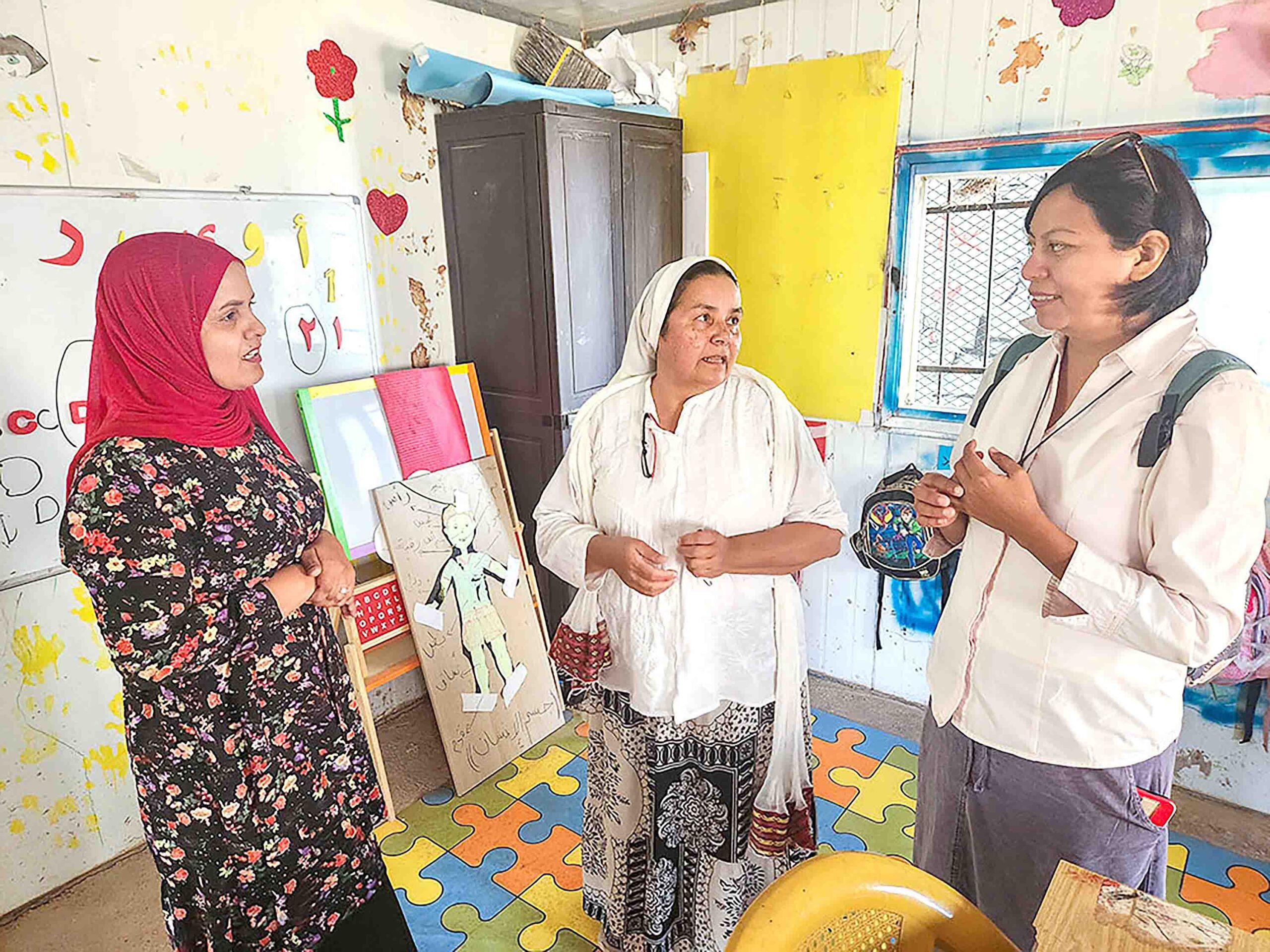
We, too, Comboni Missionaries at work in Islamic contexts, are called to make visible, with our actions, the love of Christ which moves us and is at the source of our missionary vocation. This fact poses difficult pastoral questions. “Charity makes no distinction between Greek, Arab or Syrian,” but we also know that, in many contexts, if we helped Muslims as we do Christians, we would very easily be accused of proselytism, especially by those who have transformed Islam into an ideology or may use social aid to convert non-Muslims. Even more, these are the persons who may occupy political posts of power. Therefore, the manifestation of our charity is called to be genuine and intelligent at the same time. The openness of our schools in the Khartoum province to both Muslims and Christians is the expression of this charity which makes no distinction.
The second title, “ Allah,” rather than the fruit of moral perfection, is understood by Muslims as a gift from God, who chooses whoever He wills and empowers them to perform extraordinary works, like healings, and collaborate in the ruling of the world. According to some of them, Comboni was given this gift, even if he was not a Muslim.
We also find this recognition of the action of God beyond the limits marked by Islamic faith in the case of Josephine Bakhita. In the investigation carried out by Umar Sharif and Fr. Giovanni Vantini among her descendants, they found out that the people of Bakhita’s village do not say that “Bakhita kafarat,” that is, that she abandoned her original Islamic faith, but that “she was chosen by God to teach about God to other people.”
Moreover, the miracle which opened the way to the canonization of Comboni, happened to a person of Muslim faith, Lubna Abdel Aziz. This is the only miracle of its kind which has ever come before the Congregation of the Causes of the Saints. What was God trying to tell us through this choice of a Muslim woman?
THE BASIS FOR RELIGIOUS DIALOGUE
I would also like to underline how the centrality of God in Comboni’s life was evident for these Muslim witnesses. Similarly, we are also called to be men and women of God, centered on Him who is the Giver of Life. The centrality of God in our lives will appear to those who surround us, Muslims and Christians alike.
In the same manner, the relationship between Comboni and Said Mohammed Taha tells us of the importance of being well-grounded in our personal faith as a foundation for interreligious dialogue. The fact that Comboni and his Syrian friend were well-grounded in their own religion, made them free to speak openly about each other’s religion. This is also my experience with some Muslim friends. It is easier to share one’s personal faith with those who have a real personal experience of God. It is almost impossible to do so with those for whom Islam is an ideology in which there is no place for “the other.” Lubna Abdel Aziz and her husband were also well-grounded Muslims. In fact, after her healing, the couple travelled to Mecca as Said Mohammed Taha was planning to do at the moment of his declaration in 1929.
I think this reflection invites us to present Comboni to our Muslim brothers and sisters, as Lubna believed and most Muslims in Northern Sudan also do, as someone who is not just “the one who founded all the schools in Khartoum.”