
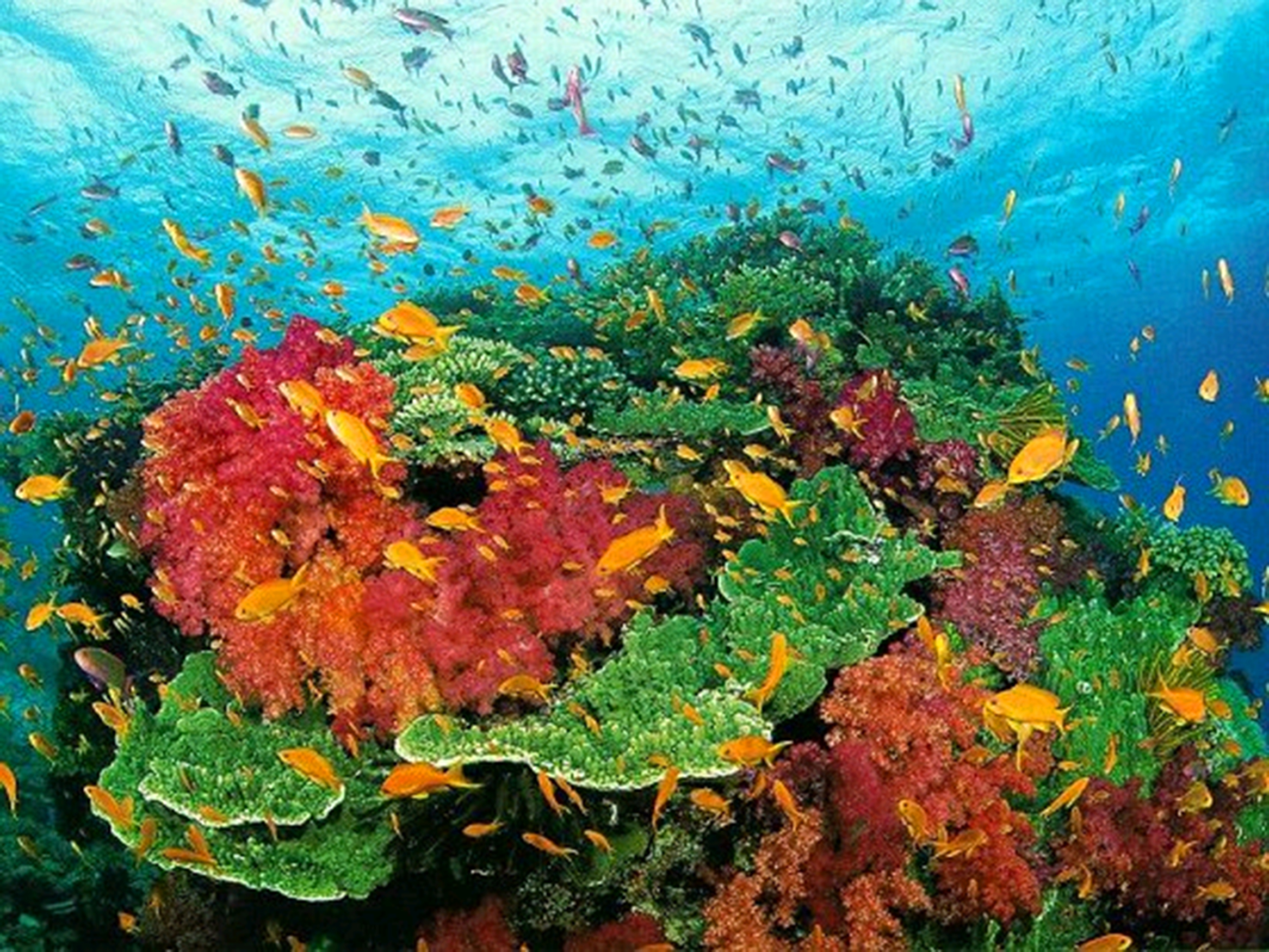
The Philippines – with its 7,107 islands, 36,289 km of coastline and 226,000 sq. km of coastal waters – is a marine biodiversity hotspot. Its richness in coral reefs, mangroves, seagrasses, species variety of decapods, mollusks, crustaceans and giant clams (whose shells are often used as baptismal vases) is breathtaking.
The bad news is that the country’s marine environment is at risk. Only 5% of the reefs are in good shape mainly due to sedimentation from deforestation and urbanization, poor land management, impacts of mariculture (sea rearing of fish), illegal fishing, dynamite and cyanide fishing and coral bleaching; mangroves have been destroyed to make fishponds and prawn farms, salt beds, agriculture, settlements, harbors or as a result of oil spills like the one that decimated Guimaras Island in August, 2006; and seagrass habitats have been affected by siltation and fishfarm organic effluents. With such pressure on the marine environment, biodiversity is compromised, marine resources depleted and destroyed thus affecting the survival of many who live on the sea.
The UP Marine Science Institute (MSI) has made significant contributions to tropical marine science, as the Calouste Gulbenkian award recognizes. Since its foundation in 1974, MSI has worked towards understanding, conserving, managing, rehabilitating, restoring, mitigating, and sustainable utilization of the marine environment, explains the Institute’s director Dr. Maria Lourdes San Diego-McGlone.
EXEMPLARY ACHIEVEMENTS
The MSI has been working in the assessment and restoration of depleted and threatened marine ecosystems and populations. Coral reefs, seaweeds and seagrasses, giant clams and other invertebrates are singled out in the nomination document for the award as examples of the Institute’s accomplishments.
Coral reefs. Under the leadership of MSI, the Philippines was among the first countries in the world to complete a nationwide survey of the state of its coral reef resources. And MSI’s work on coral restoration demonstrates that it is possible to significantly increase fish diversity and abundance in degraded reefs.
Seaweeds and seagrasses. The Institute has produced books and literature on the biodiversity of Philippine seaweeds, a first in this field in Southeast Asia. Results have shown the Philippines as having the second highest seagrass species diversity in the world. International and national collaborative research undertaken since 1996 has provided the basis for ongoing national and regional initiatives to protect and manage ecosystem biodiversity and help reverse the environmental degradation trends in the South China Sea and Gulf of Thailand.
Giant clams. As of 1988, the largest clam species, T. gigas, had become virtually extinct, and T. derasa, and H. porcellanus had become rare. Despite the absence of a national program on giant clam conservation, MSI was able to enjoin local support through information dissemination, use of protected areas for clam restocking, and training of locals as stewards of the giant clam ocean nursery in Bolinao (site of the MSI marine laboratory). To date, MSI has restocked more than 79,000 cultured clams in over 20 of the country’s 62 coastal provinces. Giant clams restocked by the Institute in Bolinao, the Philippines, have begun to reproduce locally as evidenced by the presence of some juvenile clams. This is a positive development that needs to be replicated nationwide and in other parts of the world where these organisms are threatened or endangered.
Other invertebrates. A MSI-led nationwide assessment of natural stocks of commercially important species (e.g. sea urchins, spiny lobsters) provided critical baseline data needed in developing management actions for invertebrate fisheries. Hatchery culture of the commercially important sea urchin, Tripneustes gratilla, and the development of community-based grow-out culture have become widely adopted in the northwestern part of the country (Ilocos and La Union). These methods have contributed to the reestablishment of spawning populations and recovery of the sea urchin fishery, which is a significant source of income for many poor coastal communities. This work has been expanded to other high value invertebrate species (e.g. topshells, sandfish) as a means to developing environmentally friendly options for marine aquaculture accessible to poor coastal communities while improving management of natural populations.
Lastly, the MSI studies, in collaboration with the University of Utah, have proved remarkable for drug development. For instance, the venom of Conus species found in the Philippines has been developed by a pharmaceutical company as a drug against pain and currently marketed as Prialt, a primary alternative to morphine. A second team of MSI-Utah collaborators is studying the natural products of sponges and tunicates, some of which are currently being explored as possible drugs against cancer and infectious diseases.
For more information consult the MSI’s site:
http://msi.upd.edu.ph