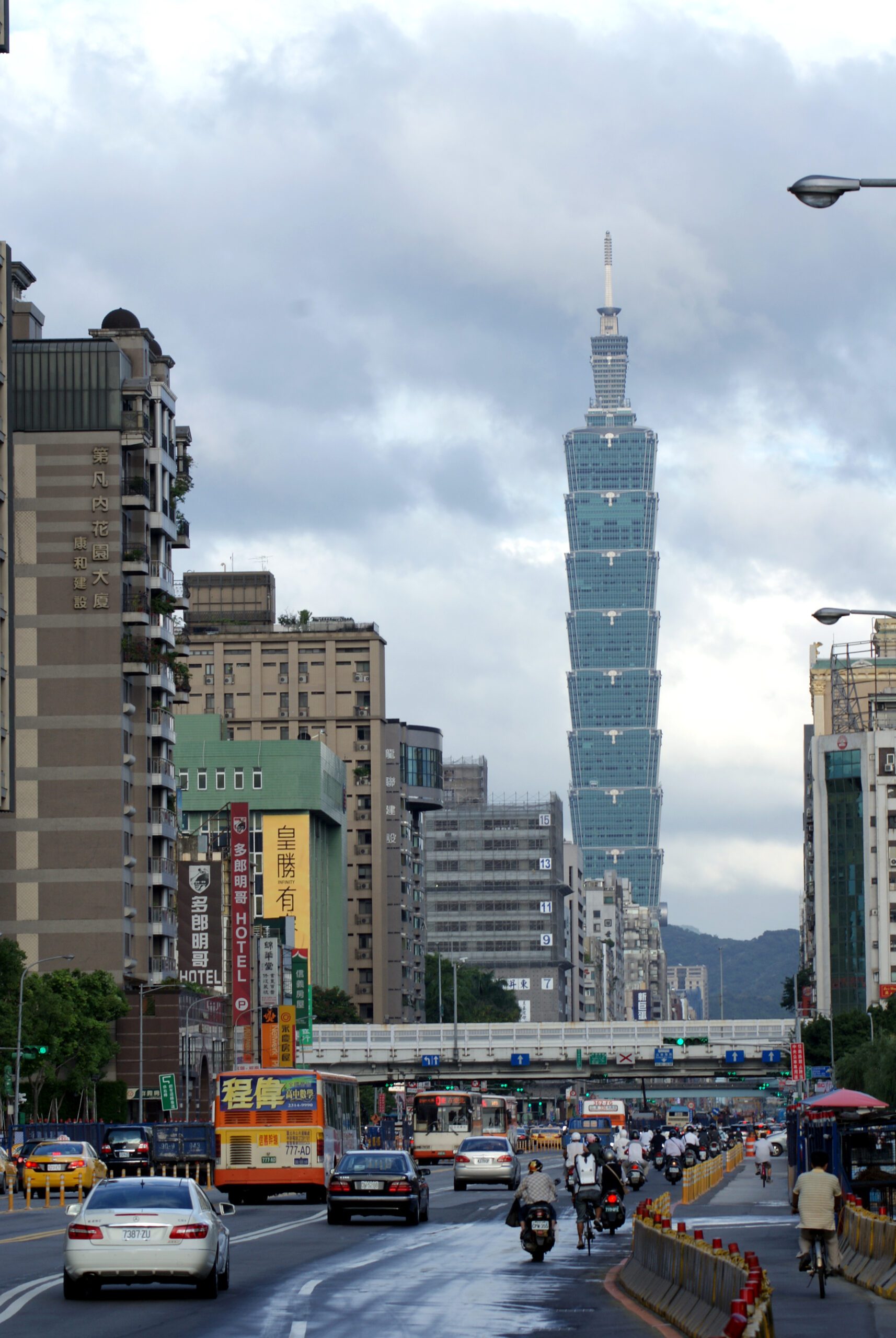

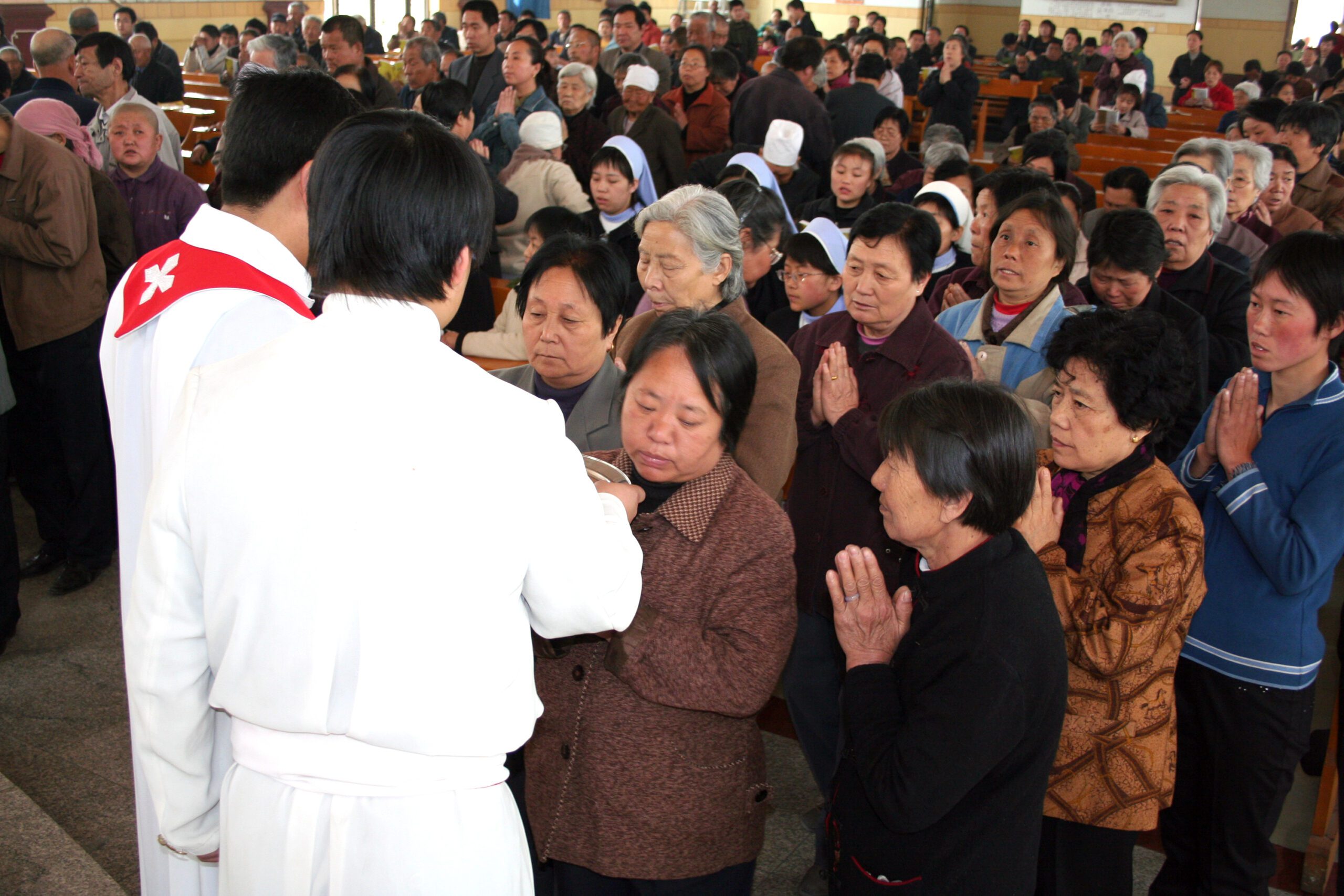
To speak of the Catholic presence in China today, we have to mention two worlds: rural and urban. Traditionally, the presence of the Catholic Church was based in the rural world, where Christianity had taken root: there were even Catholic villages in their entirety. But since two or three decades ago, there has been an urban Catholic population as a result of an internal migration.
This development has created problems for the Church because the communities and churches built in rural areas were emptied over the years. The Catholic population that flocks to the cities can hardly fit into a community where they can continue to live their Christian faith. “This is a Catholic population,” as defined by a missionary, “that lives on horseback between the rural area of origin with its traditions, realities and sense of belonging and the new area of immigration, where sometimes these are absent, even finding Christian communities with other languages and traditions.”
DIFFICULT INTEGRATION
Naturally, integrating these Catholics in urban communities is not easy. This migration to urban areas has altered the education system of children and young Catholics. In the past, faith and Catholic customs were passed down from parents to children in a family environment within the village where there was a school. The children went to school in the morning and returned home to the family environment in the afternoon. Today, with the migration to urban areas, parents leave their children in the villages under the care of grandparents or relatives; in the villages, primary schools disappeared and were reorganized into larger centers depriving the children of the influence of their families. This situation, coupled with the one-child policy, has had a negative impact on the life of the Catholic Church causing difficulties in the transmission of faith and a strong decrease in vocations for the service of the Church.
The migration of the Catholic population to urban areas took away the influence of parents on their children’s education: this is now dependent on the activities that parishes organize during the summer and the holidays at the end of the Chinese Year, an occasion that traditionally brings together families.
Geographically speaking, the vast majority of Chinese Catholics live in five major provinces: Shaanxi, Hebei, Liaoning in the North, Shanghai in the east, and Fujian on the coast.
DIVIDED COMMUNITIES
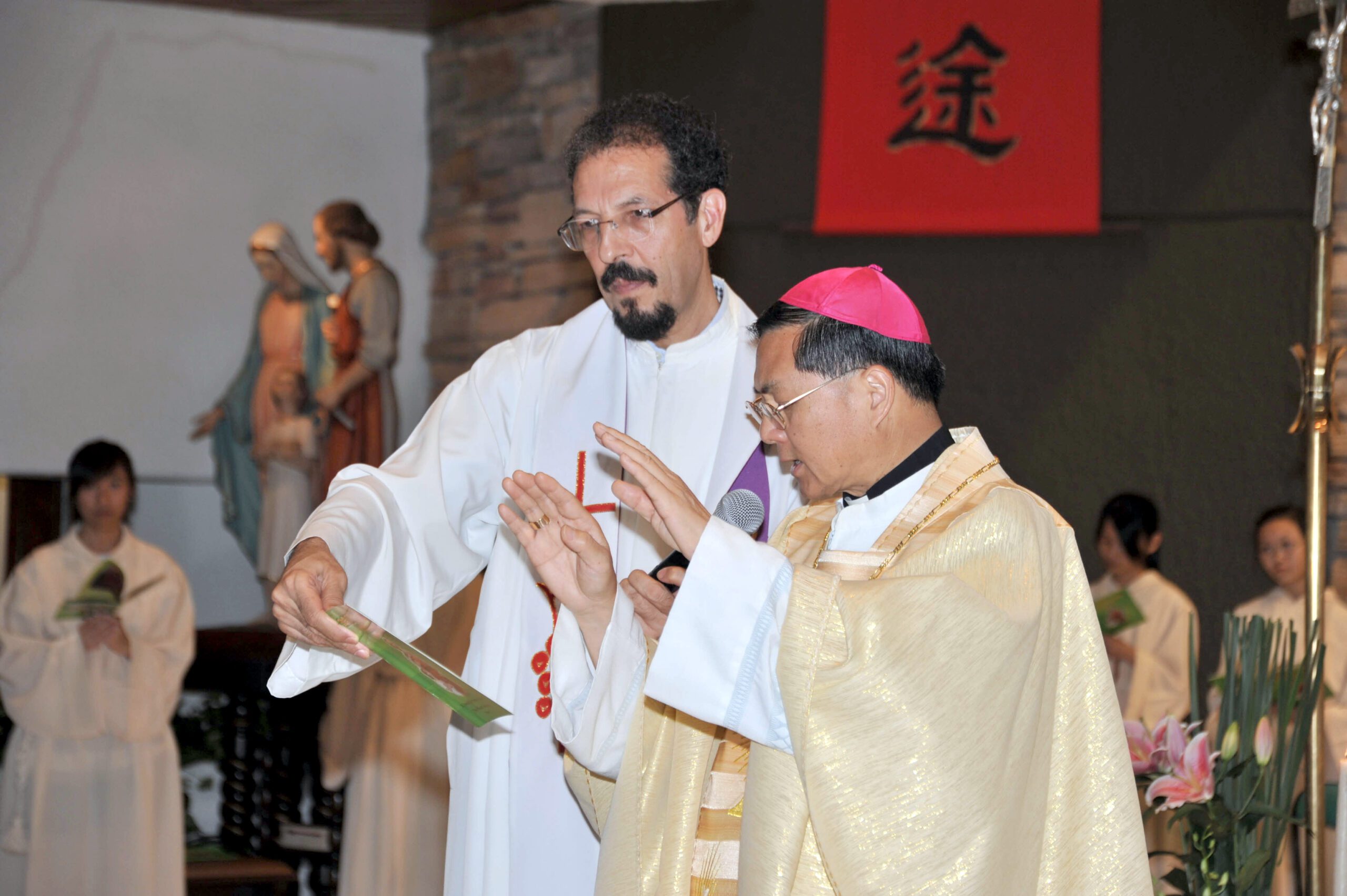
The creation of the Patriotic Association left the Chinese Catholics divided between the ‘official church,’ that is, the registered communities living out Christianity within the constraints dictated by the government, and the ‘unofficial church’, the unregistered communities refusing state control over their religious activities. There are several forms of unregistered communities, some open, known and tolerated by the authorities, and with social visibility; others without visibility and promoting domestic cults that are considered illegal by the authorities.
Today, in China, there is religious freedom within the parameters allowed by the state. The official registered communities can practice their faith and be affiliated with parishes without major problems. Unregistered communities suffer some risks: the faithful can be questioned and even spend some days in prison, bishops and priests can go to jail or be placed under house arrest. For example, Shu Zhimim, the 73-year old Bishop of Boading in Hebei, and a group of eight priests from Boading are, currently, in detention.
The new authorities have decided to end the concentration and re-education camps. Instead, people were returned to their homes under house arrest. These included five bishops, one of them Bishop Julius Jia of Zhengding, who should have come back home but, until now, no one knows their whereabouts. “Apart from some particular moments of political tension, for specific reasons, usually priests can do their pastoral work and we cannot speak of systematic and continuous persecution,” a missionary points out.
EMPHASIS ON TRAINING
The life of major seminaries that prepare seminarians in the context of the open Church also regained some normality. For one, there is a national seminary in Beijing and five regional seminaries (in Jilin, Shen Yan, Xian, Chengdu, and Wuhan). There are still minor seminaries in Hebei and Shanghai. Unregistered communities also have their structures to prepare their seminarians. In the region of Hebei, for example, but they are more informal and offer limited training, with a more traditional theology and a devotional spirituality.
The formation of the laity and religious improved greatly in recent years, thanks to the collaboration of overseas resource persons and the systematic organization of Bible courses and the initiation to new forms of prayer and spirituality. This improvement has also been seen in rural areas, but it is most evident in urban areas. Groups of missionaries travel across the country, invited by bishops or priests, to lend a hand in this task of preparation of the laity, mainly women, who, for their perseverance and leadership, are seen as a factor of great hope for the Church in China.
A REORIENTATION
Given this situation, foreign missionaries, too, have to be very calculating in carrying out their mission in the mainland. With the coming to power of the Chinese Communist Party, particularly in 1949, all foreign missionaries were expelled. This decision has not been revoked and, today, foreign religious institutes and missionaries of the Catholic Church cannot still reside or carry out pastoral activities in China. Hoping for a quick turnabout of this decision, missionaries who left China took refuge in Hong Kong and Macau, Taiwan and Singapore, and other neighboring countries such as the Philippines. More than half a century has passed but no turnabout has happened. Although the rules governing religious activities of foreigners were updated on September 26, 2000, the 22 articles still affirm that religious activities must be always conducted according to “the laws of China, the legal norms and the approval of the competent authorities.”
PARTNERSHIP?
When Deng Xiao Ping took the helm in 1978 and provided an “opening” for the Church to carry out its work, along with the reconstruction of its structures, the bishops organized themselves the best they could and, with the help of the local clergy, religious, and lay people, improvised or prepared their mission in the best way available.
Chinese bishops never asked the government or the Holy See for the return of missionary institutes to the areas where they traditionally have been full partners in the life of the Church, especially in evangelization. However, some bishops, such as the late Jin Luxien of Shanghai, discussed the problem openly. However, faced with a government ban, the bishops sought out the help of foreign missionaries very sporadically and as a means of support and material assistance. A certain presence was permitted but only to those linked to international organizations as a bridge to capture humanitarian aid.
REINVENTING THE MISSION
This situation thus forced the missionaries to reinvent their mission in China. Unable to settle down, they were left with the option to adopt itinerant lifestyles and action. Unable to have their own structures, even members of institutes of Chinese origin coming from the diaspora had to enter the diocesan structures. Since they could not carry out a direct apostolate on their own initiative, the door was opened for activities of collaboration with priests and parishes, with bishops and dioceses. Activities ranging from simple lectures and Bible studies to retreats and more concerted training of priests, religious and lay people – adult men and women, youth – were organized.
In this sense, these missionaries say they are happy with the new door that was opened to them in recent years. With this reinvented mission, focused on the contact and relationship with Church people, in the service to the Word of God, the more or less direct support to the involvement of Catholics in the process of social transformation, and in response to the needs of people left behind by the current moment of Chinese economic and social development (the orphans, patients with AIDS and leprosy, the excluded and the poor), the institutes were somehow able to carry out their mission. They do not hide the fact that it is a very demanding mission that asks for greater willingness and ability for adaptation and mobility, for a spirit of sacrifice and renunciation to any leading role, but it is well worth it!
NEW OPENINGS
The laws that prohibit missionary institutes and missionaries from freely carrying out their service in China may not have changed, but things evolved and, in fact, the situation has changed. What made such a change possible, without the Communist Party changing its policies and principles on religious matters, were the changes that happened in the country and in the world. “China, today, is open to the world, especially in economic matters. They realize the importance of different religions in the world. Slowly, new paths and new forms of missionary presence and collaboration have been found. Nobody had predicted them and, today, no one can foresee where they will take us. For now, these are very limited and localized, but they pre-announce a future missionary presence radically different from that of the past,” an active missionary in China stated. Another element that helped to explore these new openings for collaboration between the local Chinese Church and the foreign missionaries was the fact that local authorities feel that there is room for some autonomy in applying the general political principles of the party and so they create spaces for a constructive relationship with the Church authorities – bishops and priests – whom they recognize as positive partners for the common good and for a better society. Religious activities have to be registered, following government orders, but it allows some space for freedom. The famous Document 19, approved in March of 1982, opted for tolerance of religion more than fighting against it directly.
NEW CHALLENGES
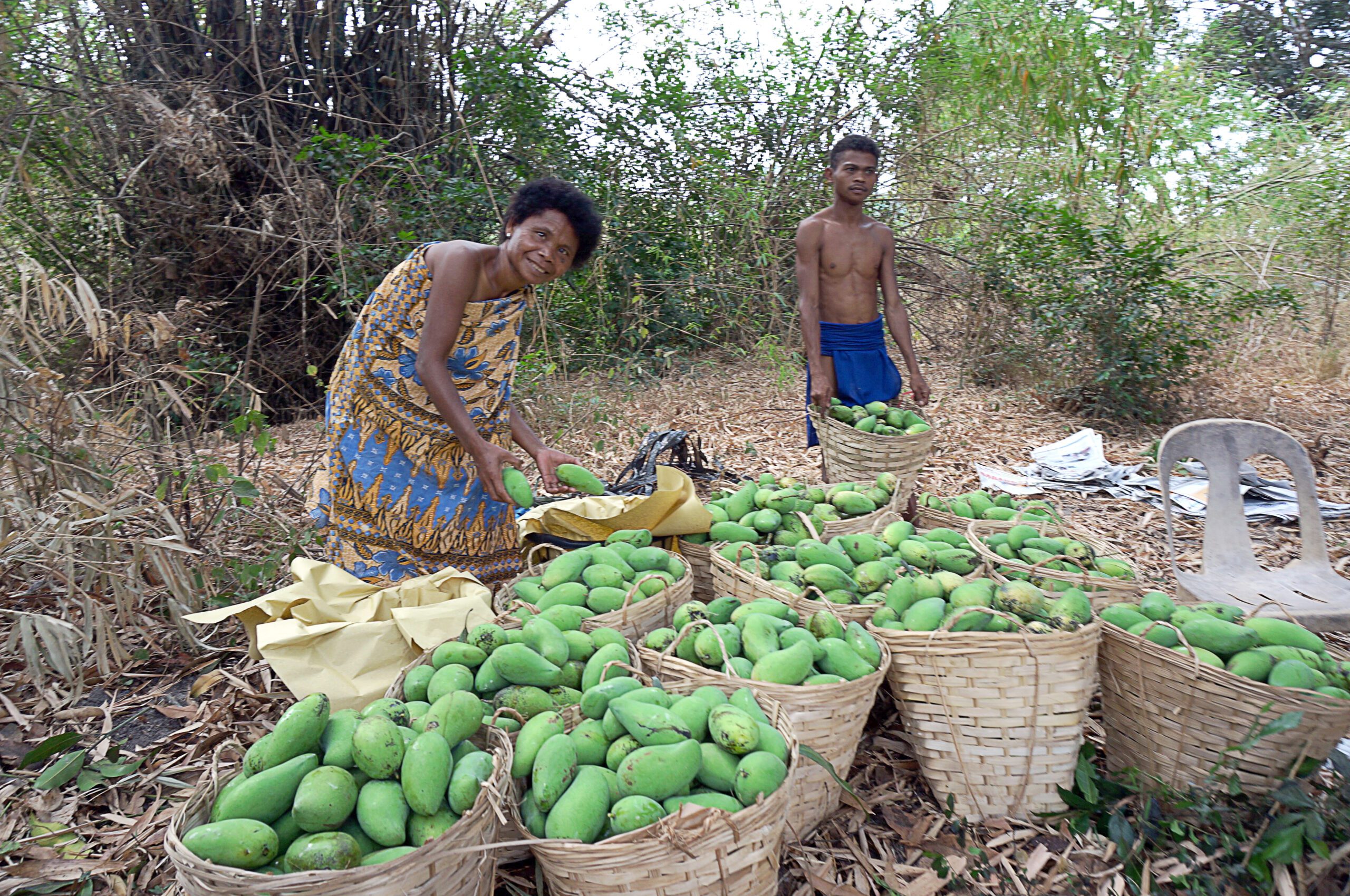
Since the 1970s and 80s, rapid change has taken place in China, where overseas investors have established their factories and production centers in coastal zones and special economic zones. This rapid economic development has changed the traditional Chinese social and cultural landscape in the last two decades. There is the appearance of urban masses, whose economic status improved much and who benefited greatly from the economic development and urbanization. Rural populations have, likewise, undergone transformation: their young population has decreased while the aging population has increased. In some parts of this rural world, children, old people and women have been left behind. Meanwhile, a third group of people appeared: a population in movement, in constant exodus from rural areas to the cities, living on horseback between the village and the city – a multitude looking for work but, being in the city, can mean having a license to work but not to live. This exodus of the population from rural to urban areas is widespread and is seen everywhere. It is a common feature of China, although economic progress is greater in coastal areas and poverty grows, the more one moves inland.
PRACTICAL SENSE
People who have benefited from the advantages of economic development and the itinerant population that seeks work suffer the consequences of this unbridled development. They lose their cultural identity, torn between the traditional world where they came from and the uncertainties and contradictions of a constant changing economy. But they do not seem ready for large demonstrations in favor of human rights or radical changes. Their practical sense makes them value the economic benefits that they had never before had the opportunity to achieve through work. For them, more money means better living conditions and health care for themselves and their families. On the other hand, the Chinese government has realized that it needs to keep running a model of economic and social development that is hinged on the exploitation of raw materials like steel, timber, minerals, and oil in order to lead in the international arena.
For missionaries familiar with China today, the present model of Chinese development will continue in the time ahead. And because of its importance in the world stage and the spiritual yearning of its population, China remains a major challenge for missionaries who and religious institutes that take upon them the mission of bringing the Gospel of Christ to the nations. The missionaries cannot simply ignore the needs of the people in poverty and those who are always on the go, seeking for a better life. They cannot silence the testimony of Chinese Christians as well.
The main challenge, therefore, is to be instruments of reconciliation among members of the Chinese population so that people who yearn for a better life, as well as the Chinese Catholic communities that are still divided for reasons of history, may live fully reconciled in a society that is undergoing a profound transformation. This is a favorable moment to announce the Gospel.