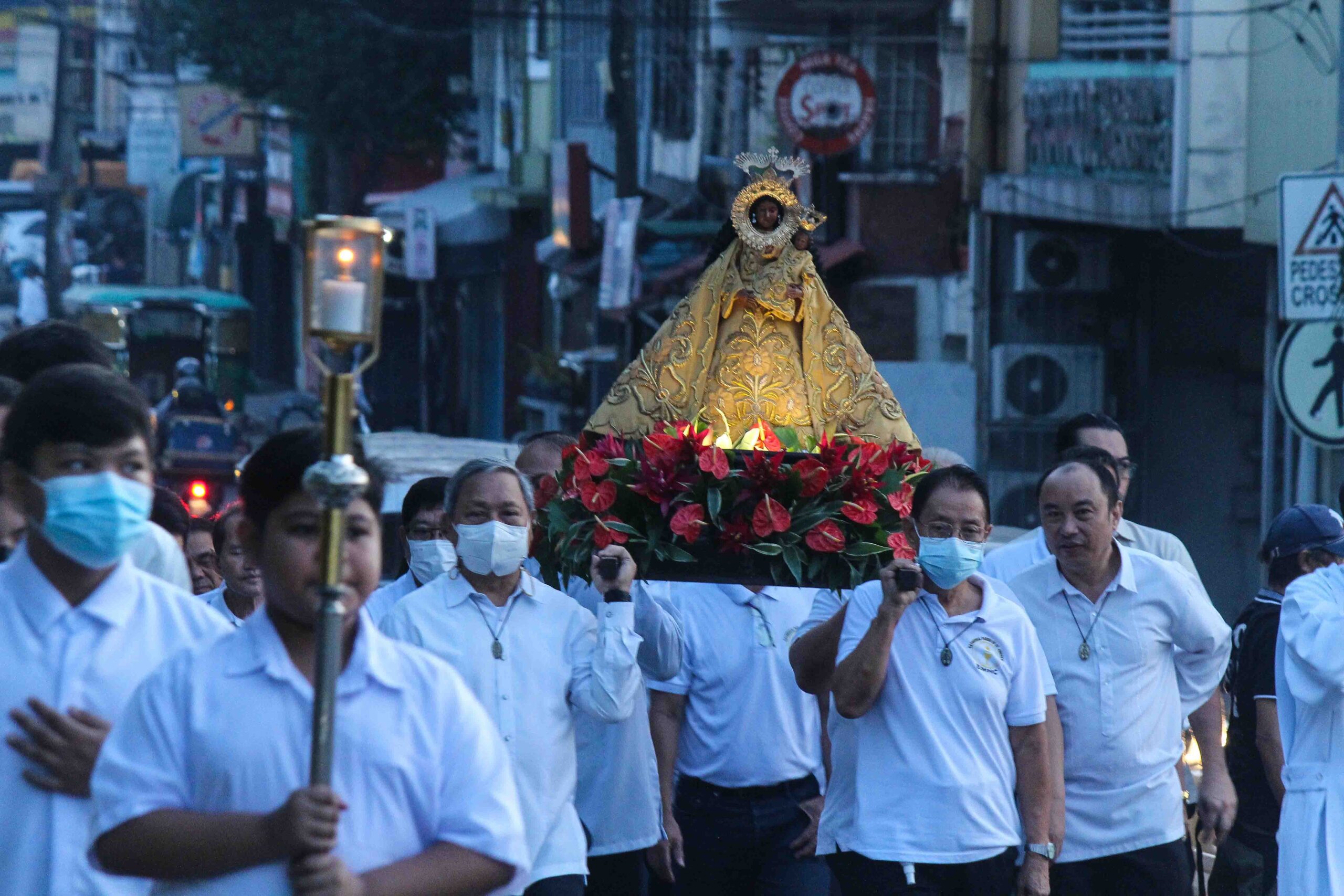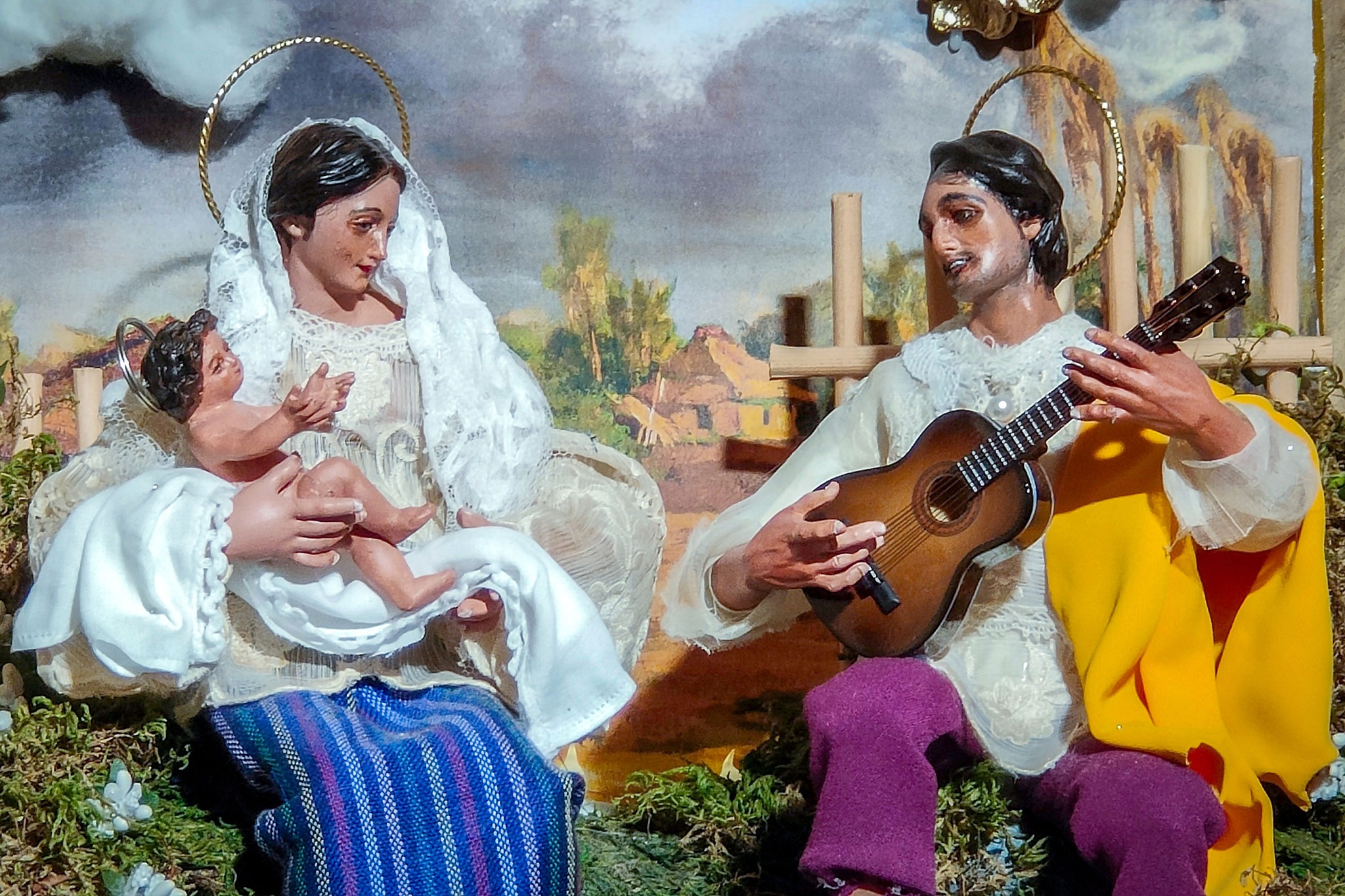

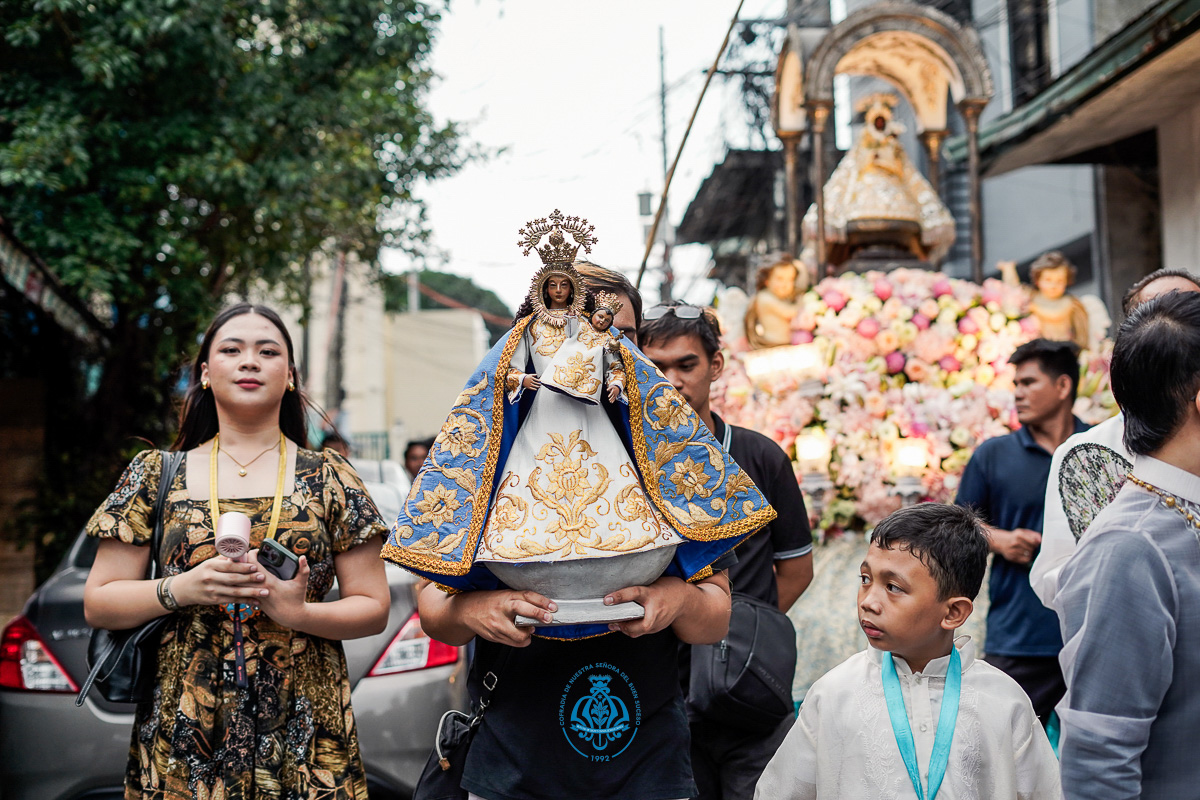
In the context of Philippine history, various images of the Blessed Virgin have been found, attributed to miracles, according to oral history. Miracles are defined by Webster’s Comprehensive Dictionary as: “Any wonderful or amazing thing, fact, or event; a wonder;” and as “an event in the natural world, but out of its established order, possible only by the intervention of divine power.” Such is the case with the wooden image of the patroness of Parañaque, known as Nuestra Señora del Buen Suceso (Our Lady of Good Events).
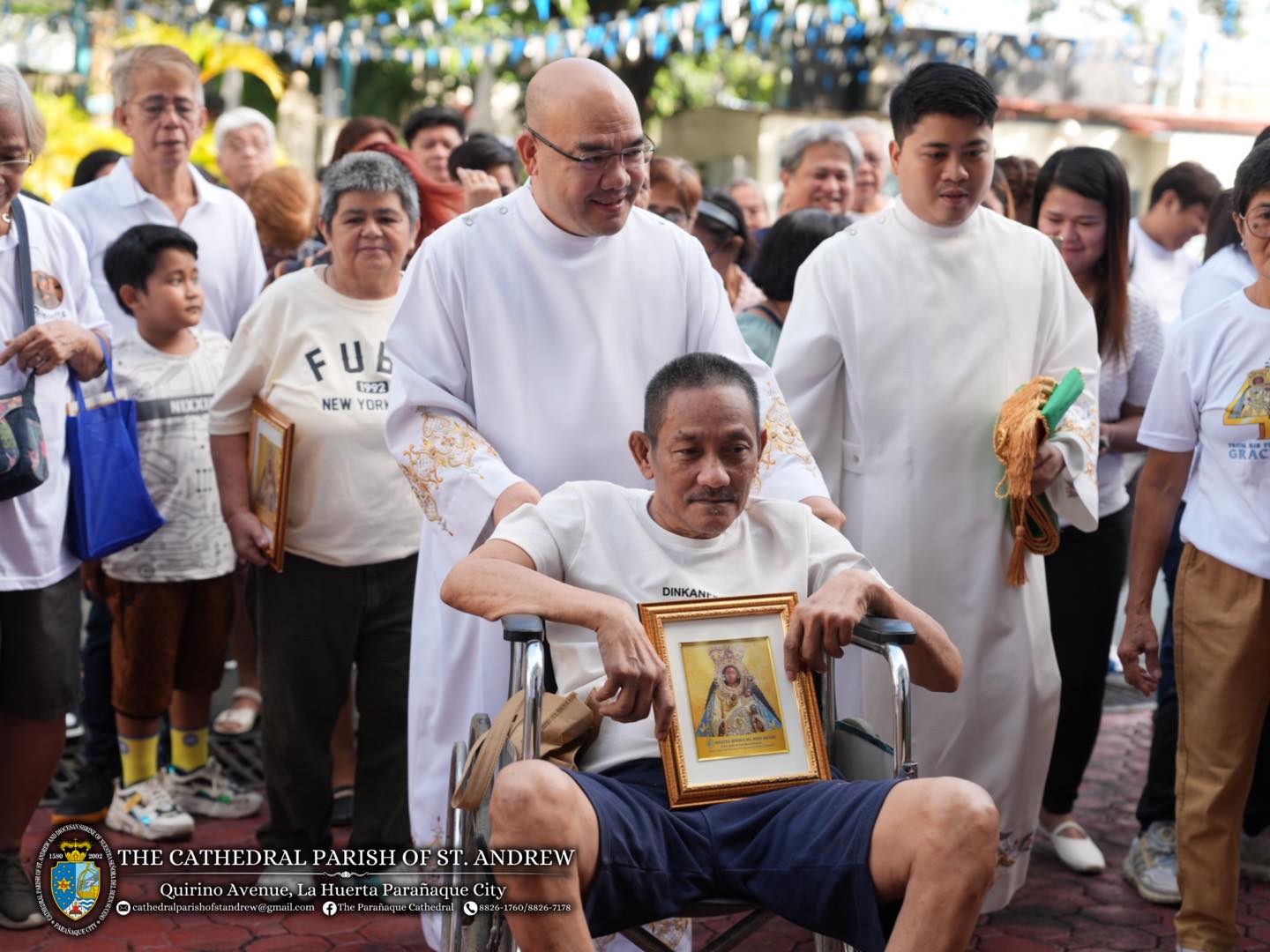
Whether such miracles were the result of imagination or simply popular folk religion, the devotion she has garnered for her title has made her an essential part of the lives of devout Parañaqueños.
One of the oldest written accounts regarding the origin of the image is by the Very Reverend Preacher, Fr. Nicolas de San Pedro, OSA, who was born in Parañaque of Spanish parents. He had various titles, such as Officer of the Order of St. Augustine, Officer of the Inquisition assigned to examine books and writings, Ex-definitor or member of the governing body of the Augustinian Order, and Ex-visitador or surveyor of the Order. Moreover, he was the parish priest of St. Andrew’s Parish.
Written in Spanish in the year 1700 while Fray San Pedro was superior of the Convent of Parañaque (now known as the Cathedral Parish of St. Andrew), his account’s complete title as translated into English is: “Regarding the miracles of the Sacred Image of Nuestra Señora del Buen Suceso that is venerated in the Church of the Convent of St. Andrew of the town of Parañaque and of its rare and strange discovery.”
The account describes the image as “a little less than a yard (around 20 inches) tall, very dark, although the dark color is not to dent her of her beauty but more to enhance her greater perfection. Not just for what the Holy Spirit said about her, nigra sum sed formosa but because of her race with which she is usually shown can be said as in the songs of the wife, that too much sun that surrounds her give her a beautiful dark color.”
Fray San Pedro inquired about how the image was actually found, preferring to ask the elderly of the town. He found a well-to-do lady named Dona Maria Dimatimbangan, nearing 90 years of age. She was still lucid and known for her integrity among the Spanish community, having married a Spaniard, as her grandchildren had done. Fray San Pedro also asked for verification from other natives, a Don Alonso Tongo, and a Dona Maria de la Cruz, and they had the same story.
THE COFRADIA DE LA CINTA
When the Convent of St. Andrew was established sometime in 1580, a religious, upon establishing the Cofradia de la Cinta (Confraternity of the Cord or Ribbon), brought and gave this certain image to the Church to be used for religious professions. Years passed and as more devotees were attracted to the image, the religious brothers in the year 1610 decided to make a bigger image, large enough to be seen from afar. The old image was discarded along with the Cofradia’s other possessions and transferred from box to box, treated like trash.
It was at this point that Catig, a native (although another account gave the name Juan), saw and asked for it from the caretaker, explaining that in his poverty, he did not have enough to be able to buy an image for his small house. It was given to him.
The joyful Catig, with tears in his eyes, grasped the holy image, embracing it as if he was carrying all the riches in the world. He brought it to the town of Don Galo, went to his hut, and since he did not have any semblance of a tabernacle to place the image, made one with two pieces of bamboo. There he offered whatever he could find in the form of sweet-smelling roses, herbs, and flowers, and sometimes with an oil lamp when he could afford it.
One day, Rev. Fr. Juan de Guevara was called to give the ailing Catig the last rites. He saw the image and was enamored, and he asked it from Catig and offered to pay. This priest was later said to have contributed 24 pesos as financial aid for Catig’s son, who was about to get married. After eight days, Catig passed away, and as previously agreed, the priest got the image and brought it to his convent cell.
While the image was in the cell, the priest and his confreres, who were outside, saw bright lights emanating from the room amidst angelic voices and heavenly fragrance. Because of these events, they reported it to the Father Provincial, Fray Alonzo de Mentrida, OSA, who ordered the image to be enthroned in the Church.
No name was initially given to the discovered image. When it was brought inside the Church on August 10, 1625, the prelate assembled the community and dropped into a jar many slips of paper with different names and titles that were used for images in Europe.
An eight-year-old boy was asked to draw from the slips and six times the paper with the name Buen Suceso was drawn. The Father Provincial then decided that this seemed to be the name the Blessed Mother had chosen for her image for Parañaque. He also instructed that a chapel of Sta. Monica, the patron saint of the barrio of Don Galo, be built on the site where the image at first stayed.
THE MIRACLES
Fray Nicolas San Pedro’s report is replete with miracles associated with Nuestra Señora del Buen Suceso, especially after her enthronement.
The first miracle which occurred on August 15, 1625, was supposedly performed on a renowned lady from Malate, Dona Maria Amada, who had been suffering from intense cold, which had caused her contractions and spasms of the nerves to the extent that she became crippled.
Upon hearing that there was such an image, she immediately tearfully asked, to be brought before Our Lady. Two relatives rigged up a hammock and carried her to the altar steps. As soon as the devotees finished praying to Our Lady after the Mass, Dona Maria, with intense faith, slowly walked unaided all the way to the image, and after, back to her home.
A miracle that supposedly affected most residents in the 1620s happened when a huge influx of people arrived at the shrine upon hearing of the miracles. As a result, potable water became scarce. In addition, there was a draught, and all of the wells ran dry. One day, the seawater nearby started to show signs of a changing taste, and suddenly, a rumor began circulating that sweet, drinkable water was now available by the seashore. The thirsty devotees rushed to the site, and wherever they were able to dig their hands, they found potable water.
In his account, Fray San Pedro also mentioned that for the first six months after the image was found and enshrined, there had been no sick person in the town of Palanyag, the old name of Parañaque.
These extraordinary events in Parañaque reached the ears of the Archbishop of Manila, Fray Miguel Garcia Serrano, OSA, who gave instructions to investigate the real origin of the image. Since the native Catig had passed away, inquiries were made from the elderly. It was then verified that the image really belonged to the aforementioned Cofradia de la Cinta of the Augustinian brothers. Archbishop Serrano is credited for assigning February 22, 1626 as the feast day for the Virgin and with him shouldering all the expenses.
By 1626, devotion to the Nuestra Señora del Buen Suceso had spread nationwide, to the Ilocos Region, the Visayas, Camarines, and other towns. In Parañaque, Catholics numbered some 7,172.
The San Pedro account ends with an inventory of the donations used to build the Church and convent, showing that it was the religious order more than the principalia of the Parañaque at that time who contributed most to the construction.
ECCLESIASTICAL RECOGNITION
This intense devotion and love for Our Lady for hundreds of years, led to its canonical coronation of her image in 2000. St. John Paul II issued the Papal Decree for the canonical coronation of the Mother and Patroness of the City of Parañaque, which was held on September 8, 2000, at the former St. Andrew Parish Church. This was upon the request of Cardinal Sin, Archbishop of Manila in a letter dated October 27, 1999.
Eventually with the erection of the Diocese of Parañaque on December 7, 2002, the parish was elevated to a cathedral. Ten years later on August 10, 2012, while celebrating Our Lady’s 387th enthronement anniversary, Bishop Jesse E. Mercado, D.D., of the diocese of Parañaque, declared that the Cathedral Parish of St. Andrew would also be known as the “Diocesan Shrine of Nuestra Señora del Buen Suceso .”
Finally, on November 29, 2023, Bishop Mercado officially promulgated the decree designating Our Lady of Good Events as the “Principal Patroness of the Diocese of Parañaque.”