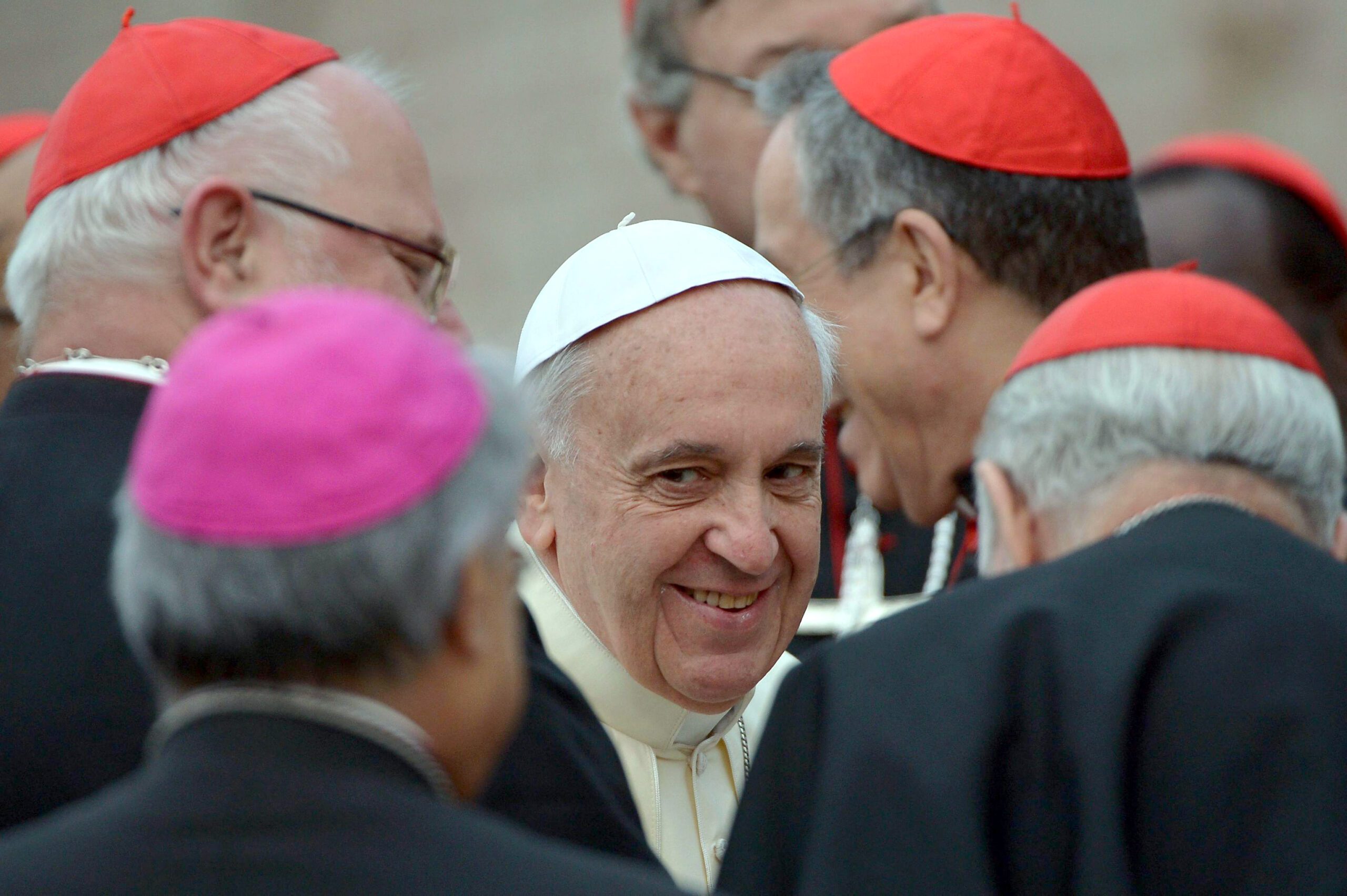
“He is like a storm: you can feel him even when you don’t see him; you can hear him coming even when he is still not there.”
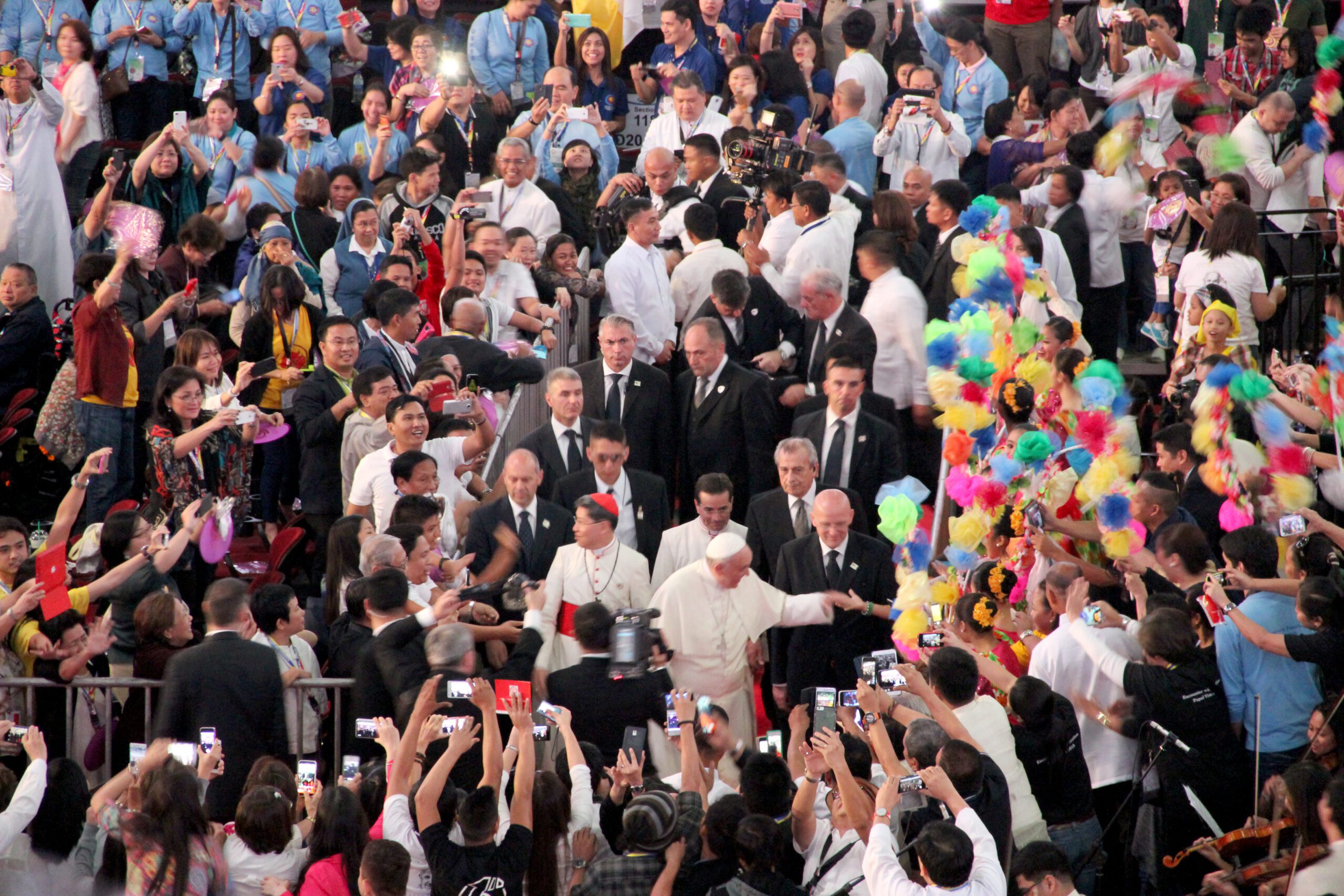
This is how one local television journalist, who was stationed at the Apostolic Nunciature, described Pope Francis as he went through Manila’s streets aboard his pope mobile to and from his official engagements during his five-day visit to the Philippines. Truth be told, anywhere the Pope went, loud screams, clicks of camera phone could be heard, and waving hands could be seen before, during, and after the Pope’s convoy had passed. The 6 million people who attended the Mass at Quirino Grandstand and who lined the streets leading to the venue under the rain were resounding proofs that Pope Francis was wildly and deeply loved by Filipinos.
But more than the fanfare caused by the Pope’s public appearances, his allocutions and homilies, especially his digressions from his prepared texts delivered in Spanish – the language that allows him to speak from the heart – really made a lasting impression on those who listened to him. The Pope’s messages were anthropological in scope, affecting even non-Catholics. While touching some physically, Pope Francis definitely touched the hearts of multitudes.
CORRUPTION ROBS THE POOR
On Friday, January 16, his second day in the country, during his courtesy call on President Benigno Aquino III at the Malacañan Palace, for example, Pope Francis exhorted government officials, and even ordinary citizens, to fight corruption, which robs the poor of their due.
“I hope that this prophetic summons will challenge everyone at all levels of society to reject every form of corruption which diverts resources from the poor, and to make concerted efforts to ensure the inclusion of every man and woman and child in the life of the community,” Pope Francis said.
He also asked authorities to uphold the dignity and rights of families and to give the necessary support to enable them to carry out their mission in society. The Holy Father remarked: “For this reason, families and local communities must be encouraged and assisted in their efforts to transmit to our young the values and the vision which can help bring about a culture of integrity – one which honors goodness, truthfulness, fidelity, and solidarity as the firm foundation and the moral glue that holds society together.”
THE POOR AT THE HEART OF THE GOSPEL
After the Palace visit, the Holy Father proceeded to the Manila Cathedral for a Mass with Filipino bishops, priests, religious, and seminarians. He reminded them to always have the poor in mind as they carry out their mission of love. “If we take away the poor from the Gospel, we cannot understand the whole message of Jesus Christ,” the Pope said.
He added: “Only by becoming poor ourselves, by stripping away our complacency, will we be able to identify with the least of our brothers and sisters. We will see things in a new light and thus respond with honesty and integrity to the challenge of proclaiming the radicalism of the Gospel in a society which has grown comfortable with social exclusion, polarization and scandalous inequality.”
IDEOLOGICAL COLONIZATION
Proceeding to an arena south of Manila hours after the Cathedral Mass, the Pope then addressed more than 1,000 families from the 89 dioceses of the Philippines. Three families were represented: the poor, the migrants, and the disabled. Encouraging the families, Pope Francis tossed aside his prepared speech and preached in Spanish.
The Pope reminded families not to forget to dream. “It is so important to dream and especially to dream in the family. Please don’t lose the ability to dream in this way. How many solutions are found to family problems if we take time to reflect, if we think of a husband or wife, and we dream about the good qualities they have.”
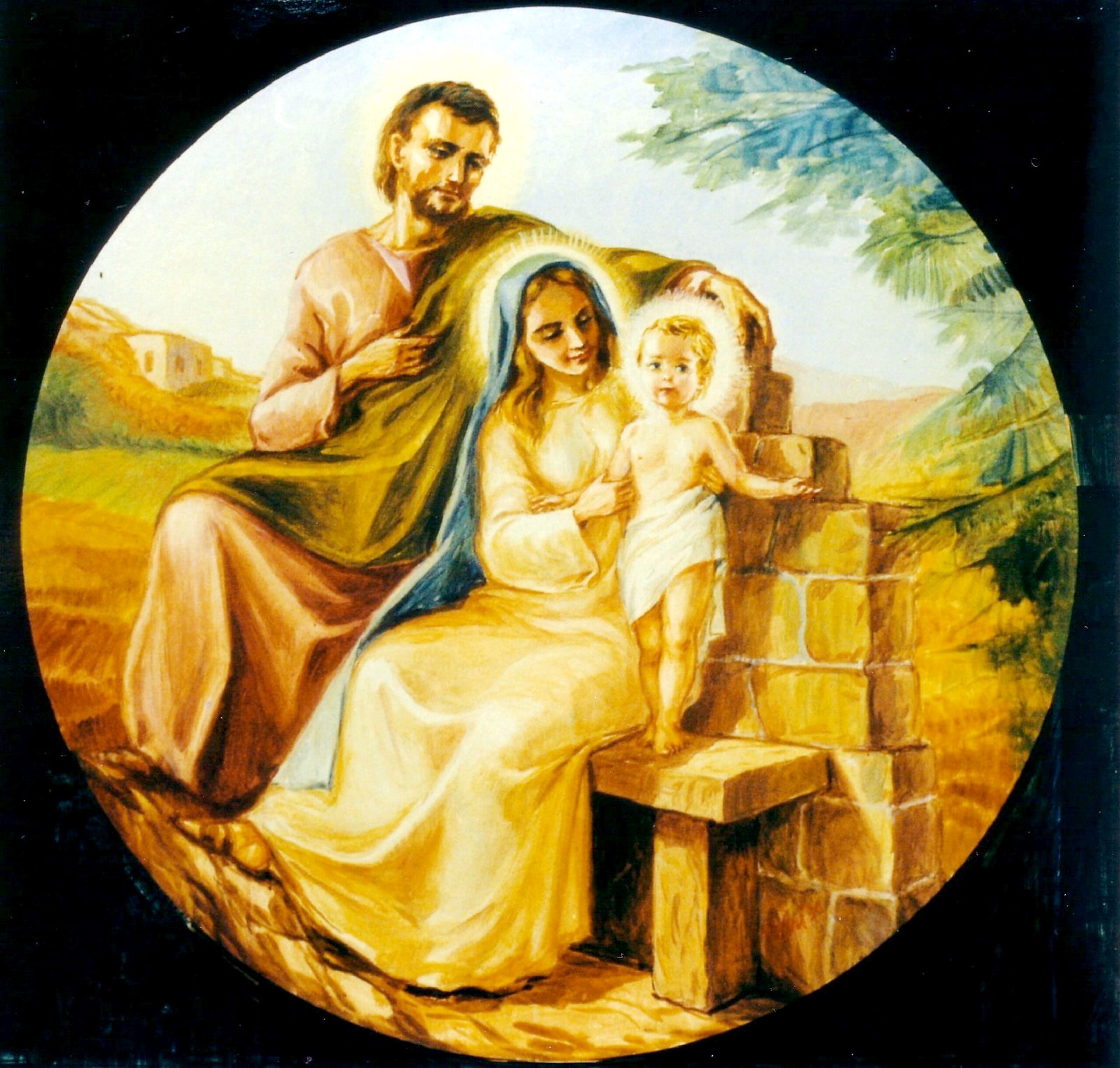
He also underscored the importance of resting for a healthy body and soul. In resting, the Pope said, one can hear the voice of God clearly. He cited St. Joseph, who, in his sleep, discerned the will of God for the Holy Family: “I like Joseph very much. He’s a strong man of silence. On my desk, I have a statue of St. Joseph sleeping. Sleeping, he looks after the church…When I have a problem I write it in a piece of paper and put it under the statue so he could dream about it. This means, ‘please pray, Saint Joseph, for this problem.’”
The Pope then lashed out at external forces which threaten “to redefine the very institution of marriage, by relativism, by the culture of the ephemeral, by a lack of openness to life.” Calling these threats “ideological colonization,” he urged families to be vigilant. “And just as our people were able to say ‘no’ to colonization, as families, we have to be very wise and very strong, with fortitude, to say ‘no’ to these initiatives of colonization that could destroy the family.” (Vatican spokesman, Fr. Federico Lombardi, later confirmed that the Holy Father was referring, in part, to those pushing for same-sex marriage.)
LIKE LIGHTNING
On Saturday, January 17, the Pope then went to Tacloban, one of the hardest hit areas by Typhoon ‘Yolanda.’ This was the heart of Francis’ pastoral visit to the Philippines. Braving rains and gusts of wind brought by another storm that was in the Philippine area of responsibility and wearing a yellow raincoat over his vestments, the Pope said Mass at the airport and once again set aside his prepared homily to speak through his interpreter. The Holy Father’s words brought tears to the crowd of 200,000 typhoon survivors.
Pope Francis admitted that he didn’t know what to say to those who are still asking why such a tragedy befell them. Just the same, the Holy Father’s words were reassuring: “So many of you have lost everything. I don’t know what to say to you. But the Lord does know what to say to you. Some of you have lost part of your families. All I can do is keep silent and walk with you all with my silent heart. Many of you have asked the Lord: ‘Why, Lord?’ And to each of you, to your heart, Christ responds with His heart from the cross. I have no more words for you.
Let us look to Christ. He is the Lord. He understands us because He underwent all the trials that we, that you, have experienced.”
Urged by government and Church officials to cut his trip to the province short because of the storm, the Pope breezed through his official itinerary but made sure that he was able to convey his message of mercy and compassion to those who needed it the most. One survivor who had the privilege of having lunch with the Pope in Palo was very grateful for the profound encounter even if “he came like lightning,” referring to the 20-minute lunch-meeting.
In an evening press briefing in Manila, Fr. Lombardi said that celebrating Mass during a storm had a profound effect on the Pope “because this is exactly the experience of the people.”
COEXISTENCE AND LEARNING TO LOVE
On his last full day in the Philippines, January 18, the Pope began his day with a meet-and-greet with leaders of different religions at the Pontifical University of Sto. Tomas. Although the Pope’s message of solidarity and cooperation with different religions was underscored in his visit to Sri Lanka, the short get-together was still a strong pitch for peaceful coexistence, dialogue, and mutual friendship.
The Pope then circled the campus in his pope mobile before finally going to the stage in front of the football field. He then listened to youths representing different areas of concern: an out-of-school youth, two street children, a youth leader and aspiring lawyer, and an innovator.
Pope Francis was taken aback by the question of a 12-year old former street dweller, who asked for an explanation for children’s trials. “There are many children neglected by their own parents. There are also many who became victims and many terrible things happened to them like drugs or prostitution. Why is God allowing such things to happen, even if it is not the fault of the children?” Glyzelle Palomar asked.
Digressing from his text, the Pope responded to Glyzelle’s question: “She is the only one who has put a question for which there is no answer and she wasn’t even able to express it in words but in tears.”
He expounded on Glyzelle’s situation further, “This is the first thing I want to say: let us learn how to weep as she has shown us today and let us not forget this lesson. The great question of why so many children suffer, she did this in tears. The response that we can make today is: let us really learn how to weep.”
To find solutions in a world that has been torn by hatred and strife, the Pope urged the 24,000 youth gathered before him to open themselves to love and allow it to complement the knowledge they have acquired: “Real love is being open to the love that comes to you. The love that surprises us. If you only have information, you are not surprised. Love surprises because it opens a dialogue of loving and being loved. God is a God of surprise because He loved us first. God awaits us to surprise us. Let us allow ourselves to be surprised by God. Let us not have a computer psychology that makes us think we know it all. Computers have all the answers – but no surprises: the challenge of love. God reveals Himself through surprises.”
FILIPINOS’ RAINCOAT
After about a two-hour break at the Apostolic Nunciature, the Pope made his way to Manila’s bayside park, Quirino Grandstand, for the celebration of the Holy Eucharist, the Feast of the Sto. Niño (Infant Jesus) in the Philippines. Undeterred by the rain, an estimated 6 million Filipinos lined up the streets and filled the grounds to listen to and see the Pope.
In his homily, the Pope warned Catholics about the snares of the devil, who continues to push Christians to retreat to worldly pleasures and superficial escapes and to forget their true calling and identity as children of God. This, he said, is where the message of the Child Jesus becomes more meaningful. “For children, as the Lord tells us, have their own wisdom, which is not the wisdom of the world. That is why the message of the Santo Niño is so important. He speaks powerfully to all of us. He reminds us of our deepest identity, of what we are called to be as God’s family,” the Pope said.
Finally, the Pope reminded Filipinos of their special mission: “May the Santo Niño continue to bless the Philippines and may He sustain the Christians of this great nation in their vocation to be witnesses and missionaries of the joy of the Gospel, in Asia and in the whole world.”
Thanking the Pope and summing up how Filipinos felt about the papal visit as the country continues to reel from crises, tragedies, and storms, the President of the Bishops’ Conference Archbishop Socrates Villegas, said: “Holy Father, you are our sunshine. For many days since you came, it has always been a sunrise of smiles for us Filipinos. We are not feeling the rain. You have brought us hope, you have brought us warmth. You have brought us Jesus.”
Indeed, Pope Francis came to the Philippines like a storm – a storm that brought love, joy, hope, and inner peace.