In its General Chapter of 1987, the Comboni Missionaries decided to expand its presence to Asia. Born in Africa and for Africa, drawing inspiration from the testimony and the life of St. Daniel Comboni, they opened themselves to missionary work in the Americas in 1947 and, finally, entered Asia as their most recent missionary frontier.
The decision led them first to the Philippines in 1988, in order to develop a presence of formation and missionary animation, and help the Filipino Church assume her missionary responsibilities in Southeast Asia. A year later, in 1989, they made the option for a missionary presence in China, given the importance of this Asian country and the difficult situation of the Chinese Church.
MACAU
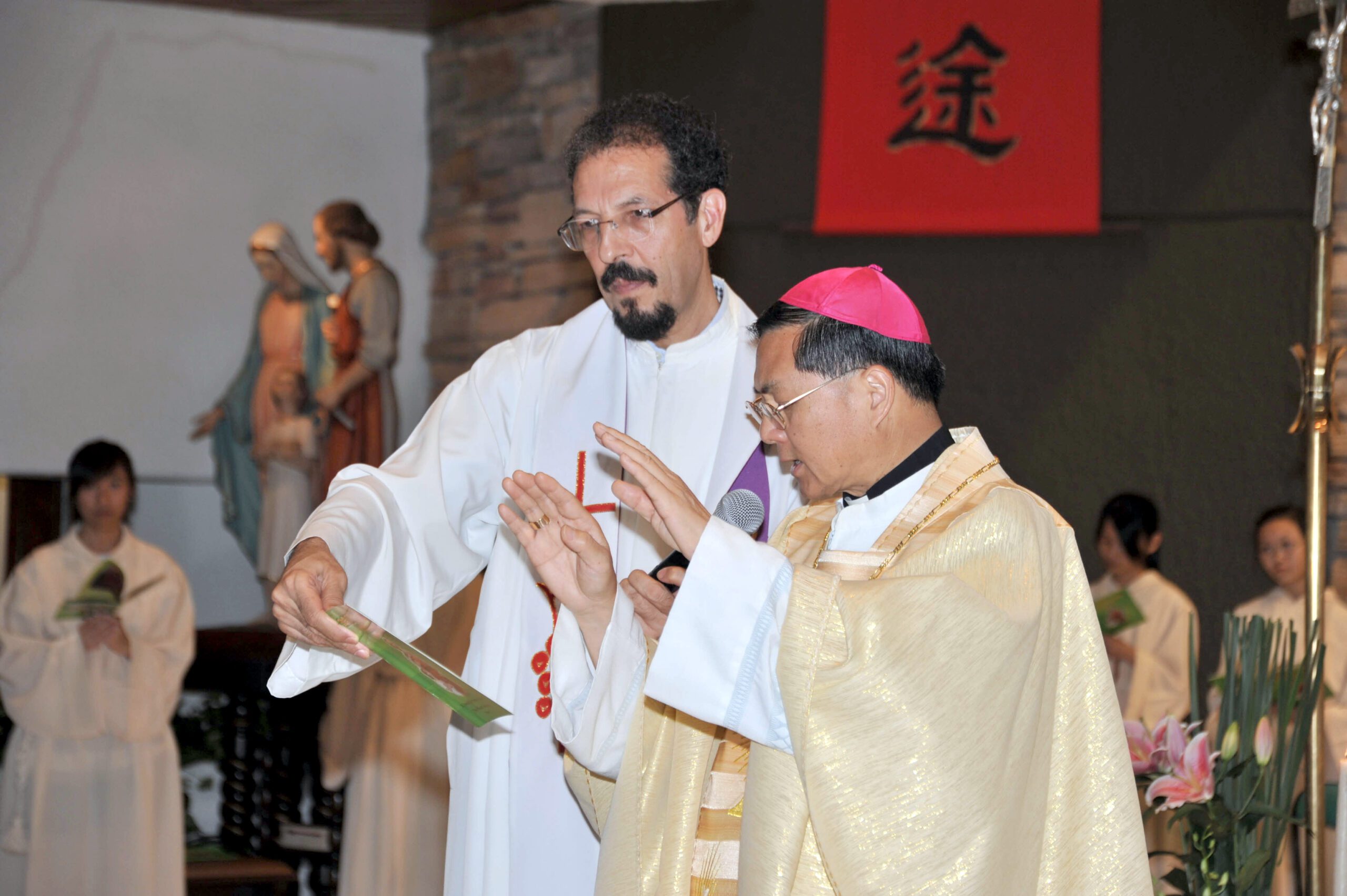
Macau was the first Chinese destination of choice: it was easier to settle in this territory which, at that time, was still under Portuguese administration. The local bishop expressed interest in having the Comboni Missionaries in the diocese. He entrusted them with the presence of first evangelization – the Church of St. Joseph the Worker in the popular district of Iao Hon, in the Border Gate area.
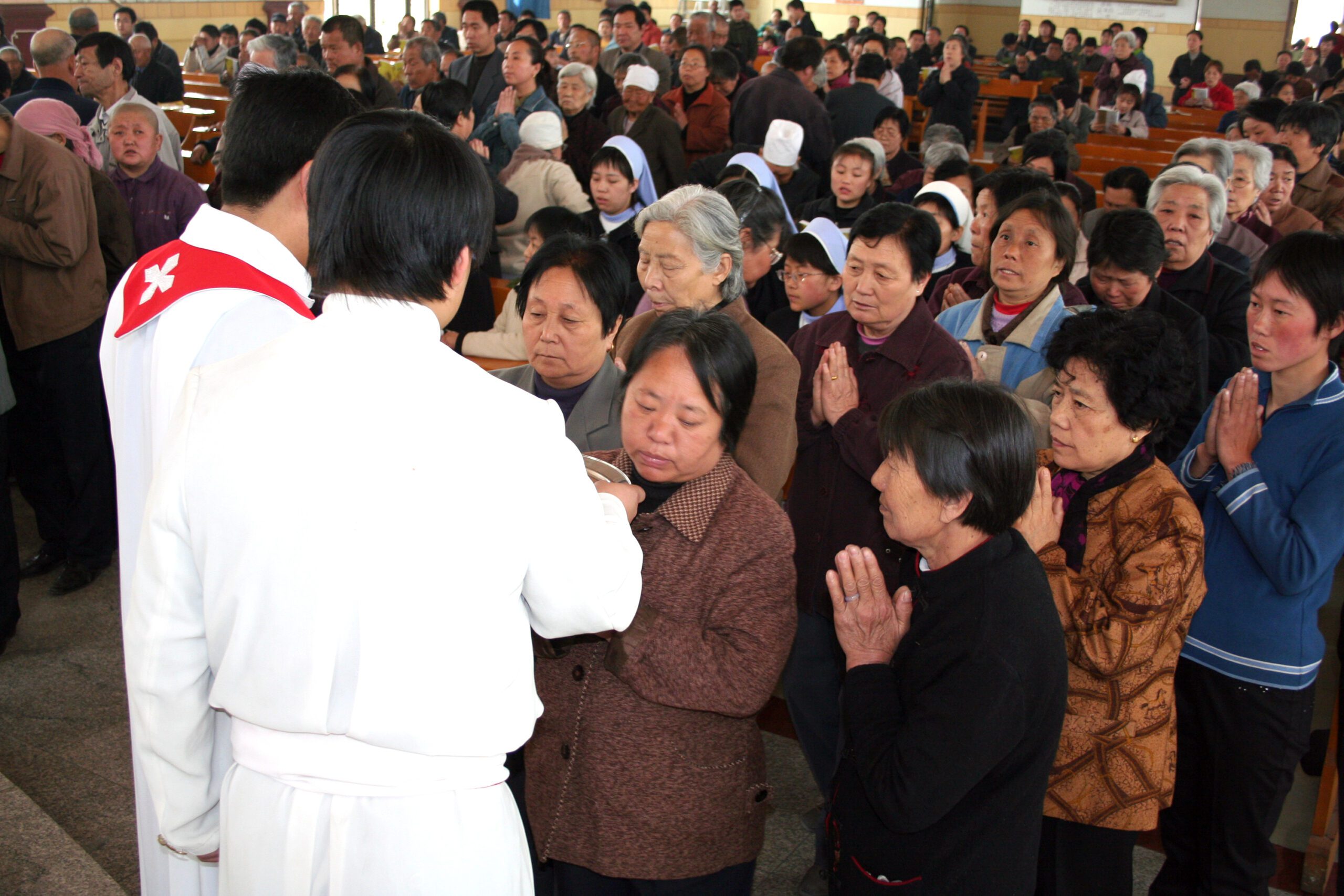
St. Joseph the Worker Church is located in a densely-populated area, inhabited by a working population coming from China in recent decades and without any Christian presence. Twenty years after the building of the new church, there is now a small and dynamic Christian community with a multicultural face and character. On Sundays, there are three Eucharistic celebrations that reflect this multicultural face of the Christian community: the first mass is in Cantonese, the local Chinese language; the second is in English, for the community of foreign Catholics, the vast majority of them Filipinos; the third Mass is in Mandarin, the official language of China and thus the language of many young students who arrived from China in the last few years.
The community has catechesis for children, youth and catechumenate for adults. The numbers are small, which show the difficulty of the mission work in this particular context. Despite this difficulty, the Comboni missionaries currently working in St. Joseph – Frs. Manuel Machado (Portuguese) and Mambueni Ives (Congolese) – are happy with the fact that the Christian community has grown consistently and its members, lay men and women, feeling a sense of belonging creatively assume their responsibilities in parish life.
PROMOTE SHARING
Aside from assuming the pastoral care of the parish of St. Joseph, and in agreement with the bishop, the Comboni Missionaries established a second community in Macau with three missionaries and with the specific aim of working to support the Church in China. This project was named “Fen Xiang” (meaning “To Share”) and the community is dedicated to S. Zhao Rong, a Chinese saint and martyr.
The community “Fen Xiang” has always counted on the three missionaries. The first task of whom is naturally to learn and master Mandarin. Its objectives are focused on helping the formation of pastoral agents (priests and laity) and contributing to the formation of the religious. A third objective is to support the social action of the Chinese Church and collaborate on social projects for orphans and people with AIDS. These objectives are achieved through the implementation of specific formation on the ground and through the granting of scholarships and other formation support.
The method adopted is the itinerary method: staying in parishes and dioceses, visiting and accompanying some of the projects, collaborating in formation and evangelization activities, offering training courses and spiritual retreats.
COMMON CAUSE
The vision and the mystique with which the work is done is based on the Comboni idea of making common cause with the Chinese Church, allowing the local Church to be the protagonist and instilling in the priests and the laity the missionary spirit that helps the Christian community to be attentive to those who are outside, near or far, and still eagerly listen to the Gospel. The dream of these Comboni Missionaries is that their work, like a small drop of water in this ocean of needs, may contribute to the growth of the missionary spirit in the Church in China and also open her to other Churches.
This field work is completed by the publication of a newsletter, Fen Xiang News, published in five languages, to make the plight of the Chinese Catholic community known to other Churches and to those who accompany and support the missionary work. Funds for projects and help for formation programs come from entities and groups of friends of Fen Xiang that spontaneously sprung up in Italy, Spain, Taiwan and Macau.
Finally, as the heart of the work of Fen Ziang is the formation of Christian leaders, it also publishes a digital magazine in Mandarin – Yenkuang – which is of theological, biblical and pastoral nature, distributed only in China four times a year, and sent by e-mail, to more than 800 bishops, priests and laity, adults and young Chinese Catholics.