
Once an English colony (1924–1964), Zambia’s official language is English, yet in rural areas, tribal or vernacular languages are widely spoken. The country is noted for its rich wildlife and landscapes, using these resources to promote tourism under the slogan “The Real Africa.” The most notable landmark is Victoria Falls, regarded as one of the seven natural wonders of the world.
An estimated 85% of the Zambian population consider themselves Christians, of whom 35% are Catholics. Christianity was declared the country’s official religion in 1991 by President Chiluba. There are other religions in Zambia, including Islam. There are also minority groups of Hindus, Jews, and Pentecostals. Animism is practiced by a great number of the population, even among Catholics, Seventh Day Adventists, and practitioners of other religions. Animistic beliefs vary from tribe to tribe but are mostly based on the power of ancestors and nature.
The first missionaries to arrive in Zambia were the White Fathers or Missionaries of Africa who entered Zambia through Malawi in 1891. In 1973, the Comboni Missionaries arrived, first in Malawi, and then in Zambia. Here, they built a small chapel, started a garden, a carpentry shop, and a school. Eventually, they initiated the Chikowa Youth Development Centre (CYDC) which implements different projects to help young people in the area.
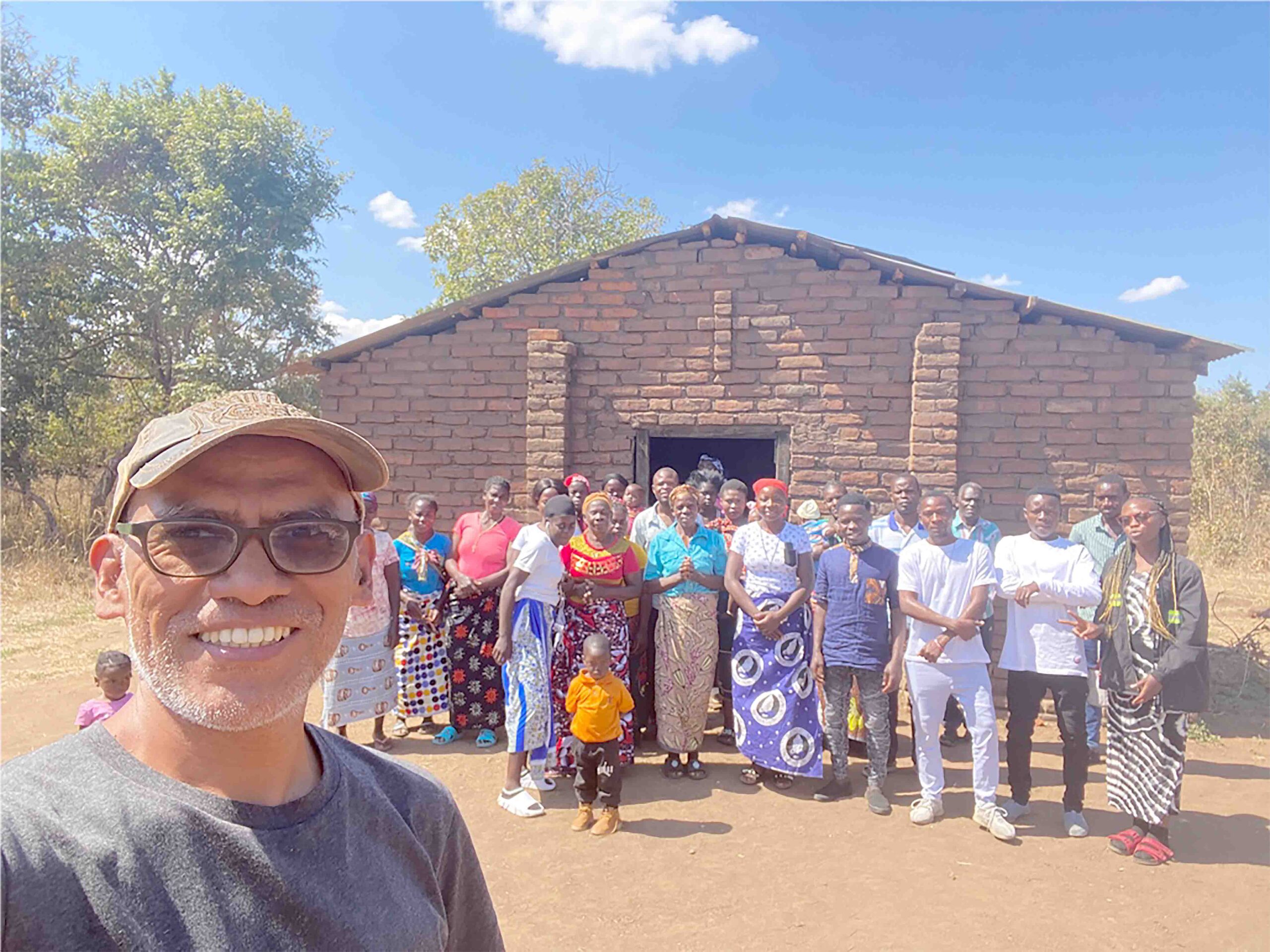
The Catholic community of Chikowa is growing not only in faith but also in numbers. Beautiful masses and Catholic traditions are well entrenched and enculturated. What I like most are the dances and songs; although I do not understand them, I am touched by the solemnity of every song, accompanied by African movements.
GREAT POTENTIAL
Catholicism in Chikowa is still relatively new and many people are still attracted to rituals, for example, witchcraft and karma. Similarly, in my home country, the Philippines, some people are still attached to tawas, a kind of witchcraft, and the words tabi-tabi po are spoken when one does not want to disturb unknown spirits.
I find it easy to live out my faith in Zambia; people are very approachable and mostly happy and smiling. Catholic organizations, especially for women, are numerous in Chikowa. The Parish has five different women’s groups. One is the Catholic Women’s League (CWL). Recently, we witnessed its commissioning ceremony. Around 55 women were formally welcomed as fully pledged members. Mass was fairly lengthy, lasting four hours, but I was happy to witness the joy of the people, particularly the members of the CWL. The Church in Zambia has great potential. I agree with those who affirm that the new horizon of the Catholic Church is in Asia and Africa.
VOLUNTEERING EXPERIENCE
In my first two years as CYDC volunteer, I was the patron of the school and at the same time taught Human Formation. This subject is unique as our aim is to help students realize the importance of a balanced human personality. A life centered on God, family, and others.
I also support students in their campus life, such as clubs and sports, and assist the student council. I helped with the opening of the new course on Fashion, Design, and Textile Technology. In my free time, I make clothes to help cover the school’s expenses and repair clothes for the students.
Here in Zambia, I got the opportunity, with the help of one of my co-volunteers, to start baking lemon cake. This was a lot of fun, and I eventually improved at making the perfect mixture. While baking with the students, I enjoy meaningful conversations with them. I also learned how to plant seeds and discovered the joy of planting and gardening, a wonderful way to de-stress after a long workday. Appreciating small things, learning and relearning skills and hobbies help me to become more grounded: in my faith and with myself.
During my first few months in Zambia, I found it difficult to work with the local people, particularly the lecturers and students. I was inclined to focus on their mistakes and weaknesses. During our talks, he told me I needed to stop comparing them to the Filipino people or to my culture.
He said, “You would be a more effective volunteer if you did not think of yourself as superior to them.” Duane Elmer, in his book “Cross-Cultural Servanthood” (2006), states: “We serve people by entering into a relationship of love and mutual commitment.” So, I stopped comparing their culture to mine and instead appreciated them and engaged in meaningful conversations without judgment. Acceptance of different cultures is the secret to a content and peaceful volunteer life.
Zambia celebrates its Independence Day on 23 October. Every year, the CYDC and St. Daniel Secondary School (sister school) organize the program. This year, I wanted the Student Council (SC) to do it by themselves, take ownership of the event, and prove that they could be trusted. I wrote a letter to St. Daniel’s Head Teacher requesting their collaboration. Although I was somewhat hesitant to let the SC officers take charge of the preparations, I sent John Gondwe, the SC President, to prepare the program with the teachers of St. Daniel.
At first, the principal did not like the idea of letting the students take charge of the arrangements, but I reassured him, arguing that it was their Independence Day and that they should be given the chance to prepare it in their own way. While I was sure that they would do their best not to disappoint the school, deep inside, I was slightly apprehensive and worried.
The day came; we started preparing at 6:00 am. Two hours later, everything was ready. The St. Daniel’s students started arriving around 10:00 am. After a two-hour delay, the program started. It lasted almost four hours and was a success. Most of our students prepared various presentations, such as drama, poetry, dance, and even a fashion show. It was a day of fun for everyone, especially for me; the CYDC students proved that, given a chance, they could accomplish great things.
In my closing remarks, I shared as follows: “There are three different kinds of people in any society: the observers or outsiders, the dreamers, and the doers. In the CYDC, we have them all; some students and lecturers watch things from afar, they don’t want to join in the celebrations, they prefer to go and do something else; others are dreamers, they are the ones who want to enjoy a good program, without helping in any way; and lastly, the doers are those people who dream and then get their hands dirty to make the dream come true. My dear students, observe what is happening in your society, dream of a better world, and take part in discourses that challenge and change its narrative. The power is in you!” I am proud of my students! Happy 59th Independence Day, Zambia!”
I am a regular blood donor. I believe in the health benefits of blood donation and, most especially, the chances of life it gives to others. I was excited when the Blood Bank of Zambia came to the school and requested a blood donation drive with the students. I was the first to donate and encouraged the students to follow my example; 36 students donated for the first time.
In September 2023, when they returned for the second blood donation drive, they shared with us that Zambia was in need of blood donors due to the high number of vehicle accidents and pregnancy-related incidents, which constantly strain their blood reserves. We organized the students and explained the benefits of donating blood; they willingly donated. The Zambian people once again showed their pride in their sense of social responsibility.
FASHION AND DESIGN
Currently, we have seven students/applicants for the fashion design and textile technology course. We cannot contain our excitement. To get started, we need at least 10 manual sewing machines. We already have three, some of which were donated by friends. The former carpentry workshop needs to be prepared. One of the applicants is Alex Banda, who is currently taking an Automotive Trade course. He came to my office one day and asked if he could take a tailoring course the following year. I was a bit surprised, but I said, “Sure!” I asked him, “Why are you interested?” He responded: “Because I understand the importance of domestic skills that will give me better opportunities as a businessman, not as an employee. In tailoring, I do not need to leave my family; I can live with them while fulfilling my dreams.”
For my 50th birthday, I had a lot of plans for this year, like a pilgrimage to the Holy Land, a celebration with the communities, dinner with my family and friends. But God prepared different gifts for me, including the Chitenge Day at the CYDC. A very special day indeed. I created most of the tailoring designs! [Editor’s note: Chitenge Day is a cultural observance in Zambia when people wear vibrant traditional Chitenge fabric to celebrate Zambian heritage. Chitenge is a colorful printed cotton fabric commonly worn as a wrap or head covering.]