
Saint Augustine (354-430), a prolific writer, left a rich legacy for the Church. Born in Tagaste, North Africa, he was the son of businessman Patricius and devout Christian mother Monica. Narrating Augustine’s story necessarily includes the pivotal role his mother, Monica, played in his multifaceted life.
Augustine’s greatest and best-known work is his Confessions, an autobiographical account of his life. The word “confession” expresses two realities: firstly, the admission or “confession” of guilt and a desire for renewal, and secondly, the “profession” or affirmation of faith as a foundation of one’s life. Augustine’s Confessions focuses on his faith journey from a worldly lifestyle to a radical acceptance of the Christian faith.
Deep Insight. Augustine’s most famous quote is: “You have made us for Yourself, O Lord, and our hearts are restless until they rest in You.” In numerous places, he speaks insightfully on the virtue of hope. He says in his Confessions: “My whole hope is only in Thy exceeding great mercy.” He affirms: “Hope begins with a choice to seek something better and to believe that it is possible.”
For Augustine, “Hope has two beautiful daughters; their names are Anger and Courage. Anger at the way things are, and Courage to see that they do not remain as they are.” Augustine asserted: “Even from the womb of my mother, who had great hope in You, I was sealed with the mark of the cross and salted with His salt.”
HOPE PERSEVERES IN DARKNESS
Saint Mother Teresa of Calcutta (1910-1997) was canonized by Pope Francis in 2016. Father Brian Kolodiejchuk, MC, postulator, sees her life as unfolding in four phases: (1) Her Childhood and Youth, when she was captivated by the love of Jesus; (2) Her Vow (1942) promising “To give God everything that He may ask”; (3) The Call within a Call (1946) when she heard Jesus’ call to serve the poor and abandoned; and, (4) The Dark Night when she experienced feelings of doubt, loneliness, and abandonment.
After Mother Teresa left the Loreto Sisters and began the Missionaries of Charity, she experienced a profound union with Christ throughout 1946 and 1947. However, soon after beginning her work with the dying destitutes in the streets of Calcutta, she began to experience a spiritual darkness that remained with her until her death, a true “dark night of the soul.”
Journeying in Faith. The 2007 book of her letters, Mother Teresa: Come Be My Light, shows her struggling for decades. “If I ever become a saint,” she wrote in one letter, “I will surely be one of ‘darkness’.” This admission may upset some who suppose that following Christ automatically produces joy and tranquility–even a facile hope. Not true; religion costs; it is not a trip down “easy-street.”
Many ordinary Christians can see themselves in her journey, often walking in darkness, struggling to believe and to have hope. Mother Teresa reminds us: “Hope doesn’t really start with us; it starts with God.”
GOD’S WORD: OUR HOPE
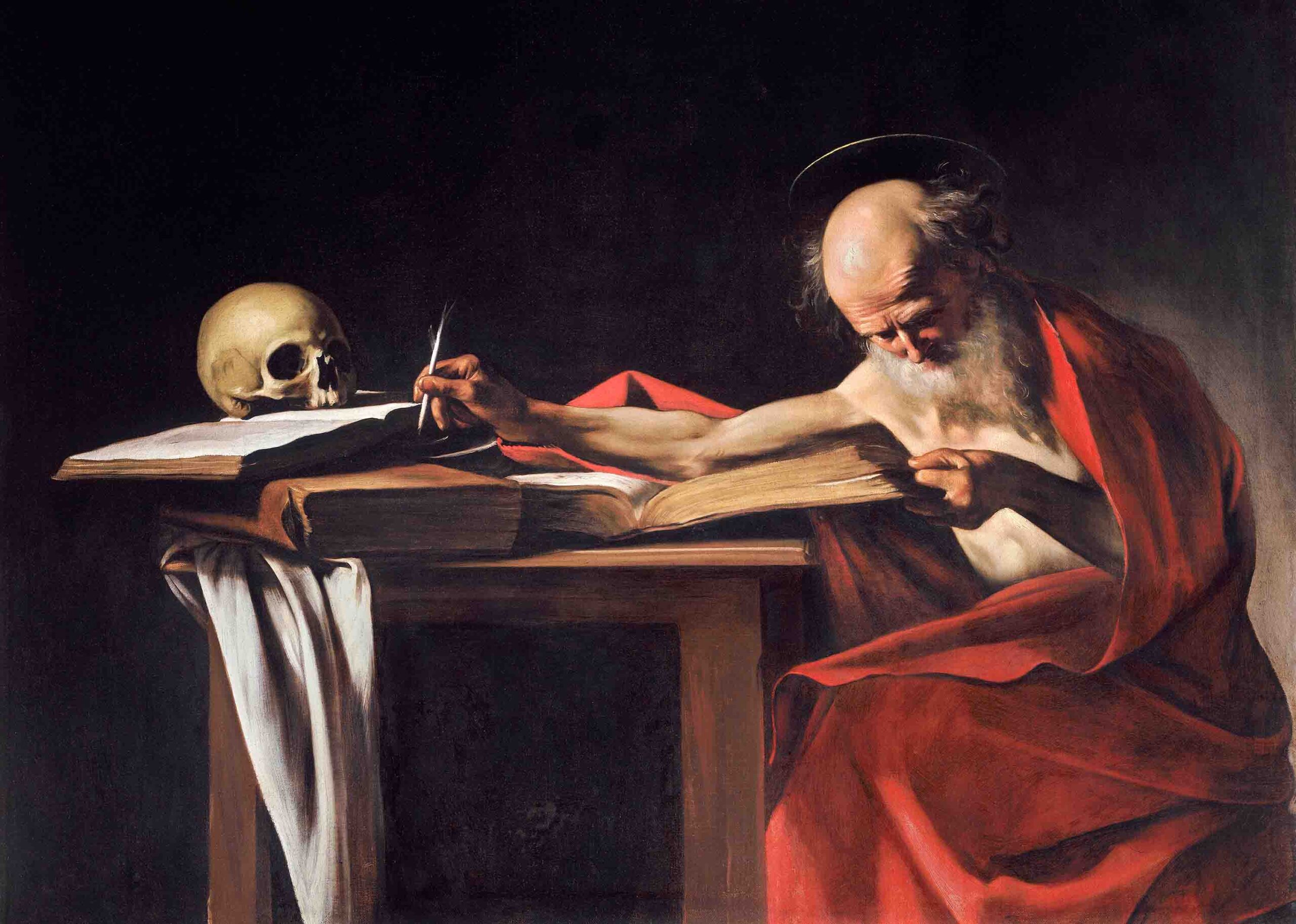
Saint Jerome (331-420) had a long life, filled with remarkable achievements. In his younger years, his life’s passion was learning. However, one night he dreamed that his identity was questioned. When he answered that he was “a Christian,” the Judge responded: “You lie. You are a Ciceronian, not a Christian. Where your treasure is, there is your heart.”
Around 375 Jerome retreated to the Syrian desert, living as a hermit, praying, fasting, studying scripture and the Hebrew language. He viewed this spiritual purification as preparation for his life’s work. He served as secretary to Pope Damasus (382-385), leaving Rome following the Pope’s death and settling in Bethlehem where he continued his biblical scholarship, producing the Vulgate, the Latin translation of the Bible from its original languages.
Authentic Hope. Saint Jerome’s understanding of hope centers on deep faith in God’s plan, especially during trials. He writes: “Hope is the courage to trust in God’s plan, even when it seems uncertain.” He believes that God “does impart the fullness of His love upon those who possess a deep faith and hope; for them He does great things.”
Jerome writes: “God wishes to test you like gold in the furnace. The dross is consumed by the fire, but the pure gold remains and its value increases. It is in this manner that God acts with his good servant, who puts his hope in him and remains unshaken in times of distress.”
Conclusion. The lives of Abraham, Augustine, Mother Teresa, and Jerome provide rich insights into authentic hope. All saints of hope, enlighten us, pray for us!