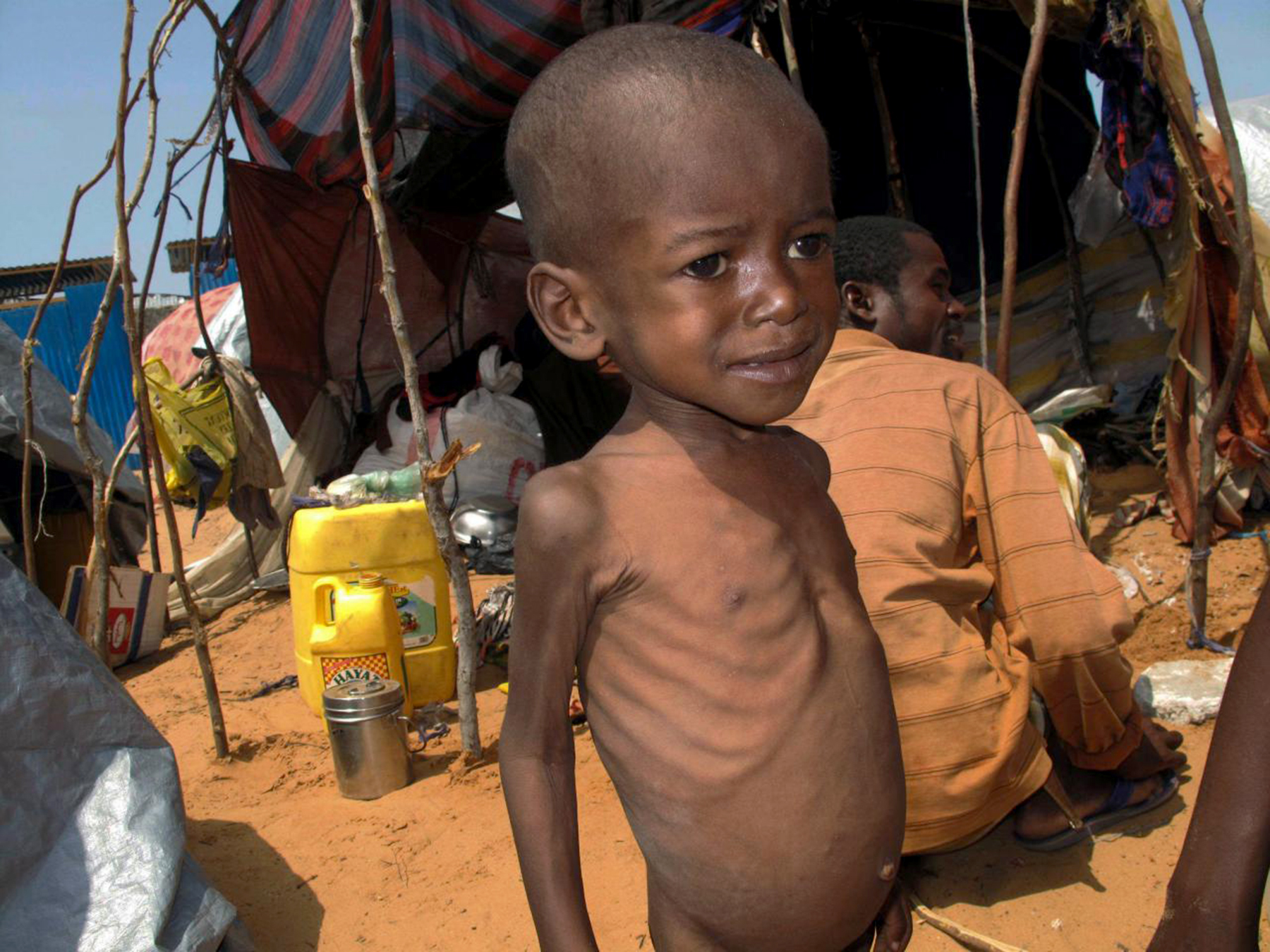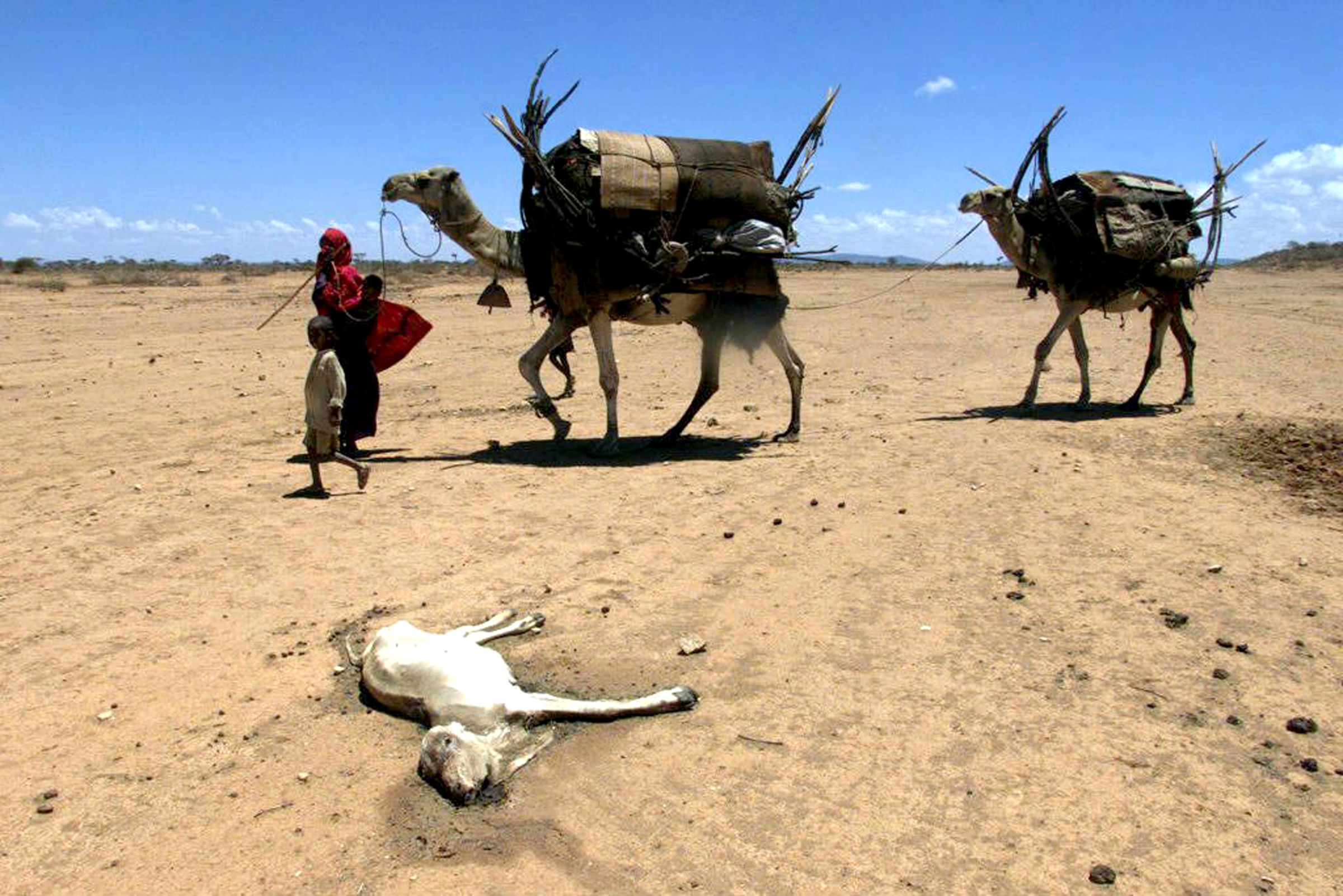

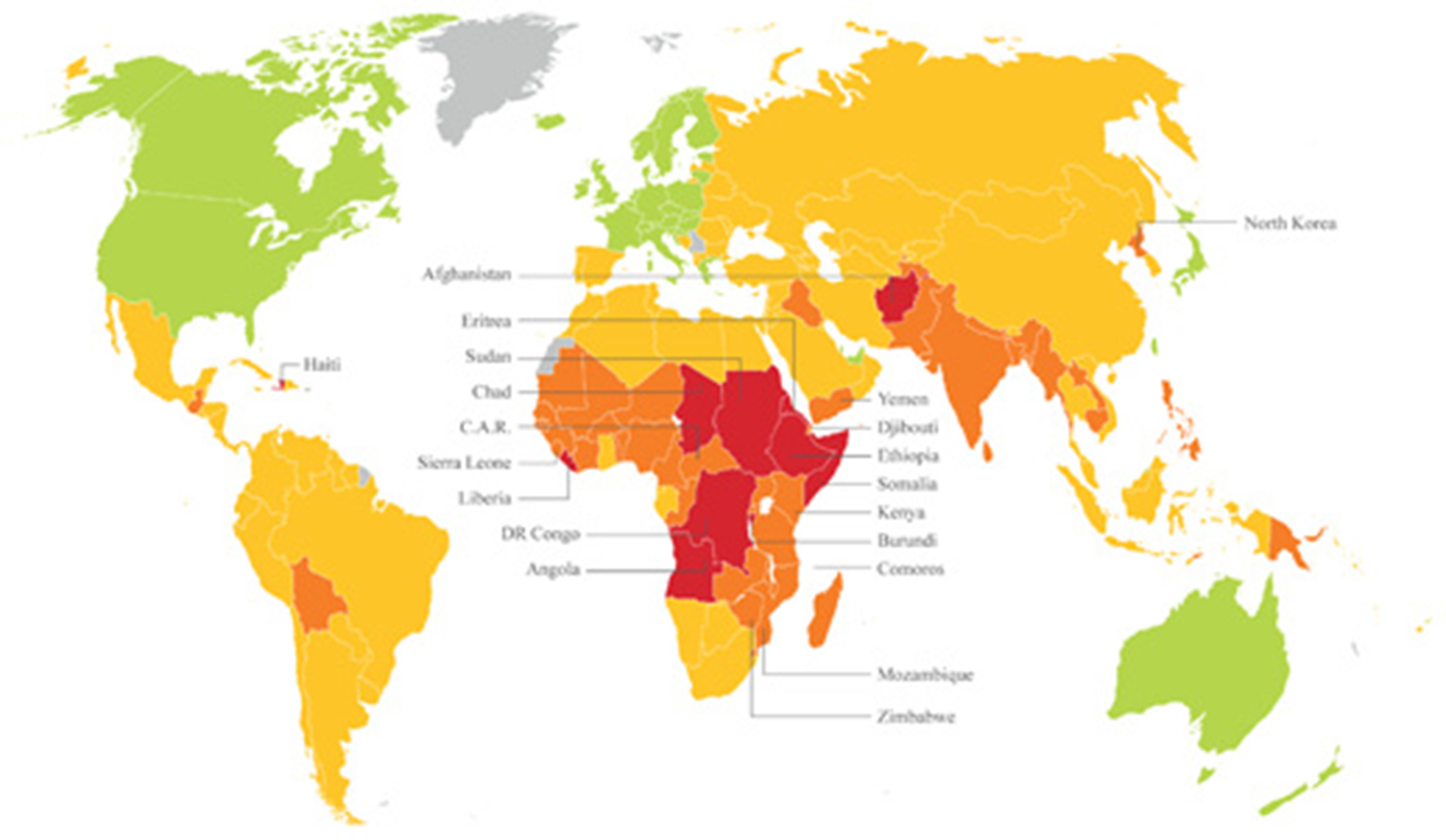
And it demonstrates the sickening, symbiotic relationship between lack of food and conflict: where one leads, the other follows. The worst spot is in the Horn of Africa. In Somalia, Ethiopia and Eritrea, human failings mean a severe drought has tipped millions into famine. It’s a textbook case of why things go wrong. War begets poverty, leaving food unaffordable. Devastated infrastructure destroys both food production and the ability to truck in emergency food. The collapse of society means the effects of extreme weather, such as drought, cannot be dealt with. And the fear of violence turns people into refugees, leaving their livelihoods and social networks behind.
The recent spike in food prices, linked by some to the uprisings across North Africa and the Middle East, had also hit hard in Somalia. Maize prices in Mogadishu were 100% higher in June 2011 than in June 2010, and the price of sorghum in Somalia rose by 180% compared with 2010 prices. Sharing Somalia’s unhappy ranking as having the greatest risk of food crisis is the Democratic Republic of Congo, where all the factors above apply, plus the impact of as much as half its rich arable land being land grabbed by foreigners. The situation in DRC is simply scary: it is on track to be one of the most populous nations on Earth in the coming years.
By the end of August 2011, in southern Somalia alone, more than 29,000 children under the age of five have died over the course of the current crisis. The total number of people requiring food assistance in the eastern coast is estimated at 17.5 million, over 12 million of which are in urgent need of humanitarian assistance. According to The Food Security Risk Index (FSRI), Somalia’s ranking, as joint 1st, relates to a number of issues. The country has been ravaged by two decades of conflict and political turmoil resulting in an ineffective government and poor infrastructure. The human and economic toll of the conflict has been profound, causing large-scale loss of life, displacement, disruption of trade and the destruction of transportation networks, which has impeded efforts to deliver humanitarian aid.
Turning to India, the new map, produced by risk analysts Maplecroft, reminds us that behind the booming economy of that vast nation, hundreds of millions of poor people remain hungry.
Almost half of India’s children are malnourished and one in four of the world’s hungry poor lives there. “Despite the enormous economic growth India has and is experiencing, it still has very stark income inequality, which is reflected in the malnourishment and infant mortality data,” says Helen Hodge, head of maps and indices at Maplecroft. The Maplecroft FSRI index, reviewed by the World Food Program, uses 12 types of data to derive a measure of food risk that is based on the UN FAO’s concept. That covers the availability, access and stability of food supplies, as well as the nutritional and health status of populations.
Spain and Portugal stand out as very rare examples of rich nations with a medium risk of food security problems. Hodge explains that, while water problems are an issue there, the major reason is heavy reliance on grain imports. Spain buys in 11B kilograms of grain more than it exports every year at a cost of $2.6B, while Portugal pays $890M for 3.3B kilograms.”Spain and Portugal have made the decision that olive oil and wine exports, along with salad crops, are more profitable than grain,” she says. So they sell lettuce and Rioja wine and buy wheat and corn with the profits.
That calculation may change if global food prices continue on their current upward trend. In other parts of the world, soaring food costs may well ignite further conflict. “It is striking how much food security plays in the wider picture of unrest,” says Hodge.
The World Bank warns that global food stocks remain at “alarmingly low” levels and even small reductions in yields will apply considerable upward pressure on prices. ww.guardian.co.uk Damian Carrington / Maplecroft