
Pope Leo XIV’s Magnifica Humanitas is a profound meditation on what it means to be human at a moment when humanity possesses unprecedented power to reshape itself and the world. Drawing upon the enduring wisdom of the Sacred Scriptures and natural law, Pope Leo argues that the fundamental moral truths that govern human dignity do not disappear simply because technology becomes more sophisticated. Thus, the human person must never be reduced to a tool, a data point, a consumer profile, a military target, or an expendable economic variable.
This conviction is not exclusively religious. It is a principle accessible to every rational person, regardless of culture, nationality, or faith tradition. Human dignity is not granted by governments, corporations, or algorithms. It arises from the inherent worth of the human person.
To dramatize the stakes, the Holy Father opens the encyclical with a striking image–humanity stands before a decisive choice: Either to construct a new Tower of Babel or to build a city in which God and humanity dwell together (Magnifica Humanitas, 1, 7).
The metaphor is powerful because Babel was not destroyed by ignorance but by brilliance detached from wisdom. The builders possessed extraordinary technical ability, yet they directed their talents toward self-exaltation rather than the common good.
Magnifica Humanitas rejects the comforting illusion that technology is morally neutral. Every technological system embodies assumptions about what human beings are and what society should become. Algorithms prioritize certain values, and data collection reflects judgments about privacy and power. Platform design shapes communication, political discourse, and social relationships, which makes technology a moral philosophy translated into code.
For this reason, the Vicar of Christ insists that developers, corporations, governments, and platform owners bear profound ethical responsibilities. Those who design the digital architecture of modern society are not simply engineers. They are, in many respects, architects of human culture, and their decisions affect not only present users but future generations.
The first major warning concerns truth itself (Magnifica Humanitas, 136-137). Human civilization depends upon a shared ability to distinguish reality from falsehood. Yet generative AI now makes it possible to produce convincing deepfakes, synthetic voices, fabricated images, and entirely fictional events that appear real. The result is a growing crisis of epistemic trust, and we, global citizens, can no longer be certain whether what we see or hear actually occurred.
The danger extends far beyond individual deception. Entire democratic systems become vulnerable when public opinion can be manipulated through industrial-scale disinformation campaigns. Elections can be distorted, public health initiatives can be sabotaged, and international conflicts can be inflamed by fabricated evidence designed to provoke outrage.
When truth becomes polluted, public reason begins to suffocate. Our Augustinian pontiff, therefore, calls truth a common good that must never become the private possession of political powers, corporate interests, or technological elites.
The second warning concerns work and economic justice (Magnifica Humanitas, 157). Throughout history, labor has been more than a means of earning income. Work enables individuals to participate in society, develop talents, support families, and contribute to the common good. Human labor possesses dignity because it expresses human creativity and agency (Rerum Novarum, 13, 20).
Yet AI is transforming labor markets at a speed unprecedented in contemporary history. Not only manual work but also professional, administrative, and creative occupations are increasingly being automated, leaving millions of workers uncertain about their economic future.
JUST DISTRIBUTION
The concern is not technological progress itself since human history has always involved innovation. The concern is whether the benefits of innovation will be distributed justly. Economic growth without social inclusion produces prosperity for a few and anxiety for many.
Pope Leo warns that short-term gains in efficiency can become long-term losses in social stability. A society that sacrifices workers on the altar of technology-based productivity may discover that it has weakened the very foundations upon which social cooperation depends.
The third warning concerns privacy and surveillance (Magnifica Humanitas, 80, 102). Modern AI systems depend upon immense quantities of data. Every search, click, purchase, conversation, location, and preference becomes a resource for analysis and prediction. Human experience itself risks becoming raw material for commercial extraction.
Natural law has long recognized that persons possess an interior sphere that deserves respect and protection. Human beings are not transparent objects to be endlessly monitored, categorized, and manipulated. Privacy safeguards freedom by preserving the space necessary for reflection, conscience, and authentic relationships.
Sadly, AI-driven surveillance increasingly threatens this protected space. Personal information can be harvested, analyzed, sold, and weaponized. And individuals become vulnerable to targeted manipulation, fraud, identity theft, cyberattacks, and behavioral engineering.
A society that knows everything about its citizens acquires immense power over them. When surveillance expands without ethical limits, human freedom gradually contracts. The Holy Father, therefore, calls for stronger protections of data, privacy rights, transparency, and independent oversight.
The fourth warning concerns algorithmic bias (Magnifica Humanitas, 171, 190-197). AI systems learn from historical data, and history contains injustice and inaccuracy. As a result, algorithms can inherit and amplify existing patterns of discrimination related to race, gender, class, and social status.
The danger lies in the illusion of objectivity. Human prejudice hidden behind mathematical formulas can appear impartial simply because it emerges from a machine. Yet an unjust decision remains unjust whether it is made by a biased official or by an algorithm processing millions of records.
The consequences are profound. Biased systems can affect employment opportunities, access to credit, educational admissions, criminal justice outcomes, and countless other life-defining decisions. Eventually, individuals may find themselves judged by patterns they neither created nor understand.
TRANSPARENCY
Our Christian faith and natural law insist that every person possesses equal moral worth. Human beings cannot be reduced to statistical probabilities. Justice requires transparency, accountability, and meaningful human review whenever AI influences consequential decisions.
The fifth warning concerns creation itself (Magnifica Humanitas, 101, 203). The digital world often appears weightless, but AI depends upon vast physical infrastructures. This “cloud” is not an ethereal mist, but rather a heavy machinery of silicon and steel, humming with the heat of a thousand artificial suns. Massive data centers consume enormous quantities of electricity and water.
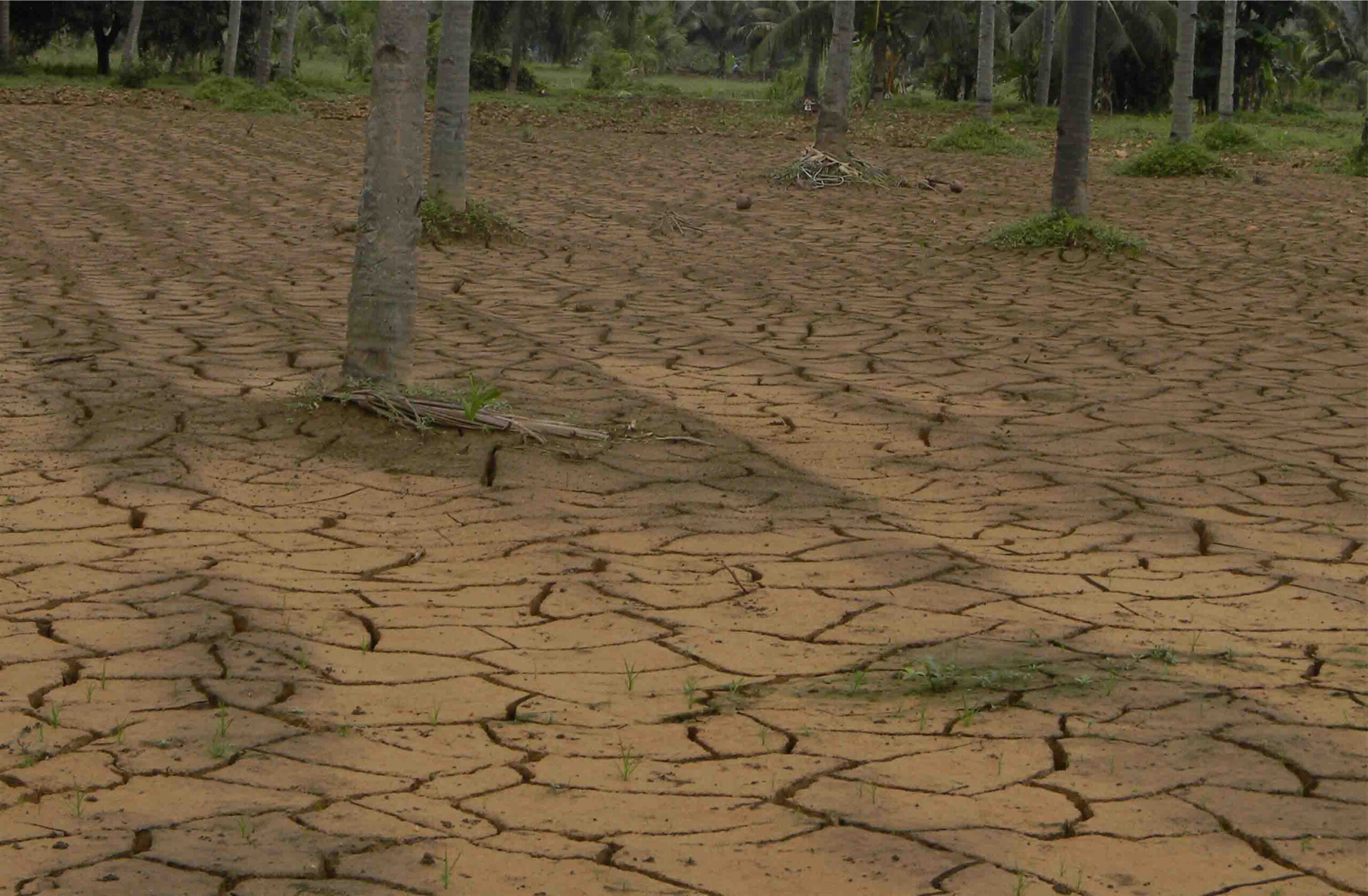
Like an insatiable furnace that demands more timber than the forest can regrow, the computational race to build increasingly powerful systems places growing pressure on energy grids and natural resources. The environmental consequences are not abstract, for global communities today experience water shortages, rising energy demands, ecological disruption, and increasing carbon emissions. The pursuit of technological advancement can therefore collide with humanity’s responsibility to care for the natural world.
The sixth and most severe warning concerns war (Magnifica Humanitas, 189-195). Perhaps nowhere does the encyclical speak more urgently than on autonomous weapons. Pope Leo draws a firm moral line: Machines must never be entrusted with irreversible decisions concerning human life and death. This warning stems from a simple moral insight: human responsibility cannot be delegated to software.
Recent conflicts have already demonstrated the growing integration of AI into military operations. Automated target selection, predictive battlefield analysis, autonomous drones, and algorithmic warfare are transforming the nature of conflict. The greater danger is moral distancing because the easier it becomes to kill through machines, the easier it becomes to forget the humanity of those who die.
War already tests the limits of moral judgment. Introducing autonomous systems risks removing human conscience from the decision-making process altogether. The Holy Father, therefore, rejects the notion that technology can sanitize warfare. No algorithm can transform destruction into justice, no machine can assume moral responsibility, and no software can exercise mercy or recognize the sacred value of a human life.
SOCIAL TEACHING
A world that delegates killing to machines risks constructing the most dangerous Tower of Babel in history–a tower armed not merely with pride but with autonomous destructive force. Against these dangers, Magnifica Humanitas offers a framework grounded in natural law, universal reason, and the enduring principles of Catholic Social Teaching: human dignity, solidarity, subsidiarity, the common good, and the universal destination of goods.
These principles provide moral guardrails for the digital age. They remind humanity that technology exists for persons and not persons for technology. Economic systems exist for human flourishing, not for human beings for economic systems. Political authority exists to protect the common good, not to surrender responsibility to algorithms.
Ultimately, Magnifica Humanitas is not a document about machines but a document about humanity. The Tower of Babel remains a timeless warning, such that civilization collapses whenever power grows faster than wisdom and whenever technical capability overtakes moral responsibility.
AI has given humanity extraordinary new instruments. Yet the decisive question remains unchanged: What kind of civilization will we build with them?
José Mario Bautista Maximiano co-authored with Cardinal Pablo David the Quo Vadis (Paulines, 2026). He is also the author of Church Reforms 1, 2, 3, and 4, which are available at Lazada and Shopee. Email: jomaximiano@gmail.com