Just a few streets away from where illegal drugs are sometimes sold openly and violence occasionally disrupts daily life, dozens of children gather each week for a different purpose: to learn about God, share a meal, and discover that they are loved.
For years, husband and wife Artemio and Lisa Manuben, and fellow Third Order of Saint Francis catechists, have devoted their Saturdays to accompanying children in one of Tondo’s most vulnerable communities, where poverty, overcrowding, and social problems continue to shape the lives of many families.
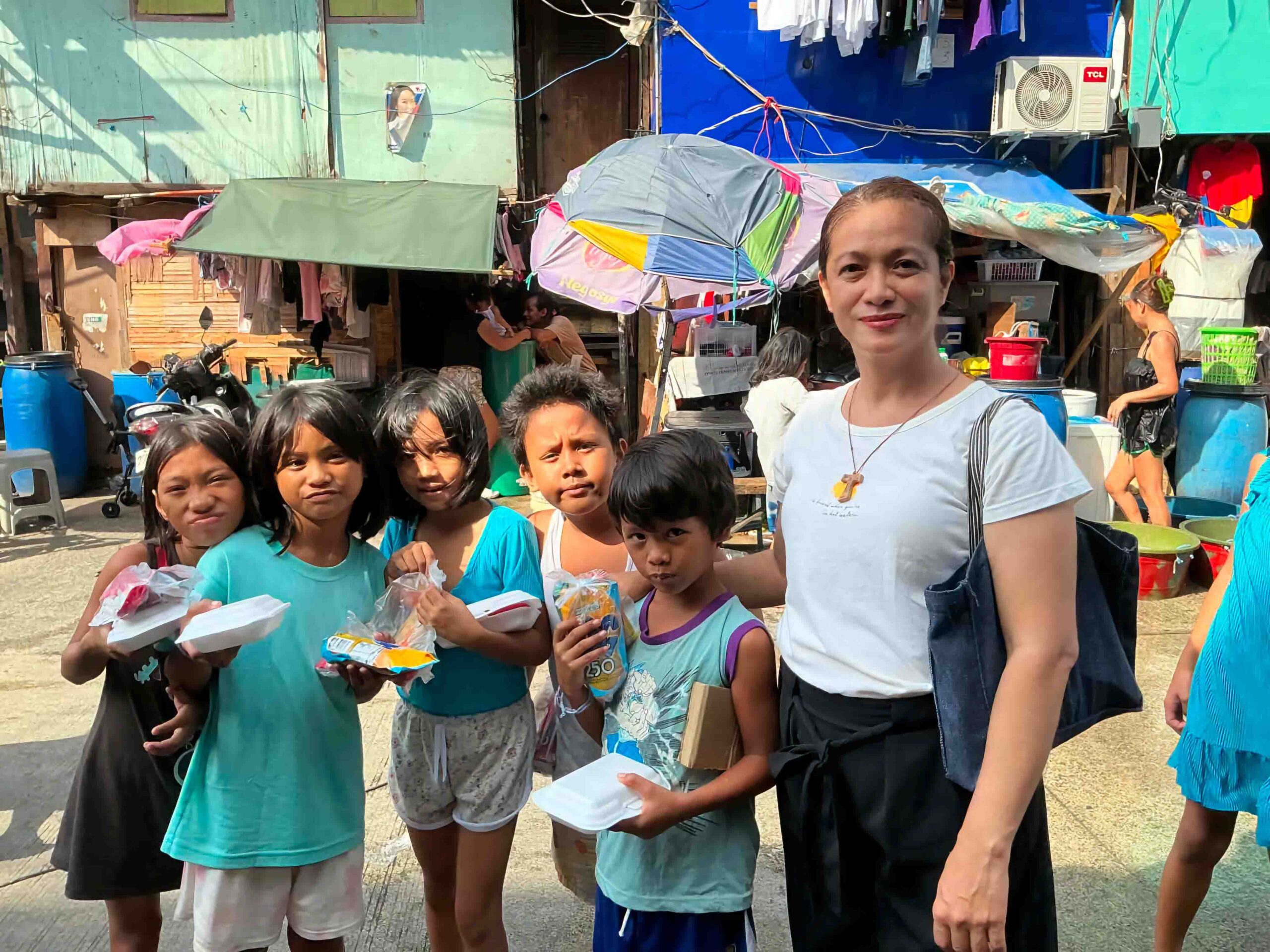
On March 21, their regular catechesis session became even more memorable when members of The Feast Light Maya outreach group arrived carrying bags of rice, slippers, school supplies, hygiene kits, food packs, and gifts for the children. Long before the distribution began, excitement was already visible.
The outreach benefited around 100 children, each receiving a five-kilogram sack of rice for their families. Donors also distributed notebooks, pencils, scissors, hygiene kits, biscuits, canned goods, candies, jackets, and loot bags. The children were later treated to meals that included rice, chicken, spaghetti, and burgers.
Yet for the Franciscan catechists, the outreach was about more than the gifts. “This has always been part of the design of our catechesis,” said Lisa Manuben. “After listening to the Word of God and participating in the lessons, the children share a meal or receive something they can bring home. It helps them feel welcomed and cared for.”
She explained that many children arrive hungry and that a simple meal helps create a positive experience at church and in the community. “When children feel that they are loved and valued, they become more open,” she said. “They want to return, learn, and be part of the community.”
The practice also reflects a deeper Christian tradition. “Jesus did not only preach,” Artemio said. “He also shared meals with people and fed those who were hungry. Even a simple snack becomes a sign of love, fellowship, and concern for others.”
They noted that the gifts also help strengthen family ties. Many of the children return home not only with food for themselves but with rice, groceries, and school supplies that can benefit their households. “When they bring these things home, they are happy because they know they can share them with their parents and siblings,” Lisa said. “It becomes a blessing not only for the child but for the whole family.”
She emphasized that the outreach is never intended to attract children through material assistance alone. Rather, the gifts serve as concrete expressions of Christian charity that complement the catechetical formation the children receive.
GOD LOVES THEM
“Faith must be experienced, not only taught,” she said. “When children encounter kindness, generosity, and a caring community, they begin to understand more deeply the message that God loves them.” For Artemio, one of the greatest challenges is helping children see possibilities beyond the limitations of their surroundings.
“Many of them grow up seeing poverty every day,” he said. “Sometimes they do not realize that they can dream of finishing school, pursuing a profession, or becoming leaders who can help others.” Through regular catechesis, they hope to nurture not only faith but also confidence, resilience, and a sense of purpose among the children entrusted to their care.
While food and gifts bring happiness, they emphasized that their ministry is ultimately about building relationships. As the children eat together, friendships are formed, and trust grows between the youngsters and their catechists.
The work, however, takes place against a difficult backdrop. According to the Franciscan catechists, the community faces numerous challenges that threaten children’s well-being and future.
“This is one of the areas where the presence of illegal drugs remains a serious concern,” Lisa said. “There have been times when we were conducting catechesis while, just around the corner, drug transactions were taking place.” Beyond the drug problem, many children experience conditions that leave them vulnerable to exploitation and abuse.
Some are forced into work at a young age. Others struggle to remain in school because of poverty. Cases of harassment and neglect also remain concerns within the community.
Housing conditions present another challenge. Many families live in cramped dwellings where privacy is nearly impossible. Children often grow up in environments where personal safety and dignity can be compromised due to overcrowding and inadequate living conditions.
“We also see young people losing interest in education or starting families very early,” Artemio said. “These realities make children more vulnerable to influences that can derail their future.” The community has also witnessed occasional violence and conflicts between groups, creating an atmosphere of uncertainty for residents.
ACCOMPANIMENT
Yet despite these realities, the catechists continue to return. For them, catechesis is not merely about teaching prayers or religious lessons. It is an act of accompaniment. The ministry also comes with practical challenges.
“The children are naturally playful and sometimes struggle to focus, especially because the environment is often noisy and chaotic,” said Franciscan catechist Efren Daguno. Yet he believes the lessons continue to leave an impact. “With God’s grace, they still remember and understand what we teach,” he said.
“Their smiles and laughter take away our fatigue,” Daguno adds. “All the tiredness disappears when they are happy and excited whenever we arrive. We do not believe that dignity comes from receiving gifts,” Lisa said. “Every child already possesses dignity because each person is created in the image of God.”
What outreach programs can do, she explained, is affirm that dignity through genuine care, respect, and lasting relationships. “The food and gifts are important, but what matters most is helping children know that they are seen, valued, and loved,” she said.
That conviction also shapes their hopes for the children they serve. Their dreams extend far beyond the next outreach activity or donation drive. “We hope they develop a vision for their lives,” Artemio said. “We want them to learn how to dream, to believe in their abilities, and to see that they have a future.”
They also hope the children will stay in school, grow in faith, and become responsible members of their communities. “We want them to become people who care for others, who live with integrity, and who know that God loves them,” Lisa added.
For them, such a transformation rarely happens overnight. Instead, it unfolds through small but consistent acts of presence–a catechism lesson, a shared meal, a conversation, a prayer, or a bag of rice brought home to a struggling family.
Yet the catechists say they have begun to see signs of change. “The changes are often slow, but we see progress,” said Veronica Homerez, a Franciscan catechist. “Some children have become more respectful toward one another, more caring toward their peers, and more appreciative of their families.”
She said witnessing the children put into practice the values discussed during catechesis, even in small ways, encourages catechists to continue accompanying them in their journey of faith. Homerez added that the children themselves remain a source of inspiration for those who serve them.
“Despite the hardships they face, they come with smiles and a willingness to learn,” she said. “Their simple yet sincere faith reminds me that God’s love can be found even in difficult circumstances.” As the March outreach concluded, children lined up eagerly to receive their gifts. Their smiles reflected the excitement of the moment.
For the catechists who accompany them week after week, however, the greater hope lies beyond the food, slippers, and school supplies. It lies in the possibility that, amid the hardships surrounding them, these children will grow up knowing that they are loved, that their lives have value, and that a different future is possible.
DEPRIVED OF LIBERTY
While much of their ministry focuses on children in vulnerable communities, the Franciscan Catechists also serve another often-forgotten sector of society: persons deprived of liberty. Beyond their work with children in vulnerable communities, the Franciscan Catechists also extend their ministry to persons deprived of liberty, bringing catechesis, prayer, and spiritual accompaniment to those behind bars.
Through regular visits to detention facilities, the catechists share Scripture reflections, facilitate discussions on faith, and offer opportunities for prayer and reconciliation. For many inmates, the sessions provide a rare space for reflection, hope, and human connection amid the difficulties of prison life.
The ministry is rooted in the Franciscan belief that every person possesses inherent dignity and remains capable of renewal, regardless of past mistakes. Catechists seek not only to teach the faith but also to listen, encourage, and accompany inmates on their spiritual journey.
Volunteers say the prison apostolate has shown them the transformative power of mercy. Many inmates participate actively in discussions, express a desire to deepen their relationship with God, and find comfort in knowing they have not been forgotten by the wider community.
For the catechists, the ministry reflects Christ’s call to visit those in prison and bring hope to those living on society’s margins. Whether among children in Tondo or inmates behind bars, their mission remains the same: to affirm human dignity, foster faith, and remind people that they are loved by God.