
How do you see, in general, the Chinese of Taiwan?
“The people of Taiwan are Chinese, but very different from those living in mainland China. They are Chinese who were exposed to modernization much earlier and much more than the mainland Chinese. Therefore, they are much more open to pluralism of thought and culture. They were exposed to the Japanese culture during the Japanese colonialism. Then, they have been exposed to the American culture. The Americans have been present in Taiwan, since the Second World War.
They are a people who, in the 90s, opened up to democracy. They abandoned martial law and the one-party system and opened up to the democratic game, overcoming the fear of communism. All this, I believe, was a part of a very beautiful and challenging journey. In spite of difficulties, such as lack of political experience, and the corruption that entered the separatist party, Taiwan is a lively, open and pluralistic society, today.”
Among the people, particularly among the young, what is their attitude toward mainland China?
“Young people have an attitude of suspicion towards China and, certainly, are not very fond of the Chinese political model. They tend to resist and maintain their freedom, avoiding the example of Hong Kong, where the Chinese government is doing everything to control the media and prevent a direct and universal suffrage. Young people prefer the current situation and do not want to be assimilated into the Chinese system. Most of the people are in favor of maintaining the political status quo, improving collaboration and communication with China at various levels. China, of course, is not happy and would like to initiate high-level dialogue on unification.”
In Western media, the society of Taipei is presented as a developed society… is it?
“Yes, but it failed in competing with China. The gap between the rich and the poor has become wider. The education system is still very much based on memorization, competitiveness and this has a negative impact on young people. Those who cannot adapt to the school system, those who cannot compete lag behind. Poverty in Taiwan is defined by lack of work, lack of opportunities, low wages that are insufficient to fully participate in the society. Considered among the poorest are the foreigners who immigrate in search of work, the aborigines, the people from the mountains.”
And the Catholic Church?
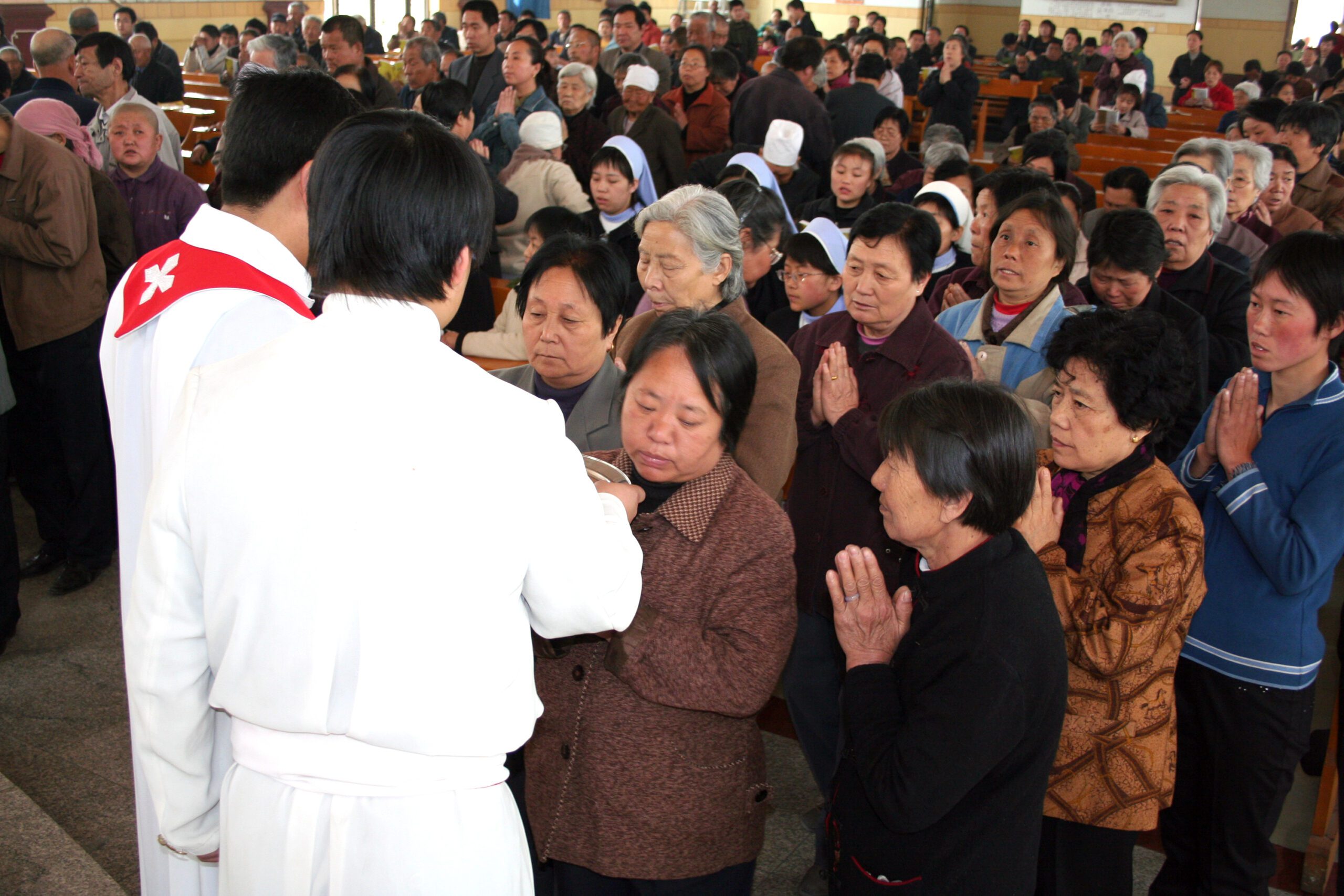
“In recent years, the Catholic Church in Taiwan experienced a time of great awakening, after a certain period of complacency. In the period of great development, the Church was seen as having a very precise role and an external visibility: large institutions, schools, churches, etc. Now, the Church knows its true dimension … When I arrived to Taiwan, there were around 300,000 Catholics there. Now, they talk only about 100,000 Catholics who regularly attend church activities and have a committed ecclesial life. Social institutions continue to operate, but they no longer have the power and projection of twenty or thirty years ago. Some social institutions disappeared, such as medical dispensaries, because society no longer needs them.
Under this situation, the Church was disturbed from its “sleep” and realized that it should be more missionary in order to evangelize, not expecting people to come on their own initiative. The transmission of faith within the families also suffered. Young people grow up with a mentality less interested in faith … also because the Taiwanese Church has difficulty in evangelizing the modern young in a language understandable for them. The Church has to abandon the vision of faith as piety or ritualism, and give an intellectual content to the Christian faith.”
What is, then, the role of missionaries in the Taiwanese Church?
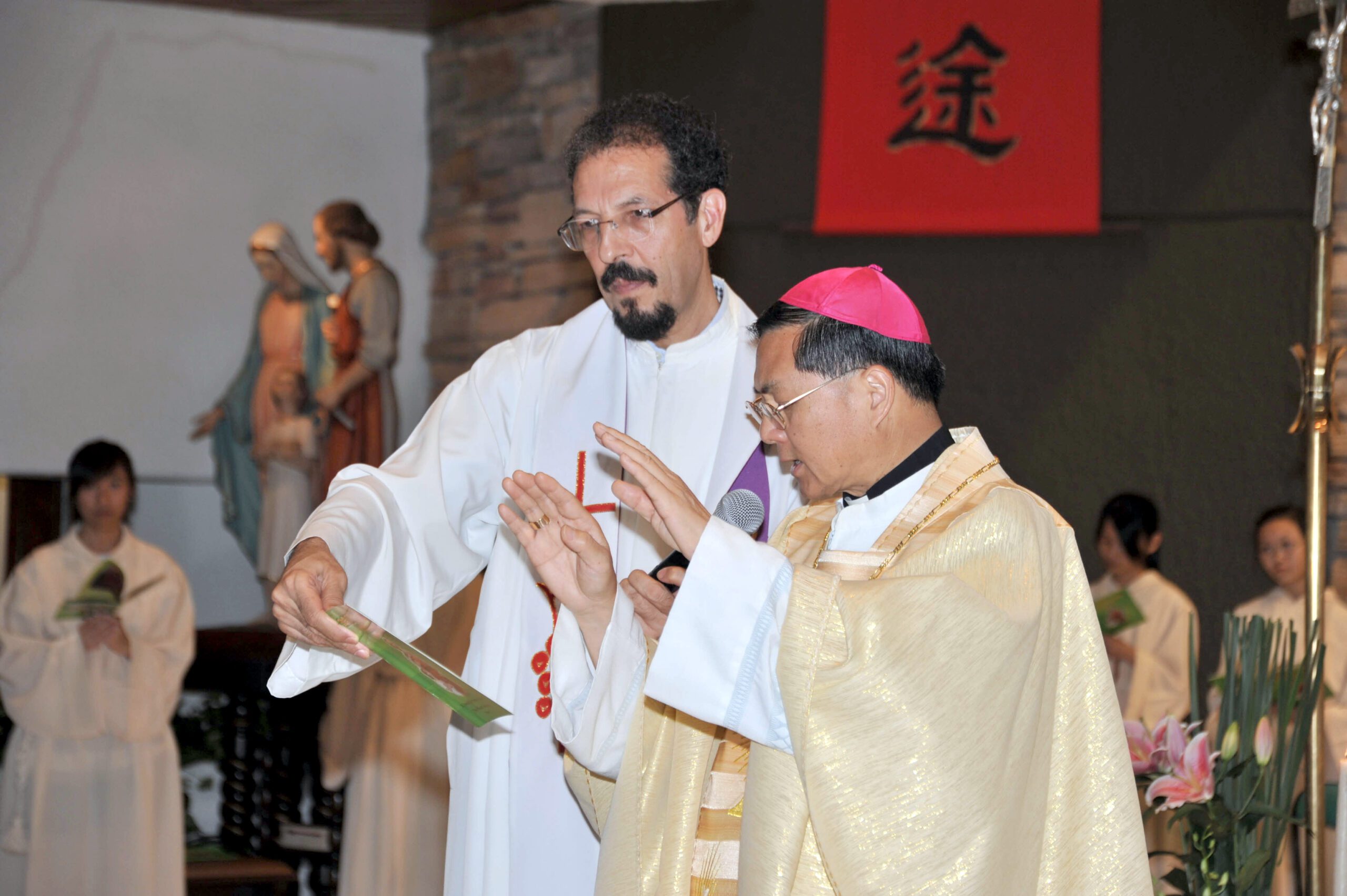
“In my experience, I will say that the role of Christian missionaries is to show to the young that faith can go hand in hand with modernity. We should be able to do evangelization without fear of modernity.
The Church needs to create new synergies between all the forces at its disposal: religious and missionary institutes, parishes and movements. All these forces are going through a phase of looking for new ways on how to operate. All can make their contribution. It seems, however, that none has yet found the best solution…
As missionaries, we must make valid contributions to the Church, especially in evangelization initiatives and in its contents. Compared with the Churches of Hong Kong and Macau, the Catholic Church in Taiwan appears more pluralistic, without a strong ideological line where all groups and movements are positively included. Therefore, all and can make their contributions in building a future that, despite uncertainties, appears promising.”