There are so many misconceptions about evangelization that I must begin by saying a few words about what it is not. Evangelization is not a form of political campaign, a commercial advertisement, an ideological propaganda, a refute-all debate, a ridiculing contest, an arrogant claim of superiority, a religious Jihad. It is not a spiritual boxing match to knock out every other person in the ring. It is not a threat to people’s cultural heritage, ethnic identities, national heritage, healthy traditions, anthropological diversity, ancient wisdom, inherited bonds and kinships, heirloom of ideas, civilizational archetypes, nor people’s native religious genius. Christ comes to affirm and uplift, to fulfill and perfect, to heal and empower; not to damage and destroy, not to denounce and derail, not to deny and reject everything of value. “He will not argue or shout, or make loud speeches in the street. He will not break off a bent reed, nor put out a flickering lamp. He will persist until He causes justice to triumph, and on Him all peoples will put their hope” (Mt 12:18; cf. Is 42:1-4).
I do not deny that the work of evangelization may be carried on in a hurtful manner. That is why a study of culture is very important. It is clear that constant vigilance and self-criticism are required when we are offering any kind of cross-cultural service, whether it will be in the field of education, health or social assistance. The work of evangelization, like any other human service, can be handled wrongly. The fact is that we are no more than limited human beings, and all that we do have the mark of human frailty. But we must not be discouraged. A mother, reaching out with love for her child, may not hold a degree in child care. She may be at an imperfect task.
But her services are required to sustain life, and for the continuity of the human race. Evangelization is the central mission of the Church. It is that activity that keeps the Christian community alive and effective in serving the Lord and humanity. Apart from it, the Church ceases to be relevant, to have energies; she even ceases to exist.
Evangelization represents God’s loving kindness reaching out to every person in human society through human agencies and His caring concern for the whole of creation. It is the hand of a loving friend stretched out in help; it is an encouraging and reassuring word from a brother/sister who cares. That is why the religious have a special role in this noble mission. It is a privilege to be called to assist in His work.
GO INTO PEOPLE’S LIVES
The first thing to be done, if we are earnest about evangelization, is to come into the lives of people. We cannot stand aloof and organize this important work from a distance. We may be able to keep a mighty organizational machine going by remote control, but that would be a lifeless structure. That is why some of our parishes and institutions have become lifeless. It is when things happen in this manner, that our works lack the vibrancy and energy of a living organism. They fail to grow, and they fail to yield the desired fruits.
We are amazed at the way that Jesus kept walking into the lives of people. He takes people by surprise. He enters into the lives of Andrew and Peter, James and John while they are busy fishing; He calls Levi from the tax-collector’s desk; He summons Philip and Nathaniel on the wayside; He surprises Zacchaeus by inviting Himself to his house. He is ever sensitive to the needs of people. He goes into the house of Peter and cures his mother-in-law. He calls up a man with a paralyzed hand and cures him, unasked. He cleanses lepers, cures people of all kinds of diseases; He raises the dead. What stands out evident is His keen interest in the other person: His warmth, His relationship. It is not that He is offering help all the time, He asks for help too. He asks for a drink from the Samaritan woman. He seeks to stay with Zacchaeus. He relaxes at the house of Martha, Mary and Lazarus. He dines with Simon the leper. He accepts invitation from Simon the Pharisee (Lk 7:36). He takes part in a wedding feast at Cana (Jn 2:1-2).
If you wish to be a good missionary, you must be involved in the lives of people. You will be happy to welcome people into your house, make them feel at home. You will be equally happy to visit them, enter into a dialogue with them, discuss matters of common interest; you will be interested in their children and their education, their fields and their crops, their economic problems and their uncertainties, their domestic tensions and their search for peace, their spiritual struggles and their religious aspirations. Your conversation may move to deeper levels and to areas of self-understanding, and the presence of God in their lives. It is at such moments that God reveals His face quite unexpectedly to new persons and communities. And miracles take place.
Among the more educated persons today, you are likely to come across individuals who live by a philosophy of undefined pluralism, vague openness to everything, eclectic spirituality, inner ambiguity and indeterminism, preparedness for multiple religious belonging, lack of enthusiasm about any form of organized religion, resistance to the establishment. Attitudes that we call post-modern are never absent in the Asian tradition. For one thing, Asian elite, in general, cannot be said to be secularized. There is an openness to the spiritual, though not to specific affiliations. However, simpler societies have less inhibitions, especially indigenous (tribal) communities and those of primal religions. And miracles do take place in unexpected areas. There was a sixfold increase of Christians in Wuan, North China, in less than a decade, 1996-2003, through the work of lay evangelists. Inchon diocese in Korea witnessed a tenfold increase during the pastoral ministry of a single bishop.
What is important is that we keep going out, not merely to new geographical areas, not only to new individuals and communities, but to new areas of human life and activities. We need to explore the ‘frontiers’ of every human thought, ambition and commitment, and explore the line that divides the possible from the impossible! Yes, we should keep ‘going.’
REMOVE BARRIERS
When you are initiating a work in a new place or coming into contact with a new community for the first time, some people may look hostile. But when you enter into dialogue with them, you realize that they are just ordinary people with ordinary human goals and ambitions. If you are planning some beneficial work in their area, you may be sure that they, too, are interested; they, too, want their place and their community to develop. However, they want to know what this ‘outsider’ is all about. You need to explain to them your intentions, associate yourself with the good they are already doing in the neighborhood, recognize the role of the local leaders and keep up a stimulating dialogue with the local community as your work develops. There is a dialogue that is meant to solve the immediate problems. There is another form of dialogue oriented towards joining hands with people of different cultures and religions for the development of the local community and for the promotion of genuine human values. There is still another type of dialogue, at a deeper level, in search of what is true and good, ultimate sources of your inspiration and strength, with an eagerness to discover God’s presence in various cultures and operative in various societies, and active in human hearts, with an openness to where He will lead us.
Dialogue is a learning process. Francis of Assisi was deeply impressed with the prayer habits in Islamic society. Charles de Foucauld rediscovered his Christian faith in the Sahara living among his Muslim friends. But you also have an opportunity to share your own perception of truth, your own understanding of God and His plan for the well-being of the human race. Dialogue, ultimately, is about relationship, common commitment to what is good, not about argumentation, ideological subtleties. It is oriented towards a sense of mutual belonging which everyone is longing for.
When you begin discussing with them more at length, you discover that their starting point is different from yours. Their mental makeup is not influenced by Aristotelian intellectual discipline, Thomistic theology, Catholic catechetical tradition, or the type of spiritualities and metaphysical concepts that you have inherited from a Christian tradition. The words you use, especially about religious realities, have other connotations. The symbolisms you are familiar with may not evoke the same response. The hymns you sing may not stir the same religious sentiments. If you refer to the Mass and other sacraments, they may remain nebulous realities to them.
Some of the rules of the Church may appear, to them, arbitrary and unrelated to anything religious (e.g., Church contributions, records, regulations regarding marriage, etc.). Words like ‘Catholic,’ ‘Apostolic’ have different meanings in the Catholic, Orthodox, and Protestant traditions. Christian concepts of God and afterlife differ from those of our Hindu, Muslim and Buddhist brothers and sisters. A missiologist remembers how, when “Lord, have mercy” was translated into a dialect of Ghana, it sounded like “Lord, be miserable!”
BUILD BRIDGES
Some recent converts have seen a relationship between the Buddha’s eightfold paths and the Beatitudes. Today, what we need most are people who can build bridges between communities and their varying visions of realities.
As the world is globalizing itself, we are becoming acutely conscious of the sharp differences in points of view, collective interests, political perceptions, cultural identities, philosophical outlooks, civilizational mental slants.
We remember how, even in early Church, there were differences between the Hellenist and Hebrew Christians (Acts 6:1 ff). We need people who can interpret one to another, who can cross such barriers with ease, and help others to negotiate their way through the contradictory stands that people often take, and lead them to mutual understanding. We, in Asia, have to deal simultaneously with people of different religions.
When thinkers of different civilizations, reflecting on the historic experiences of their respective societies, propose solutions to certain human problems, they are tempted to hold them up as universally valid principles.
They may very well be! However, one will easily notice that psychological and social theories that have developed in a particular cultural context, in a particular period of history, will need to be modified and changed when applied to another cultural and historical context. Words have different meanings, ideas have different connotations, images provoke different sensitivities in different situations. St. Paul insisted in his own times:
“Your speech should always be pleasant and interesting, and you should know how to give the right answer to everyone” (Col 4:6). Only when we are aware of subtle differences in words and meanings, shall we, as evangelizers, be able to build bridges between different ways of thinking. Take, for example, words like ‘democracy,’ ‘progress,’ ‘discipline’ in the mouths of a Stalin, a Mao, a Gandhi or a Nehru. Each would have a different understanding of the concept.
“John used the methods of Hellenistic Jewish propaganda in order to transmit the originally Semitic content of primitive Christianity to the Greek world” (C.K. Barrett). The Semitic Saul was also the Roman Paul. Paul was accused of saying ‘yes, yes and no, and no at the same time’ (2 Cor 1:17). It is evidently a reference to his accommodative ways to different communities, trying to become all things to all people. In the Councils of Nicea, Chalcedon and Ephesus we see the inculturation efforts of the early Church trying to define doctrine in a vocabulary suited for the Greek world. The evangelizer in Asia today should be truly Asian and deeply Christian.
Being truly Asian does not mean using aggressive language to defend Asia’s interests, much less taking aggressive postures. It does not mean reveling in exaggerated forms of nationalism which, unfortunately, finds even a theological expression not entirely in good taste. Becoming bridge-builders is something very different.
Structures that developed in a particular civilization, like the Westminster form of parliamentary democracy, need not necessarily function well in another cultural context. In India, we have been fairly lucky in being able to preserve the model that we inherited from the British. When adopting practices prevalent in another society to solve a social problem, the entire approach may need to be different, emphasis changed, and priorities redrawn.
The Japanese way of tackling problems of economy amazes people who grew up with the Anglo-Saxon economic traditions. Sophisticated and highly-developed plans of action derived from alien inspiration may need to be indigenized and reformulated, and even replaced. Globalization has made people to more and more realize the fact that people from the Western, Confucian, South Asian (Hindu-Buddhist), and Islamic civilizations differ a great deal in outlook. Such global classifications are also deceptive, because there are further internal differences within these general groupings that need to be attended to.
THE INDIAN CUP
What we have discussed above has lessons for the evangelizer as well. He needs to adapt and shape ways of approach which he has studied and read about, or heard described or seen with his own eyes elsewhere. After working with one ethnic group when he moves on to another, he may have to learn all over again how to relate with this new community and how to offer effective service to its people. In India, we have to deal simultaneously with people of different religious and cultural traditions.
In India, there is an Indian way of thinking and acting. Sadhu Sunder Singh said: “Give us the water of life in the Indian cup,” in a way, that makes sense to the Indian mind. However, there is nothing like a single approach to communities that are believed to belong to the Hindu tradition. Some totally ignore, though not necessarily reject, the texts that are held by the upper castes. Each community has its own beliefs, practices, and celebrations that differ greatly from those of others. Some may be said to be Hindu only in the sense they have accepted a position in the Hindu caste hierarchy. Historically, the case has been that they were driven to accepting such a position to obtain a place in the larger society in which they have to live. They cling to their caste traditions (for them, that is dharma) as a way of fiercely asserting their identity and distinctness, on the one hand, and affirming their superiority over some other communities, on the other. Contrary to their sturdiest desire, they may have to concede superiority to some other castes. Such inter-caste strife has been going on, all the time, in our national history. But what I want to emphasize here is that there is no single approach to the Hindu society as a whole.
Rather, there is a different approach to each community having an inner identity and cohesion of its own, living in a specific geographical and social situation.
It is interesting to note how the religious sensitivity of different communities differ. Our Hindu friends from a high caste background, especially of Brahmin origin, will be attracted by the religious depth of the Christian message, its emphasis on interiority, contemplation, silence, renunciation, spiritual discipline, asceticism. But those of the middle castes would have more of a pragmatic outlook and admire the efficiency of Christian works in the field of education, health and similar areas. Those of the humblest castes and tribal background find encouragement in the disinterested service of Christian workers in the area of social uplift, development, relief and rehabilitation. They would identify themselves with popular piety, not so much with sophisticated spiritual dissertations or mystic contemplation. The real skill of the evangelizer is to find out where his interlocutor is in his heart and mind, in his aspirations, ambitions and life struggles, and make it the starting point of his dialogue.
THE DIFFERENT NEEDS
Solidarity with the needy is central to the work of evangelization. One should consider it the path to egolessness and to God. A true evangelizer seeks to keep close to the suffering, the sick, old, handicapped, prisoners, exiles, migrants, slum-dwellers, orphans. He attends to alcoholics, drug-addicts, AIDS’ victims. He enjoys the mysticism of generous service. For instance, Vincent de Paul experienced ecstasy in being outside of himself and centered in the poor. He considered it as an encounter with God. He said: “In this, the Father will be glorified, if you produce abundant fruit” (Jn 15:18). He encouraged his sisters to take a rented room for their cell in order to be close to the people and to consider the streets of the city as their cloister. “The poor are our patrons,” he would say, ‘they are our kings. We should obey them.” Mother Teresa used similar expressions. If the evangelizer wishes to be deeply spiritual, he should keep close to the poor. That is the place of encounter with God. Vincent de Paul considered mysticism without service, pointless. He was distrustful of mystic swooning and escapist spiritualities.
Exaggerated forms of penance, fasting, prophetic utterances, visions and the search for the miraculous and sensational have nothing to do with genuine spirituality.
As you will find individuals in special need, so you will also come across communities that are under undue stress. St. Francis Xavier came to the aid of fisher-folk who were being exploited; Fr. Lievens, to the rescue of Chotanagpur tribals who were losing their land. Today, dalits and tribals are under great pressure: loss of land, weakening of identity, damage to culture, diminishment of dignity, alienation from tradition, sense of rootlessness, marginalization in society, lack of space in economy, a sense of being used by the powerful as a tool for their own ends. An evangelizer cannot remain indifferent before such a situation of tribal/dalit helplessness.
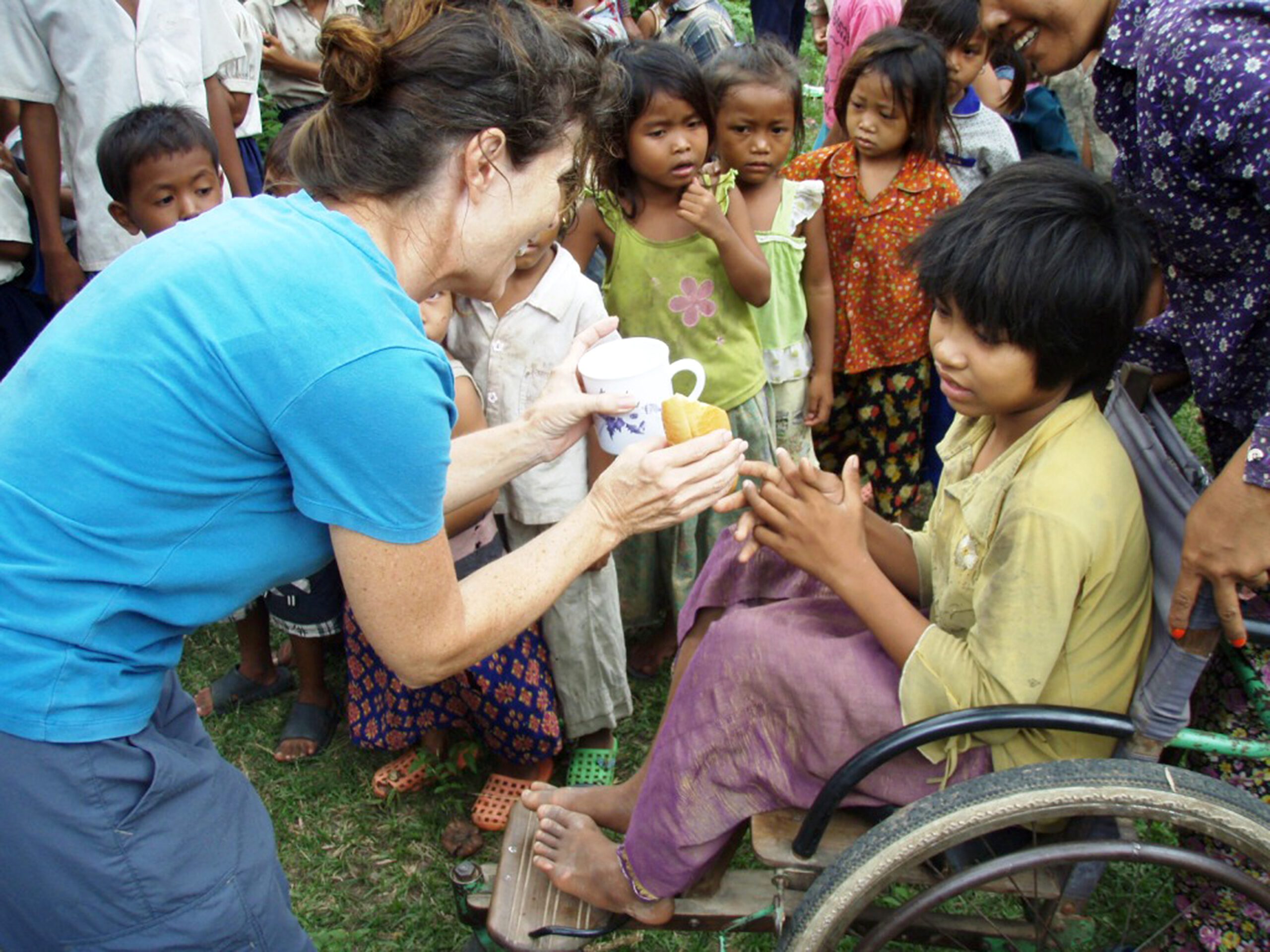
People crowding into the great cities of Asia call for attention and assistance. John Naisbitt says that seven of the thirteen megacities in the world are in Asia. These people, uprooted as they are from their own specific culture in the villages and being herded together into urban agglomerations, have a psychology of their own. Hungering for the solidarity that they miss, they tend to re-create a ‘village’ in their urban surroundings. In the same way, migrants (some called ‘illegal’) in search of better fortunes, land up in similar situations of helplessness. They, too, seek solidarity and guidance. The evangelizer can help them in their effort to eke out an existence and struggle for justice. Political refugees, likewise, need encouragement and assistance. Then there are specific problems of individual countries, e.g., Cambodia has the problem of exploding landmines. It is said that there are, in Asia, more than 100,000 amputees and disabled due to landmines, and that 200 to 300 people fall victim every month. They need to be assisted and rehabilitated.
This sense of responsibility will lead the evangelizer to enter into a vast variety of activities. What they ought to be can only be determined by the needs of the situation. Among the tasks that have received central attention, in recent years, are: peace initiatives in contexts of interethnic and communal tensions (Mt 5:9; Col 3:15; Phil 4:7; Eph 2:1 ff); ecumenical collaboration; struggle against local forms of unfairness; support of development programs; activities of advocacy; assistance to schools that don’t run; health programs; intervention for government efficiency; work for gender equality and against female infanticide, child marriage, dowry system, domestic violence, state violence; care for unwed mothers and children; education to ecological concerns like deforestation, cleanliness drives; assistance to AIDS/HIV patients; promotion of children, literacy programs, slum work, self-help groups, micro-financing, economic empowerment; promotion of culture; encouragement to freedom struggle, anti-case struggle, human rights contention; however, the struggle should not grow into hostility and end up in conflict. Those are only some of the pressing needs that call for special attention in Asia.
THE BATTLE FOR JUSTICE
We must remember that “the Church cannot and must not take upon herself the political battle to bring about the most just society possible. She cannot and must not replace the State. Yet, at the same time, she cannot and must not remain on the sidelines in the fight for justice. She has to play her part through rational argument and she has to reawaken the spiritual energy without which justice, which always demands sacrifice, cannot prevail and prosper. A just society must be the achievement of politics, not of the Church. Yet, the promotion of justice through efforts to bring about openness of mind and will to the demands of the common good is something which concerns the Church deeply.” (Pope Benedict XVI, Deus caritas Est).
Zeal for doing good should not lead us into exaggerations: e.g., during the early colonial period, overzealous people went for conversion by force or for holy wars; during the late colonial era, colonial propagandists justified imperialism with the professed intention of ‘civilizing’ the ‘natives’ through conquest and imperial rule; currently human rights are invoked to camouflage various forms of egoism, personal and collective; self-interested leaders take communities to violence voicing justice claims, leaving no room for compassion and with the exclusion of the transcendent. However, the evangelizer’s intervention in behalf of communities differs from that of the social worker. He feels the power of God acting through him. He seeks to be an icon of God’s love for His people. He dialogues with the thinking and dynamic element in a community and addresses the Gospel to its soul. Some central learning is hidden in these words that I have just said. It is the evangelizer with a profound grasp of the inner identity of a community that knows how to get close to its deeper self and stir it to life with the power of God’s Word and the touch of Jesus Christ.
With all our proud boast of rapid development in parts of Asia, we notice that power and resources come speedily to be concentrated in the hands of a few. This happens in situations of state socialism, irresponsible capitalism, or monarchic/oligarchic rule. For the weaker sections in society, ethnic and religious minorities, life means a constant struggle against injustice under regimes that may be described as semi-military, civil-authoritarian, elitist-democratic, or majoritarian. But even in fighting for what is right, there is an evangelical style. God’s justice is a justice that defends, not destroys. Zeal for justice that is not an expression of love can become an untamable monster. Denunciation that does not end with a word of blessing can prove to be effectively a curse.
Severe criticism, even when well-deserved, should have a touch of encouragement somewhere. Accusations will end well only if there are words of affirmation as well. True prophets are not inspired by anger, but by love. Gustavo Guttierrez, the Father of Liberation Theology, says that if the task of the Church is denunciation, it is also annunciation.
In our struggle for justice then, one form of collective selfishness is not fought with another form of equally selfish collective self-affirmation, but the spiritual energies that proceed from the ‘mystical blending’ of strong self-assertion and claim for rights with gentle self-renunciation and eager concern for others; fierce loyalty to one’s own community with radical commitment to the long-term good of the larger society. So, to take a small example, Euro-centrism is not confronted by Indo-centrism or Sino-centrism or Asia-centrism, but by universal brotherhood/sisterhood.
A happy blending of what looks like opposites is neither impossible nor undesirable. It is generally considered a part of the Asian genius to harmonize opposites. It is the failure to work out a happy synthesis and attain a new harmony, a new balance in thought, that leads human processes to swing from one exaggeration to another, from one radical position to another. It was Paulo Freire who said that, once liberated, the oppressed becomes an oppressor. The pendulum will keep swinging as long as there is a calculated imbalance on either side. One has to plant moderating influences into the mechanisms built up for pressing for one’s rights or fighting for one’s community’s interests. Such an attitude springs from one’s concern for others and firm confidence that the future belongs to the ‘victims of history.’
The Beatitudes offer the most reliable assurance of better times to history’s victims. “Blessed are those who suffer…” But when the victims seek to punish the oppressors too severely instead of entering into critical dialogue with them, and begin to act aggressively towards the aggressors, ‘the future’ slips too fast from their hands in favor of the new victims of history. In other words, unless we work out a situation of ‘stimulating harmony’ and usher in a ‘culture of responsibility’ for each other, society will not take a single step forward. One group will keep dragging the other behind.
TAPPING THE CREATIVITY
We are in search of creative and innovative ways of sharing the Gospel. Amazingly, in many areas of life, creativity does not lie with the dominant groups or intellectual leaders, but with people at the margins of society; not with the elite who are in search of fulfillment or suffer from hurt egos, but with the feebler groups that are striving for sheer existence and are serenely confident of their destinies; not with those who present ready-made answers, whose reflections are lost in stereotypes and worn-out jargons, but with those who are contending with actual human problems in real life with their multifaceted manifestations; not with those who are rule-bound and contended with established patterns of functioning, but with those who take risks and venture out in new directions; not with those who place all their trust in their abundant resources and limitless resourcefulness, but with those who simply fall back on God.
When engaged in justice-struggle, one needs to remember that the creativity of the poor is expressed most of all not in anger and aggressiveness, but in forgiveness and faith. It is the ability to forgive that enhances the personhood of diminished persons, gives them a special dignity, and equips them with a sense of equality with even the mightiest powers on earth. The cry of the poor is not a war-cry spurred on by social activists, but the expression of a spiritual hunger, of trust and confidence in the One who, they know, will intervene in their behalf without fail. It is the creativity of the poor that gives new directions to human history. Arnold Toynbee, in his voluminous book ‘A Study of History,’ continuously refers to the creative contribution of the poor (‘internal proletariat’ as he calls them) in the field of religion and the growth of civilization.
Indeed, we need to discuss, as we do today, concepts and approaches related to evangelization, dialogue, Inculturation, organization of health and education, struggle for justice and similar topics. But creativity will reveal itself only in concrete situations: a missionary trying out new ways of sharing the Gospel with amazing results, with no precedent, no sophisticated equipment or methods, no elaborate plans or training; a local Christian team achieving unforeseen results in the area of justice, development, reconciliation, or peace. We can only encourage the initiators of such ventures, learn from their experiences, and propose worthy models for imitation. Even so, some will always remain inimitable. Cultural diversity itself is a source of creativity. Young people think up more new ideas than those whose thoughts have begun to freeze. Women have a unique style of innovating. ‘Outsiders’ present fresh points of view. Enthusiasm about the goals stirs new thinking. Information about the success of recent creative ventures stimulates further creativity.