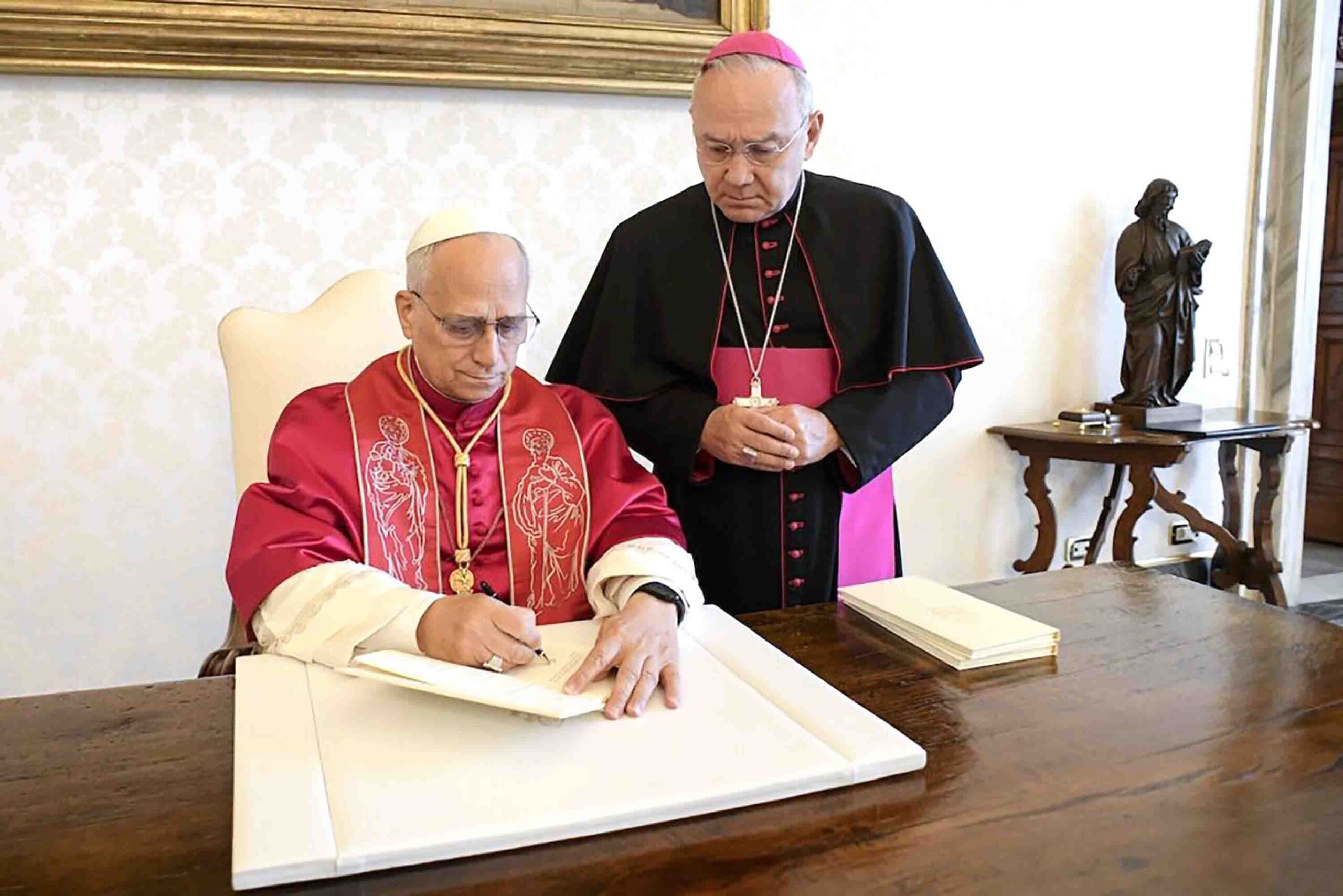

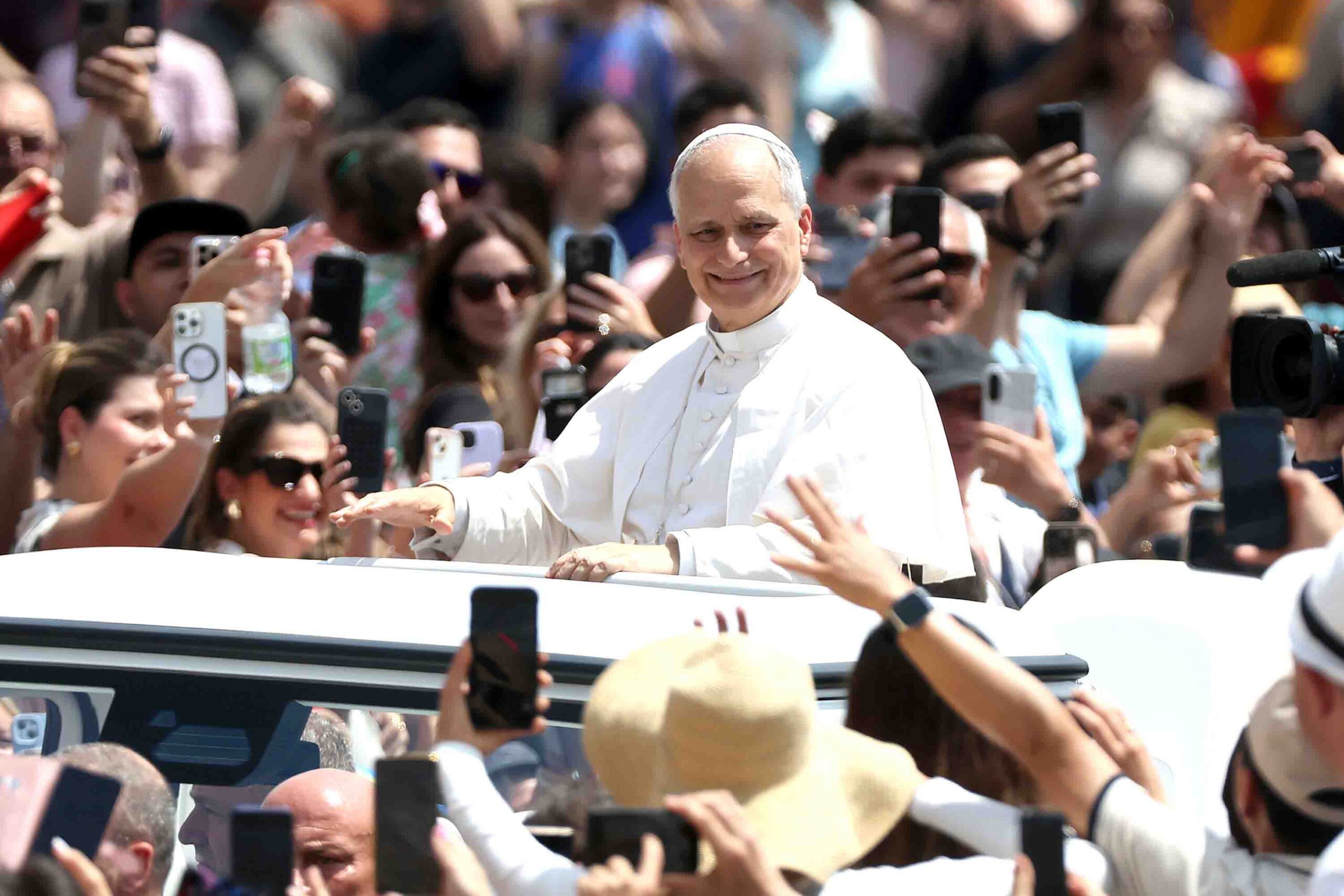
In my little book titled Pope Leo XIV: Church Reforms and Synodality, published by Claretian Publications in 2025, I portray Pope Leo XIV as a leader who arrived on the world stage like a lighthouse lit in a storm–quiet, steady, and impossible to ignore. On May 8, 2025, the College of Cardinals–always guided by the Holy Spirit–elected the Prefect of the Vatican Dicastery for Bishops as Roman Pontiff.
What makes Leo XIV compelling is not only the sacred Office he holds but the life he lived before it. What makes Leo XIV unique is not his American citizenship but his choice to leave the comfort of a superpower to live with the impoverished communities of Northern Peru, where he learned to eat their meals and pray with them in the native tongue.
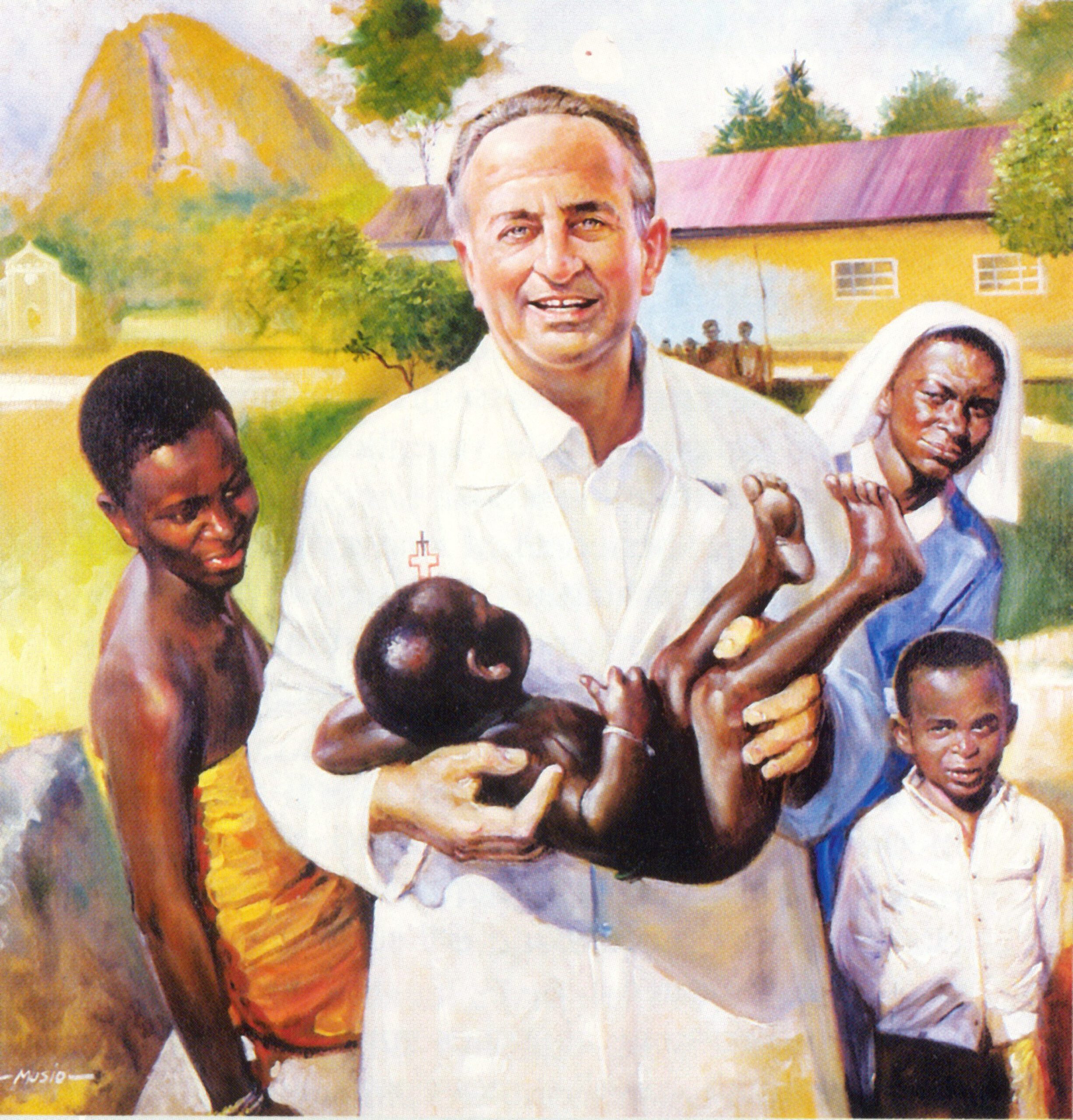
During a pastoral visit to a Peruvian village years before becoming pope, then-Bishop Robert Francis Prevost reportedly refused the ceremonial meal offered to dignitaries and instead sat on the dirt floor with children, eating the same stew as everyone else.
That small act became a moral parable of his leadership, which is not performed from above but lived beside the vulnerable. He does not lecture from a marble pulpit but testifies from a kitchen table where he once shared a meal with a family who had nothing to spare.
His pastoral background and years spent living among the poor in Peru lend him credibility when he speaks about migration, labor, and inequality. His soft power is not sentimental but relational. The Vatican’s global network of parishes, hospitals, schools, and humanitarian agencies becomes a living argument for a different kind of security–one built on human flourishing rather than deterrence.
He wields soft power like a shepherd’s staff–guiding and certainly not coercing–challenging hard-power orthodoxies, re-centering the Global South, and insisting that war is a moral failure rather than a policy strategy.
If geopolitics is a chessboard, Leo XIV refuses to treat human beings as pawns. He reframes the Vatican’s role as a Gospel prophet and a moral compass in one–someone who bridges the North and the South and calls for ceasefires and conscience. His vocabulary is not of sanctions and strikes but of truth, unity, and love—the Augustinian triad he carries into the public square.
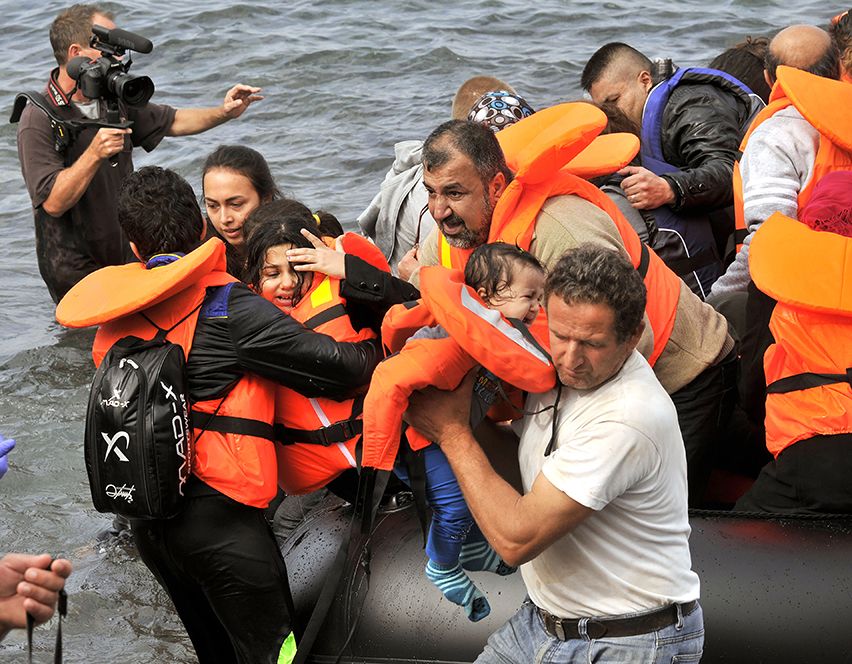
Where military strategists measure success in territory, our American pontiff Leo XIV measures it by restored human dignity among migrants and reconciled communities. Our American pontiff speaks, and the world listens because the stakes are not abstract–they are human faces in refugee camps, the tremor of a mother’s voice after a bombing, the quiet dignity of a worker denied a living wage. Leo XIV speaks to those faces, and in doing so, he forces nations to reckon with conscience and not ambition.
AUGUSTINIAN DIPLOMACY
Leo XIV’s relationship with the United States is both paradoxical and prophetic. He is the first US-born pope, yet his moral posture often reads as a corrective to American exceptionalism. As his first duty, the Vicar of Christ proclaims the Gospel, the Gospel of love and peace. Our pontiff’s American roots give him a unique platform to challenge U.S. policy without being dismissed as an outsider. He can name the costs of war in a language Americans understand–families, veterans, communities hollowed out by violence–and he can call for alternatives that are both principled and practical.
His most biting critique came on Palm Sunday, March 29, 2026. The Holy Father invoked the image of a “crucified humanity” to describe the victims of the Iran War. He directly challenged the military vernacular of the Pentagon, asserting that civilian deaths cannot be dismissed as collateral damage. Quoting the prophet Isaiah–“your hands are full of blood”–the Pope argued that any policy resting on violence is morally unacceptable, regardless of its legal justification.
By centering the vulnerable in the conversation, Leo XIV effectively stripped away the sanitized language of statecraft. He forced a public debate over a singular question: Can a state claim moral authority while its strategic successes are built on the suffering of the innocent?
Beyond doubt, his Gospel-based pronouncement is not anti-American but rather an appeal for the United States, the country he dearly loves, to be a power that protects rather than one that dominates.
Unlike secular heads of state who derive power from constitutions, elections, or military might, the Pope speaks from a platform Catholics believe is divinely instituted–the Chair of Peter. This is “sovereignty without swords.” While the Vatican is a tiny geographic state devoid of hard power–no standing army, no nuclear deterrent, a “sovereignty without swords”–it wields a unique form of normative persuasion.
The Holy See operates on a timeline of centuries, rooted in apostolic continuity and doctrine rather than four-year political cycles. Petrine Ministry means, in ad extra pastoral sense, to act as the world’s conscience, judging sovereign decisions not by their efficiency but by their morality. As the Pentagon and the Vatican continue their “frank dialogue,” the world is left to decide which standard should govern our future: the strategic gains of the powerful, or a moral standard that prioritizes the dignity of the most vulnerable.
For Pope Leo XIV, the answer is crystal clear–a state that sacrifices the person for the sake of the system has already lost its right to lead. Leo XIV’s most urgent message since Day One of his pontificate is simple: War is a moral failure.
He refuses the old calculus that treats war as a legitimate instrument of statecraft. Instead, he insists on ceasefires, humanitarian corridors, and negotiations that are centered on the needs of civilians. His message is not merely rhetorical but a moral summons that re-examines how leaders should put human dignity above violence.
Human beings are not data points, statistics, or targets on a screen, says the Bishop of Rome in his first encyclical, and “any technology that facilitates attacks without seeing the face of human beings lowers the moral threshold of conflict” (Magnifica Humanitas, 199).
GLOBAL SOUTH
Pope Leo XIV solemnized the Church’s solidarity with the Global South when he visited Lebanon from November 30 to December 2, 2025, marking his first international apostolic journey. The trip, which immediately followed his visit to Turkey, served as a message of peaceful dialogue, Christian-Muslim coexistence, and oneness with the Lebanese people, who have been bombarded by Israel until now.
When he calls for peace in conflict zones, the Roman Pontiff does so with the authority of someone who has personally heard the cries of war victims. That credibility matters. It turns abstract appeals into moral pressure that regional leaders cannot easily dismiss.
Again, Leo XIV has made the Global South the moral center of his pastoral attention and diplomacy by completing a historic 11-day apostolic journey to Africa from April 13 to April 23, 2026. The papal pilgrimage was focused on peace, social justice, and interreligious dialogue across four countries: Algeria, Cameroon, Angola, and Equatorial Guinea.
Remember that his own life–three passports, a missionary’s humility, a bishop’s compassion for the poor–embodies a bridge between North and South. He speaks for communities that have been treated as afterthoughts in global policy debates: migrants, informal workers, rural farmers, and the climate-displaced.
Leo XIV and his predecessor, Francis, are influential transnational figures for having occupied the highest office in the Catholic Church, and both are described as charismatic in their own way. Like Francis, Leo knows too well that he has taken over the most prominent pulpit on Earth and that his voice will be heard globally in a world where authoritarianism is on the rise, where ongoing wars are destroying both body and soul, and spawning hatred in human hearts.
MORAL AUDACITY
I should say Leo XIV is a continuation with a different cadence. He treasures the reforms of Pope Francis while bringing an Augustinian temper–measured and communal–invoking the legacy of Leo XIII and Rerum Novarum to argue for the dignity, rights, and economic justice of labor.
In conclusion, I have this much to say: Pope Leo XIV’s geopolitical diplomacy is a study in moral audacity. He asks the powerful to remember the powerless, the wealthy to remember the poor, and the nations to remember that peace is not the absence of conflict but the presence of justice. His leadership is not a distant sermon from a Roman pulpit but a series of small, stubborn acts of solidarity that accumulate into a global argument for a different kind of order.
If geopolitics is a storm, Leo XIV is not a gale that topples trees; he is the lighthouse that keeps ships from crashing on the rocks. His is a moral leadership that asks nations to rise above their worst impulses and to build together a peace worthy of human dignity.
José Mario Bautista Maximiano co-authored with Cardinal Pablo David, the Quo Vadis (Paulines, 2026). He is also the author of Church Reforms 1, 2, 3, and 4, which are available at Lazada and Shopee. Email: jomaximiano@gmail.com