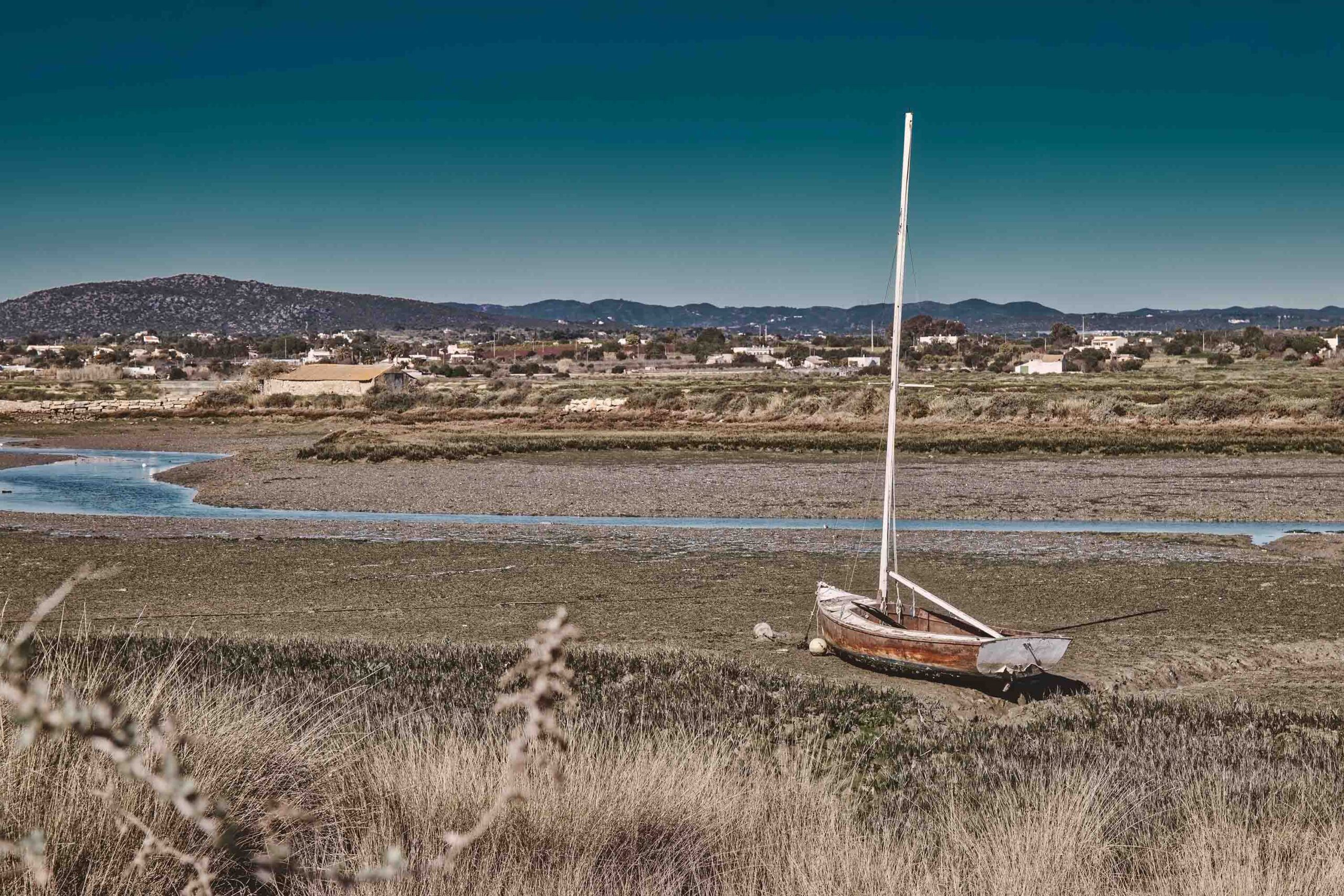


“Swarms of living creatures will live wherever the river flows. There will be large numbers of fish, because this water flows there and makes the salt water fresh; so where the river flows everything will live. […] Fruit trees of all kinds will grow on both banks of the river. Their leaves will not wither, nor will their fruit fail. Every month they will bear fruit, because the water from the sanctuary flows to them. Their fruit will serve for food and their leaves for healing” (Ezekiel, 47:9, 12).
The symbol pictures water flowing from the Temple of God-at first a tiny stream which grows deeper and deeper, and as it does so it brings life to dead areas and restores fertility to damaged or barren ecosystems. Through living water comes healing, but to receive new life we too must step into the water and become part of God’s river of life, taking part in the healing of creation.
The context of this text is one of political, social, theological and national catastrophe. Jerusalem has been destroyed by the armies of Babylon. The Temple of Solomon has been razed to the ground. Many of the people of Israel have been taken into exile in Babylon, carried far from their homeland.
The Book of Ezekiel is set during the Babylonian exile (Ezekiel, 1:1), after the fall of Jerusalem at the beginning of the 6th century BC. Ezekiel, a priest, is among those exiled and is commissioned by God as a prophet (Ezekiel, 3; 33:1-9).
His message initially centers on God’s judgment against Israel’s idolatry and injustice, interpreting the fall of Jerusalem and the destruction of the Temple as divine judgment carried out through the Babylonian armies (Ezekiel, 7-10; 21). Yet Ezekiel’s message does not end in judgment: God has not abandoned his people. Ezekiel proclaims that God’s sovereignty is not confined to the Temple; God remains present with the exiles, and restoration is promised.
VISION OF RENEWAL
Significantly, the Temple is at the center of Ezekiel’s vision of renewal (Ezekiel, 40-47). Although it had been profaned and destroyed, it is now transformed into a symbol of blessing, healing, and God’s presence throughout creation. The wonderful river described in Ezekiel, 47 embodies this future renewal: when the Lord dwells again among his people, the land itself will be restored.
Ezekiel has been describing the building of a new temple in the desert from chapter 40 through chapter 46. This new temple is impressive but empty and lifeless. It is only in chapter 47 that life finally appears. In this passage, the prophet is brought in a vision to the entrance of a future, idealized temple. From beneath its threshold flows water that begins as a trickle and becomes an ever-deepening river-too deep to cross.
This river courses through lands once barren, transforming deserts into fertile deltas, restoring fish, vegetation, and even healing the salt-laden waters of the Dead Sea. The Hebrew verb ûb (“to return”) may be imagined spatially as a turning point, comparable to a place along the Jordan River where fish could turn back before being carried into the lifeless waters of the Dead Sea. This notion also has a deep theological meaning of conversion. The imagery is vibrant and dynamic, and yet its ecological significance often gets overshadowed by purely metaphorical readings.
In many Christian traditions, Ezekiel, 47 has been read primarily as a future eschatological promise–a depiction of the messianic age when God dwells fully with his people and renews all things. The prophet’s vision is, however, also for healing now, as well as anticipating a broader cosmic restoration.
The River of Life represents a renewal that extends beyond human salvation to include the healing of creation itself. The trees whose leaves are “for healing” suggest not only physical sustenance but holistic flourishing, encompassing both humanity and creation. Ezekiel, 47:1–12 contains a distinct environmental message that speaks of global healing, renewal, and transformation of life; the interdependence between humanity and the natural world; and hope through action in caring for the earth, our common home.
WATER AS LIFE
Ezekiel’s vision reframes water– the most basic element of life–as a divine agent of renewal, justice, and hope, a life-giving force flowing from God’s sanctuary. In Ezekiel’s time, water was a symbol of divine presence and blessing. Great civilizations depended on mighty rivers such as the Nile, as well as the Euphrates and the Tigris, which were two of the rivers that watered the Garden of Eden (cf. Genesis, 2:10). The water of the oceans too is teeming with life!
The vision begins with a small trickle–droplets of water flowing from the place of prayer and sacrifice. From a tiny stream it grows to an unstoppable river–the first marvel. The river grows as it flows from the Temple, nourished by the worship and prayers of God’s people.
But the second marvel is greater still. The river does not merely sustain life; it restores entire ecosystems. The prophet saw “on the bank of the river a great many trees on one side and on the other…. This water flows towards the eastern region and goes down into the Arabah, and when it enters the sea, the sea of stagnant waters, the water will become fresh” (Ezekiel, 47:7,8).
While describing how the river flows into the “sea of stagnant waters” the prophet is referring to the Dead Sea, one of the most lifeless places in his region. So powerful is this river’s water that the salt waters will become fresh and teem with life.
Ezekiel’s vision decisively reconfigures the meaning of the Temple. In Israel’s cultic tradition, the sanctuary was the place of sacrifice, where blood–the bearer of life–was shed for reconciliation. Blood signified both judgement and mercy, reminding the people that life was both costly and fragile.
In Ezekiel, 47, however, the dominant image is no longer blood flowing toward the altar but water flowing outward from the Temple threshold. Holiness is expressed primarily through generative abundance. Divine presence does not consume life; it releases it.
This shift from blood to water is both theologically and ecologically significant. Blood belongs to the logic of survival within brokenness; water belongs to the logic of renewal and flourishing. Ezekiel does not reject sacrificial theology, but situates it within a wider horizon. Reconciliation with God results not only in restored worship but in renewed land, healed ecosystems, and abundant life.
Ethical implications follow naturally: if God’s presence manifests itself as life-giving water, authentic worship cannot be confined only within ritual observance. Faithfulness must be measured by its impact on all conditions that sustain life. Care for creation thus emerges as a direct consequence of a restored relationship with God. Hope for renewal and healing starts in the place of prayer, worship, and sacrifice. The tiny drop of hope begins in our own lives, in our repentance and transformation.
NEW CREATION
Ezekiel’s claim that fresh water will make salt water become fresh (Ezekiel, 47:8–9) is deliberately shocking–it names something ecologically impossible in order to proclaim something theologically decisive. The prophet is not describing a natural process; he is announcing a divine reversal.
The Dead Sea symbolized death: no fish, no plants, no outflow–a place where life goes in and dies. Salt water represented sterility and judgment. By declaring that the fresh water heals the salt sea, Ezekiel echoes Genesis imagery, where God brings order and life out of chaotic waters.
This is a new creation. Ezekiel could have said the river bypasses the Dead Sea. Instead, it enters it. The point is theological: divine life flows into the most dead and hopeless of places. The Hebrew verb used (rapha) means to heal, restore, make whole. Life is renewed not through human management but through divine action interacting with the created world. Salt water becomes fresh not by human management but by divine healing. God does not bypass the place of death–God enters it.
The trees which bear fruit every month represent a form of life that has moved beyond scarcity and seasons of lack. Like the freshening of the Dead Sea, this image is intentionally non-ordinary–it signals restored creation, not improved agriculture.
Fruit trees are naturally seasonal and vulnerable–to drought, pests, war, and famine. Ezekiel is saying: in God’s restored order, life is unbelievably abundant. The trees bear fruit “because the water flows from the sanctuary.” Their productivity does not depend on rainfall patterns or soil conditions, but on continuous divine presence.
The imagery deliberately recalls Eden, yet it exceeds it. Eden had trees “pleasant to the sight and good for food” (Genesis, 2:9), while these future trees have twelve harvests a year! This is not nostalgia; it is amplified restoration–Eden has been reopened. John the Apostle later echoes Ezekiel, presenting the river and the Tree of Life as the final vision of cosmic, ecological, and even political healing (cf. Revelation, 22:2). Published in the Season of Creation-Celebration Guide 2026