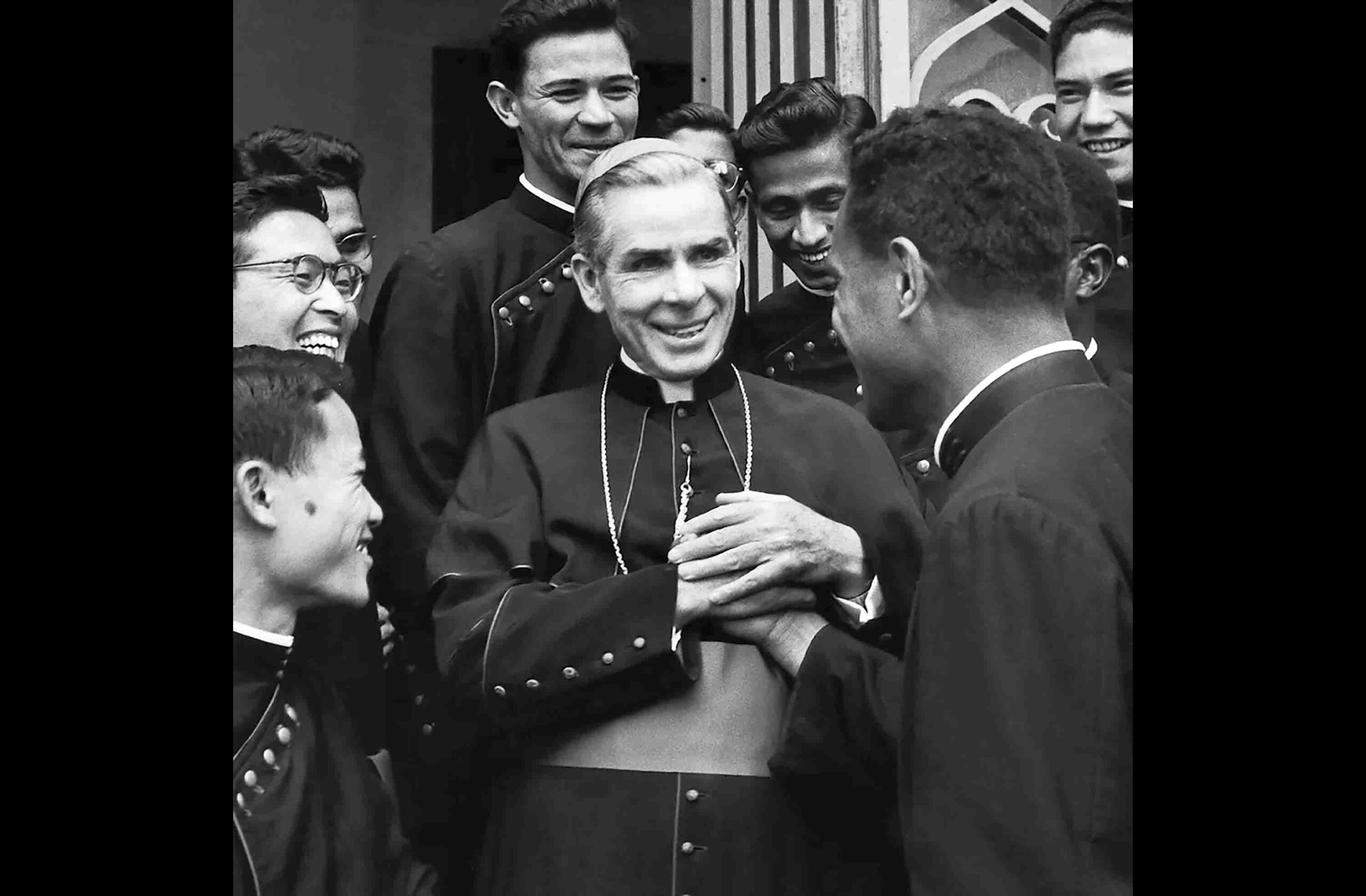

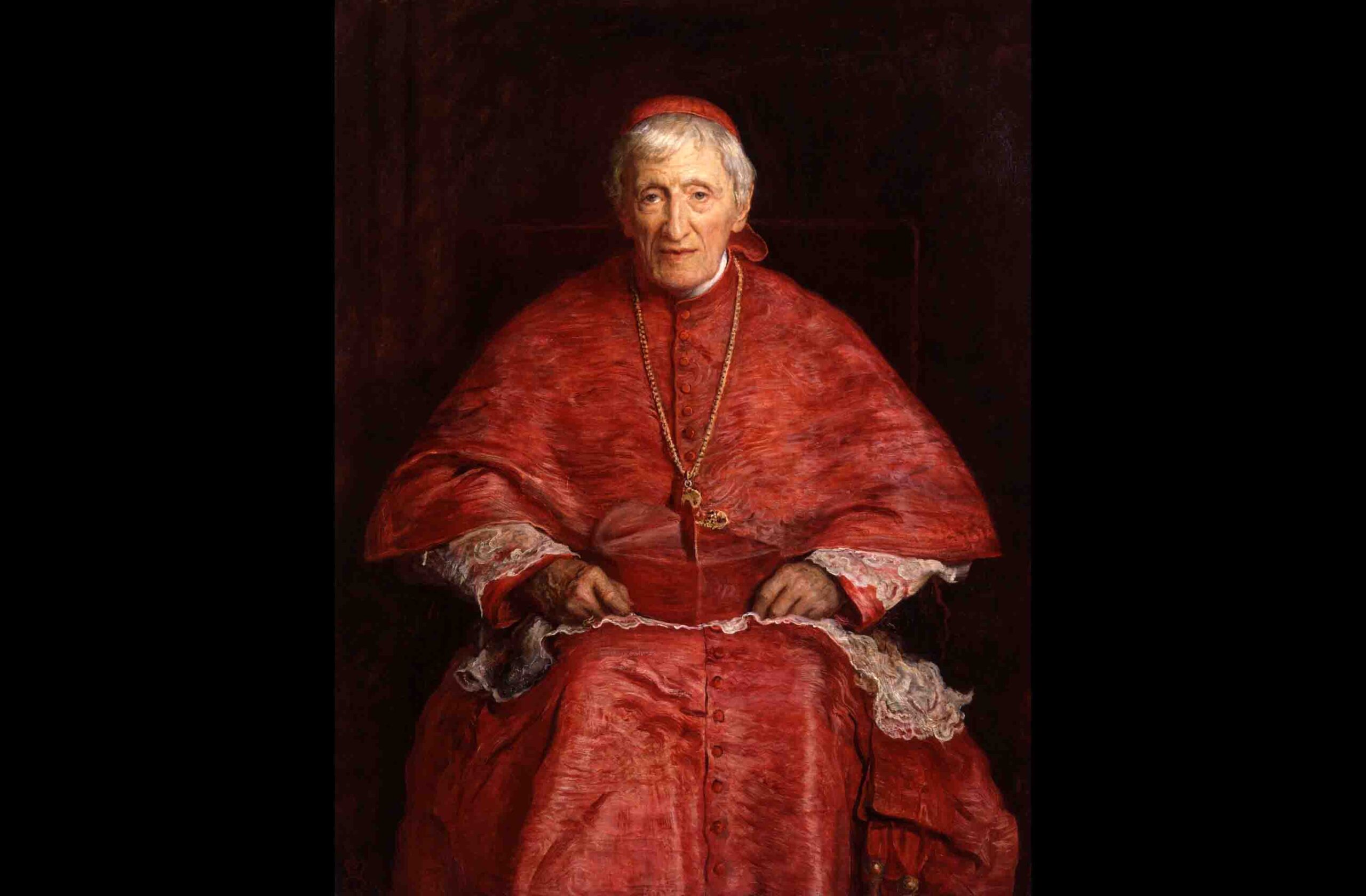
The Vatican II era has fostered renewed hope in the Church; multiple examples emerge when one surveys this remarkable six-decade period (mid-1960s to present). Three unique examples of cardinals associated with the Council are presented here.
John Henry Cardinal Newman (1801-1890) was recently declared “Doctor of the Church” by Pope Leo XIV (2025); he is the thirty-eighth person (four women and thirty-four men) to have this prestigious title. This designation signifies the person’s outstanding holiness, exceptional theological depth, and profound writings that have advanced the understanding of spirituality, faith, renewal, hope, and theology.
Newman was ordained a Catholic priest (1847), made cardinal by Leo XIII (1879), beatified by Benedict XVI (2010), and canonized by Pope Francis (2019). Newman’s profound writings foreshadowed many topics treated by Vatican II (conscience, ecumenism, ecclesiology, religious freedom, scripture and tradition). Newman expert, Ian Ker asserts: “Newman has often been called the ‘absent Father’ at the Second Vatican Council or ‘the Father of Vatican II.’”
John XXIII noted Newman’s role in his rationale for convoking Vatican II. Paul VI asserted: “Not only this Council but also the present time can be considered in a special way as Newman’s hour.” Newman’s motto, derived from Saint Francis de Sales, Cor ad cor loquitur (Heart speaks to heart), reflects his understanding that God speaks to the Church’s heart, thus facilitating the heart of the Church speaking to her God and therefore to the hearts of all people of good will.
Newman’s long life and his faith journey are testimonies to a profound hope. His reflections on hope emphasize the importance of trusting in God’s providence, even amid uncertainty and suffering. Along with Newman and his prayer-poem, we fervently implore our God, praying: “Lead, Kindly Light.”
BIBLICAL WISDOM
Augustin Cardinal Bea, a Jesuit priest, was a highly influential figure at Vatican II. Pope John XXIII had requested Bea to serve on the central preparatory commission for the Council. In John XXIII’s view, promoting Christian unity was an important objective of Vatican II. The pope had established the Secretariat for Promoting Christian Unity in 1960 and appointed Bea as its president. He influenced the writing of Unitatis Redintegratio, the Council’s decree on ecumenism.
Bea was an esteemed biblical scholar; he taught at the Pontifical Biblical Institute in Rome and was its rector from 1930-1949. He influenced the biblical encyclical of Pope Pius XII, Divino Afflante Spiritu (1943), and participated in drafting the Vatican II document Dei Verbum on Revelation and the Word of God.
Named a cardinal in 1959, Bea played a pivotal role in Vatican II; he employed his considerable diplomatic skills to bridge differing views because of his natural tolerance and perspectives.
Bea’s skills as a statesman and his biblical scholarship were two great gifts through which he served the renewal of the Church. Bea died in 1968; undoubtedly, his contributions to the Council and Church transformation were immense. He is a model of authentic, hope-filled leadership for the entire Church.
Cardinal Leo Josef Suenens and Pope John XXIII shared common views on the importance of renewal in the Church. Suenens provided an overview agenda for the Council, asserting that the Church needed to examine both internal aspects (ad intra) and external questions (ad extra). Following this two-fold vision, Suenens helped shape two pivotal Council documents: Lumen Gentium, “Light of Peoples” (Church) and Gaudium et Spes, “Joy and Hope” (Church in the Modern World).
Suenens contributed to the renewal of the life of religious women through his book The Nun in the World. He promoted the collegial dimension of Church authority through Co-responsibility in the Church. He also championed the themes of lay involvement and religious liberty.
STAUNCH FAITH AND HOPE
During World War II, Suenens boldly defied the Nazis while teaching at the Catholic University of Louvain; later his name was found on a Nazi death list. He followed his conviction and hopes: “Happy are those who dream dreams and are ready to pay the price to make them come true.”
After Vatican II, Suenens remained active for thirty years until his passing in 1996. In particular, he was involved in the Catholic charismatic renewal movement, reflecting his episcopal motto: In Spiritu Sancto (In the Holy Spirit). The joyful charismatic movement has inspired hope among Christians across the entire world.
These three Catholic cardinals are admirable witnesses to faith-based hope, expressed in their “participation” in the Second Vatican Council. However, the challenge to be “hope-filled witnesses” is the vocation of all the baptized- whether lay person, religious, or ordained. Faith-based hope seeks to transform all of life!