
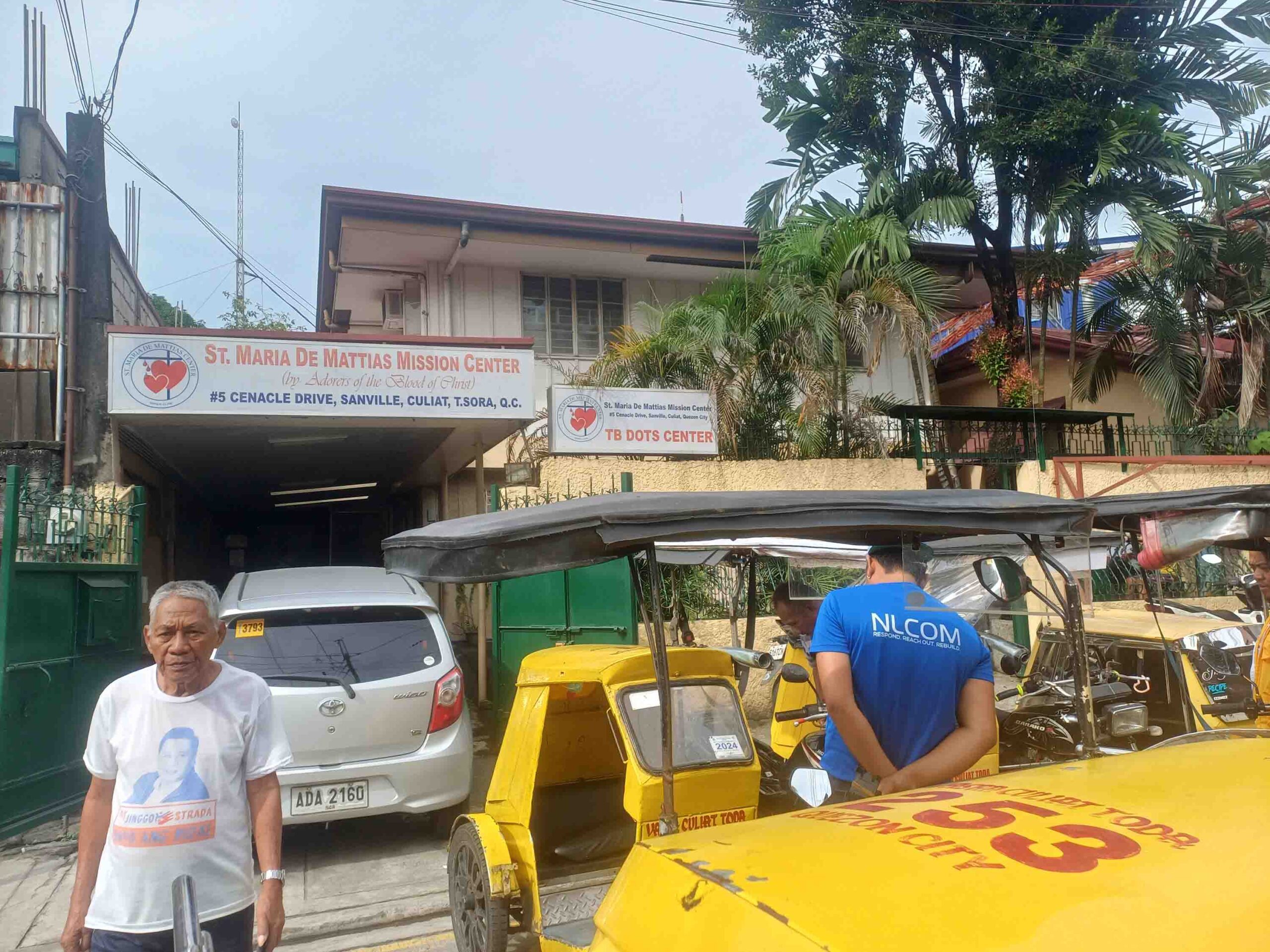
Inside, the clinic is quiet. The air smells faintly of rubbing alcohol, floor wax, and the brewing coffee of the Adorers of the Blood of Christ Sisters. For thirty-one years, this small, unassuming sanctuary has operated on a simple premise: that health is not a luxury reserved for those who can pay, but a basic human right. But outside this gate, in the sprawling, glittering expanse of Quezon City, that premise is tested every single day.
Quezon City is a triumph of modern Philippine development. It is the largest and wealthiest local government unit in Metro Manila, pulling in tens of billions of pesos in annual revenue. It is a metropolis of superlatives: home to massive IT parks, high-end lifestyle malls, sprawling gated communities, and soaring residential towers clad in green glass.
Yet, if you stand on the roof of one of these new luxury high-rises and look down, the geometry of inequality becomes instantly clear. The glittering towers do not stand apart from the poverty of the city; they rise directly out of it. The very people who build these vertical communities, sweep their polished marble lobbies, and transport their residents to work live in the tightly packed enclaves of informal settlements huddled at their bases.
“You cannot feel the wealth of the city in the lives of the poor here,” says Sister Flor Montoja Manga, the congregation’s mission coordinator. It is a quiet indictment of a system where economic growth has bypassed the very hands that constructed it. The wealth is there–it is visible in the neon signs and the clean, air-conditioned luxury of the shopping centers. But for the working-class families of Culiat, that wealth is something to be serviced, not shared.
PRECARIOUS WORK
The central engine of this disparity is not a lack of work, but the precarious nature of the work itself. Most of the patients who line up at the mission center are fully, exhaustively employed. They are construction workers, mall cashiers, security guards, and service staff.
But in the Philippines, these workers are frequently trapped in a cycle known as endo–short for “end of contract.” Under this system, companies hire employees through third-party agencies on rotating five-month contracts. Just before the six-month mark, when Philippine law dictates that an employee must be regularized and granted full benefits, the contract is terminated. The worker is let go, only to apply for another five-month stint elsewhere.
This contractual loop is devastating for public health. Because these workers are never regularized, they are shut out of employer-sponsored health insurance (PhilHealth) and denied paid sick leave.
For a contractual worker, a day spent sick in bed is a day without pay. A day spent waiting in a crowded public hospital is a day of lost wages. Consequently, minor, treatable illnesses–a mild respiratory infection, a small cut, a spike in blood pressure–are systematically ignored until they escalate into medical emergencies.
By denying these workers basic stability, the formal corporate sector effectively outsources its health liabilities to the informal sector. It relies on the labor of a healthy workforce while refusing to pay for the maintenance of that health. When these workers break down, they do not turn to corporate HMO cards; they turn to the Catholic sisters of Culiat.
BRUTAL SURVIVAL
To understand the lifeline the Sisters provide, one must look at the brutal arithmetic of survival on Metro Manila’s minimum wage, which hovers around ₱645 a day.
If a man takes a morning off to visit a private doctor, the consultation fee alone can easily run up to ₱500. A single bottle of antibiotics can cost another ₱400. To seek standard private care is to make a choice between breathing clearly or feeding his family for two days.
At the St. Maria De Mattias Mission Center, the math changes. The registration fee is a nominal ₱50 (less than a dollar). The consultation with Dr. Lourdes Sarmiento, a volunteer OB-GYN who has served here since the 1990s, is entirely free. In the tiny clinic pharmacy, managed by local volunteer Bing Ariola, an anti-allergy tablet costs ₱3, compared to ₱9 at commercial drugstores. If a patient truly cannot afford even that, the medicine is given for free, paid for by donations from quiet benefactors.
But keeping this pharmaceutical lifeline running has been a constant battle against market forces. In 2011, the pharmacy nearly closed its doors, squeezed out by aggressive competition from commercial generic drugstores that began popping up on every major corner in the city.
“But the people asked us not to close,” Sister Linlee Vios recalls. Instead of surrendering to the market, the clinic adapted. “We adjusted the prices, and they became even cheaper. When someone really cannot afford medicine, we give it for free.”
The ₱50 fee is not a dole-out, and that is by design. “Even if you are poor, you have to do your share,” explains Sister Linlee Vios. “This clinic has gone this far because of their contribution. We remind them that this is their clinic.”
This small co-payment transforms the dynamic from passive charity to active partnership. The patients are not beggars receiving alms; they are sustaining members of a collective healthcare cooperative. The ₱50 coin is a token of dignity.
Inside the clinic, the atmosphere is a stark contrast to the transactional coldness of the city outside. There are no automated ticketing systems, no security guards turning away those without proper attire, and no bureaucrats demanding triplicate copies of government IDs.
For Sister Flor, this warmth is entirely intentional. When she speaks about the people who walk through their doors, there is no trace of the detached, clinical language of healthcare administrators. Instead, she speaks of them as partners in a shared survival.
“Dear Patients, you are the heart of our Mission Clinic,” Sister Flor says. “Our clinic exists because of you–to bring compassionate care, hope, and healing to those who need it most. Thank you for your trust and for allowing us to journey with you in caring for your health. Your courage, resilience, and smiles inspire us to continue our mission of service.”
These are not empty platitudes; they are the literal blueprint of the space. On Saturdays, the waiting area is cleared of medical charts to make room for children’s catechism. On other days, the room is used to run mental health seminars and workshops on navigating social media.
LAY VOLUNTEERS
But the Sisters do not run this sanctuary alone. The clinic’s survival relies heavily on lay collaborators and volunteers–like Bing Ariola in the pharmacy–who often come from the very same neighborhoods as the patients. For these volunteers, the clinic offers monthly spiritual formation, turning their daily work into a shared vocation.
Sister Flor is quick to point out that these volunteers are the backbone of the entire mission. “To our dear collaborators, with grateful hearts, we thank you for being our partners in mission,” she shares, expressing a deep gratitude for the team beside her.
“Your commitment to your ongoing formation in faith and your generous service reflect God’s love in action. Your willingness to learn, grow, and serve alongside us strengthens our mission and brings hope to the communities we accompany. Together, we continue to build a culture of compassion, justice, and faith.”
The sisters have realized that in a community living under constant economic stress, health cannot be separated from spiritual, emotional, and social well-being. “We create programs not based on our will,” says Sister Flor, “but on the needs of the people we serve.”
This responsiveness has turned the clinic into a genuine community hub. Many of the local youth who were once treated here as children now return as young adults, donating their time or a portion of their first paychecks to keep the pharmacy stocked. It is a self-sustaining ecosystem of mutual aid, surviving quietly in the cracks of a hyper-capitalist city.
In the afternoon, the sun is high and unforgiving, baking the concrete of Culiat. A man steps out through the heavy iron gate of the mission center. In his pocket, he has a blister pack of cough medication and a bottle of multivitamins. His chest feels lighter, if only because he now has a plan, a diagnosis, and the reassurance of a doctor who looked him in the eye and treated him with respect.
He climbs back onto his tricycle, kicks the starter, and feels the engine rumble to life beneath him. Within minutes, he is back on the main road, merging into the roaring road, swallowed once more by the dust and the glittering promise of the wealthy city.
The St. Maria De Mattias Mission Center is often described as a work of charity. But looking at him as he rides back into the exhaust-choked streets, a different truth emerges. The clinic is not just helping the poor; it is quietly keeping the city’s wheels turning. Without these sisters, and without the volunteer doctor who gives their time, the human cost of Quezon City’s rapid growth would be completely unsustainable.
The small, back-alley clinic is not a monument to the city’s generosity. It is the quiet, essential scaffold holding up the very skyline that threatens to block out its sun.