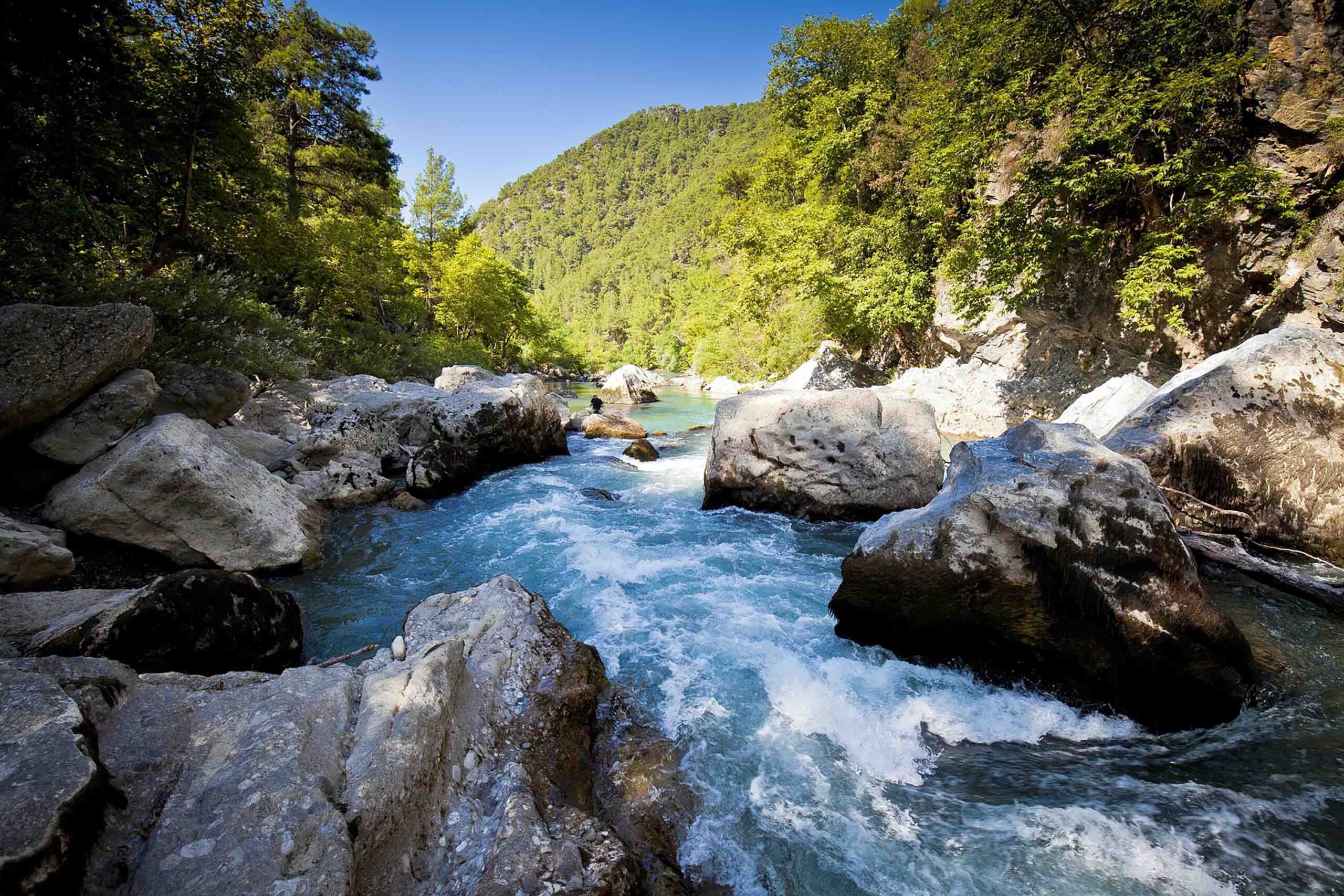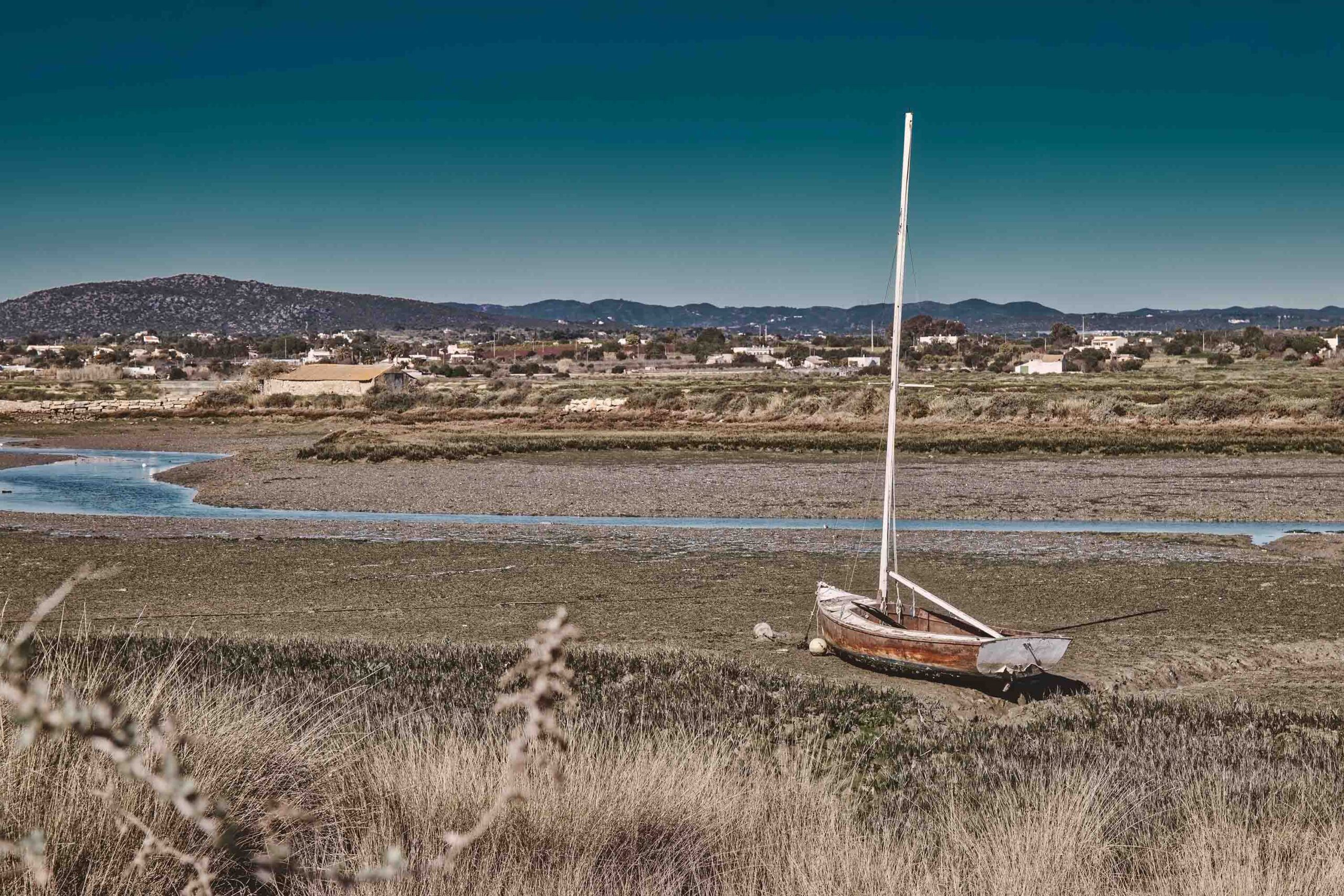

The survival and health of human beings depend directly on water, and so does the production of food, energy and many consumer goods. The Earth’s biodiversity, the functioning of the various biomes and of the atmosphere, the cycles of water and climate remind us of how versatile and fundamental this precious creature of God is. When astronomers observe space to identify and study other planets, they often note that there is no apparent trace of water, an indispensable element for life as we know it on Earth: not all the planets have this precious gift that was the cradle of life. A fortiori, we should thus be more aware of its multifaceted value.
This Dicastery, repeating the words of Pope Francis, invites “to reflect on the symbolism of water in the main religious traditions”, and likewise urges “to contemplate this resource that, as Saint Francis of Assisi wrote, is multo utile et humile et preziosa et casta (very useful and humble and precious and chaste)”.
It is fascinating to trace the value of water in the Old Testament–the act of creation at the beginning of Genesis, the water that purifies or that is a sign of blessing and fertile land, or even the punishment caused by drought or deluge–and in the New Testament.
There are many connections between water and healing (cf. 2 Kings, 5:8-14; John, 5:2-4; John, 9:6-11). Although precious, water does not completely quench thirst, and serves Jesus to teach that man cannot be limited to his material needs (cf. John, 4:13-14; John, 7:37-38).
It is equally fascinating to study and understand the role of water in the life and tradition of the Church. Think, for example, of the Sacrament of Baptism. First of all–it cleanses from sins and gives a new birth of innocence by water and the Holy Spirit–and then of liturgical and devotional gestures such as the sprinkling with holy water, the liturgy of the night of Holy Saturday, the lasting connections between water and healing (for example in Lourdes), the presence of the source of water at the entrance of many churches to make the sign of the cross, and finally, the pilgrimages to Lourdes or to the banks of the Jordan.
Water is “a symbol that touches the deepest experience of humanity, which indicates a transcendent value. Consider that, for example, the fundamental text of Hebrew-Christian faith, the Bible, has 1500 verses bathed by water, in which water is spoken about. (…) There is a striking element in the heart of the Old Testament’s language, Hebrew: a single word in Hebrew, nefesh, indicates at the same time the throat and the soul, the living being”. There is a deep connection between the thirsty throat and the soul that needs the infinite, the eternal.
In many religions, water has been and is still perceived as holy and connected to divinities and their benevolence. The Nile, the Ganges, and the well of Zamzam are eloquent examples, among many others. And there is very often a fountain at the entrance of a religious building for ritual purification.
SOCIO-CULTURAL AND AESTHETIC VALUE
Water also has a ‘socio-cultural value’. Let us not forget the fundamental role of water in driving the development of numerous civilizations. Just think of people’s relationship with rivers, lakes and seas, human settlements, toponymy, and how they can inspire literature, music and more generally artistic expression. Water is a carrier of the collective memory of humanity.
Pope St. John Paul II noticed that “the aesthetic value of creation cannot be overlooked. Our very contact with nature has a deep restorative power; contemplation of its magnificence imparts peace and serenity. (…) The relationship between a good aesthetic education and the maintenance of a healthy environment cannot be overlooked”. This applies particularly well to water, a source of beauty and wonder.
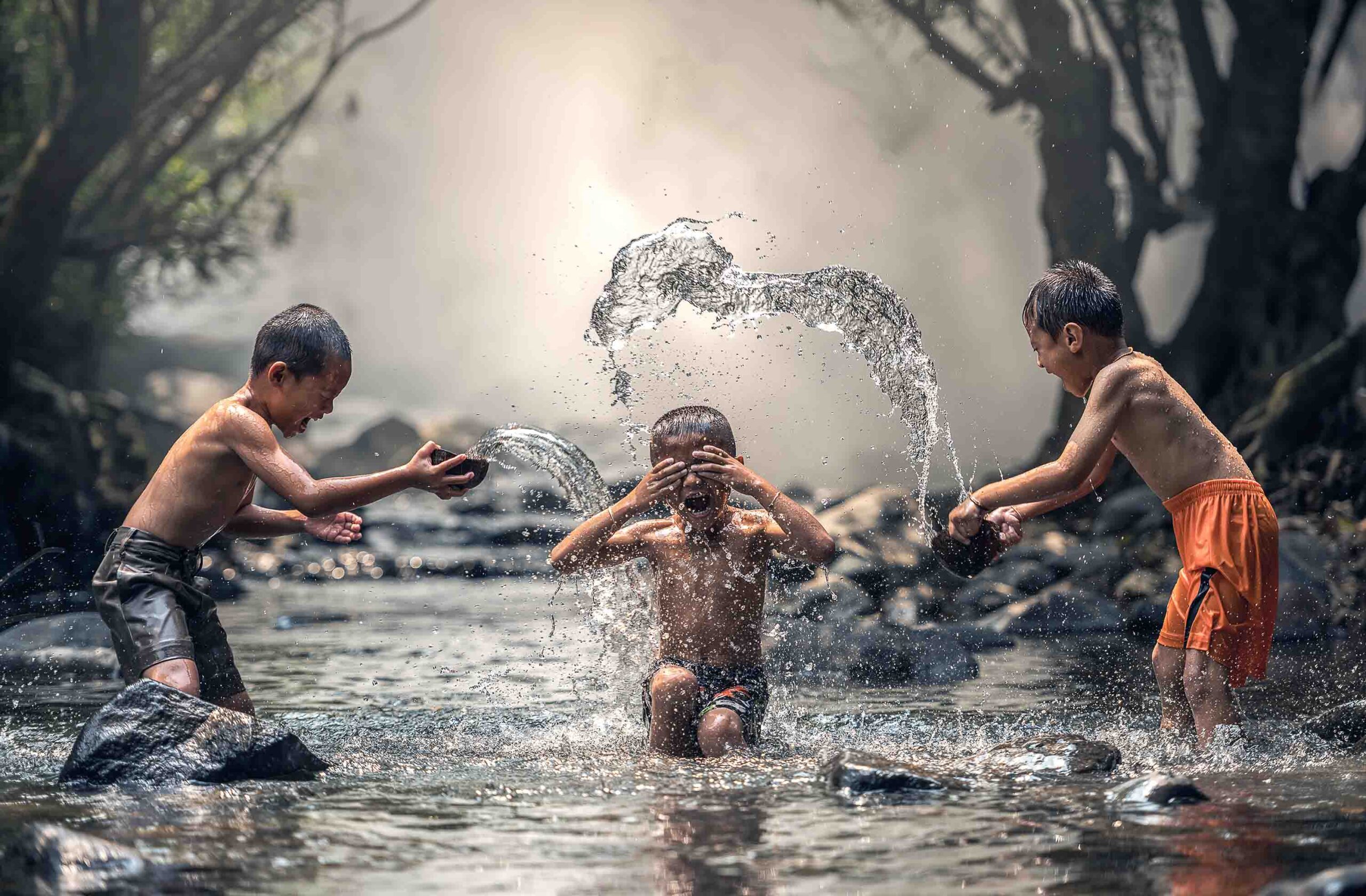
This cultural dimension also involves daily life with its customs, as well as the navigation and cultural exchanges between civilizations. Farming activities and fishing are a primary source of sustenance for many populations, and these activities shape local social and cultural cohesion. Hospitality gestures (cf. Genesis, 24:32), moments of public life and propitiatory rites make use of water sprinkling, and again water (fresh or saltwater) is at the center of commemorations (such as the celebration of the season of rains or monsoon festivals in some countries) and many recreational and sports activities.
VALUE FOR PEACE
Water is a connector, and we can therefore speak of an ‘institutional value’ of water, as well as of a ‘value of water for peace’, since water is an element that drives the creation of bridges, collaborations and dialogue. Also, think of the role of the well in the social life of Moses (cf. Exodus, 2:15) and of Jesus (cf. John, 4:5-15). With Abraham, wells, which were a point of contention, could become the object that triggers negotiation, agreement, development and sharing (cf. Genesis, 21:19-30), as it was also for Isaac (cf. Genesis, 26:12-22).
The ways in which water is managed in many rural areas imply a high involvement for local communities. For example, decisions include whether to dig a well, how to use or share a water source, access to a specific fishing area, or how much water to tap from a river (generally establishing a certain water tenure regime).
Community management and the frequent presence of various committees in charge of settling disputes (if not a real court), is an important part of social life and contributes to empowering the population, probably more than it occurs in cases where the management necessarily takes place at a higher level (e.g. basin level management, private or public companies managing water in large cities) thus bringing up the challenging reality of how multiple communities interact with ‘the whole’.
Moreover, freshwater, both surface and groundwater, is largely transboundary. Just think of how much peace would be gained if countries could collaborate for water in various areas of the world more than is currently the case. In critical situations, tension among competing parties over access to water, its uses, and allocation can lead “to outright conflict that can become violent if not adequately addressed. While water is very rarely the single–and seldom the major–cause of conflict between or within nations, it does have the potential to exacerbate existing tensions as well as to impede progress toward resolving already existing broader conflicts”. Consequently, well-proven transboundary water cooperation mechanisms are an important feature of peace and of the prevention of armed conflicts.
Joint river mechanisms and commissions established by water agreements may foster communication and dialogue, thus improving relationships among groups beyond their usual role of facilitating a joint management of the water resources. A body of norms enshrined in treaties and customs applies to internationally shared rivers, lakes, seas, basins, and groundwater resources. These approaches – oriented towards mutual understanding, sharing information, searching for and implementing solutions together–constitute the so-called ‘water diplomacy’.
ECONOMIC VALUE
In many cases, access to water suitable for drinking (as well as for other uses including agriculture, building and industry), its supply and transport, processing and purification operations have a cost. It is therefore right to acknowledge “its role in production and thus in economy”, and to acknowledge that water has an ‘economic value’.
Such acknowledgments can be used to: encourage all users to constantly seek the smallest negative impact on the environment, underscore how much humanity loses by not respecting nature, and how much it would gain by protecting it. Start from the assumption that frequently, as long as something is not measured and quantified, nobody takes it into account, and nobody cares about it. Provide economic criteria useful in calculating and planning investments and incentives. Much can be achieved by applying benefit-cost analysis of water management, identifying trade-offs, and being transparent with them, along with subsidies. Understand that there often is a connection between filtering and purification: enhancing wastewater treatment reduces pollution and consequently the need for filtering in future withdrawals. Stimulate water saving if the principle of total costs coverage (including environmental costs) is applied, especially for intensive and polluting uses. Illustrate how much humanity loses by not respecting nature (costs generated by massive water pollution, from improved filtering and treatment to medical expenditures), and how much it would gain by protecting it, starting from the assumption that, as long as something is not measured and quantified, nobody cares about it.
However, this assumption can be misleading, and while considering what is quantifiable, we should not neglect key elements that are more difficult to measure, such as the happy and meaningful life a community can achieve also thanks to adequate access to water. Published in Aqua fons vita –Orientations on water: symbol of the cry of the poor and the cry of the earth, Vatican City, March 2020.