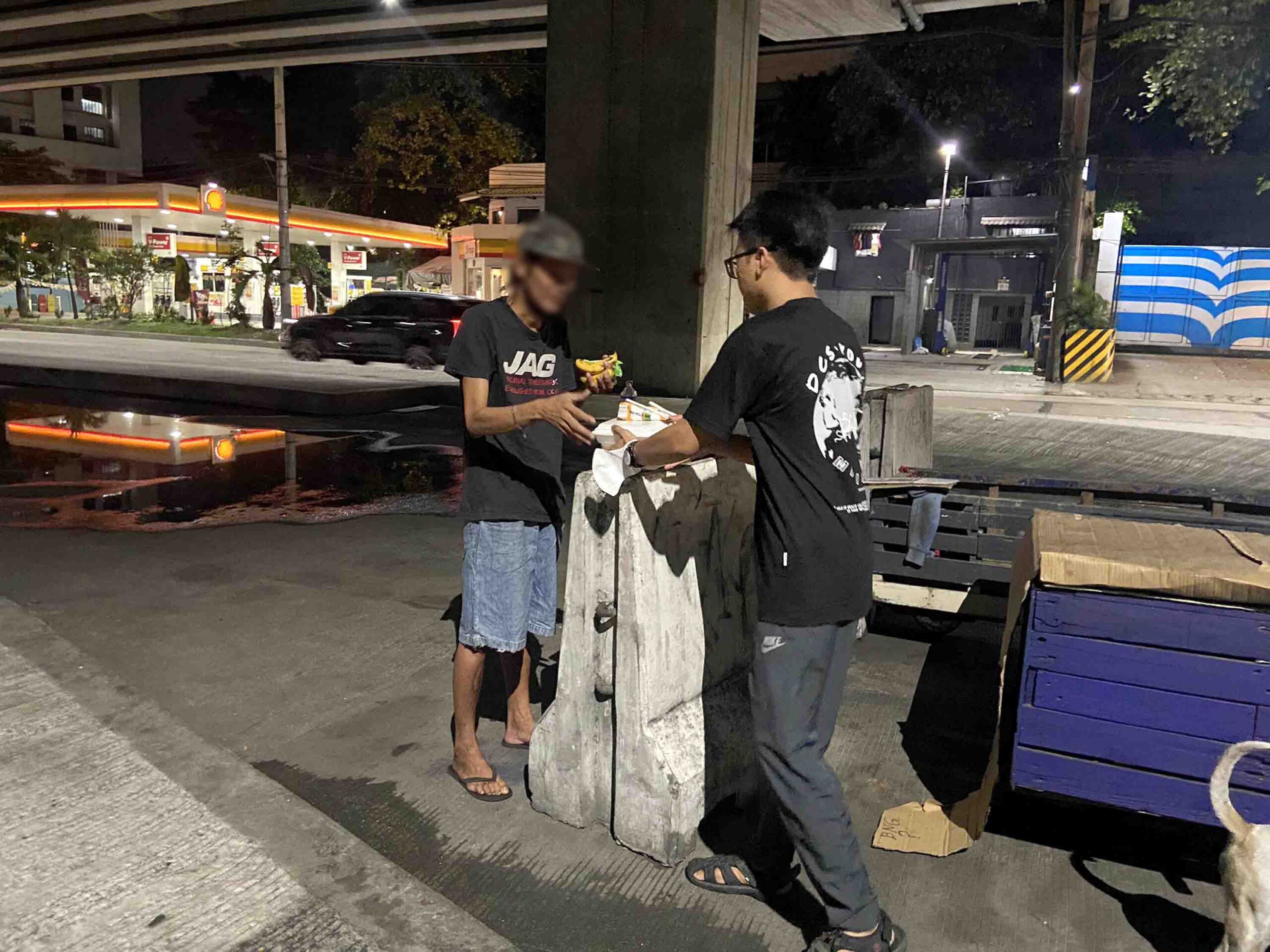

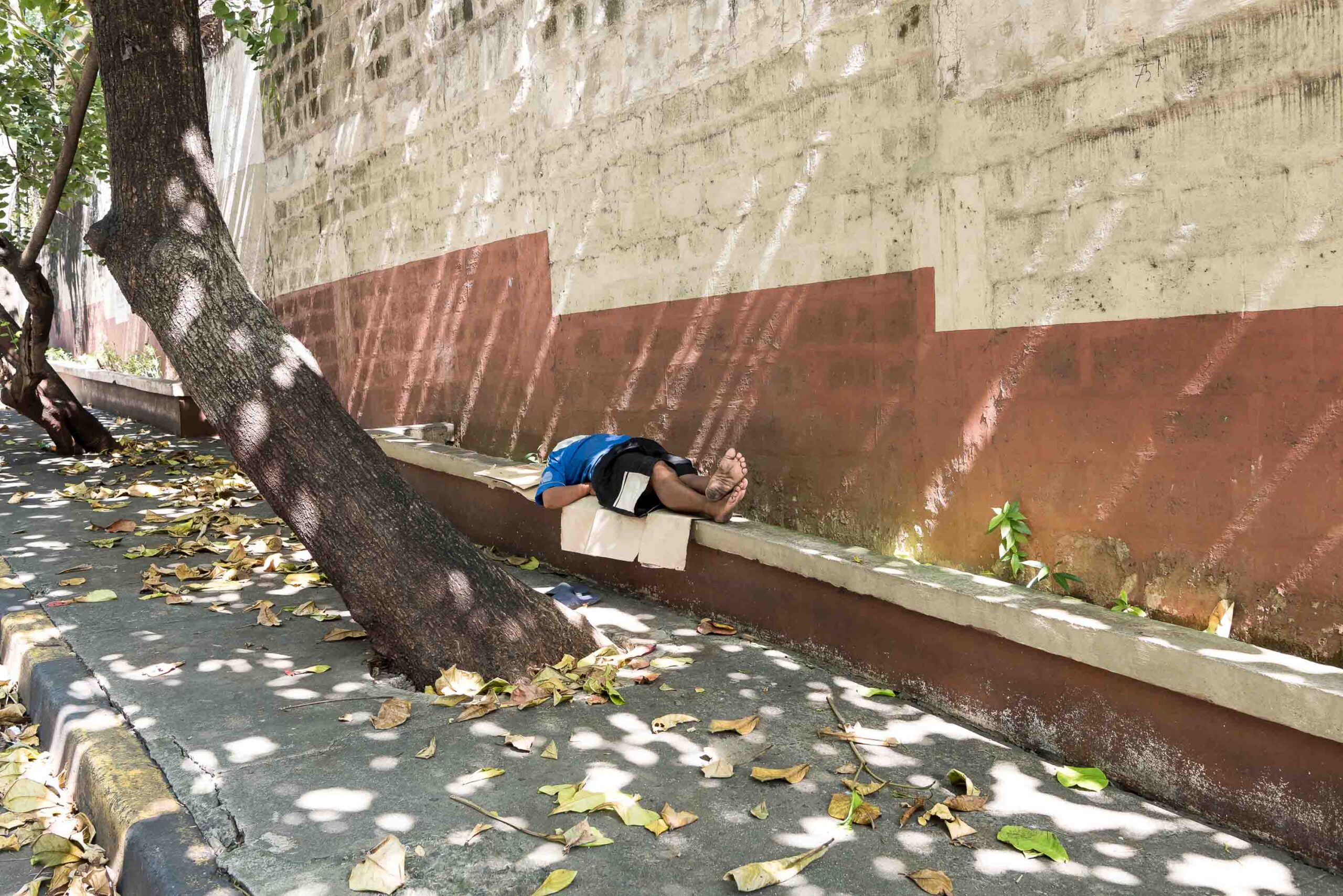
Shortly after we started our regular evening outreach to people living on the street–sharing some food and chatting with them–we agreed as a community that we would refer to them as ‘our friends,’ a simple, general term, yet with various implications.
First, we wanted to avoid any expression that could be associated with their living conditions and try to come to their level. Secondly, our intention was, and is, to try to establish a kind of relationship that may bring us closer to each other.
One evening, as we were talking with three men, who like calling each other ‘brothers’ and have settled together on a fixed place on the pavement, we met a certain woman. She was in her early forties, formally dressed, nice-looking, and wearing a work tag around her neck. She approached us quietly as we were having our conversation and, with a gentle smile, thanked us for what we were doing.
STANDING NEAR US
It was immediately clear to us, due to her informal way of greeting them, that she knew those men and was familiar with them. One of them was quick in telling us, “She is our friend!” During those few minutes we remained there, she remained standing near us, silent, and listening to our conversation.
However, what struck us most was the fact that when we passed by, on our way back home after about half an hour, we found her still there, among those men, sitting on the pavement. When she saw us, she waved at us with the same gentle smile.
As we were conversing along the way, we realized that there was something remarkable about that lady. One of the two novices who were with me added that one evening he had seen her at the same place as he was going back home, but he did not know anything about her. All these impressions made the encounter with her quite intriguing.
On one of the following evenings, as we reached the same spot, I decided to satisfy my curiosity. I invited one of the three men to move away a bit from the others and asked him in private about that woman. This is what emerged in our conversation.
PAINFUL EXPERIENCES
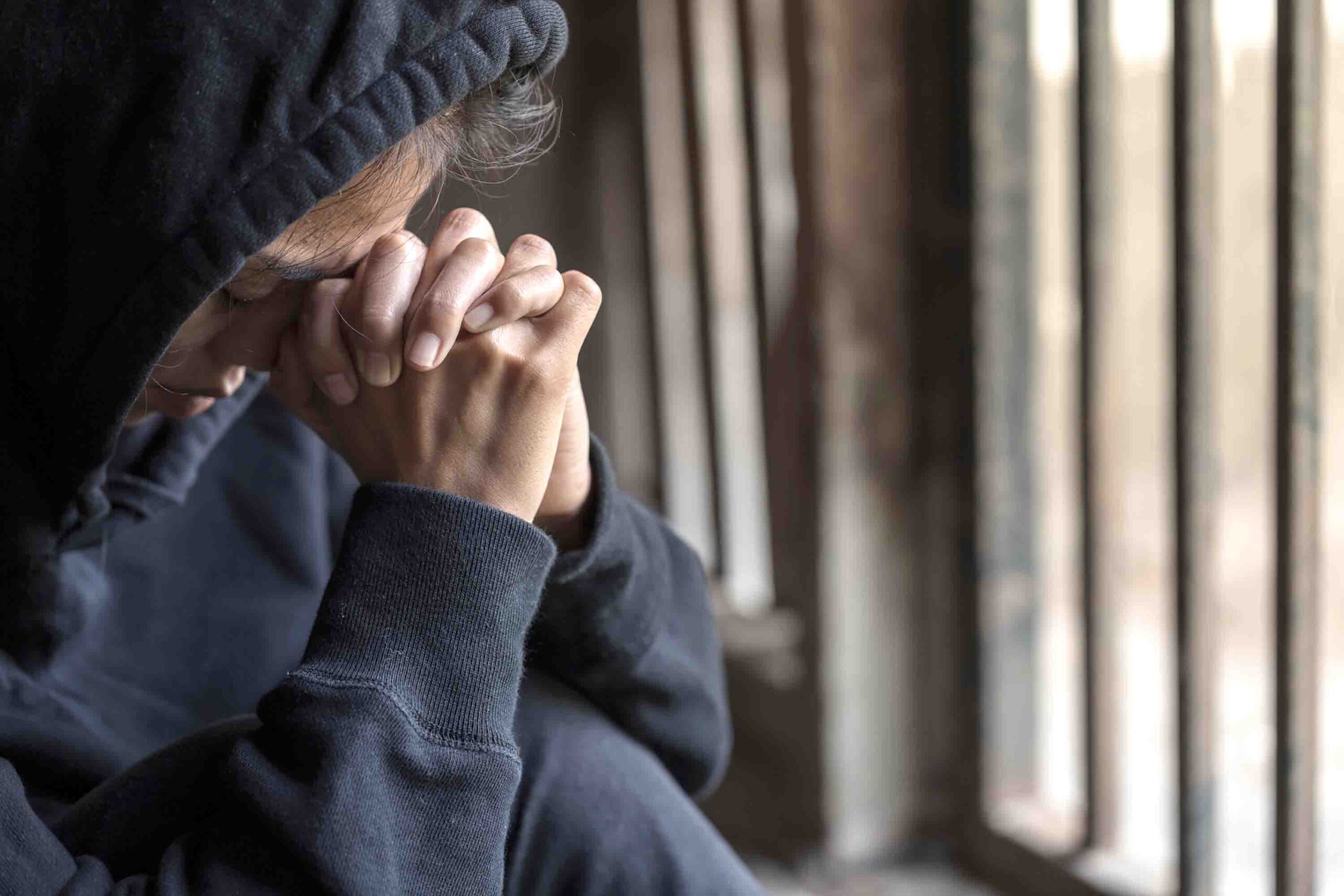
“Oh, Janet (the names of people and places have been changed), she is our friend; she works in a company in Caloocan and is married with four children.” “How did you come to know her?” The face of Danny suddenly turned serious, and he continued, “She is a Muslim from Mindanao, married to a Christian, but the man is a drunkard and drug addict. He frequently becomes violent and beats her. She lives just a few hundred meters from here, along that road to the left.” Then he took a deep breath and said, “One day, late in the evening, when she alighted from the bus on the other side, she crossed the road and came to us. She looked sad and distressed, and with tears in her eyes, she began to narrate some of her painful experiences with her husband. At the end, as she felt some relief, she asked us, ‘Can I stay with you tonight?’ This is how we welcomed her!” As Danny noticed a reaction on my face, he candidly responded, “We slept separately!” Needless to say, I was caught by and became amazed at the whole story.
He then informed me that she stops regularly to greet them; now and then, she also brings some food and occasionally sleeps at their place. He then added, “When she goes to Dubai to work for some months as a domestic helper, she makes video calls to greet us, and we chat a bit! When she is away, we really miss her so much!”
I could only comment on it, “She has indeed become your friend! Now I understand what you said the other day.” To confirm what I had just expressed, he then reported a significant incident.
“One evening, as she was here with us, the husband arrived with one of the children. When he found us together, he began to shout angrily at all of us. Steve stood his ground and moved forward to confront him and said, ‘Instead of shouting like a madman, ask yourself why your wife does not want to go home and prefers to stay with us! Shame on you!’”
We thought that by using the word ‘friends’ to refer to people living on the street, it would motivate us to ‘come down’ to their level; however, what we did not expect was that through a testimony like this one, we are the ones who are ‘taken up’ to their level! In here is exemplified the deep truth of the words of Pope Leo XIV who invites us to see, “the marginalized as new spiritual teachers.” (Dilexi Te, 63)