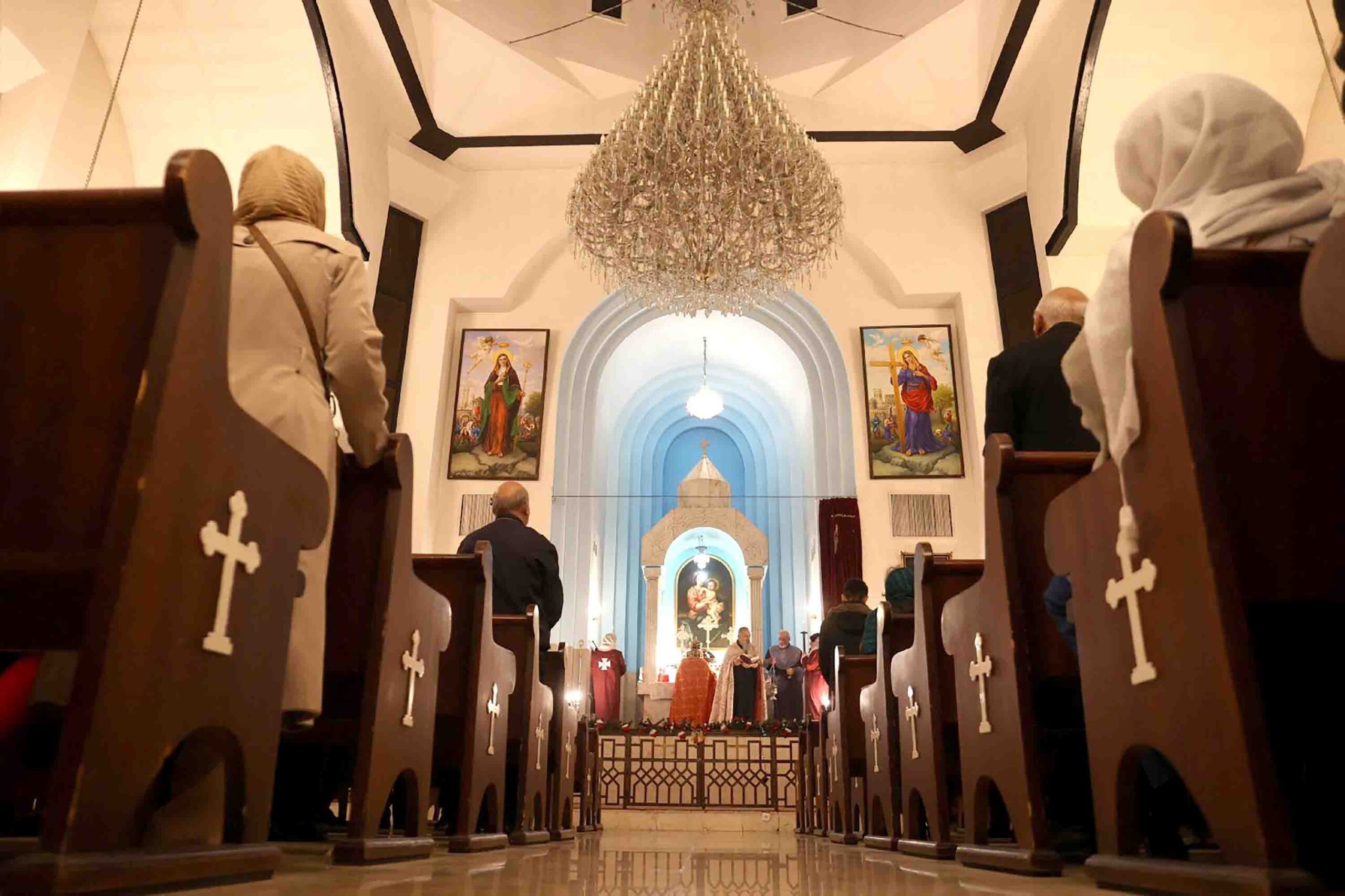

Christianity in Mongolia began with the spread of Nestorian communities in the Far East. They were followers of the Syriac tradition and followers of the teachings of Nestorius, bishop of Constantinople from 428 to 431. [He was a prominent theologian whose Christological views sparked significant controversy. Influenced by the Antiochene school, he emphasized a clear distinction between Christ’s divine and human natures, opposing the term Theotokos (God-bearer) for Mary, arguing that she gave birth to the man Jesus, not God himself.] These communities brought the Christian faith to Central Asia via the Silk Road in the 6th century, during which time several tribes converted. When Genghis Khan united the tribes and founded the Mongol Empire in the 13th century, Nestorians held official administrative positions.
The first Western Christian missionary authorized to enter the East Asian country was the French Dominican Father Barthélémy de Crèmone, who arrived in Karakorum in 1253 during a diplomatic mission on behalf of the King of France.
In 1271, Kublai Khan asked Pope Gregory X to send 100 missionaries, but Rome sent only two, who failed even to reach their destination. The Mongol leader then embraced Tibetan Buddhism, which is still practiced by 51.7% of Mongols today.
MISSION SUI IURIS
In 1922, Pope Pius XI established the Mission sui iuris of Outer Mongolia (corresponding to present-day Republic of Mongolia), reducing the territory of the Apostolic Vicariate of Central Mongolia in China (now the Diocese of Chongli-Xiwanzi). In 1924, the Mission sui iuris of Urga was renamed. After the proclamation of the pro-Soviet Mongolian People’s Republic in 1924, the Christian presence in the territory was eliminated until 1992, when the new Republic of Mongolia, born from the democratic revolution of 1990, established diplomatic relations with the Holy See, and the Mission sui iuris of Ulan Bator was established.
The Congregation of the Missionaries of the Immaculate Heart of Mary (known as the Scheut Missionaries) was charged with evangelization and the establishment of an ecclesiastical structure in Mongolia. The mission was led from its inception by the Filipino missionary Wenceslao Padilla (died in 2018), appointed Apostolic Vicar by Pope John Paul II in 2002 and Apostolic Prefect of Ulan Bator the following year. When Scheut’s first three missionaries arrived in the Mongolian capital in 1992, there was not a single Catholic in Mongolia, and their evangelization work had to start from scratch, amidst linguistic and cultural difficulties.
Their apostolic work, and that of other religious congregations that had arrived in Mongolia in the meantime, began to bear fruit. By 1995, there were 14 Mongolian Catholics. Little by little, the first local Christian communities began to take root, and in 2016, the first Mongolian priest, Father Joseph Enkhee-Baatar, was ordained. Currently, the Catholic community is very small, consisting of 1,500 baptized. There are eight parishes and one chapel, five of which are located in the capital and the others in more remote areas.
The predominant pastoral activity in the missionary service remains its commitment to integral human development projects in the social, educational, and healthcare sectors. The Catholic Church operates a technical institute, two elementary schools, and two kindergartens, a medical clinic that provides care and medicine to those most in need, a center for people with disabilities, and two retirement homes for abandoned and impoverished elderly people.
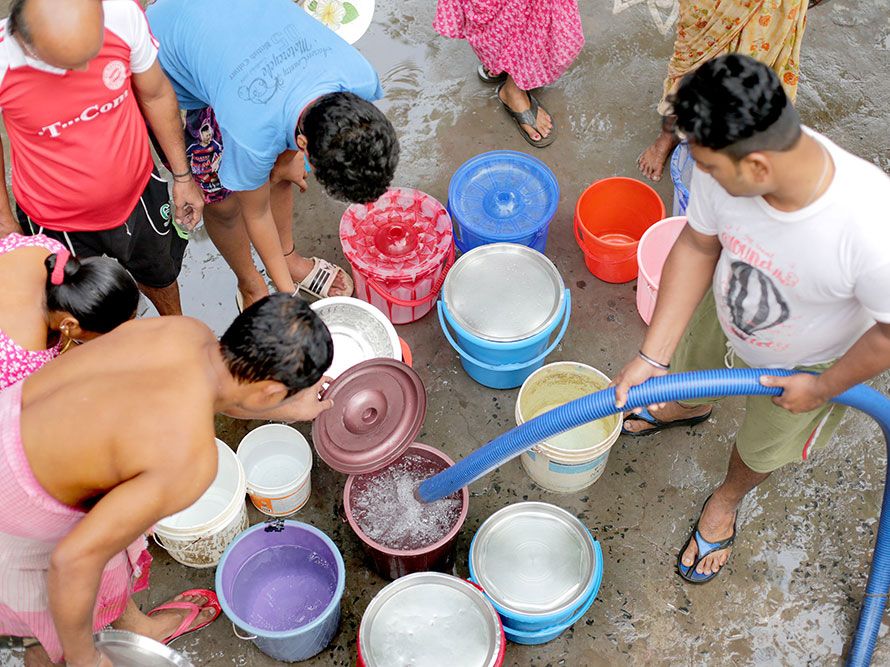
Each parish also has charitable projects that complement those of Caritas Mongolia, including opening soup kitchens and public showers, providing academic support services, and offering courses for women. The Church combines this testimony of service to society with the proclamation of the Word of God, community growth (achieved through the pre-catechumenate and catechumenate), and the strengthening of the experience of faith through liturgical life and ongoing catechesis.
CHALLENGES
Cardinal Giorgio Marengo, Consolata missionary and Apostolic Prefect of Ulan Bator, recalled the main pastoral challenges of the Church in Mongolia: helping the faithful deepen their faith and make it an increasingly integral part of daily life; promoting communion and fraternity among missionaries from various congregations and other Christian communities in the country; continuing to courageously proclaim the Gospel in a Mongolian society that, after decades of state atheism during the communist regime, still sees 40% of the population declare themselves non-religious.
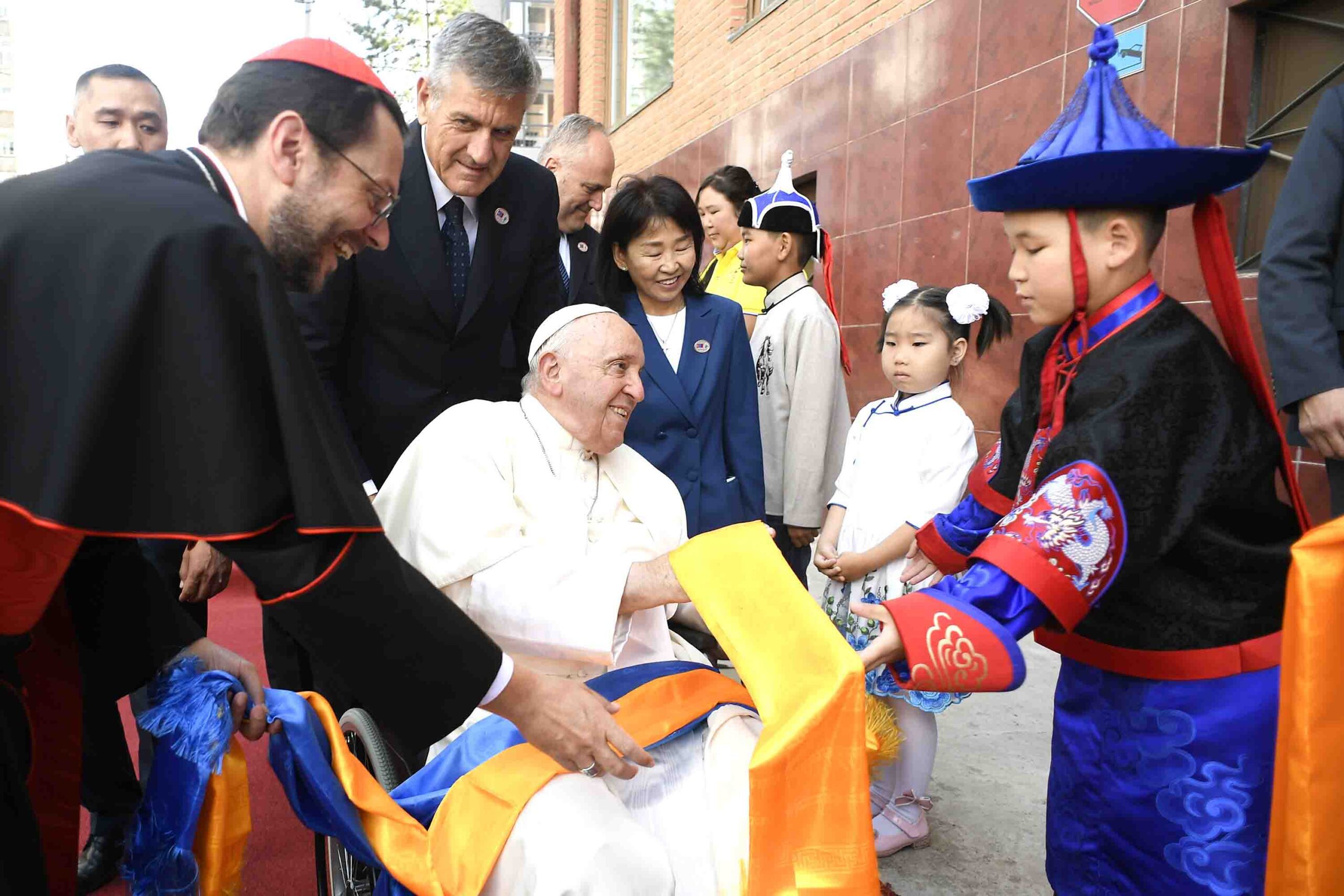
During Pope Francis’s visit to Ulan Bator, the capital of Mongolia, in September 2023, the pope commemorated the statue of Mary, which was miraculously found a few years earlier in a landfill in a northern city by a non-Catholic woman and is now housed in the cathedral. “This is why the cathedral is increasingly assuming a fundamental spiritual role for the faithful, who can go before this small wooden statue and entrust their lives to the Virgin Mary,” said Cardinal Giorgio Marengo.
During his apostolic visit, the pope participated in an ecumenical and interreligious meeting at the Hun Theater, highlighting religious freedom and harmony, with a message of solidarity. He then celebrated Mass at the Steppe Arena for the roughly 1,500 local Catholics, with many pilgrims attending from neighboring countries. The trip concluded with the inauguration of the House of Mercy, a center for the needy, homeless, and abuse victims in Ulaanbaatar.