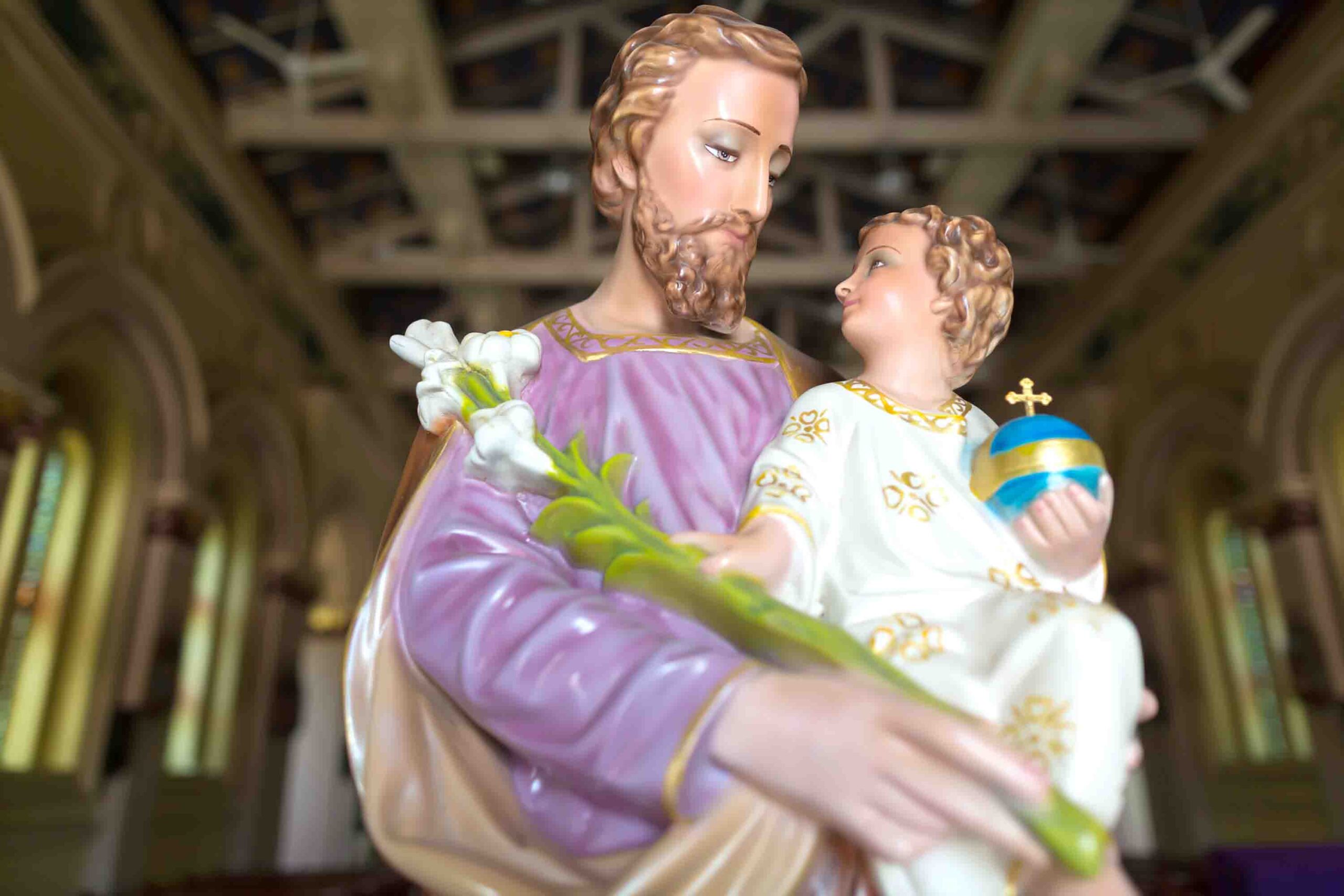
Pope Francis writes that ‘Saint Joseph did not stand out; he was not endowed with any particular charisms; he did not appear special to those who crossed his path. He was not famous, nor did he draw attention to himself: the Gospels do not record a single word spoken by him. Yet, through his ordinary life, he accomplished something extraordinary in the eyes of God’ (Message of Pope Francis for the 58th World Day of Prayer for Vocations). Indeed, with simplicity, yet with profound trust in God, Joseph teaches us through his own life that we must always trust in God. Joseph, humble servant of God, a righteous man, never hesitated to do God’s will.
Joseph, though filled with doubts and insecurities, accepted God’s plan for his marriage with faith. Through a dream, Joseph understood that the child to be born of Mary, his betrothed, was the Messiah, the Savior of his people and of humanity. Therefore, with silence in his heart and, with faith, serenity and readiness, carried forward God’s promise and the mission of protecting the most precious treasure, Jesus of Nazareth.
Joseph, a family man, a hard-working man, a man of God, lived a life much like our own; yet he always knew how to put God first, trusting in His Word and doing as God instructed him. ‘Joseph had to change his plans and step in to carry out God’s mysterious designs, sacrificing his own. He trusted completely’ (Pope Francis, ibid.). Joseph should therefore be an example to us all, through his love for his family and for God, stepping out of his comfort zone and convenience, always acting out of love and for Love alone.
A CREATIVE AND LOVING FATHER
In the accounts of Jesus’ childhood found in the Gospels, Saint Joseph appears, and his dedication to caring for, taking responsibility for, and loving his family is evident; as a father and husband, he fulfils his duties with great skill. Yet Joseph is a man of silence, a silence that expresses a love which acts beyond the desire for recognition or acclaim – an aspect which today, in the age of social media and rapid communication, seems to mean little, as we are accustomed to many words and public stances.
After the birth of Jesus, Joseph took on the task of caring for Mary and Jesus with dedication and joy.
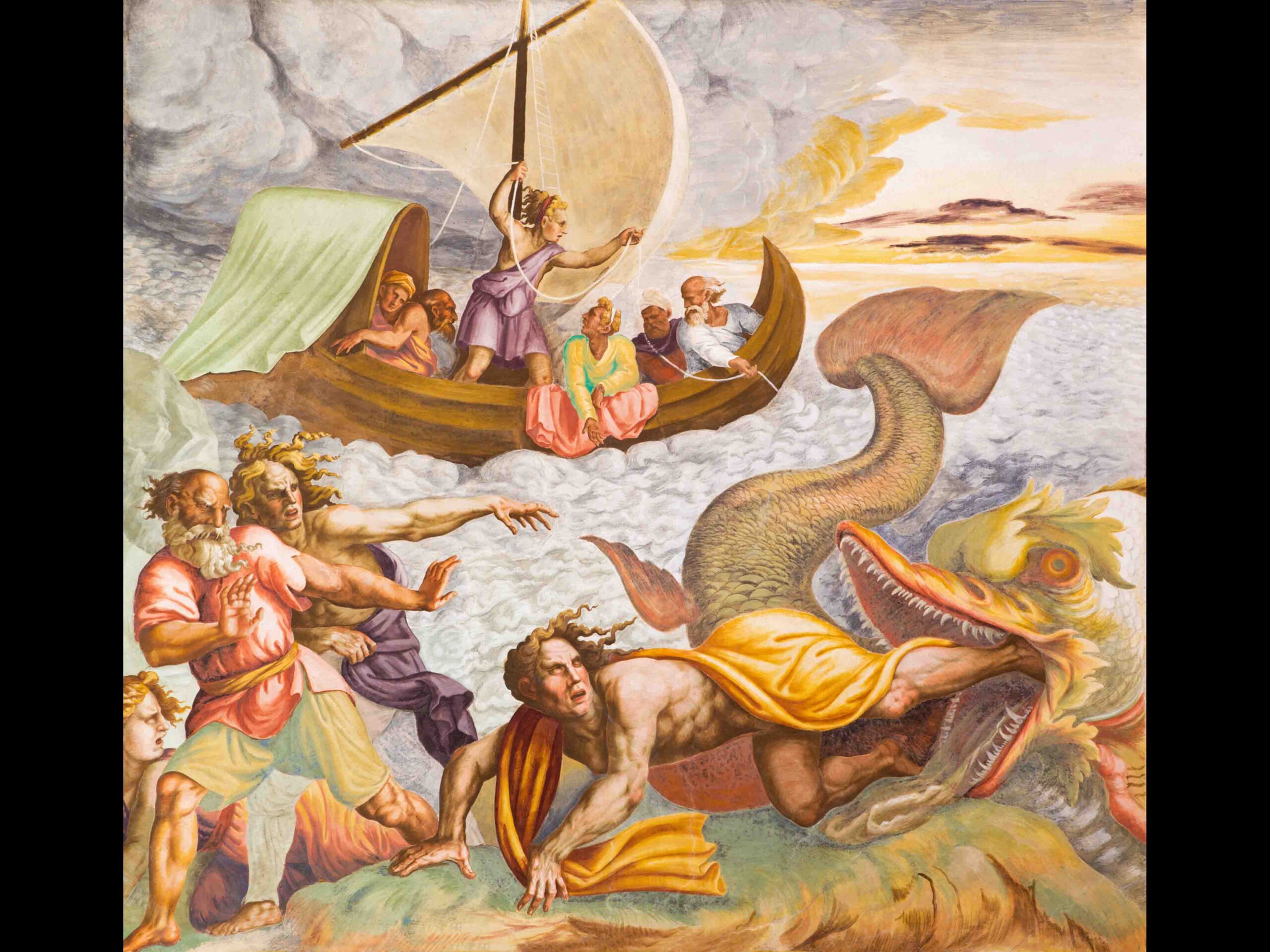
During the flight into Egypt (Mt 2:13–23), shortly after Jesus’ birth, Joseph had the courage to leave behind his security, his work, his family and his friends to save Jesus from Herod’s hands, travelling along dangerous paths and, no doubt, facing difficult situations. As Pope Francis emphasizes in the apostolic letter Patris Corde, Saint Joseph’s creative courage is evident in his ability to overcome adversity with faith and determination. He is a pillar of strength, demonstrating unshakeable resilience as he guides and protects his family through life’s challenges.
In a foreign land, Joseph had to find new work; he surely missed his family and friends, and his homeland. St Joseph’s experience is echoed today by thousands of migrants who have left their country, family and friends in search of better living conditions, in search of security for themselves and their families.
On his return to Nazareth, St Joseph continued to work as a carpenter and taught this trade to Jesus, his ‘son of the heart’. It was this work, carried out with constancy, that provided for his family and gave them dignity.
Joseph also supports and nurtures Jesus’ spiritual and human growth, taking him to the synagogue, sharing the Word of God and bearing witness to a fatherhood that reflects the supreme love and the freedom granted by God to his children.
A LIFT FROM A MISSIONARY
Father Fernando Cortés Barbosa, a Mexican Comboni missionary, shares his missionary vocation story with us.
“One afternoon, when I was just 21, I stopped by the side of the road to wait for the bus to my village. Barely half an hour had passed when I saw a car approaching and asked for a lift. The driver was a priest. The words with which he introduced himself remained etched in my memory: ‘I am a Comboni missionary.’ I took the opportunity to ask him what the Comboni Missionaries were, and throughout the entire journey to my village we spoke of nothing but the missionary vocation.
The next day, my travelling companion went to the parish to speak to my parish priest, and as soon as I saw him, I told him the decision I had made: ‘I want to be a Comboni missionary.’ He accepted it gladly and began to give me magazines and books about the missions and St. Daniel Comboni.
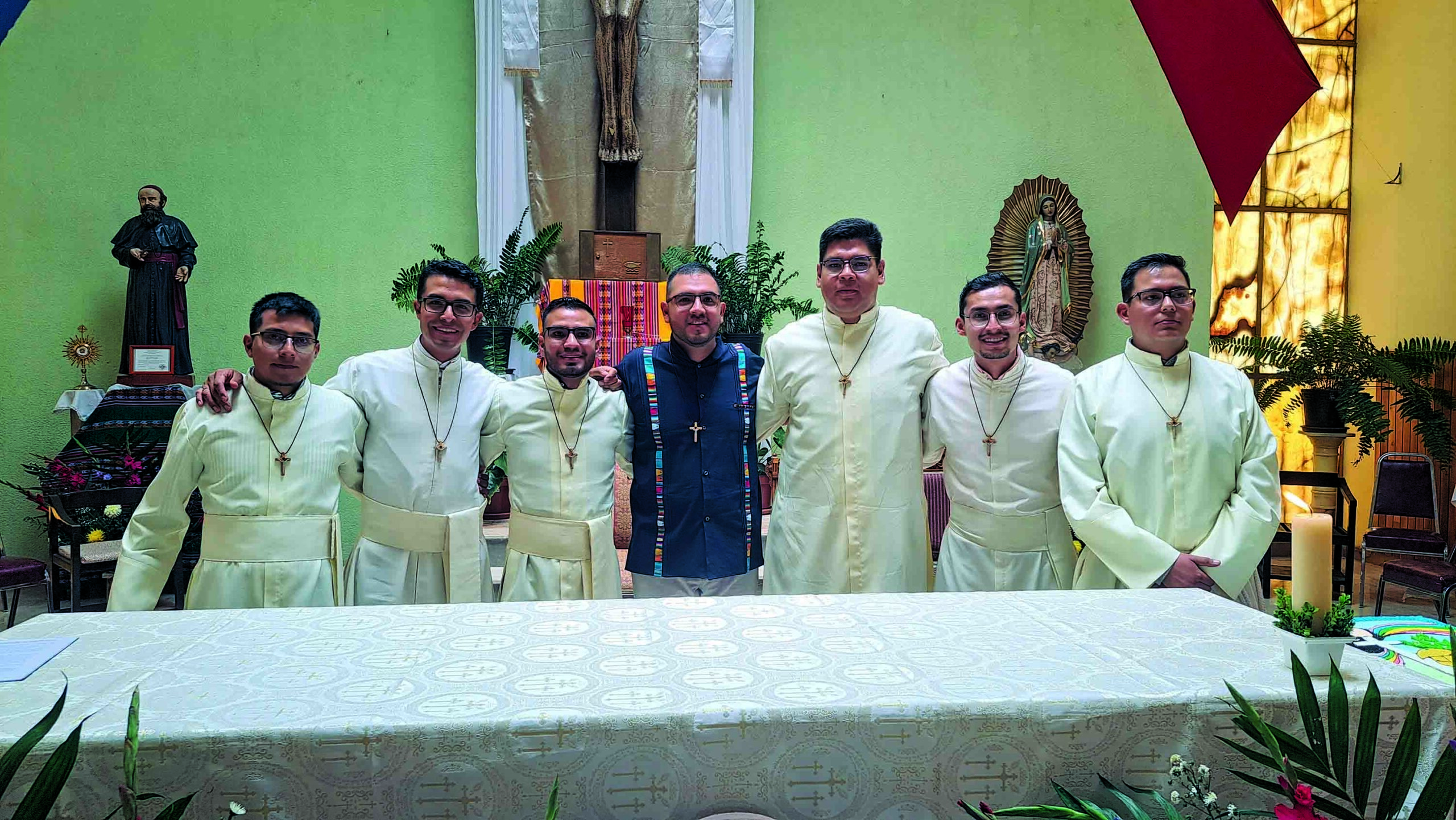
I was accepted to begin my formation. I progressed through the following stages of formation: postulancy, novitiate and Theology in Lima (Peru). When I finished, I spent two years in the country before taking my perpetual vows and ordained a deacon.”