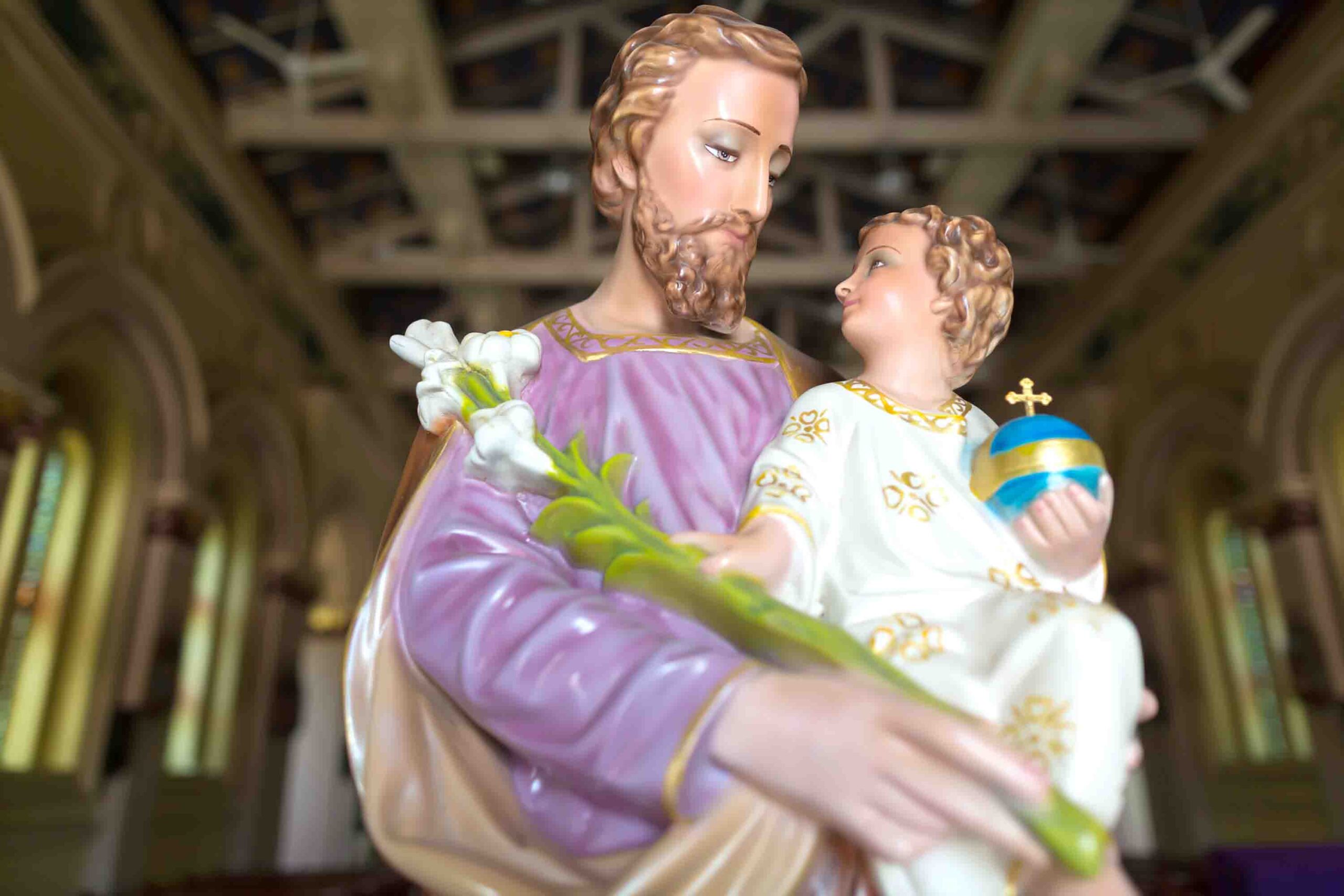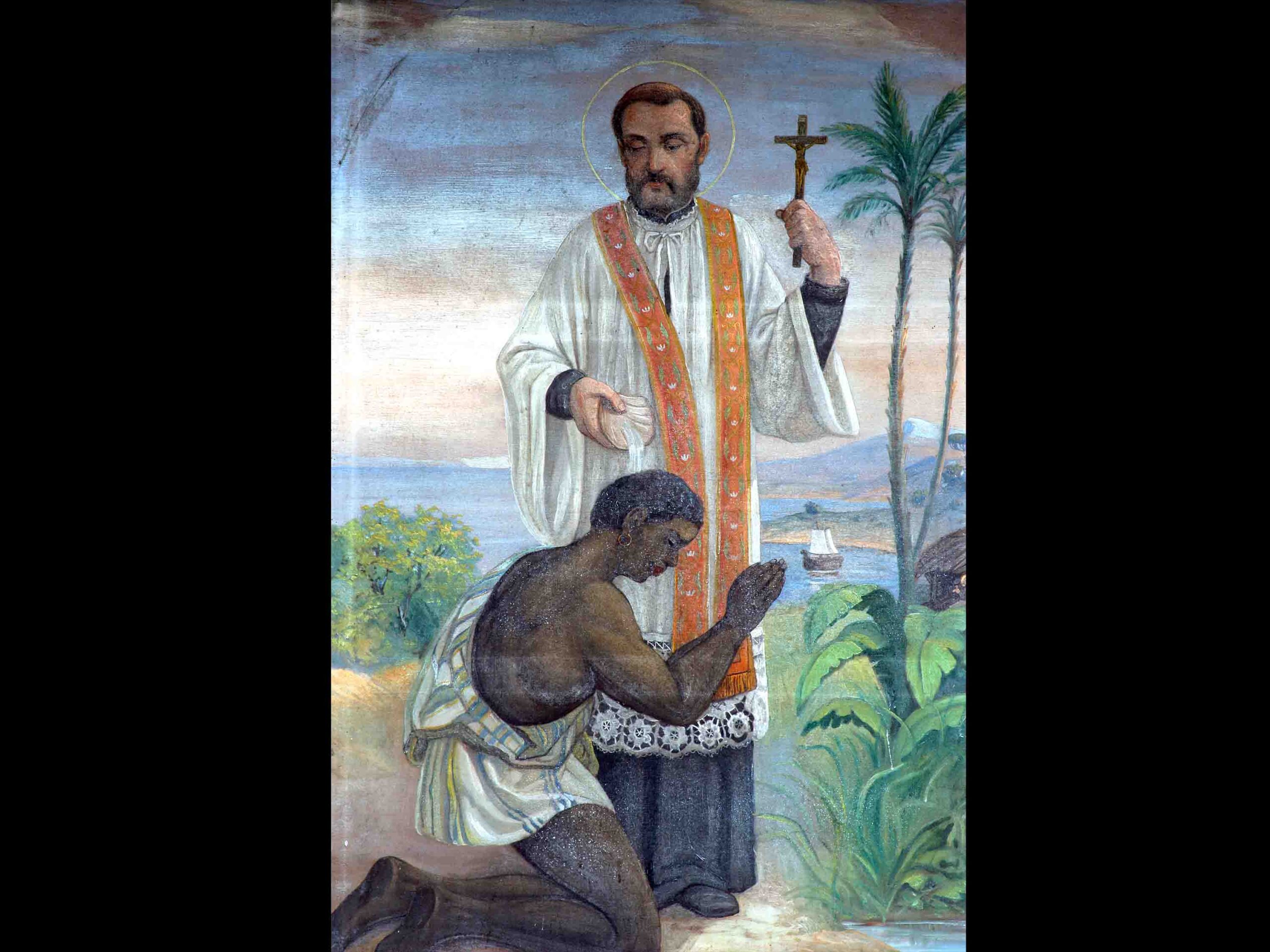
Damien de Veuster. The dedication and heroic service of the lepers in Hawaii by this Belgian missionary are well known. Arriving in Molokai in 1873, he found the place in a state of abandonment. Damien set about remedying the situation, building houses, facilitating a water supply, improving the port, enlarging the hospital, building a church and an orphanage, making coffins, and encouraging gardening.
In addition, he taught people to farm, raise animals, and even play musical instruments. He labored with great zeal to raise the needed finances. It took years of hard work and dogged determination to provide for his flock’s physical and spiritual needs. What is particularly striking about Damien (as evidenced by his letters) is the profound joy he experienced in offering realistic hope to needy people.
Saint Damien. Pope Benedict XVI, during the canonization ceremony, said of Damien: “His missionary activity, which gave him such joy, reached its peak in charity.” Indeed, deep joy and profound happiness mark the life of this missionary priest–even from his earliest days. When his death was approaching, Damien noted: “I die as a leper, but I am the happiest missionary in the world.”
Damien, the dedicated evangelizer who lived “in joyful hope” with his leper community in Molokai and who calls himself the “happiest missioner in the world,” remains a contemporary witness of profound holiness, genuine hope, and authentic charity.
James E. Walsh was a Maryknoll missionary and bishop in China; he was the last foreign missionary in communist China. His life spanned nine decades (1891-1981). Having endured twelve years in prison, the frail, elderly bishop was escorted by Red Guards on July 10, 1970 across the bridge linking mainland China and Hong Kong; there he was welcomed by numerous friends and fellow Maryknollers.
This dedicated missionary had a rich and diverse apostolic life: one of first group of seminarians to enter Maryknoll (1912), member of the first group of missioners sent overseas (1918), ordained bishop of the Vicariate of Kongmoon (southern China) at age 36, second superior general of the Catholic Foreign Mission Society of America (Maryknoll) [1936-1946], as well as numerous subsequent missionary assignments.
Man of Deep Virtue. On his return trip to the USA, Walsh was received by Pope Paul VI in Rome. The pope told him: “You have been a witness, authentic and simple, in joy and in sorrow, then in suffering and humiliation, and finally in separation from the people you loved so much. For all of this we thank you on behalf of the entire Church of Christ.”
Walsh was a prolific writer; his touching “clodhopper” story, Shine on, Farmer Boy, describes his hope-filled dedication to the world’s little people. He noted in the Maryknoll Spiritual Directory that missioners need the virtue of “hope, which implies confidence in God, and a persevering willingness to spend and be spent as His messenger.” Walsh lived in profound hope, a pivotal missionary virtue.
Martyrs of Hope. In early December of 1980, the bodies of four North American Church-women were exhumed in rural El Salvador. The assassinated women were Maryknoll Sisters Maura Clarke and Ita Ford, Ursuline Sister Dorothy Kazel, and Jean Donovan, a lay missioner from Cleveland. Archbishop Oscar Romero of El Salvador had been assassinated only nine months earlier.
Each of these dedicated women followed a unique missionary path. Maura and Ita served many years in Nicaragua and Chile. Dorothy Kazel had labored numerous years in El Salvador. Jean Donovan was only twenty-seven and had chosen to live out her faith serving in El Salvador. Before being shot in the head, two of the women were raped. All had been deeply touched by the life witness of Archbishop Romero.
Mission Solidarity. These four women believed that identification with the oppressed is a profound witness to authentic Christian hope; they professed their faith by witnessing to the cross as well as to the resurrection. It has been noted that “they died not simply for clinging to the true faith but for clinging, like Jesus, to the poor.”
Sister Ita, attending a Maryknoll Sisters assembly one month earlier (November 1980), read from a sermon by Oscar Romero: “Christ invites us not to fear persecution because … whoever commits oneself to the poor must suffer the same fate as the poor, and in El Salvador we know what the fate of the poor means: to disappear, to be tortured.”
Hope, An Essential Missionary Virtue. Through their in-depth association with people of diverse cultures, languages, religions, and values, missionaries come to appreciate multiple expressions of authentic hope; they know from direct experience that “hope does not disappoint for God has poured his love into our hearts through the Holy Spirit who is God’s gift to us” (Romans 5:5).
James H. Kroeger, MM, served mission in Asia (Philippines and Bangladesh) for over five decades; recently he authored Walking with Pope Francis (Paulines, Manila) and A Joyful Journey with Pope Francis and Living in Joyful Hope (Claretians, Manila).