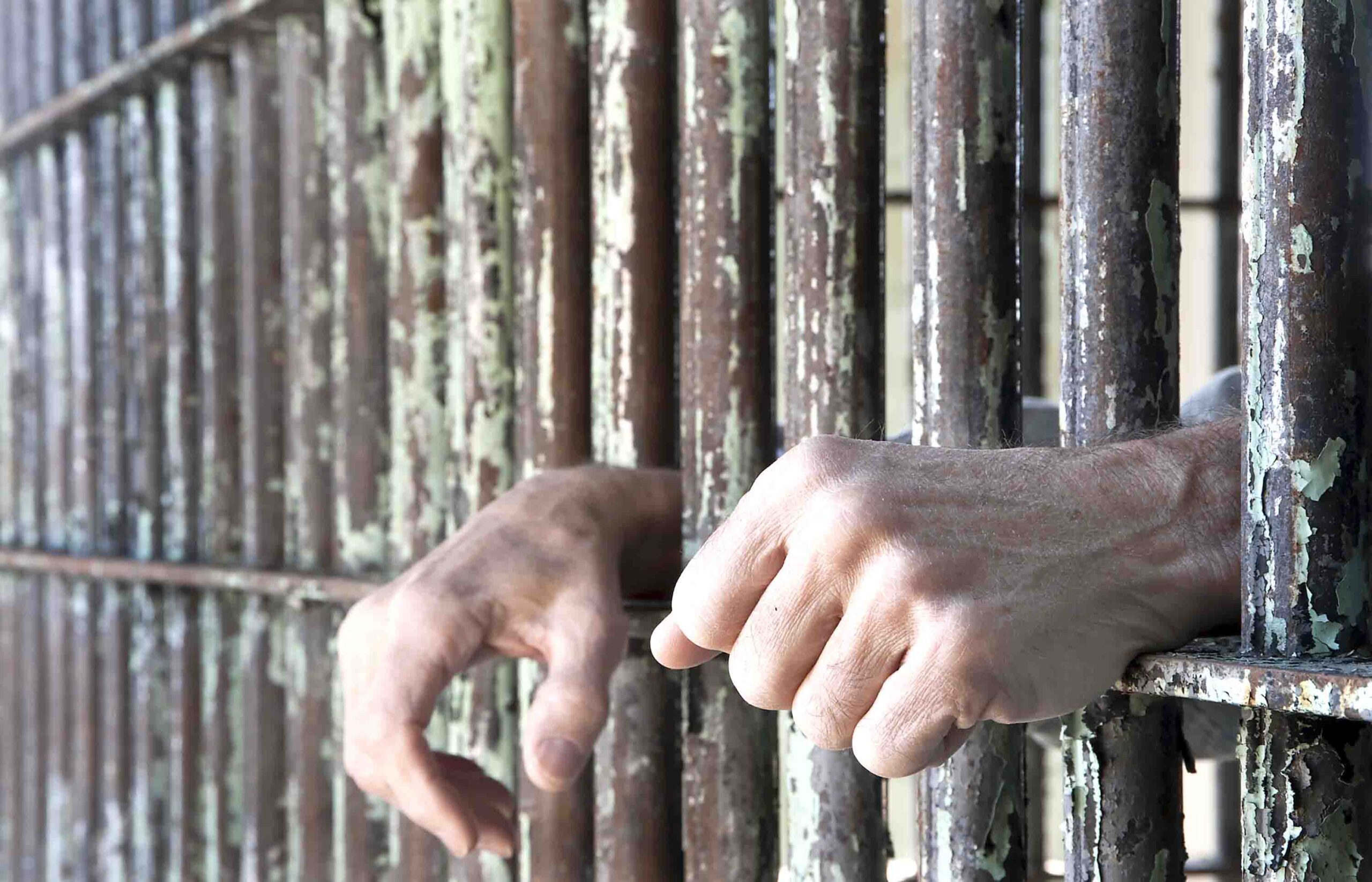

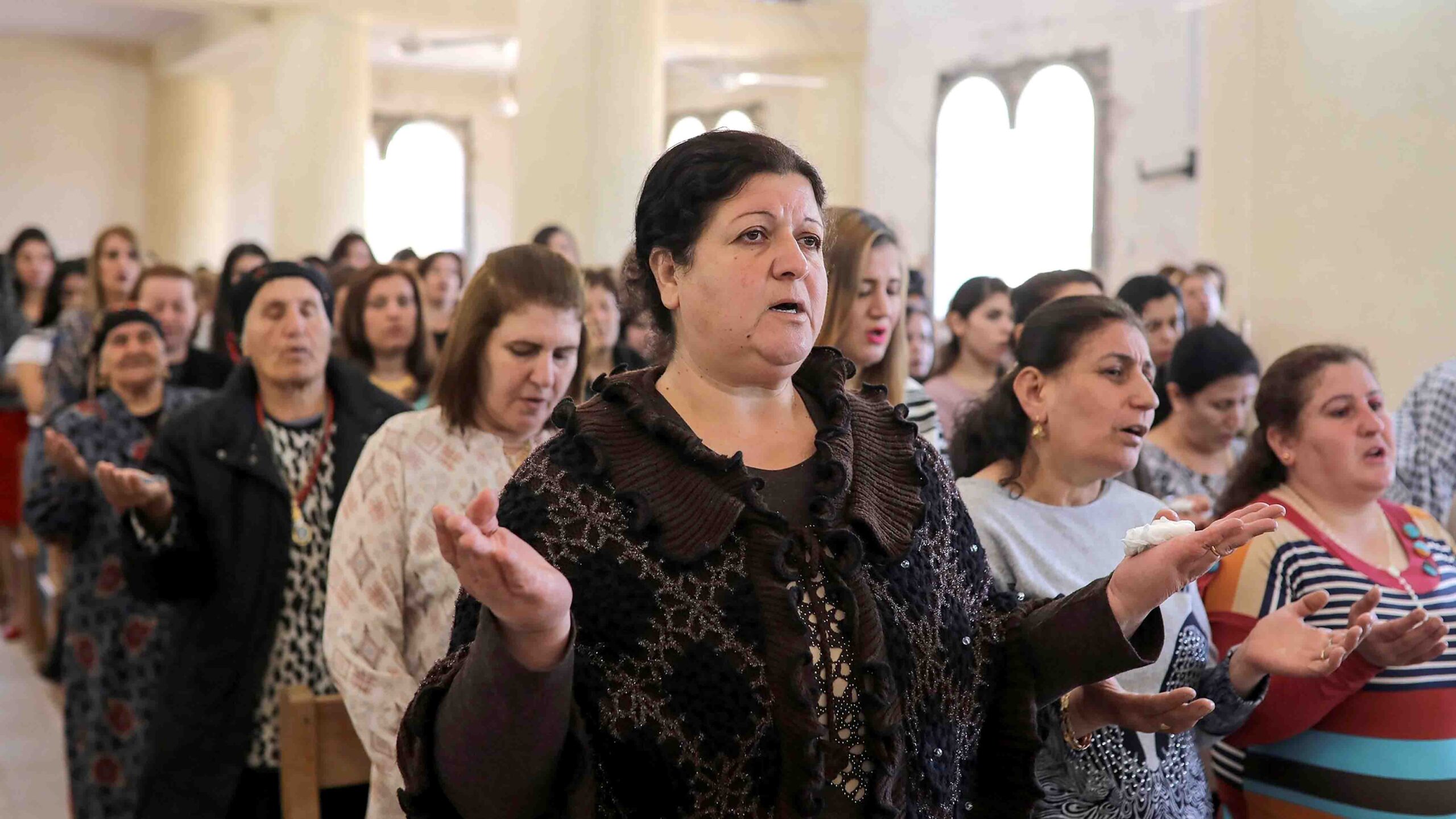
One of the biblical texts that Father Jean-Marie Humeau often quotes during Eucharistic celebrations with the Iranian converts he ministers to in France is the Beatitudes. It is no wonder that many of them place themselves in God’s hands when they hear “Blessed are those who are persecuted for righteousness’ sake”, for persecution and injustice have marked the history of Christianity in ancient Persia and present-day Iran.
For centuries, Persian rulers promoted Zoroastrianism as the official religion, and when Christianity arrived in Iran, it faced ‘considerable persecution’, notes historian Charles A. Frazee in an article published on the Catholic Near East Welfare Association (CNEWA) website. In the 4th and 5th centuries, particularly under the reign of the Sassanid Shah Shapur II, who triumphed over the Roman Empire, thousands of Christians were martyred.
However, even Zoroastrianism, ‘humanity’s first monotheistic religion’, influenced Christianity, with concepts such as the Day of Judgement, heaven and hell, angels and demons, some of which are thought to have been passed on to the Jews of Babylon when they were freed by the Achaemenid emperor Cyrus the Great.
Charles A. Frazee (1929–2019), who was a professor of Byzantine History at California State University, Fullerton, points out that Zoroastrian priests, known as ‘magi’, are depicted in the Gospel of St. Matthew as the first Gentiles to worship the Baby Jesus.
THOMAS IN PERSIA
Catholic tradition tells us that it was Thomas, the ‘apostle of doubt and faith’, who was the first missionary in Persia and Mesopotamia (Iraq), before going on to evangelize India, where he would be murdered. To distinguish themselves from the ‘Church of the West’, to which the believers of the Roman Empire belonged, the first Persians to convert to Christianity called themselves ‘members of the Church of the East’.
The split between the Church of the East and the Church of the West was finalized in the 5th century, when Nestorius, Patriarch of Constantinople, denied the divinity of Jesus Christ, a theological position adopted by the school of Edessa, in eastern Syria (now Urfa, in Turkey), which was influential among Persian Christians, who had ‘adopted the Syriac liturgy and did not mind being called Syrians’.
In 431, at the Third Ecumenical Council of the Christian Church, held in Ephesus, Nestorius was declared a heretic and deposed. Instead of submitting to the council’s condemnation, Frazee reveals, “the emissaries from Edessa migrated to Persia, where they were very well received, given their enormous prestige, despite the resulting rupture with the rest of Christendom.”
This glorious period came to an end with the Mongol invasions in the 13th century. Although the Mongol khans (rulers) “tolerated” Christians, notes Charles A. Frazee, their destructive raids dealt them a severe blow. “Population decline, economic stagnation, political anarchy, and social pressure to convert to Islam drastically reduced the number of Persian Christians.”
It was around this time that the first Latin-rite missionaries arrived in Iran: Dominican friars sent by the popes of Avignon and tasked with contacting the khans. “One of them even became bishop of Sultaniyeh, near the modern Iranian city of Tabriz–but they did not convert many people.”
It was not until the 16th century that Catholicism “truly left its mark on Iran,” Frazee notes, when a group belonging to the Church of the East rejected the appointment of an “incompetent leader.” By this time, the position of chief bishop of the Catholicosate was hereditary, passing from uncle to nephew within the same family.
CHALDEAN CHURCH
“To legitimize his election, Abbot John Sulaca, chosen by the dissidents, was persuaded to seek the support of the Western Church,” Frazee reports. “He traveled first to Jerusalem and then to Rome, where Pope Julius III, convinced of his orthodoxy, personally consecrated him as Patriarch of Mosul on April 9, 1553. It was Rome’s first intervention in the affairs of the Persian Church, and Sulaca became the first Eastern patriarch consecrated by a pontiff.” To distinguish it from its heretical counterpart, the Holy See gave its Eastern Church the name Chaldean.
Sulaca returned to the Near East, eager to establish a separate church with its own hierarchy. His enemies were many, and the patriarch was tortured and executed in 1555. However, “it was already too late to extinguish the Chaldean Church,” whose members remained in full communion with Rome, “supported by a new contingent of Latin missionaries who began arriving in the early 17th century.”
The growth of the Catholic community in Iran so impressed the Congregation for the Propagation of the Faith that, in 1629, Pope Innocent XI decided to consecrate, for Isfahan, a “Bishop of Babylon,” the French missionary Louis Marie Pidou de Saint Olon. By the end of the 17th century, “intrepid missionaries” of the Latin rite–Augustinians, Discalced Carmelites, Jesuits, and Dominicans–had drawn thousands of members of the Eastern Church into the Western Church.
This near-unanimous loyalty to Rome suffered a setback, however, when, due to “endless wars between Turks and Persians along the shared border, situated in the heart of Christian territory,” the Sulaca line of patriarchs was forced to take refuge in the mountains of Kurdistan. Here, “motivated by isolation and resentful of the attention that Catholic missionaries devoted to their former rivals, the original Chaldeans reverted to the heretical position regarding the duality of Christ.” But others did not succumb to this temptation.
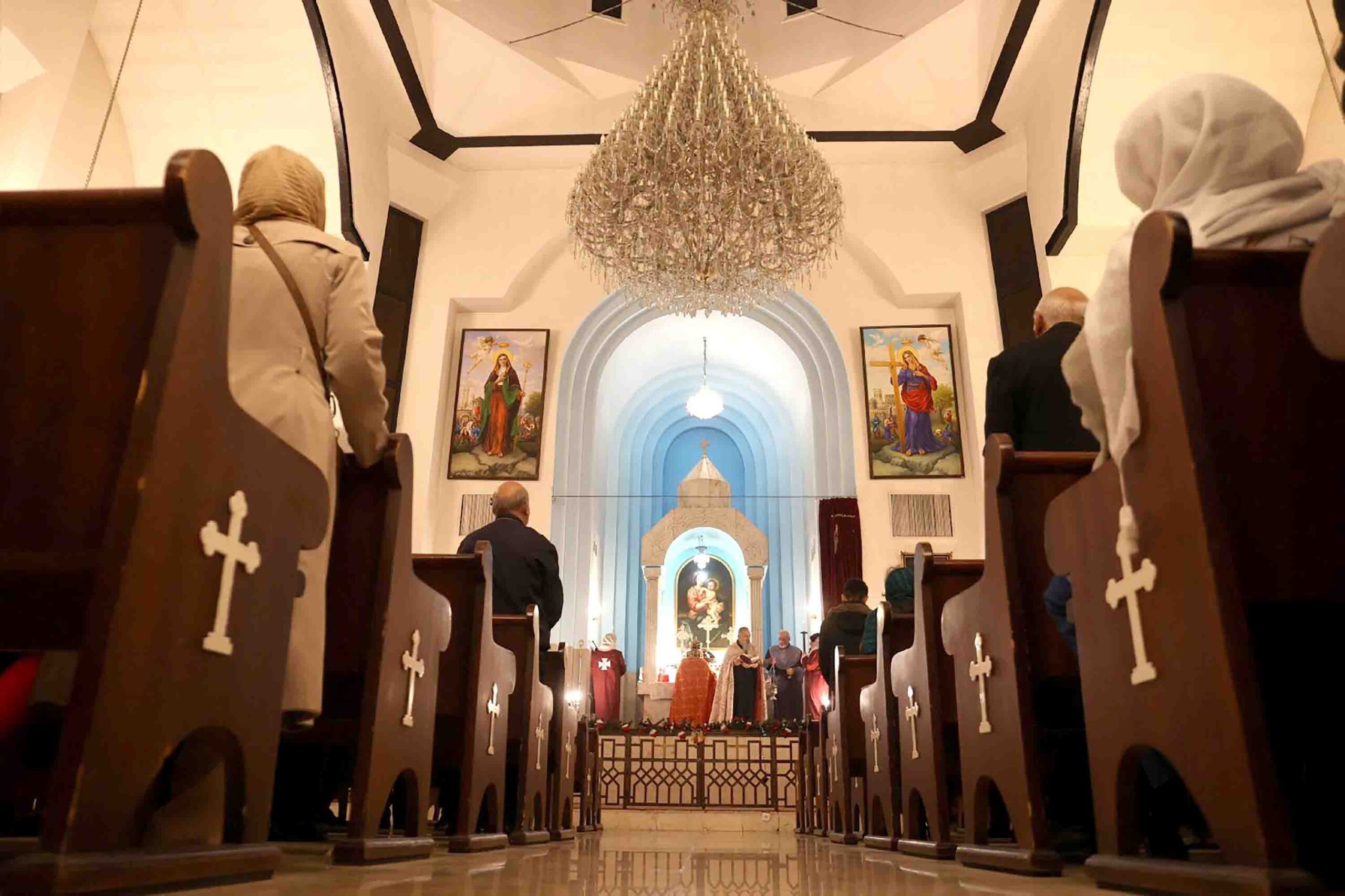
Today, of all the churches under papal authority, the largest remains the Assyrian-Chaldean Church, of the Chaldean/Eastern Syriac rite, which celebrates its liturgy in Aramaic, the language of Jesus, at St. Joseph’s Cathedral in Tehran and at the Cathedral of St. Mary, Mother of God, in Urmia (Western Azerbaijan).
But also in other parishes in Ahvaz (Khuzestan Province, with a rebellious Arab majority, a refuge for Assyrians from across the Middle East) and in Salmas (Western Azerbaijan, a province with a continuous Christian presence until the massacres committed by Kurdish emirs in the 19th century).
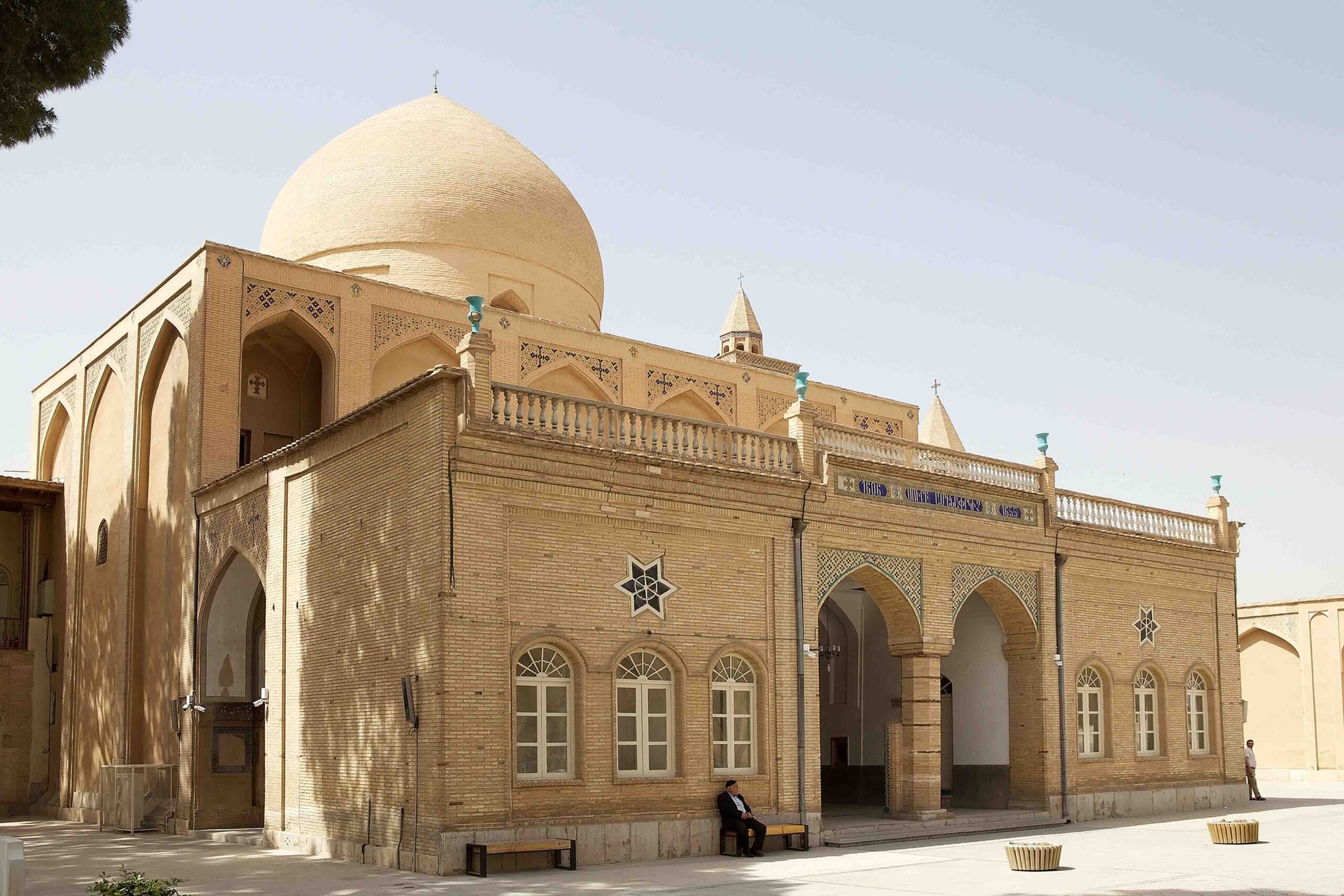
Also loyal to Rome is the Armenian Catholic Church (Armenian rite), which has the Cathedral of St. Gregory the Illuminator in the Majidieh neighborhood of Tehran and the Church of St. Mesrob in the city of Ahvaz, named in honor of the monk and theologian who created the Armenian alphabet. As for the Latin Church (Roman/Western rite), it is composed mainly of foreign faithful who worship at the Consolata Cathedral, the Roman Catholic Cathedral of Tehran, and the Cathedral of Our Lady of the Rosary in the Nova Julfa neighborhood of Isfahan.
In the centuries that followed, despite its isolation, the Persian Church ‘survived intact’ under the leadership of the bishops of the Catholicosate (equivalent to a patriarchate) of the Assyrian Church of the East in Seleucia-Ctesiphon (the ancient capital of the Sassanid Empire, in Mesopotamia), who governed alongside other bishops scattered across the region from the Caspian Sea to the Persian Gulf, reports the author of Catholics and Sultans.
In the 7th century, when the Arabs invaded Persia and defeated the last Sassanid and Zoroastrian Shah, Yazdeger III, the position of Eastern Christians improved significantly, because ‘they were favored by the new Muslim rulers’, to such an extent that, in the 8th century, as soon as he made Baghdad ‘the capital of the Islamic world’, Al-Mansur (or Almanzor), the second caliph of the Abbasid dynasty, ‘invited Catholics to his residence’.
GOLDEN AGE
Thousands of Persian Christians then moved with their leader to Baghdad, becoming the ‘sole inhabitants’ of a part of what is now the capital of Iraq. It was a ‘golden age’, which allowed Christianity to ‘expand and flourish for several centuries’, with missionaries from the Church of the East establishing churches and at least 200 dioceses in China, Korea and India, along the great Silk Road.
Another Catholic Church, which was also once a convent–St. Abraham’s, in the Jamalzadeh Shomali neighborhood of the Iranian capital, had been run since 1966 by Irish Dominican priests (who arrived in 1962, but most or all of them have since left).
The Assyrian and Chaldean Catholic communities survive in the Islamic Republic of Iran, but they are far less influential than they were before the revolution that overthrew 2,000 years of monarchy, when their nine religious orders administered schools attended by some 8,000 students, “mostly children of the Muslim elite.” Latin Rite Catholics, on the other hand, are mostly expatriates. Many of them–engineers, architects, businesspeople, diplomats–were instrumental in the modernization plans of Shah Reza, the first emperor of the Pahlavi dynasty.
In 1980, Charles A. Frazee wrote: “Whatever the future may hold, the Assyrian-Chaldean Church will survive. It has been part of Iranian life for centuries and has faced adversity in the past. With the same certainty, it will survive the revolutionary upheaval of the present.”